Hello, welcome to Chinese Folk Tales.
This is Man Ling, and today I have another fascinating tale for you.
Our journey starts on the vast grasslands of northwest China, deep into the heart of Xinjiang.
Here, stories aren't only told with words.
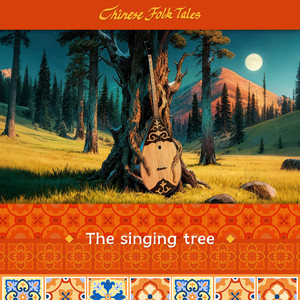
They are sung accompanied by the soulful music of a very special string instrument, the dombra.
This long-necked lute has been played for thousands of years by the Kazakh people.
More than just music, the dombra tells stories about love, struggle, history, and pride.
And legend has it that it was born out of love.
A long time ago, a beautiful girl from a poor family lived on the grasslands.
Life for the family was hard but she was a happy girl and sang songs all day long.
Her parents had brought her up well and though she had to look after the livestock, help with the cooking and cleaning since a young age, she was always grateful and happy to do so.
Life was simple.
And that was good.
She would send to herself, to her family, to the animals and birds, even after all of them had gone to sleep.
Time flies.
In the blink of an eye, the girl grew up and reached marriageable age.
Thanks to her beauty and hard-working spirit, She was surrounded by young suitors vying for her attention, willing to do anything for her.
Beautiful young lady, would you marry me?
I am handsome and have half a dozen heads of sheep.
No, that's nice of you, but I don't think so.
What about me then?
I have a horse running so fast that it can carry you across the grassland and back within half a day.
I think not.
I'm quite happy staying here with my animals and family.
I have no need to travel that fast.
Those are no good guys.
She's just not interested.
She probably fancies marrying a king or a rich man.
We don't stand a chance.
Well, as it happened...
A prince from far away had heard about the girl's beauty and her singing and thought he would give it a go.
He arrived at the girl's tent one late afternoon on a fine white horse and with a cart full of treasure.
Behold, said the prince proudly.
You have the beauty of the moon and I have enormous wealth.
I bring you gifts, and once we are married, you shall live in a fine palace and you shall want for nothing.
He seems like a nice boy.
Go for it, said her mother, looking at all the riches being laid at their door.
The girl looked at everything critically, but then said, I think not.
Such treasure can't buy happiness, which I already have, by the way.
Name your price.
The girl pondered for a moment, then laughed and said I shall marry the man who can make the trees sing to me.
The prince didn't know what to say.
No wealth on earth could make a tree sing.
Disappointed, He started to gather up all his treasure.
You're taking me for a fool.
Well, if that's your game, good luck to you.
The prince left the village, never to return.
Not so long afterwards, another suitor arrived at the girl's door.
Good afternoon.
I'm the richest merchant you can find on the plains.
I trade far and wide to distant lands.
I bring you herbs and spices, precious tea and beautiful silk.
I know I'm a bit old for you, but I'm sure all this finery will make up for that.
You will no longer have to look after animals or spend your time weaving.
You will have many servants to do that just for you.
The girl looked at the gifts spread out across the floor in front of her house and thought for a few minutes and then said Thanks, but no.
I like keeping busy.
I love my animals and I like to weave.
If I couldn't do any of that, I would be lazy and bored.
I might consider marrying you, but only if you can make the tree sing to me.
Make the tree sing?
Yes, sing.
I can pay a singer to hide behind a tree.
Will that be good enough?
The tree itself must sing to me.
The rich man turned away, gathered up his precious goods, and left.
It seemed that no one would be worthy enough to win the young girl's hand in marriage.
But there were still some who hoped they could change her mind.
Not far away lived a handsome, intelligent and brave young man who was an accomplished horseman and a capable shepherd.
In fact, he had long harbored hopes of marrying the girl.
He also knew of her repeated demands for a singing tree.
He thought long and hard.
Surely this was impossible.
One day as he was walking through the woods, he heard a strange sound.
It was a sort of a hum, a buzz.
He looked around but couldn't see anything.
But then, Wait a minute.
What's that?
It looks like the dried intestines of a sheep caught up in an old tree trunk, likely dropped there by a bird of prey.
As the wind blew around the tree, the sinews made a noise almost like a voice singing.
He reached out and plucked one of the sinews.
The noise it made was loud and melodious.
He did it again and again and then started laughing.
Suddenly, a light bulb lit up in his head.
The tree is singing!
It's singing!
I found a singing tree!
When the young man got home later that day, he found a piece of wood and hollowed out its middle.
Then he stretched two strands of delicate sheep gut tendon across the opening.
He plucked on them and the strings made a good sound.
With it, he composed a song all about the girl and his love for her.
He practiced on his newly invented instrument day after day.
Herders from miles around would come to listen to him play.
You should take your singing tree instrument to that beautiful girl and ask her to marry you.
And that's exactly what he did.
But on his way, he met the rich man who had failed in his own quest to marry the girl.
The shepherd boy showed him the instrument, and at once the rich man realized what he had created.
He snatched the instrument out of his hands and ran straight to the girl's house.
See here, beautiful girl.
See what I've made.
A singing tree.
Surely you can't refuse me now.
When shall we marry?
But the smart young girl was immediately suspicious.
This man may have all the money in the world, but was he so skilled to be able to make this wondrous instrument?
She thought not.
Play it then.
Make it sing to me.
Oh.
And of course, the rich man didn't know how to play it.
He left the house in shame.
But then a thought crossed the girl's mind.
If the rich man didn't make it, someone else surely did.
I must find him.
The girl asked around, but no one knew the creator of the instrument.
She was about she heard the sound of the singing tree instrument.
Where did that sound come from?
I am holding the singing tree in my hand.
The sound is not coming from that.
Is there another one nearby?
And sure enough, she followed the sound and found the shepherd boy playing a new singing tree instrument and performing his song of love.
She immediately fell in love with him and they soon married.
Instead of riches, a palace and fine clothing, they had loyalty, honesty, bravery.
And of course, the singing. called the dombra.
And that's how the dombra, born from love, became one of the most beloved instruments of the Kazakh people.
If you travel to Xinjiang today and are lucky enough to be invited to a Kazakh family's, Don't be surprised if someone picks up a dombra and starts strumming a tune for you, probably with a bowl of milk tea in hand.
Singing, chatting, laughing, it's all part of the welcome.
While the strings of ancient dombras were made from sheep gut tendons, today they are usually nylon.
Because it's such an important part of Kazakh culture.
The art of playing the dombra has been recognized as a National Intangible Cultural Heritage of China.
But the story doesn't stop there.
The dombra isn't just a treasure in Xinjiang.
It's also a favorite along the ancient Silk Road. loved by people across Central Asia.
For centuries, this little instrument has been connecting cultures, carrying songs and stories across mountains and deserts from one people to another.
And that brings us to the end of this episode of Chinese Folk Tales.
Thank you for listening.
If you have enjoyed the story, do give this podcast a five-star rating.
Leave a comment and share it with your friends.
To hear more stories like this, please subscribe to Chinese Folk Tales wherever you get your favorite podcasts.
Bye for now.