Hey, it's Waylon Wong.
We're almost at the end of 2025.
It's been a tough year for NPR and local stations.
But despite the loss of federal funding for public media, despite attacks on the free press, we're still here for you.
With your support, NPR will keep reporting the news.
And here at The Indicator, we'll keep explaining how the economy affects your life at home, at work, in your community and around the world.
And of course, we'll do it in about 10 minutes every weekday.
If you're already an NPR Plus supporter, thank you so much.
We see you and we're so grateful for you.
If not, please join the community of public radio supporters right now, before the end of the year at plusnprorg.
Signing up unlocks a bunch of perks like bonus episodes and more from across NPR's podcasts.
Plus, you get to feel good about supporting public media while you listen.
Visit plus.npr.org today.
Thanks.
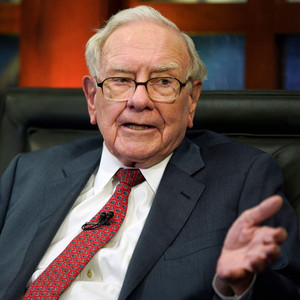
One of the most impressive things about Warren Buffett... Besides the billions of dollars?
Yes, yes.
Besides that was that he turned boring value investing into a sort of cult.
His shareholder meetings for his company, Berkshire Hathaway, were legendary.
It was called the Woodstock for capitalists.
Every year, tens of thousands of people would travel to Omaha Nebraska, to hear a 90-something-year-old man sit on a stage and answer questions.
What is your next goal in life now that you're the richest man in the country?
That's easy.
It's to be the oldest man in the country.
Good joke.
He's so folksy.
Then Warren Buffett would toss out this common sense investing advice about buying good companies for the long run.
You know, when people are chewing chewing gum, we have a pretty good idea how they chewed it 20 years ago and how they'll chew it 20 years from now.
And we don't really see a lot of technology going into the art of the chew, you know.
Do you think Warren Buffett read Calvin and Hobbes?
I feel like Calvin and Hobbes was based off of Warren Buffett.
Well, because Calvin subscribes to Chewing Magazine, which is a magazine for chewing gum enthusiasts.
And I feel like chewing technology would have been part of that, which is so funny.
You know, lots of people try to imitate the investing style of Warren Buffett, but there is a small problem with that.
At a certain point, Buffett started to do deals so big, so audacious, that only Warren Buffett could pull it off.
This is The Indicator from Planet Money.
I'm Waylon Wong here with Robert Smith, who's hosting a new podcast called Business History.
A show about the history of business.
And we're doing a big series on famous investors.
And of course, Mr. Buffett is front and center.
On yesterday's show we talked about the investing tricks of Warren Buffett when he was young and unknown.
Today we talk about how he became famous and used that fame as a new superpower to make even more money.
What's in your wallet?
Terms apply.
See CapitalOne.com for details.
This message comes from Mint Mobile.
Starting at $15 a month, make the switch at mintmobile.com slash switch.
$45 upfront payment for three months.
Five gigabyte plan equivalent to $15 a month.
Taxes and fees extra.
First three months only.
See terms.
Young Warren Buffett in the 1950s and 60s would buy stocks in small, undervalued companies and hold them for a short period of time and then make quick profits.
That would change under the influence of his new partner in investing, Charlie Munger.
Munger was a lawyer who had also grown up in Omaha, lived in California and author Alice Schroeder says he helped push Buffett into a new investing philosophy.
Buy companies that sell things that people need and have growth potential.
Charlie Munger knew one big thing, which is, if he could find a business that would roll like a snowball, that it would get more powerful and more successful each year due to its innate qualities.
You could buy it once, and then you wouldn't have to do a lot of work to it.
You just would watch it as it grew.
Alice Schroeder wrote a biography of Warren Buffett called The Snowball for just this reason.
Buffett had impulsively bought a textile manufacturer in the 1960s called Berkshire Hathaway.
And with Munger's urging, Buffett started to use that company to buy other companies.
Buffett bought insurance businesses to generate cash.
He bought classic American companies like See's Candy.
Oh, yeah, they make those boxes of fancy chocolates.
Half of them are really good, and then half of them have fillings that you absolutely don't want to eat at all.
Like, I don't like the raspberry ones.
They do sell the candy boxes at the investor meetings.
Warren Buffett bought newspaper companies.
He bought a bank.
He owned large blocks of the TV network ABC and Geico Insurance.
Fruit of the loom.
Underwear.
He bought that, and the idea was that each of these companies would generate money that you could essentially put into the other companies.
It was the big snowball.
And we should say, by the 1970s, Warren Buffett was truly becoming famous.
As an investor, yes, but also because of his personal quirks.
He was a multimillionaire, but he drove an old car and lived in a regular old house in Omaha, Nebraska.
He famously had the diet of a picky child.
Hamburgers, french fries, cherry coke.
So much cherry coke.
It was at this point that Warren Buffett, always looking for advantages, must have realized that this attention he was getting could be good for business.
There's a famous moment in the mid-1980s when the investment firm Salomon Brothers is being targeted for a hostile takeover.
And the CEO calls up Warren Buffett and says essentially help, I need a white knight to invest in my firm.
And Alice Schroeder tells this story in her biography how Buffett made a huge profit just by publicly putting his money into Salomon Brothers.
He learned to get the value for his reputation just by putting his name on things without doing work.
It would end up being more work than he bargained for.
There was a scandal at the company.
The CEO had to resign.
And Warren Buffett ended up running the whole investment firm.
This Omaha nice guy was the boss of these ruthless Wall Street finance bros.
He had to fix the troubled company.
And the diagnosis of what was wrong was all the things he hated about Wall Street the perverse incentives to make money at the expense of your client, the childishness that went on among the traders.
It's funny Buffett went from hunting down companies to invest in to having companies basically throw themselves at his feet.
That folksy reputation Warren Buffett was getting from his shareholder meetings meant that people trusted him.
And when a company is in trouble, you really want to put out a press release that says oh, Warren Buffett believes in us.
It really is pretty remarkable that, as we tell this story, Buffett has remained on top of his game for like 60 years.
It's quite the track record.
But there were some dicey moments.
Yeah, the most famous was during the dot-com bubble in the late 1990s.
This was the age of high-flying internet stocks.
And Warren Buffett had famously not owned a computer until just a few years before, and he certainly would not invest in the internet.
Yeah, he's eating his See's candies and reading financial documents at night on paper.
Yeah, and he's playing bridge.
He loves playing bridge.
But as these internet stocks are going up, everyone is saying that Buffett is out of step.
They say he's losing his mental acuity.
The stock in Berkshire Hathaway is languishing.
There's a rumor at this point yeah, on the new internet right that Buffett is sick and in the hospital, and the company has to officially deny it.
Alice Schroeder, his biographer, says everyone was trying to kick Buffett off of his pedestal.
He told me in a conversation that that was the worst experience of his career, was the feeling of being told that he was just wrong and that his thought process had broken down and was obsolete.
Buffett ends up doing this very brave thing.
In 1999, there was this big conference of CEOs in Sun Valley, and Warren Buffett shows up.
And he gives this speech to the executives there.
They work at hotshot tech firms like Amazon and Apple and Intel and Yahoo.
And Buffett says the internet is certainly useful.
Yes, but the valuations of your companies are way, way too high.
And he told them they were making a terrible mistake and they were wrong.
And they made fun of him and they laughed at him.
And he did that because he felt like he needed to say it.
And it was the first time that I remember in his adult life, after he became famous, that he put his reputation at risk by giving advice about the market.
You know what, though?
He was right.
It was a bubble.
The Internet stocks plunged the next year.
Over the next couple of years, the Nasdaq index went down 77 percent.
But Berkshire Hathaway, run by Warren Buffett, was up about 30 percent in the year 2000.
Now, Warren Buffett was not always right.
He made some big investing mistakes.
A recent one is that he pushed the merger of Kraft and Heinz, two big food companies.
They're now breaking up and saying the merger never worked.
But it is notable that the fame of Warren Buffett meant that people didn't dwell on his errors.
And now that he's retiring and giving away most of his money to charity, people are looking back and acknowledging that 60 years of success is an unprecedented run in the up-today, down-tomorrow world of investing.
And as for Berkshire Hathaway, it will go on even without Warren Buffett at the helm.
Alice Schroeder, Buffett's biographer, says it will be interesting to see how the company works under the new leadership.
I think Warren's been honest for a long time that it will be sturdy and robust.
It's a business designed to be resilient when bad things happen.
But if you're trying to make a lot of money or beat the market, Berkshire Hathaway is not going to be that.
Buffett often said about companies that they can't beat the market forever.
Trees don't grow to the sky, was his quote.
But you have to admit, Waylon, this one did get pretty big.
Robert's new podcast is called Business History.
Thanks for bringing us these stories, Robert.
My pleasure, Waylon, and I'll be back in the new year.
This episode was produced by Cooper Katspa Kim and engineered by Jimmy Keeley.
It was fact-checked by Sierra Juarez.
Kate Kincannon is our editor.
The Indicator is a production of NPR.