This BBC podcast is supported by ads outside the UK.
Find home wherever you roam at Sinesta ES and Simply Suites.
Stretch out and enjoy home -like amenities for however long you need.
And when you're a Sinesta Travel Pass member, staying at Sinesta ES and Simply Suites means earning points toward free nights, upgrades, and more.
Go to sinesta .com and book your stay and unlock their best rates with Sinesta Travel Pass.
Here today, Rome tomorrow.
Join now at Senesta .com.
Terms and conditions apply.
This message is sponsored by Greenlight.
With school out, summer is the perfect time to teach our kids real -world money skills they'll use forever.
Greenlight is a debit card and the number one family finance and safety app used by millions of families, helping kids learn how to save, invest, and spend wisely.
Parents can send their kids money and track their spending and saving, while kids build money confidence and skills in fun ways.
Start your risk -free Greenlight trial today at greenlight .com slash iHeart.
That's greenlight .com slash iHeart.
This is the Global News Podcast from the BBC World Service.
I'm Jackie Leonard and at 13 hours GMT on Tuesday the 29th of July, these are our main stories.
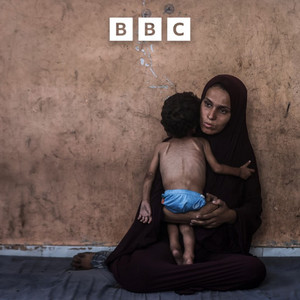
A UN -backed review has warned that famine is playing out in Gaza despite the limited increase in aid deliveries.
Israel says life in the Palestinian territory is tough, but lies are being told.
A ceasefire along the Thai -Cambodian border appears to be holding after a shaky start.
And the Russian national airline Aeroflot has cancelled 50 more flights today after Ukrainian hackers said they'd attacked its IT systems. Also in this podcast. For the last three years, I've only been able to plant half my farm because I don't have enough irrigation water.
We feel that Mexico has not been living up to their part of the treaty.
We'll hear from farmers in the US and Mexico caught in a water crisis driven by a decades -old treaty.
The worst -case scenario of famine is currently playing out in the Gaza Strip.
That's the assessment of a group of UN -backed international agencies after months of an Israeli blockade, aid, which has only recently been eased.
One woman in Gaza told us how hard it is to get aid.
Where are we supposed to go?
The Israelis say they don't want to distribute the aid because Hamas might steal it.
And sometimes they allow people to go and get the aid themselves, but they end up fighting each other to get it.
That's not to mention the bombs that are killing them anyway.
Every day, more than 500 people are martyred from Rafah to the north while trying to to reach the aid.
Yesterday, for the first time, my son went into an aid distribution centre.
They took the bag of flour he managed to get, broke his shoulder and stabbed him in the hand with a knife.
Israel has steadily denied that there is starvation in Gaza.
Here's its foreign minister Gideon Saar talking to journalists earlier today.
It is clear that after almost almost two years of war, the situation is tough.
But there is a lie, and the lie is the starvation policies, which the international media, including BBC, is cooperating with.
And the reality is the opposite, because we are working very hard under very complicated circumstances from the beginning of the war until this day in order to facilitate the entrance of humanitarian aid into Gaza Strip.
In a moment we'll be hearing from our Gaza correspondent Rushdi Abu Alouf.
First though, more details on the report itself from Imogen Folks in Geneva.
Well this is a report from the, it's an independent body, it's called the Integrated Food Security Report and it assesses hunger levels around the world And what it says this morning is that the famine threshold has been reached in Gaza, that all the signs are there, acute malnutrition, deaths from hunger, and that this is now present across nearly all of the Gaza Strip.
So it's not, I mean, it's a tragedy, but it's not a surprise.
We have heard the warnings from the aid agencies who are present in Gaza, talk of perhaps Médecins Sans Frontières, who does a lot with child malnutrition, reporting over the last week, I believe, that the levels of malnourished children it was seeing was really getting up to this.
This is a warning of famine.
famine. So here we are.
Some aid is coming in.
But I heard the World Food Programme in Geneva just half an hour ago saying these airdrops and the humanitarian pauses are just going to be nowhere near enough.
So just to be clear on the terminology, is there or isn't there a famine now?
What the IPC report says is that famine thresholds have been reached or breached in parts of the Gaza Strip, in fact, most of the Gaza Strip.
What we need to be careful about is that, of course, in many places you get more data than you're getting from Gaza.
but what the IPC thinks now is that it has enough in terms of reports from the different aid agencies.
They are talking about this is the level of acute malnutrition among the under fives.
This is a key indicator that we saw in July, this is what we saw in June, this is what we saw in May.
So they can extrapolate from that plus the reported deaths from hunger which have rocketed in July.
You know, many more are reported in the last couple of weeks than throughout this conflict.
That was Imogen Fowkes in Geneva.
In Gaza itself, the position remains desperate, as our Gaza correspondent Rushdie Abu Alouf told us from Istanbul.
Well, we understand that in the last 48 hours, about 152 trucks of food were allowed from three different crossings in Gaza, in the north, in the middle and also in the south.
But this is not near enough.
People are demanding 500 to 600 trucks every day full of food, for a month at least, in order to overcome this humanitarian crisis in Gaza.
The famine is looming, according to Palestinians.
More people are dying in hospitals from lack of malnutrition.
Hamas -run health ministry said about over 100 people died from hunger.
Also, the airstrikes did not stop at the time where this humanitarian pose is over.
Last night, according to a new statement by the Hamas -run health ministry, about 112 people were killed only in the last 24 hours.
And we've heard reports of looting.
Just how much of what is getting into the Gaza Strip is actually getting to its intended destination?
Well, in fact, based on what we are collecting on the ground and talking to local journalists in different areas, about 95 % maybe 98 % of the trucks were looted by not only by gangs but by you know desperate hungry people who are waiting somewhere in the road to stop the trucks and loot whatever they can.
I've seen a video about 22nd video of like thousands of people you know jumping over a truck and taking what they can.
There is a boxes from the Egyptian Red Cross that contain some food and there is other trucks carrying flour, which is the most needed item in Gaza.
One kilo of flour this morning is about $35.
There was a little drop of the prices at the beginning of this humanitarian pause.
But then suddenly the prices jumped up again.
I spoke to a father in Khan Yunis.
He said that he didn't eat and his five children did not eat for the last 48 hours.
And he had to buy the flour in this big price, which he can't afford. Rushdie Abu Alouf.
At least 30 people have died in Beijing as northern China experiences days of heavy rains and flooding.
Tens of thousands have been evacuated.
The downpours started over the weekend and intensified around Beijing and surrounding provinces.
Our China correspondent Stephen McDonnell is in one of the worst affected areas, the Meyun district of Beijing.
In the mountains around Beijing, there's been a mass mobilisation involving the People's Armed Police police and other emergency teams. There's a roadblock here and there are many like this all around the Meeun Reservoir, stopping people from entering the worst hit areas.
The government's view is that there have already been too many people dying in this disaster.
They don't want more names added to that terrible list. We've just come from a relief centre.
There are 400 people there.
Now, they're staying in dormitories, They've been given food and they're pretty happy that they're now in a safer place and they're just waiting to be able to go back in a few days' time after the flooding recedes a bit.
Down in the city, ordinary citizens have been told not to come to work, but up here in the mountains, it's more a question of the authorities controlling all the roads, controlling where people are going.
The good news for the emergency teams, though, is that the rain has stopped.
they've been operating in really terrible conditions with driving rain heavy strong flooding now they've got a bit of a break to reach some of these villages that have been cut off with no electricity where roads have been washed away but xi jinping has warned them look you've got to really muck in now because we don't want any more casualties however the rain is going to come back in the coming days and so china's leader has also warned they should be preparing preparing for the worst. Stephen McDonald in China.
Russia's national airline Aeroflot is continuing to experience disruption and flight cancellations after pro -Ukrainian hackers claimed to have attacked its IT systems. Aeroflot said it had cancelled more than 50 flights on Tuesday, mostly within Russia, but also including routes to Belarus and Armenia, which the Kremlin said was worrying.
Our cyber correspondent Joe Tidy is following the story.
It's chaos in lots of airports across Russia and in countries that fly to Russia.
I think it's being underreported, actually, because I just read this morning that there's 42 flights cancelled yesterday and more today.
But these are round trips.
So that means that there is double that number.
And if you look at some of the videos on social media, there are huge queues of people that can't get on planes, can't get information on the state service tasks.
I was just reading that they've said that people are being urged to kind of keep away from airports because they're becoming overcrowded.
They can't do refunds, ticket machines aren't working.
And this has all come from a hacking group called Silent Crow, which said we declared the successful completion of a prolonged and large -scale operation, as a result of which the internal IT infrastructure of Aeroflot was completely compromised and destroyed.
So how common are attacks like this on Russia?
They are regular almost every week, I'm being told, by different hacking groups about various things they've done to take down services and targets in Russia.
Russia we often think about cyber attacks particularly from a western perspective as being like you know perpetrated against the west by Russia but in terms of hacktivist attacks in the which obviously have really come to the fore in the last few years since the full -scale invasion it's the other way around because you've got pro -Ukrainian hackers launching attacks against Russia you've got other hackers from different countries doing the same this group Silent Crow which are carried out the Aeroflot attack they have teamed up with a group called Cyber Partisans and they are a long -standing hacking
group. They describe themselves as a highly organised hacktivist collective that's fighting for the liberation of Belarus from dictatorial rule.
But of course they're going against Russia as part of the kind of online allying ship between the two countries in terms of the attack on Ukraine.
Generally speaking, how vulnerable are airline IT systems?
We have heard a couple of attacks this year.
So, for example, there was a criminal attack which is obviously based around money.
This one today is not about money.
and that was against Qantas Airlines.
But there are almost regular attacks against the IT networks of airlines.
But it's really important to say these are attacks on the IT, not the OT.
And there is a difference.
OT is operational technology.
IT is information technology.
So there's no real concern here that these planes are going to fall out the sky or anything like this.
It's about the IT networks that underpin the running of these airlines.
That was Joe Tidy. President Volodymyr Zelensky says says Russia has ignored Donald Trump's latest peace ultimatum and pressed on with its bombing campaign, targeting more than 70 Ukrainian towns and villages.
He said 22 people had died, including a pregnant woman at a hospital in a city on the Dnipro River.
A prison facility in Zaporozhye was also hit.
Our defence correspondent Jonathan Beale reports from Kiev.
President Zelensky says at least 22 people were killed across the country overnight.
night in the latest Russian aerial assault on Ukraine's towns and cities.
Most of the casualties were in a prison near the city of Zaporizhia, hit by Russian glide bombs.
Ukraine's Ministry of Justice said 16 inmates were killed, with dozens more injured.
Nearby housing was also damaged.
The frontline region of Zaporizhia in the southeast is already partially occupied by Russian forces and is regularly targeted by Russian drones, missiles and bombs.
Russia, like Ukraine, claims it only strikes military targets.
But in Ukraine, civilians are often among the casualties of these nightly attacks.
Jonathan Beale. There's a new threat to an 81 -year -old water treaty between the US and Mexico.
It covers two major rivers, the Rio Grande and the Colorado River.
Under the treaty, every year Mexico sends to the US enough water to fill 170 ,000 Olympic -sized swimming pools and gets even more back.
But northern Mexico is in the middle of a severe drought and it's led to the country falling behind on deliveries.
The Trump administration has stepped in, threatening sanctions and more tariffs.
The BBC's Will Grant reports.
After 30 consecutive months without rain, the townsfolk of San Francisco de Conchos gather to plead for divine intervention.
On the shores of Lake Toronto, the reservoir behind Chihuahua State's most important dam, called La Boquilla, farmers on horseback and their families pray for a very wet, rainy season.
So far, they've had no sign of one.
From its high watermark, the lake has lost 26 .5 metres of depth.
It's now at less than 14 % of its capacity.
In the congregation is Rafael Betanzi, who has monitored La Boquilla for the State Water Authority for 35 years.
Few know the lake's fluctuations as well as Mr Betanzi, and as we head out on the reservoir for a closer look, he says he's never seen the situation get this dire.
It's impossible. We are not able to water crops.
You can see that the dam lies idle.
There's no hydroelectric power being generated, and we can't use any water for agriculture.
They're just decent enough.
Despite the meagre supply in Chihuahua, Mexico must abide by the terms of a 1944 water -sharing treaty with the United States.
Under the agreement, Mexico must send water from the Rio Grande to Texas.
In return, the U .S. sends its own much larger allocation from the Colorado River to supply the Mexican border cities of Tijuana and Mexicali.
Mexico is in arrears and has been for much of the 21st century.
In April, on his Truth Social site, President Trump accused Mexico of stealing the water and threatened tariffs and maybe sanctions unless Mexico sends Texas what it owns.
The thing is, the complaints from Texas are valid, but people here on the Mexican side say you simply can't take from what isn't there.
People in these communities feel trapped by the terms of what they consider to be an outdated agreement, which doesn't account for the ravages of climate change.
So this is my corn.
It's about a week, ten days off from being ready to harvest. Brian Jones, a fourth -generation farmer in the Rio Grande Valley in Texas.
For the last three years, I've only been able to plant half my farm because I don't have enough irrigation water.
We feel that Mexico has not been living up to their part of the treaty.
The cross -border arguments go beyond just water scarcity.
They're also about agricultural methods and efficiency.
In the face of such a litany of problems, the community around the Rio Conchos can do little besides bow their heads and pray the rain falls sometime soon.
That was Will Grant.
Still to come in this podcast...
Down there we have Sesuma Anna, the mother of the sea, which is like a mythical figure in Greenlandic history or an Inuit tradition.
Greenland's Inuit majority taking pride in tradition, but can they achieve independence?
Find home wherever you roam at Sinesta ES and Simply Suites.
Stretch out and enjoy home -like amenities for however long you need.
And when you're a Sinesta Travel Pass member, staying at Sinesta ES and Simply Suites means earning points toward free nights, Hi, I'm Cindy Crawford, and I'm the founder of Meaningful Beauty.
When Dr. Sabah and I decided to do a skincare line together, he said to me, we are going to give women meaningful beauty.
And I said, that's exactly right.
We want to to give women meaningful beauty, which means each and every product is meaningful.
It has a reason to exist. It's efficacious.
You're going to get results.
And then you just go out and live your life.
Meaningful beauty. Confidence is beautiful.
Learn more at MeaningfulBeauty .com.
This message is sponsored by Greenlight.
With school out, summer is the perfect time to teach our kids real world money skills they'll use forever.
Greenlight is a debit card and the the number one family finance and safety app used by millions of families, helping kids learn how to save, invest, and spend wisely.
Parents can send their kids money and track their spending and saving while kids build money confidence and skills in fun ways.
Start your risk -free Greenlight trial today at greenlight .com slash iHeart.
That's greenlight .com slash iHeart.
So do you want to look and feel your best this summer?
Well, don't just think skin deep.
Think cell deep with Prolon.
Prolon is a plant -based nutrition program featuring soups, snacks, and beverages that nourish the body while keeping it in a fasting state, which triggers cellular rejuvenation and renewal.
Target fat loss, support lean muscle, and reset your metabolism so you look and feel your best all summer long.
Prolon is science -backed nutrition that can help change your relationship with food in just five days.
Get 15 % off plus a $40 bonus gift when you subscribe now at ProlonLife .com slash iHeart.
That's ProlonLife .com slash iHeart.
There's been another mass shooting in the United States.
A gunman killed four people before shooting himself at a skyscraper in New York.
This was Mayor Eric Adams' message to New Yorkers.
No words can describe this act of evil, a man who takes the lives of others who are innocent.
No words can fill the void that has been left by this tragedy.
Terrific crime reminds us all how easy it is to gain access to a gun.
Gun violence has scarred so many neighbors and ripped apart too many families across this entire country.
We will continue the fight to do all we can to protect our city.
But tonight we mourn for those who were killed.
Our correspondent in New York, John Sudworth, has been following the story.
These reports started coming in at around 6 .30 in the evening here in New York.
Reports of a mass shooting at a skyscraper on Park Avenue in central Manhattan.
A gunman seemed striding into that building, carrying an M4 assault rifle at his side and then spraying bullets indiscriminately in the lobby, taking an elevator up to one of the upper floors and doing the same there.
We've heard from the New York mayor, Eric Adams, and the police commissioner at a press conference here confirming that five people were shot.
Four of them have died, including one NYPD officer officer and another civilian, another worker in that building has been taken to hospital with critical injuries.
John, mass shootings are sadly a regular occurrence in the US, but rarely in Manhattan.
Yeah, that's right.
And I think that's why there's been such a sense of shock, you know, as news of this story has come in.
You know, obviously, Manhattan is one of the most sort of It has the highest concentration of media organisations in the world.
So this is a city that is under very close scrutiny, if you like.
But it is also in a state with some of the strictest gun laws in America.
These kind of things, thankfully, are not common in this city.
So I think that's part of the reason why there has been such a reaction.
I mean, of course, at the end of last year, we had the shooting of the United Healthcare CEO, Luigi Mangione, who's facing trial for that similar sense of shock at the time and of course the political dimension of that particular shooting gave that story such public interest in this case the police say that the suspect who they've named as 27 year old shane tamura from las vegas he drove by car all the way from vegas crossing multiple states arriving in new york today they say that he had a history of mental health problems they are looking at motive this skyscraper house some pretty high profile
companies including the NFL for example we don't know whether that's connected or whether it was chosen at random but obviously the police are going to be looking now very carefully to see if they can understand why this building was targeted in the way that it was John Sudworth and he was speaking to Anna Foster the five -day conflict between Thailand and Cambodia Cambodia was the deadliest between them for more than a decade.
At least 40 people were killed and more than 300 ,000 displaced.
The ceasefire, agreed on Monday, appears to be holding, despite reports from Thai forces of attacks by Cambodian troops in at least five locations.
Some people have begun returning to their homes.
Others are waiting to see what happens.
I really wanted to return home, but I dare not go now.
now, I'd rather wait until later today or tomorrow to see what the situation looks like.
I was listening to news on my phone last night in bed to hear if they stopped.
I didn't hear any gunfire after midnight, so I started praying that they would permanently stop the fighting as agreed.
I want to go home. I left all my things, my house and my cattle.
Jonathan Head in Bangkok told us more.
I mean, it was a very shaky start to the ceasefire and the Thais were clearly unhappy happy this morning.
Cambodia has denied that there were any skirmishes after midnight.
That delayed the seven o 'clock meeting they were supposed to have between the commanders in each different area.
But eventually those meetings did take place.
We've had two actual meetings where Cambodian and Thai top officers sat opposite each other with a table between them and hammered out how they're going to avoid fighting again and one online meeting they have agreed for the moment that there will be no more shooting there will be no more movements of troops attempted reinforcements of positions and that they will now start facilitating the return of any killed or injured soldiers but also to start looking at how they can get people back to their homes back from the evacuation centers and for that there needs to be an absolute assurance this isn't
going to flare bear up again.
I think on the Thai side, they're very jumpy because of the number of civilian casualties from Cambodian rockets.
And Donald Trump has warned Thai and Cambodian leaders that trade negotiations with the US won't progress if fighting continues.
Will that sort of thing focus minds?
Well, I think it did.
In fact, the Thai foreign minister has just acknowledged that their decision to attend the meeting in Malaysia on Monday was as a result of the conversation with Donald Trump on Saturday.
Now, of course, the ties aren't framing it as President Trump put a gun to our heads and we did it.
They're saying, well, we explained to President Trump we are a very good partner of the US and we're committed to resolving things peacefully, so we decided to attend.
I think it's very likely that both countries would have come to talks at some point this week because there was a lot of pressure from neighbouring countries, and Malaysia put a lot of diplomatic efforts into getting the two sides together, but the fact they came together so quickly and announced a ceasefire after just two hours of talks is almost certainly down to the pressure from President Trump.
They've got till Friday to get a deal on tariffs.
Both are now facing 36%.
Tariffs, if they don't have a deal, that's much higher than neighbouring countries.
So that definitely played a part.
Jonathan Head. For the first time in Colombia's history, a former president has been convicted of a criminal offence.
Alvaro Uribe, who was president from 2002 until 2010, 10, was found guilty of witness tampering.
He could now face up to 12 years in prison.
Here's our South America correspondent, Ione Wells.
The charges at the centre of this trial date back to 2012, when Alvaro Uribe accused a left -wing senator of fabricating links between him and right -wing paramilitary groups involved in Colombia's armed conflict.
Uribe claimed that the senator was pressuring jailed fighters to testify against him, but the Supreme Court dismissed his case and instead began investigating him.
They found evidence that him and his allies had tried to influence or bribe ex -paramilitaries who were in prison to change their testimonies and essentially retract statements linking him to those groups.
So he was accused of witness tampering, which he's now been convicted of.
The paramilitary groups in question fought Marxist guerrillas like the FARC, often in extremely bloody battles in Colombia.
He's strongly denied all wrongdoing.
His sentence will be decided in a future court hearing, but his defence is expected to appeal the conviction.
This ruling will likely have a strong political impact in Colombia.
He's widely seen as Colombia's most influential politician in the early 21st century.
His supporters credited him with leading this military crackdown against the Marxist rebels of the FARC, eventually driving the insurgents to the negotiating table where they signed a peace treaty with the government in 2016 under his successor.
His critics, though, accuse him of being responsible for multiple human rights violations committed by the state, by security forces, as part of this crackdown on armed groups.
After his initial house arrest in 2020, supporters rallied around him in Medellin, but also critics were seen celebrating in the streets, revealing these deep splits within Colombia itself.
Ione Wells. Greenland has frequently been in the headlines since Donald Trump's return to power with his repeated threats to annex it from Denmark.
Greenland has a high level of autonomy, but many in the majority Inuit ethnic group hope that one day it will be fully independent.
But to do that, the figures need to add up, and at the moment it relies on big subsidies from the Danish government.
Bob Howard has been to the capital, Nuuk, to hear how people there might be able to self -fund their future.
Down there we have Sesuma Amna, the mother of the sea, which is like a mythical figure in Greenlandic history or an Inuit tradition, like the protector of the sea, of the animals, the hunting, the weather, survival, everything.
You know, she's a really core figure in Inuit mythology.
The indigenous Inuit people make up around 80 % of the population, living on the biggest island in the world.
When earlier this year, US President Donald Trump Trump announced he wanted to buy or even annex Greenland.
The 55 ,000 plus people living here suddenly found themselves in the international spotlight.
Living in harmony with the environment is critical, as we heard poet Akaneviana just say.
Greenland has potential for the extraction of many minerals, including so -called rare earth metals.
But there are currently only two active mines in operation.
Thomas Varming, the chief consultant and leader of the National Geological Survey of Denmark and Greenland says there are many operational challenges when ice covers more than 80 % of the land Development is a bit hampered by the climate because you can most probably only work three months a year Some places And the longer time it takes before things get started well, the longer time you have to wait for a cash flow to come in And that basically also means that the investors have to be risk -taking But then there are the restrictions the Greenlandic government has put on mining and the time it takes
to secure various permissions to start extracting.
Getting that permit for some is being compared to having your root canal at the dentist. It's a long haul to get that permit.
The Greenlandic government is also involved in two legal cases with mining companies which have halted their work.
Still, the Minister for Business, Trade and Raw Materials, Naya Nathanielson, doesn't think that's putting investors off.
She believes five new mines might be sustainable in the next five to ten years.
In Greenland we do insist on doing things with a high ESG standard, that is environment, government and social standard, and that adds to the bill.
And that means that making profit in Greenland is probably more difficult than many other jurisdictions, but we won't really lower our standard. So if the Western world wants a green transition, They cannot get it as I see it on a discount.
Another potential source of income is the tourist trade.
Last year, 160 ,000 people visited Greenland, with more expected with direct flights from North America.
Helena Stefansson is Head of Content and Administration at Visit Greenland.
Before that, you had to go flying from North America over Greenland, maybe to Iceland or Denmark, and then back to Greenland.
Now they can fly directly in high season.
Still, Minister Naya Nathanielson says it will take time for the island, where fishing generates 90 % of export income, to completely be able to stand on its own two feet.
If you ask if I'm ready to declare full -on autonomy, no, because I have an obligation to the population of Greenland and we don't have a self -sufficient economy yet.
That report by Bob Howard. and that's it from us for now but there will be a new edition of the global news podcast later if you would like to comment on this edition or the topics covered in it do please send us an email the address is global podcast at bbc .co .uk you can also find us on x at bbc world service just use the hashtag global news pod this edition was mixed by allison purcell davis the producers were carla conti and peter hyatt our editor is karen martin i'm jackie leonard and until next time, goodbye.