
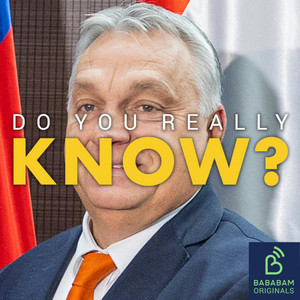
[Unmasking the Kleptocracy: Understanding the Rule of Thieves]-[What are the world’s biggest kleptocracies?]
📋 Summary
Understanding the Kleptocracy: A System Defined by Theft
At its core, a kleptocracy is a political system defined by the literal translation of its Greek roots: kleptos (theft) and kratos (power). It is a form of government characterized by systemic corruption and widespread money laundering, where those in positions of authority prioritize personal enrichment over the welfare of the state. As noted in the discussion, this phenomenon often acts as a corrosive force that drags down a country's standing in the Economist Intelligence Unit's Democracy Index.
The Mechanisms of Corruption
In a kleptocratic regime, the state’s resources are not managed for the public good; instead, they are systematically siphoned off. Leaders frequently divert public funds into clandestine tax havens, ensuring that the wealth remains hidden from public scrutiny. This illicit accumulation of capital primarily benefits the "families and inner circles" of the ruling elite. The economic foundation of such regimes is often heavily reliant on the exploitation of natural resources, such as "precious stones, oil or gas," which provide a steady stream of wealth that can be easily misappropriated by those at the top.
Historical and Regional Archetypes
While the term is frequently applied to countries in Africa and Eastern Europe, as well as former Soviet states, history provides several definitive examples of kleptocratic rule:
- Libya under Muammar Gaddafi: Following his 1969 coup, Gaddafi leveraged Libya's status as an OPEC member to seize control of vast financial resources. He utilized this national wealth to sustain an "opulent lifestyle" for himself and his family, while simultaneously funding militias and armed groups abroad. Crucially, the regime maintained its grip by banning the press and eliminating "independent oversight bodies," ensuring that government corruption remained entirely unchecked.
- Other Notable Examples: The podcast highlights leaders such as Hosni Mubarak in Egypt and Zini El-Abidin Ben Ali in Tunisia as figures whose regimes embodied the characteristics of kleptocracy.
- Contemporary European Concerns: Even within modern democratic frameworks, the specter of kleptocracy persists. In Hungary, Prime Minister Viktor Orban has faced accusations of leveraging "public contracts and EU funds" to systematically enrich his political allies, demonstrating that the threat is not confined to authoritarian states alone.
The Surprising Reality: Kleptocracy in the West
Perhaps the most provocative assertion made in the analysis is that kleptocracy is not exclusively a problem of the developing world. The journalist Casey Michelle, in his book American Kleptocracy, argues that the United States has seen a significant rise in "large-scale tax evasion." Michelle posits that the 2016 election of Donald Trump served as a catalyst that "significantly advanced the interests of billionaires." By characterizing this trend as "capitalism at its worst," Michelle suggests that kleptocracy is a versatile danger—a parasitic system that can adapt and thrive even within the most established democratic institutions.
Conclusion
Ultimately, a kleptocracy is more than just a corrupt government; it is a fundamental betrayal of the social contract. Whether through the blatant seizure of oil wealth in a dictatorship or the sophisticated tax avoidance strategies seen in modern Western economies, the result remains the same: the privatization of public power for private gain. Understanding this concept is essential for recognizing the subtle ways in which corruption degrades democratic integrity globally.
Deep Learning with ListenLeap


