Discussion keeps the world turning.
This is Roundtable.
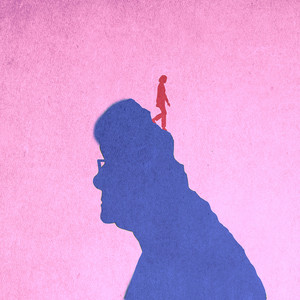
World Alzheimer's Day reminds us of the challenges faced by patients and their caregivers, what services truly make a difference for families affected by this disease and from sparkles of joy to unforgettable adventures, we're here to share the happiness that brightened our week.
Join us in Roundtable's happy place.
Coming to you live from Beijing, this is Roundtable.
I'm He Young. For today's program, I'm joined by Steve Hatherly and Yu Sun.
First on today's show, September 21st marks World Alzheimer's Day, a time to reflect on the challenges faced by those living with Alzheimer's and the dedication of their caregivers.
Caring for a loved one with the disease requires immense patience and support, but it could also be overwhelming.
How can respite care services offer relief to both patients and caregivers?
But before we get into this very much needed service for those in this situation, Yu Sun, could you help us to understand what is Alzheimer's and what are the key symptoms as we'll get into it?
Yes. So Alzheimer's disease is the most common type of dementia.
It is a progressive disease beginning with mild memory loss and possibly leading to a loss of the ability to carry on a conversation and respond to the environment.
Alzheimer's disease involves parts of the brain that control thought, memory, and language.
And also symptoms include persistent memory loss, difficulty concentrating, and thinking.
Also decreased decision -making and judgment abilities, as well as changes in mood and behavior.
So sometimes it can seriously affect a person's ability to carry out daily activities.
It can and there's two types that they talk about.
One is typical Alzheimer's disease.
That's with people after the age of 65, but there's also one called young onset Alzheimer's.
And the age of 65. It's important to know as much as we can about a disease like this, should knock on wood.
It never does happen in our own families, but should it ever happen the more we know the better.
So learning as much as we can today, I was watching videos this morning and I learned that it was caused, it is caused by the buildup of toxic proteins in the brain and that can lead to the shrinkage of brain structures that are important for memory, as Yu Sun mentioned, and also cognitive functions
as well. When we talk about cognitive functions, those are the mental processes that allow us to do things like think, or understand, or perform basic tasks.
Memory, learning, language, decision -making, reasoning, problem -solving, even orientation being aware of yourself and your surroundings.
All of those things are included in cognitive functions and Alzheimer's has a detrimental effect on all those things.
Right, and actually there's still another stage after all those things you guys mentioned, which is might be something more surprising for some people.
That is, people could gradually lose motor function, meaning that this person loses the ability to eat, to swallow, to stand up.
And to me, as someone who's learning about Alzheimer's, I think this is the part that really shocked me as I watched some interviews with carers whose loved ones have suffered from this disease.
And then it's not just about memory loss, it's not just about disoriented and sometimes maybe even getting lost or forgetting the burning stove, those kind of things.
But it's also this gradual loss of ability to conduct your daily lives and even these really basic functions, such as eating.
Yeah, absolutely. And speaking of eating, I was watching a couple of videos online from the Mayo Clinic, the hospital that were specifically about people who were living with Alzheimer's and one man was telling his story and he uses Siri and Alexa to remind him to do things.
So he uses them almost as an alarm clock.
So as he was doing his interview and he was in a very coherent state at that time, Alexa went off and said, You're a reminder to eat breakfast.
And they said, Oh, you have a reminder to eat?
And he said, Yeah, because sometimes I forget and then I don't know if I've eaten or not.
So he uses almost an alarm function to remind him of his daily, daily activities.
And also this disease seems to be really, of course, very difficult for the patient, him or herself.
But for the caregivers, this seems to be they might even be shouldering a bigger load of the burden, if I may say it that way, because if you're suffering from the disease, then you don't necessarily know what's going on.
But it's the caregivers beside you that is seeing everything.
And if it's a loved one, then, you know, emotionally, it's really difficult to accept and also to care for someone who doesn't really know what's going on.
And this could also mean that, you know, this person might forget about how to control the bowel movement, the bladder and those things.
And a few weeks ago, I remember sharing on the show in the happy place segment about the show I recently watched about the famous.
Well, he's become famous on social media.
Professor Hu Yong of the Journalism School of Peking University in China really stirring up a major discussion in this country about the care of Alzheimer's, given the fact that his mom has been living with it and for a few years.
And he's seen the deterioration of her situation is extremely sad.
And it's it's tough to hear those stories.
But it's important to hear those stories as well.
Like I said, in case we ever find ourselves in in a situation where it's close to us, what is the situation in China and perhaps in other parts of the world, too?
Yeah, of course. So first of all, we can see it is a huge issue here.
The China's Alzheimer's Disease Report in 2023, which is a report led by Renji Hospital affiliated with Shanghai Jiaotun University and also compiled by experts from multiple medical institutions.
This report reveals that the current number of Alzheimer's disease and other dementia cases in China is sixteen point ninety nine million over the past 30 years with accelerated aging of the population.
The incidence and morality rates of Alzheimer's disease have risen sharply, making it the fifth leading cause of death among residents in China.
Also, globally, it is also a huge issue, according to the International Alzheimer's Disease website, which is A L Z I N T R G.
Someone in the world develops dementia every three seconds.
There are over fifty five million people worldwide living with dementia in 2020.
And this number will almost double every 20 years, reaching seventy eight million in 2030 and maybe one hundred thirty nine million in 2050.
Those are a lot of big numbers, and the most cited number in China is fifteen million people in our country suffer from dementia.
So what are the known causes for this disease?
This is what's very, very, very, very difficult for doctors.
From the videos that I watched, it's a very common belief that Alzheimer's or dementia is simply a result of getting old.
And the reason for that correlation, the reason people make that correlation is because typically it happens after sixty five years old.
There is young onset Alzheimer's as well, as I mentioned.
So people make that natural connection.
Oh, it's just a natural part of aging.
It's not. It's not a natural part of aging.
And it's very, very difficult for doctors to lock down the causes of dementia.
And the other real challenge for doctors is because is that they can't really see the see the diagnosis of it until it's too late.
And the reason for that is because behavior, they only can go by behavior.
And when the behavior starts to starts to change within the patient, it's already in its late stages.
So that's that's a real challenge for doctors as well.
The thing is, you cannot actually see what is maybe the cause of one certain person's diagnosis because like you said, people can only tell after it is at the stage of getting Alzheimer's disease.
So, you know, the causes probably include a combination of age -related changes in the brain, along with genetic, environmental and lifestyle factors.
And the importance of any one of these factors in increasing or decreasing the risk of developing Alzheimer's may differ from person to person.
So that's why it has been the problem for so many years.
And scientists don't yet fully understand the cause of Alzheimer's disease in most people.
Yeah. What they do know is that it's a neurodegenerative condition, meaning any condition that causes the loss of function or the death of neurons.
And these types of diseases are dangerous because as adults, we don't grow many new neurons.
Examples of neurodegenerative conditions would be Parkinson's disease.
Multiple sclerosis, ALS would be another example of this.
And these diseases are generally fatal.
The life expectancy after Alzheimer's disease diagnosis is about four to eight years.
So once it is diagnosed, as we learned, it's tough for doctors to find it before it's too late, the lifespan afterwards is not very long.
So I was thinking that's why maybe most of articles that are related to Alzheimer's disease are all focusing on how to prevent it but not to cure it.
But because this is just a problem that yet to be understood.
Yeah. And I looked at the research in recent years on Alzheimer's disease.
And it's interesting that apparently with the advancement of technology, the researchers have managed to identify more than a couple of genes that are likely to develop Alzheimer's.
But the problem is, is a combination of these genetic causes that leads to the disease.
So I guess we're on the way to finding out, but we're certainly not there yet.
Still no clear answers as of yet.
But there have been some research developments of the diseases.
Something going on here in China, too.
Yeah. We can see, actually, of course, we don't have that kind of cure.
For Alzheimer's disease.
But at least nowadays, we can see some medicines that is assisting to decrease the speed of making the Alzheimer's worse.
So Lacrimap is the I think the medicine for targeting and removes the beta amyloid from the brain and beta amyloid is an amino acid that plays a central role in Alzheimer's.
And for patients with early Alzheimer's, the therapy helps reduce cognitive and functional decline and allows them to have more time to participate in daily life and live independently and live independently.
I'm sorry. It was approved in the US in January last year and in China this January.
So at least we are seeing some medicines coming out for supporting and helping this group.
In China, who's receiving?
You said it came out in January of this year in China.
Who's receiving the treatment so far?
It was prescribed on the Chinese mainland for the first time at Shanghai Hwa Shan Hospital, affiliated with Fudan University in June 2024.
And also the first batch of six patients aged between 55 and 75 and diagnosed with early stage Alzheimer's at this hospital will receive an 18 month cycle of treatment.
And they will receive an 18 month cycle of treatment with infusion of the drug twice a month.
And we're seeing that well, the treatment is not available for everyone.
And we know that there's such a huge number of people suffering from this disease in China and around the world.
Could you paint the picture?
Also provide some of the figures regarding what it's like to deal with this in a family.
Yeah, I mean, it's a huge burden to the family and the caregivers as well.
There's a website called alzint .org and the total estimated worldwide cost of dementia is very high, 818 billion US dollars in 2015.
That represented a 1 .09 percent of global GDP at the time.
The annual global cost of dementia, they're expecting it to go up to 2 .8 trillion by the year 2030.
So to put that in a context, if you can imagine global dementia as a country, it would be the 14th largest economy in the world.
That's why, you know, when you were talking about it is the issue for both patients and caregivers at the beginning of this discussion, I was trying to say, yes, it's not only about the patients because the caregivers are the one who need to take care of them around the clock, basically.
And maybe sometimes they need to face some of the issues of, you know, being isolated with this patient.
And that is kind of a huge burden on both financially also emotionally.
Well, emotionally and I can speak to this on a personal level, not within my family but within my best friend's family.
He recently lost his mother to dementia.
And that was a big decision for him and for his father to make, because the mom, his mom was at home and she was suffering and but she wanted to be there.
And my friend, he works and he has his own family.
He couldn't be at the home.
He couldn't be at the house to take care of her every single day.
And also his dad is also not a young man.
So for him to have to be alone with her and take care of her was very, very difficult and challenging for him.
And when they spoke with her about potentially putting her in a place in a home where she could have the proper care, she resisted.
She didn't want to do it.
So that's such a hard conversation to have, right, because the family knew that was the best place for her to be so she could get the best care possible.
But of course, you know, from her point of view, she wanted to be at home.
Ultimately, she gave in and she said, OK, I'll go there.
Eventually her time came.
But that was the right decision for the family at the time.
But the point is, is that, yeah, it's expensive.
The care is expensive.
But the emotional toll is even more expensive, you could say.
And with the anecdotes that I shared about coming from Professor Hu Yong paints a very similar trajectory as to what Steve, you just shared.
Professor Hu talked about in his well -known, well -circulated WeChat posts, as well as in the TV interviews, that it's really tough.
Like, for some time, like his family decided to put plastic wraps all over the bed so that the mom, his mother, could eat in bed.
But because she's going to spill over, she's having trouble to to to properly eat.
And then, you know, the stuff is going to be all over the place and it's going to be a mess.
And he said his his home smelled smelt of urine because gradually mom lost the control of controlling the bladder.
And therefore she had to wear diapers and she didn't really know what was going on and gradually.
Yeah. And see, like, when we talk about cost, when is the family that's shouldering the emotional and care cost?
Maybe you're not spending that much out of the pocket.
But as people who are taking up this hugely important essential responsibility of care.
And then once the family can't do it anymore, they outsource it to a home or whatnot.
And then that's when you have to spend the dollars and the yuan.
And that becomes a huge financial burden for the family.
Well, it's a really difficult situation.
And in China, we're talking about and this is something new about respite care.
Sorry, respite care that could give the carers a little bit of a breather room.
And how does that work?
So first of all, it is offering these kind of services to families that has a patient of Alzheimer's disease and these.
So there are higher professional caregivers to your family, to your home, and then give them some care, which means the one who has been taking care of this patient can take a break.
And that is why it is called respite care.
And also they can they are offering these kind of care services for the caregiver so that they can organize support activities from family members of Alzheimer's patients.
And these family members can exchange their experiences of taking care of patients, also communicating with and comforting each other.
Also, doctors can encourage them to doctors are encouraging them to bring patients to participate and community workers guide them to do some simple cognitive activation training and exercises.
If the patients feel uncomfortable and make maybe something troublesome, volunteers and other caregivers will come to help.
So I think this is a very important part because, you know, first of all, expressing your inner thoughts is very crucial at that stage.
And second, sharing experiences with others who have the similar experiences helps you feel less isolated.
And that is a big part in, I think, emotional help for these caregivers.
Yeah, emotional help and also technical support as well.
And maybe that's not the right term.
But what I mean is learning how from professionals to properly take care of their family members.
Because I think when this happens to families, it's very unexpected.
It's very quick, as was the case with my friend.
It came out of nowhere.
And then all of a sudden, everyone is kind of asking, what do we do?
What literally what do we do in this kind of situation?
There's something wonderful they did in Beijing, too.
The name of the district is at the Fengtai district here in Beijing.
They launched a pilot door to door respite care service for caregivers of patients with disabilities and dementia.
They did that back in 2018 and public information of the district government that showed that the free pilot.
It was free, by the way.
The care service was offered from October 2018 for two years to October 2020.
They visited for they visited each family four days a month and they offered a total of one thousand one hundred and ten people over 17 ,800 times of service.
What a wonderful, wonderful thing to do.
And that would be helpful on so many different levels, not only to the patients themselves, but as I just mentioned, to the caregivers who offering them that support.
Absolutely. And also, well, I suppose the receivers, they're really lucky.
To participate and receive this free service.
But if you look at the bigger picture for most families, they'll need to make this decision and how to come up with a with the schedule, a program of helping and supporting the loved one as well as if this person can get a little bit of breather room.
And when you look at the figures, if this free service were to be charged, it costs at least two hundred and twenty yuan per day per person.
And that's above thirty one US dollars.
But this is already very unaffordable for many families in China.
Yep, that's true. I mean, it sounds like a reasonable price because, you know, of course.
Because you said, Steve, it was a pilot program back then and now it is becoming an official service.
So people need to pay that two hundred and twenty yuan for these kind of services.
And but if you want that service like weekly, daily, even monthly, it can become a burden for some of the families, especially when, you know, a lot of these families, they are the old people taking care of another old people.
I mean, that is why it is still a financial burden for a lot of families that need these kind of services.
But another point that I would like to mention is that this kind of service, at least they are telling people and promoting the idea of we need to offer support for Alzheimer's disease patients and their caregivers.
Because, you know, first of all, I think it is very essential to understand this disease and only with a thorough understanding can we develop at least some extent of empathy for those affected and provide support.
And also, at least ensuring we don't hold any biases against them when we see these kind of patients or when we are meeting with caregivers because they are actually paying a lot on this.
Yeah. And for the respite care options available out there, and one of the reasons why they're so important, this kind of surprised me a little bit.
There was this observation that, well, for Alzheimer's patients, they rarely leave the home.
And because of, you know, what you shouldn't you just mentioned, sometimes they don't know what kind of attitude they encounter with strangers.
And and also the family members don't want to be, quote unquote, embarrassed for themselves as well as for the patient.
And therefore they're confined within the home and therefore with these respite care services out there, if they can normalize this a little bit for people and give it a chance so that the patients and their caregivers can come out of the house from time to time, that would do people good.
And in a world where Alzheimer's continues to impact millions of lives supporting caregivers is just as vital as treating the disease itself by improving access to respite care and other essential services.
We not only ease the burden on families, but also ensure that patients receive the compassionate care that they very much deserve.
And it just makes me feel that I need to work harder today to build up my savings for the uncertainty of tomorrow.