
[The Divine Imagination of William Blake: A Visionary Artist's Legacy]-[The Divine Imagination of William Blake (Advanced Program)]
📋 Summary
The Divine Imagination of William Blake
William Blake (1757–1827) stands as one of history's most distinct artistic figures—a poet and painter whose life was defined by a unique intersection of religious fervor and creative independence. While largely unrecognized during his lifetime, his work has since become celebrated for its profound beauty and visionary power.
The Visionary Beginnings
Born in London to a family of modest means, Blake displayed an early aptitude for art. His father, recognizing his son's interests, supported his training as an engraver. This craft, which involved cutting images into metal or wood to be colored with wet paint, became the foundation of his artistic expression. However, Blake’s childhood was marked by experiences that set him apart from his peers. From a young age, he claimed to see angels in the branches of trees. While his father dismissed these claims as lies, threatening to punish him, Blake’s mother provided support, and Blake himself described these visions as being as vivid as thoughts. Whether these were supernatural encounters or deep manifestations of his imagination, they became the bedrock of his spiritual and artistic life.
Artistic Independence and Poverty
Blake’s refusal to conform to societal expectations often left him in a state of poverty. He possessed a fierce commitment to his own creative vision, which frequently clashed with the demands of his patrons. A notable incident involved Dr. John Trusler, who commissioned Blake to work under specific directions. Blake, unable to suppress his internal creative impulse, wrote to Trusler explaining that he could not follow another’s path, stating, "I will not follow the path of another, however wonderful that path may be." This rejection of commercial constraints meant that Blake often struggled to find work, as he prioritized his artistic integrity over financial security.
The Creation of "The Tiger"
Blake’s most enduring legacy is perhaps his poetry, specifically the collection Songs of Innocence and Experience. His poem "The Tiger" perfectly encapsulates his fascination with the act of creation. Using metaphors of forging—a process requiring immense heat and strength—Blake contemplates the origin of the tiger’s "fearful symmetry." By questioning, "Did he who made the lamb make thee?", Blake explores the complexity of a divine creator capable of producing both the gentle and the terrifying. This work highlights his ability to turn philosophical and religious inquiry into visceral, haunting imagery.
A Lasting Legacy of Faith and Creativity
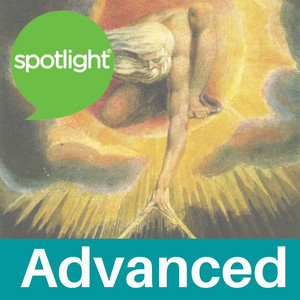
Throughout his life, Blake maintained a unique version of Christian belief, often painting scenes like the Ancient of Days, which depicted a God-like figure using a gold compass to design the universe from nothingness. While his contemporaries often found his work and beliefs "strange," history has vindicated his perspective. Blake saw his faith and creativity as one united thing; his faith guided his brush, and his art gave shape to his spiritual visions. Today, William Blake is remembered not just as a creator of art, but as a man who lived entirely for his convictions, proving that the most powerful art often comes from an unwavering commitment to one's own inner world.

Deep Learning with ListenLeap


