This message comes from an PR sponsor, American Express.
Take your business further with the smart and flexible Amex Business Gold card.
It's packed with benefits that help unlock more value from your business purchases.
Learn more at americanexpress.com slash business gold card.
Hey, a heads up to our listeners.
In today's episode, there's going to be some vulgar language.
This is Planet Money from NPR.
This is the final round, y'all!
Red, the battle begins!
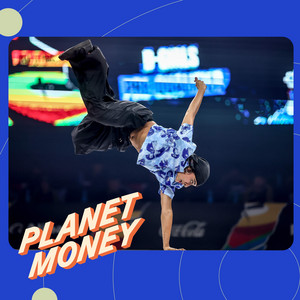
So, there was this epic break dancing battle that went down in 2008.
It is the finals of the Red Bull Championships.
Starts off with this B-boy from Japan called Taisuke.
Taisuke is throwing down this really fancy footwork.
It looks like he's dancing on the air.
So now he's doing a little bit of top rock.
Nice, nice on the music.
This is Niels Ravitsky.
He's this legendary B-boy who goes by the name of the storm.
He was one of the judges at this competition and he's walking us through a video of it.
Great control here, into a chaffries, very solid solo.
After Taisuke, it's the other guy's turn.
His name is Wink. He's from South Korea.
And Sky has a totally different style.
Wink's super stylish with his sweeps.
Wink scrunches up his body into this kind of ball and starts spinning across the stage.
Yeah, he looks like one of those turtle cells from Mario Kart.
Here I go! This is a move that he came up with called Wink Mills.
But he's only doing two rounds because he's tired.
Break dancing or breaking as people in the scene call it.
It's known for these big, acrobatic power moves.
But Storm says, at the elite level, the game is really about creativity.
About putting those power moves together in a way that surprises and delights people.
If you want me to put it in a percentage or something like that, it definitely is more of an art form than it is a sport.
This artistic side of breaking, how you tell a story with your body, that is what Storm loves.
What he hates is what's about to happen next.
Man, I would not want to be a judge in this.
I would not want to be a judge in this.
So, after a couple rounds going back and forth, the battle is finally over.
Both the dancers, they're panting, and it's time for the judges to crown the winner.
Two, one! All at once, each judge holds up a sign with the name of one of the dancers.
It's Wing, the guy from South Korea who's doing all those wingmills.
He wins the vote three to two.
Storm has judged hundreds of breaking contests over the years.
He says, someone wants to ask him, like, what are the criteria here?
What are these judges actually judging?
And then I had to tell him, I was like, look, it's just go either side.
There is nothing. He was like, what?
Yeah, Storm's like, you just point to one side or the other.
That is the traditional way you judge a breaking competition.
There are no official criteria.
Nobody's asking, why, who, what made you decide?
I mean, there was nothing transparent.
No, not at all. It's just like these guys won, these guys lost.
That's it. This informal pointing system, it has always bothered Storm.
Because if you don't know why someone won, how do you know it's fair?
And he wasn't the only one asking those questions.
Several years ago, Storm was actually approached by a bunch of people working with the Olympics.
They wanted to turn breaking into an Olympic sport.
But in order for that to happen, they needed a better way to judge these battles.
Something more clear, more objective.
And Storm, well, he had some ideas.
Hello and welcome to Planet Money.
I'm Jeff Quo. And I'm Alexi Horowitz-Gazzy.
For most of the things that people think of as sports, the winner is kind of obvious.
It's the team that scores the most goals, or the person who crosses the finish line first.
But then, you've got all these sports in the Olympics, but the answer is a little more complicated.
Sports like gymnastics and figure skating.
But also, more recently, skateboarding and surfing.
And, new this year, breaking.
Today on the show, Storm sets out to transform the way that breaking is judged without breaking the soul of the sport itself.
This message comes from Capital One.
Banking with Capital One helps you keep more money in your wallet with no fees or minimums on checking accounts.
What's in your wallet? Terms apply.
See CapitalOne.com slash bank for details.
Capital One NA, member FDIC.
This message comes from NPR sponsor Oracle Cloud Infrastructure.
AI may be the most important new computer technology ever, but AI needs a lot of processing speed, and that gets expensive fast.
Upgrade to the next generation of the cloud.
Oracle Cloud Infrastructure, or OCI.
OCI is the single platform for your infrastructure, database, application development, and AI needs.
Do more and spend less, like Uber, 8x8, and Databricks Mosaic.
Take a free test drive of OCI at Oracle.com slash planet.
Now, at the time Storm was approached by the Olympics, he'd actually been thinking for decades about a better way to judge breaking.
And there was one person who he'd always bound his ideas off of, a guy named Kevin Gope, also known as DJ Renegade.
When did you know that you two were going to be like ideological soulmates?
It just happens. How do you know when you're fully loved with a girl or whatever, right?
You don't know. One day you're hanging out, the next day you're like, I can't breathe when you're not around.
Do you know? Storm and Renegade, they are legit celebrities in the world of breaking.
They're both in their 50s now.
They sort of look like Costco dads.
But you know, like Costco dads with swag.
Storm is from Germany. Renegade grew up in the UK.
His family's from Guyana.
The two of them go way back.
They met at a hip hop jam in Sweden in the 1990s.
And back then, the scene was still pretty informal.
Breaking had started out as a street dance in New York.
And a lot of people still saw it as just another fad.
But when Storm and Renegade looked at breaking, they saw an art form.
They would talk for hours and hours about technique, about philosophy, about innovation, and how to get breaking the respect it deserved.
You know, like I was always working towards the goal that breaking would be more accepted generally.
So that wherever I go, when I tell people that I'm a breaker, I'm a breaker, you know, that they wouldn't look at me in a strange way.
And like, what do you mean?
You know? Storm and Renegade realized that one way to really develop the scene was to focus on the battles.
Battling is a big part of breaking's culture, two dancers or two crews going head to head.
Breaking at its core, its essence, its one-upmanship, its a value system, and its based on the ego.
That competitive spirit is one of the driving forces behind breaking's evolution.
These contests were where breakers would debut their freshest moves, you know, push the art form forward.
But the judging was not always up to par.
I've seen judges turn up to events, right?
And before the event starts, they tell you who's going to win.
What? Bro, it's madness out here.
You've no idea. Yeah, there wasn't really any framework for judging.
So when breakers would lose a competition, they wouldn't really get any feedback about how they could improve.
But Storm and Renegade were thinking, if you could make the judging more professional, more objective, then you could use these contests to supercharge the growth of breaking.
So in 2013, they joined forces with some of the other leading forces.