Discussion keeps the world's turning.
This is Roundtable. You're listening to Roundtable with myself, how young I'm joined by Steve Hatherley and you should in the studio.
Coming up, artificial intelligence or AI is being added to various processes across industries from creative ventures to manufacturing.
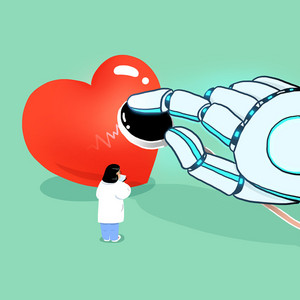
Healthcare is no exception as AI therapy enters the space.
Chatbot, therapists, and AI-driven medical care are gaining popularity.
But can they compete with the real thing?
How do human doctors view these AI tools?
Are they seen as valuable assistance or just a brief distraction in the field?
And our Special Sigma Motivational Monday coming our way, we'll give you that adrenaline shot for the start of the week.
Our podcast listeners can find us at Roundtable China on Apple Podcast.
If you have questions that you like us to answer on social issues, business, technology, or whatever moves your spirit, you can send those our way.
There's a place to do it.
EZEFAM Roundtable at FoxMail.com.
Emails are fine, but voice memos are always better and we would have really appreciate you to include your name and region of residence in that voice memo.
So we know a little bit more about you in answering your questions.
Now on Roundtable, as we move on to the next topic of discussion today.
The launch of the likes of chat GPT and VINCINY YEN has quickly transformed how we interact with artificial intelligence, making conversations with chat bots feel like second nature, whether it be for customer service, personal assistance, or entertainment.
Now millions of people are turning to AI for one of the most personal tasks therapy.
While AI offers new opportunities for precision and efficiency, it also introduces new challenges for mental health professionals.
Experts highlight that as AI, natural language processing and supportive policies advance the field of psychological counseling, maybe more effective, but it also requires doctors to navigate these evolving technologies and their implications.
First of all, what is the definition of AI therapist and how does it work?
So first of all, we can see that based on the products or the applications currently available in the market, AI psychological services are mainly focused on specific areas such as emotion management, stress relief, psychological assessment, and self-help therapy.
So depending on the scenarios, it could be a diagnostic assistant robot in a hospital helping patients to understand their condition in advance.
Or it could also be a chat bot that directly communicates with patients to provide assistance and so on.
So it is quite normal that we can see on the internet that you can just search online and then an AI therapy will come up and talk to you and you can directly get some information from it.
Yeah, through a chat bot, right?
And a lot of these apps will have a free chat bot service.
Maybe we can talk about a couple of those apps in a little bit, but it doesn't seem so counterintuitive, doesn't it?
AI therapist. What? So I'm having emotional problems or I have some things that are weighing me down emotionally.
I need to talk to someone, maybe not.
Maybe just a chat bot is good enough.
That was my kind of initial reaction when I heard about this topic, it was like this.
What? No, no, really? That doesn't seem right.
But I'll share a story a little bit later about why my opinion changed and why my perspective changed.
But AI psychological services are now really a helpful and powerful supplement to traditional counseling.
They offer really accessible mental health services to more and more and more people.
And accessibility is one of the biggest advantages.
Yes, because it can provide 24, 7 continuous service, right?
Handle more complex mental health issues when you're just inputting some information for it and reach a wider audience since you can get it as basically anywhere in the corner of the world.
As long as you have internet.
So I would argue. Fair point, fair point.
Yeah, and I would argue that the internet should be treated as a utility instead of a special something that you have to pay extra to get.
But aside from all those things, we've found that there are some really great examples of how AI has our chat bots as such have already helped people.
And one of the examples is the tree hole rescue team.
It's like whispering to a tree hole and your secrets are safe there.
Is that how it works? Oh, that's the idea behind it.
Yeah, so basically this is a kind of resecuing action activity.
And in fact, the integration of AI technology into psychological service is not new by this team, actually.
This is a Chinese AI expert founded the campaign or action.
And this is a charity organization.
It uses artificial intelligence and knowledge graph technology to analyze specific social network data.
And currently it's more or mainly on Sina Weibo, the Chinese blog platform.
Identifies words related to suicide methods and timing from Weibo posts to detect individuals at high risk of suicide.
And according to a report by Worker Staley, this action or this activity has prevented over 6,000 suicide attempts and saved at least 3,000 lives over the past five years.
Well, that's wonderful.
So the algorithm picks up on certain language.
And that's how it recognizes a potential problem.
Yeah. How do you feel about this, Steve, as an international person, about using analyzing social media fees to detect risk and therefore to come up with intervention to specific individuals?
When you explain it like that, when you're talking about intervention to help save someone's life, then how can you say it's invasive?
You know, that's the counter argument, right?
It's analyzing data. It's doing AI things.
It's doing all the things that AI typically does, right?
When we talk about marketing and consumer privacy rights and things like this.
But in this case, it's to save people's lives.
And those are 6,000 suicide attempts that were foiled because of this intervention.
So it's very difficult to say this isn't a wonderful thing.
And also I wonder whether you're giving up your own information to this or I mean, so far I haven't seen a lot of report or details regarding how exactly the program runs.
But I think this is really interesting.
And you can see the obvious benefits of it.
But how to make it happen, people might have some disputes in the different ways and going about it.
Like I said before, there's lots of apps available.
If you go to your app store on, pardon me, on your phone right now, you'll find different applications that have millions of downloads of peace.
And I've seen these advertisements for these applications before BetterHelp, I think is the name of one of them.
If not, that's a different company.
But anyway, there's lots of apps.
And I thought, huh, you know, I don't know if this will work or not.
And then I read this story from NPR National Public Radio in the United States.
And this is the story I was talking about a moment ago.
It has completely changed my opinion.
This woman's name was Shakira Ali.
And she's from America.
And she was a baker. And she was a single mom who supported her daughter and her mother as well.
She got in a horrible car accident that didn't allow her to speak properly and didn't allow her to walk properly.
So as a result, she was having trouble supporting her family.
And as a result of that, she was suffering from deep depression.
But she couldn't get to a therapist, right?
To physically get in a car and go meet a therapist.
Not only that, she couldn't afford one as well because of all of her medical bills.
She used an online application that allowed for free interaction with the chatbot.
Now, a lot of these apps will have in-app purchases available or in-app payments.
For example, if you want to have tele therapy with a real person online, you can do that.
But she just used the free chatbot.
And she said it really, really, really helped her out.
After I read that story, my opinion completely changed.
These applications are wonderful.
And also, I know that there is another quite popular platform named character.ai.
It is a platform where anyone can create chatbots based on fictional or real people, which means you can maybe talk to the celebrity that you like that created on this platform.
But anyway, until January 24, according to this website, more than 78 million messages, including 18 million, sings last November, have been shared with the bot since it was created by a user called Blaseman 98, just over a year ago.
So that's a lot of people using that service.
So that's more for maybe friendship or to combat loneliness or maybe including some of these mental health needs as well.
But I suppose it's easier to persuade me a certified leadite on the show to be on board with helping you with the lack of friendship or just to have an AI friend to chat with or a group of AI friends to chat with.
That I think is easier for me to support.
But when it comes to mental health, there's still so much we don't know about this area of medicine.
And with some of the existing, I don't know if less severe is the right word to use here.
Some of the mental health issues people need support with is maybe nice words, validation, and also being there to support you.
And I think that maybe AI can do.
But with more complicated mental health issues, let's say depression, bipolar, and all kinds of anxieties.
And so much more, I'm a little bit more suspicious about like how can this help you in an effective way?
It's not perfect. It's not a perfect system.
You know, I think we talked about on the show recently, McDonald's had shut down their AI ordering system and one of the reasons was if the customer was ordering something different from what was on the menu, the AI had trouble processing that.
Now that's for ordering French fries and a cheeseburger.
Imagine if you're trying to explain extremely complex human emotions and how much pain you're in emotionally to an algorithm, sometimes that won't be able to understand it.
And that's one of the problems with AI therapists is that the complexities of the issues are sometimes beyond its capability.
And that's why they say, hey, I will never replace real human therapists, but as an assistant, they are a wonderful tool.
Yes, and also I think when you are speaking of how can we deal with these bipolar or others severe symptoms, we can actually, I think that is based on the idea of, you know, AI replacing the real human doctor.
So when we are talking about the application of AI therapists or psychologists, it is actually trying to be the supplement tool for the doctors right now for this, I think the whole shortage of psychologists worldwide and things we've talked about it before.
And so in this way, you know, this is actually helping more people when they maybe have a little bit of issue on their mind.
And I think I have an example of myself because I used to listen to some, you know, just affirmation when I have a huge stress or pressure on maybe work or life.
But that actually works.
Even by just listening to some affirmation, it actually works.
So maybe even some talking to chatbots, it can be helpful for a lot of people.
Yeah, that I can see, but also I like to highlight some of the potential risks of AI therapists or, you know, getting involved with mental health because when you look at mental health, it requires, and therapy, it requires careful handling of sensitive personal issues, personal information where the risk of misinterpretation or insensitivity can be significantly
impacting the patient, so to speak.
And also, yeah, there's just so much complexity in interpreting and interacting with the other person who's coming to seek for help even through a nap that kind of thing.
So, and privacy concerns, of course, you know, with anything, technology touches, I think that's something we think about.
Privacy concerns also responding in the correct way.
Yeah, absolutely. I mean, you can, one of the things that I was reading about that expert therapists were saying as a downside to AI therapists is that if someone is trying therapy for the first time, and there's a lot of stigma around the world with even going to therapy, I think, right?
Oh, you must be crazy. Well, that's not true at all.
And in my own personal opinion, we all need a little therapy from time to time.
But if someone's trying out therapy for the very first time, and the AI doesn't respond in a way that's helpful, well, this could not only put off therapy for that person forever, but it could also put off sharing deep emotional feelings for a long time as well, because they thought, oh, I didn't want to do this anyway, then I tried it and it doesn't work.
See, I was right and I'm not going to do that again.
Yeah. And also compared to, you know, human doctors, you know, the authentic bond that you can actually create and sympathetic response between client and counselor or doctors are irreplaceable in some way, you know, when you are talking to a real person, the kind of, you know, resonance that you created.
And I saw a clinical psychologist, Frank Talisad, the person benefits primarily from feeling understood, feeling seen and feeling psychologically held.
Feeling validated. Yes.
Yeah. And that sort of on a side note, I like to highlight that even when you're going to see a real human psychologist or a therapist, the first time might not work.
And that's totally normal.
Actually, even with therapists, there could be a, whether you click or not issue as well.
And finding one that truly understands you and vibe with you, that might take a couple of therapists.
But I suppose initially, especially if let's say, if you feel severely depressed and there's a time limit actually for you to sort of judge this that is apparently something along the lines of being severely unhappy for more than two weeks, then this is a red flag.
And possibly going to see a medical professional is a good thing to do.
But after the diagnosis, or if you feel this is not right, then actually going to see another one, this is absolutely normal as well.
Can I just say that? And I do agree with you guys that replacing the human doctor or the human therapist is really not what we're talking about here.
It's just a tool. It's a helpful tool.
Like that story from NPR, where that woman couldn't get out of the house and that was her only option at the time, then that proved to be a very useful tool for her.
But yeah, I agree. I don't think it's better than speaking to an actual person.
And certainly, a lot of the times it's that there is a gap where there is no one providing the service that you absolutely need.
And that's when using AI.
To fill that gap, sounds pretty justified.
But also, before we go on to our next segment of the show, I'll ask you guys to crystal well a little bit.
What do you see as maybe AI therapists roll in the future of this whole medical, well, mental health medical care experience?
If the apps are already available now and they're successful, and obviously I think they are because millions and millions of downloads, then I think the service will only get better in the future.
The algorithms will only get smarter in the way that they respond, which means that they'll only become more helpful.
So if these apps are finding success now and the quality of the service improves, then I think that this is going to be a pretty big industry in the future.
And also, if security and personal information, personal privacy can be well protected, you know, this is something that we, or the patients, or basically everyone are concerning about.
I'd still like to know more about what's inside the black box.
Because AI itself is confusing enough for most people, and then having AI to sort of open up your mind to technology, to come in, to offer consolation or comfort, or some kind of guidance.
I think that's a big ask.
So personally, I would still like to know more about this, more transparency in this area, just so that you get, you know, the skeptics out there as well too.
And that's not a bad thing either.
More information, it makes people feel more comfortable.
More laws and regulations to make, or to guarantee the all of the information and privacy to be protected.
Right, so you think that AI can be more of a, a, assistant to the doctors, instead of creating more distractions and trouble, as we've talked about on the previous topic, they're busy enough.
So I absolutely do think they can be a strong assistant.
What about you, you should?
Yes, of course, I think it can be a good helper, I mean, helper for traditional psychologists.
All right, well, okay, playing the devil's advocate a little bit.
I think with these new technologies, to get the doctors up to speed with them, sometimes requires a little bit of training, if not a lot of getting used to as well.
And we'll keep you updated and see what happens late us in smart medicine, in AI therapists, and how technology can be of aid to our busy doctors.
Coming up next, Motivational Monday.
Motivational Monday. Motivational Monday.
Motivational Monday. So you should, what do you have for us?
So my motivational quote actually comes from a TV show that I've been watching recently.
It's called The Bear. It is a series that set in a family restaurant and the pacing is really tight and visually appealing.
I loved it and I recommend you guys to watch it.
But anyway, what I want to share is actually something the main character's uncle said when he's niece asked him if he was to have kids all over again, what would he do?
He said he would want them to be not so afraid of things.
He'd protect them less.
He wants them to have more fun, make more mistakes, and get into more trouble.
Yeah. So I think what he said really touched me and kept me thinking, you know, sometimes I feel like our lives are so tightly scheduled.
You know, society's expectations make us feel like we should be doing certain specific things at certain age or certain time, like choosing a good majoring school or finding a good job after a graduation.
And you need to do the right thing and so on.
So as if not to be a good teacher, you know, as if not doing these things properly will make our lives turn out badly.
But sometimes, you know, life can also be an adventure and part of that adventure is being brave enough to make a lot of mistakes.
Sometimes we shy away from challenges because we are afraid of failing and getting into trouble.
But maybe the most incredible growth happens when we step out of our comfort zone and take those risks.
So allow yourself to maybe explore and to push boundaries to occasionally stumble is something that we need to do.
I think I don't know if I like that word failure all the time because it just has such a negative connotation, right?
I've talked about this many times before, but my opinion on failing is if you don't try that's failure, if you try and you're not successful, well then there's lots to be learned there.
You can try again, but if you never ever try, that's the real failure in my opinion.
Each mistake can be a stepping stone on the path to success.
Exactly. Yes, exactly.
And falling off the bike is part of learning how to ride a bike.
Exactly. Nobody knows how to ride a bike the first time they try, right?
Yes. And just as falling off a bike, it teaches us how to balance better, experiencing setbacks, helps us grow and improve and embracing.
Should I still say failure or these mischiefs or hiccups?
Missteps. Missteps is a step in the journey that allows us to develop resilience and gain valuable insights, but the problem or the difficult part is is only in hindsight, you realize, huh, what didn't kill me, did make me stronger?
In the moment though, in the moment where that misstep is happening, that's hard to feel that, that positive attitude, like, oh, this is okay, it's just a misstep on my path.
Yeah. You need that time to reflect, don't you?
Yeah. But if you can have that wisdom at that time, then you can still feel good about it when it's happening too.
Yes. But that's easier said than done.
Yeah, and maybe this can offer a little bit of inspiration and motivation to our listeners.
And I have maybe a quote that can sort of go nicely right as a supplement to do what you shouldn't just shared.
It just sort of made me have this light bulb moment this morning when I was writing the subway.
A lot of people don't play to win.
They play not to lose. So it kind of shows how the fear of failure or not doing well can lead to a defensive mindset.
Instead of striving for success, people may play it safe, aiming merely to avoid mistakes rather than aiming for victory or doing something big.
And this approach can limit our potential and prevent them from achieving our goals.
And I feel like, I don't know if this is anything wrong, I don't know if this is anything to do with age.
No, age is just an excuse here.
But why, what were you going to say?
I feel as I grow a little bit older, I tend to want to play it safe.
Yeah, fear of trying new things.
Fear of it not going well.
And then so what you guys just said really did offer as something to think about.
Yeah, for sure. And Steve, what do you have for us and you only have like 40 seconds?
Mike Tyson Boxer said, you everybody has a plan until you get punched in the face.
Which means if you're, it sounds like a violent inspiration, but it's not what I take away from that is if you have a plan and it doesn't work perfectly the first time, adjust the plan and try again.
It's not an excuse to give up just because it didn't go well the first time.
Wonderful. He said, and that's our motivational Monday offer.
Did I get that in in 40 seconds?
Well done. You did so well.
And that brings us to the end of today's round table.
Thank you so much. You should.
And Steve Hatherley for joining the discussion.
I'm Hayoung. You can always find us on Apple Podcasts at roundtablechina.
We'll see you next time.