
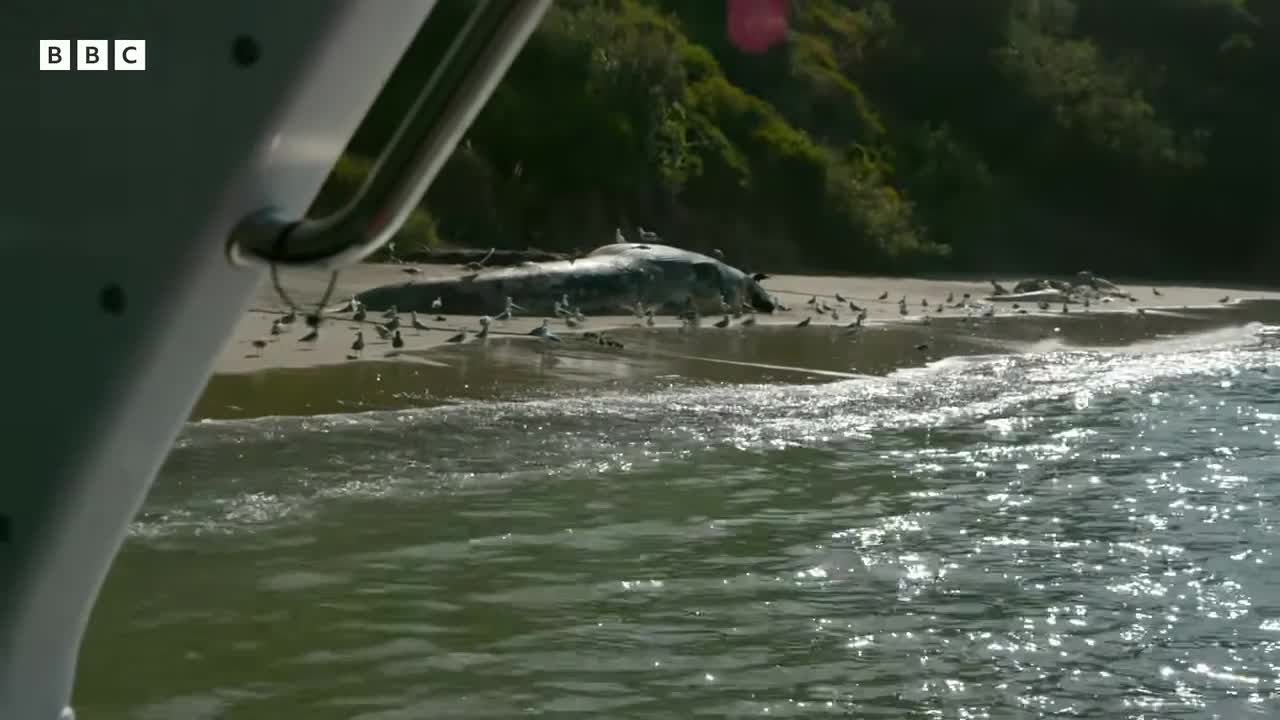
[The Silent Tragedy: Investigating the Fatal Collision of a Fin Whale]-[Why Did This Whale Turn up Dead in San Francisco? | BBC Earth]
📋 Summary
The Necropsy of a Fin Whale: Uncovering a Hidden Tragedy
When a deceased whale is discovered three hours north of San Francisco, a specialized team, including Joy, converges on an uninhabited island to conduct a critical investigation. The process is not merely a disposal of remains; it is a vital scientific mission to decode the mystery of the whale's death. As the team notes, "If we don't know why it died, we can't do anything about it," highlighting the urgency of identifying the "warning signs" that could prevent the loss of an entire species.
The Crime Scene Investigation
The team approaches the carcass as a "crime scene," prioritizing the determination of the cause of death. This particular subject is a young female Fin whale, a member of an "endangered species." The emotional weight of the discovery is profound, as the team acknowledges the potential life and offspring this whale would have contributed to the population. The necropsy, performed under the "hot sun," is a grueling but necessary process to gather evidence.
Evidence of a Fatal Collision
Joy’s investigation begins with a suspicion of a massive impact. Upon examining the internal tissues, she identifies abnormalities that deviate from normal anatomy. Specifically, she notes that the layer beneath the muscle, which should be "white-ish yellow," shows clear evidence of a "bruise." This discoloration is significant because "bruising would indicate that it was bleeding," and crucially, "bleeding indicates it was alive when it was struck."
Further inspection reveals "rust from the boat" embedded in the tissue, identifying the "site of the main impact." This evidence serves as a grim confirmation that the whale suffered a violent collision while still alive.
The Physical Toll: A Spine Snapped in Half
As the team digs deeper to expose the spine, they encounter evidence of catastrophic structural damage. The spine has been "pushed out of position so much so that it's up against the rib," rather than remaining in the center of the whale. Joy remarks, "This is crazy," describing the "massive amount of pressure" required to cause such a deformation. The evidence suggests that the "whale was really snapped in half," a reality that challenges the perception that whales are impervious to such physical destruction.
Reflections on Human Impact
The investigation leads to a somber conclusion regarding the interaction between nature and maritime industry. Joy observes that "there's nothing bigger than a whale in nature," yet ships possess the power to inflict fatal damage. While she notes that "I don't think this was done on purpose," the tragedy remains undeniable. The final sentiment is one of profound sorrow and frustration: "I'm sad that it happens. I'm angry that we haven't been able to do something about it to stop it."
With the necropsy complete, the team leaves the remains for scavengers, returning home with the heavy realization that while they have identified the cause of this individual's death, the systemic "red flags" threatening the species continue to loom large.
Deep Learning with ListenLeap


