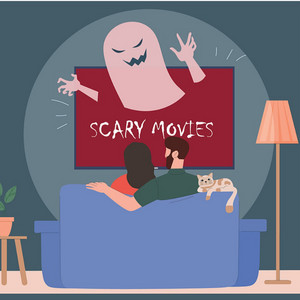
You're tuned in to Roundtable, I'm Steve Hatherly, together with Xinyu and Yuxun today.
Coming up, why are we drawn to what scares us?
It doesn't seem to make sense, but a new report has a surprising answer to that question.
Horror is self-care.
We'll break down the science of how a monster on the screen can help you fight the monsters in your mind, revealing what a haunted house or a zombie apocalypse can teach your brain about calm.
It's the surprising link between terror and tranquility.
After that, life can get you down sometimes, and when it does, we all need a smile.
We'll share with you some of our happy moments from the past week.
Roundtable's happy place is on the way.
Our podcast listeners can find us at Roundtable China on Apple Podcasts.
And don't forget, we say it every single day, we love hearing your voice as well.
So send your voice notes our way with any thoughts that you might have on any of the things that we discuss here on Roundtable.
Here's how you get in touch, roundtablepodcast at qq.com.
Once again, roundtablepodcast at qq.com.
And now...
For decades, if not more, we've sought out stories designed to terrify us, spending billions on films and games and haunted houses.
But why do we do this?
Why would anyone deliberately subject themselves to the stress, the heart-pounding panic or the sheer terror of a horror film or a haunted house or anything that scares you?
A recent report though suggests that this impulse to do so isn't just about cheap thrills, it's actually related to self-care.
It seems that exposing ourselves to controlled fear and that's the key can be a powerful way to soothe real-world anxieties.
What is happening in our brains?
What is happening in our bodies when we decide to watch a good old-fashioned slasher flick or just scare ourselves through bungee jumping or skydiving or what have you?
To these questions, we have answers.
We've reviewed some of the latest findings from health researchers and psychologists.
We'll get to that in a little while.
But I want to know, what's the scariest movie you've ever seen?
Honestly, I'm not a big fan of horror films, but I watched a few, I can say.
But I picked this one, Psycho.
Psycho.
I don't know if you guys... Alfred Hitchcock, right?
Yes, Alfred Hitchcock.
That scene from The Shower, I think?
Yes, the famous shower scene.
Actually, it's a 1960 American horror film.
And I watched this because I heard from I was recommended by my friends that this director is famous for this suspense films.
So that's why I watched this most, the best, the masterpiece of Hitchcock.
And did it scare you?
Yes, it did.
And I think the scary thing is it's not about monsters or ghosts.
It's ordinary human beings.
And when you see these human beings, when they go mad, they can do crazy things that you cannot believe human beings can possibly do, you know.
So that's the scariest part.
That's also something that I would be scared of.
Because you know the real scenes that you will see in the movies, that that you may imagine, that could that actually happen in your real life.
That is, I think, something that could be the scariest.
So I think I'll pick the Final Destination series.
I don't know that one.
You will see a lot of realistic scenes that they will give you in the film.
For example, when you're traveling on a bus and suddenly, like very, very strange thing would happen, let's say, the tires going wrong, or or the bridge that you're going through just break up and then you fall into the ocean and something like that.
So it's almost seems like those things could actually happen in your real life, plausible situation.
So it's not about ghosts or zombies, or yeah okay, oh yeah.
Speaking of zombies though, because when you're asking this question, the first idea in my mind was actually because I don't also real like watching horror movies, so I try to avoid them as much as possible.
There was a lot of Chinese zombie movies, especially those from Hong Kong.
I was going to ask if China, because I haven't heard of that before.
I was going to ask if China is known for its...
Horror movies or scary films.
I really like to say that Chinese classic Hong Kong horror films, they're not purely horror.
It's comedy.
Yes, mixed comedy and horror.
But even that, I feel scared.
How interesting.
Well, let's get into it then.
So it's kind of a paradox, isn't it, of pleasure?
I think we can put it like that.
Why do we choose horror? to be afraid because that's exactly what we're doing.
It's our choice to put ourselves in that situation.
Why do we seek out an experience that our own biology should tell us to run away from?
I think some people they watch horror films because it gives them sense of physiological stimulation.
It's like you can feel your heart is pounding and you can feel faster breathing pace and also you're sweating.
And this adrenaline that's flowing throughout your body is.
It's just different from like in your mundane everyday life that you can feel that ordinary, but that's this excitement that make you feel alive.
We don't get an opportunity to experience those emotions.
That would be one of the reasons.
Another one, I guess, is that yeah, this is counterintuitive, I suppose, because we as humans are known for our fight or flight responses.
So we're biologically wired to run away from, from things that scare us or are potentially dangerous, but we're also biologically wired to enjoy a physical rush, like you said Jingyu, when your heart starts to pound.
But here's the key, and this is what I was referencing before.
Yeah, we're still getting that fight or flight response, But we are safe on the sofa when we're watching a horror movie.
So we are able, our brains are able to interpret that state as thrilling rather than really dangerous.
Something that would put us in dangerous path.
So it's the excitement of the physical reaction, but you're decoupling yourself from the actual threat of danger.
Definitely.
And also we kind of fulfill a deep sense of morbid curiosity.
Humans have a dark side.
Yeah.
When you having that kind of idea OK, I want to see what is actually going to happen, or is it really going to happen?
Something like that.
And Dr Mathias Clazen or Clazen, if I pronounce that right of Aarhus University notes that horror films provide a safe space for us to explore maybe death, violence and other dark themes that society otherwise prohibits us from looking into.
From looking into or talking about, you know, during lunch.
Or even thinking about.
Yeah, even thinking about.
But it's obvious, right, that humans do have a dark side and a creative dark side too.
Otherwise, these films wouldn't even exist in the first place.
Right.
So we can explore these taboo topics without any consequences, with zero consequences, as a matter of fact.
All right.
So that's the kind of the psychology behind it.
But what's the new research about?
What did they find?
Yeah, a psychologist at Arizona State University called Colton Scrivener.
He is also the author of a book called Morbidly Curious.
A scientist explains why we can't look away.
And in one of his studies, he recruited around 400 online participants for an online questionnaire.
And by analyzing the results, he found that the participants could be divided into three main groups.
So the first is the adrenaline junkies.
They were driven by the physical feelings of suspense.
So they reported feeling more alive due to their fear.
Oh, the adrenaline rush you get from feeling scared.
Yes.
Okay.
And the second is white knucklers.
Oh, yeah.
So these groups, they tend to dislike the stress that horror films provoke.
But even though they don't necessarily enjoy the feeling of fear, but they do enjoy the feeling of conquering the fear.
Ah.
I think I can feel that.
Is that your group?
I think so.
So that's your group.
And the third group is called Dark Coopers.
So they explore how violent the world is through these horror and suspense films.
For instance, these films can remind themselves of how safe their own lives were in comparison to the gore on screen.
And some others say it's a way of testing their bravery.
So I think that also explains how they are in a safe position when they look at these horror films.
They feel that they are in a better position than those on screen.
You should.
You would be the.
You would be the white knuckler group.
Yeah, you don't like watching the scary movie, but you like the feeling when it's finished where you said to yourself like, oh yeah, i want i got through that film.
Yeah, maybe like something like oh okay, no big deal.
Yeah, you act kind of tough afterwards, right like you've got a superhero's cape on all of a sudden, So all right.
So those are the groups.
But what's happening physiologically speaking?
What's going on in our bodies and our brains when we get scared like that?
We mentioned it a little bit, actually.
The body releases adrenaline as part of that fight or flight response, right?
Adrenaline is a stress hormone that triggers physiological changes such as increasing your heart rate and dilating your pupils.
And this prepares your body to either fight off the danger or run away from it.
Maybe that natural instinct, right? even when the danger is just a screen or happen in a screen.
And what's surprising to me is that actually, after we experience, or after we finished watching this horrifying movie, we've we experience a surge of endorphins.
Endorphins is the body's natural painkillers.
So their release follows the initial fear response and they can create a rush of feel-good chemicals, like Yushun mentioned.
After watching the the movie, you feel like you've conquered something and you are that brave and you can maybe watch more such horrifying movies later.
So you get that rush of fear.
But then your body says uh, that's not good for me, so i need something to balance that.
So here is your cocktail of endorphins to make you feel better.
That's so bad, i feel so bad for my body.
Yeah well, it's trying to calm itself down, I suppose, or balance it out somehow.
Let me ask you this question.
When you watch a horror movie, do you watch the screen the entire time?
No.
I do.
You look away?
No.
I remember while I was in college, and I was watching the movie Saw with my roommate.
Oh, yeah, that's a sick film.
Yeah, and...
I think the whole time I didn't finish the movie, but the whole time I was watching because I was too terrified of what's going to happen next.
So the entire time I was looking at my roommates.
But aren't you curious about what's happening?
No, no, no.
It's just...
You know something bad is about to happen, but you don't know when and how.
So that's scared me a lot.
That's the, I think, exciting part for me for watching that horror movie, that jump scare or something like that.
Because that's when I got scared.
Actual scared.
Because some of the times when we know that.
Okay this is a horror movie.
And this is all fictional.
Then I will not be that scary.
But if we have that something like jump scare.
That I can get actually scared.
But after that.
I am also safe and I feel maybe conquering something.
Then you will feel that pleasure.
I'll give a tip to all the boyfriends and husbands out there who don't actually enjoy watching a scary film, but also don't want to act scared in front of their girlfriend or their wives.
I developed this trick.
When I watch a scary movie with my wife, I face the screen.
During the scariest parts of the movie however, I focus my vision on the bottom corner of the screen.
So to my wife, it appears like I'm still watching the film.
And through my peripheral vision I can still kind of see what's happening on the screen, but not enough to actually scare me when that jump scare thing happens.
So when it does happen, I don't react at all.
And my wife's like, Oh my God.
And I'm just sitting there like the coolest person.
It's okay, babe.
It's okay.
It's just a movie.
When actually, I didn't really see what happened.
That's a good trick.
It's a good trick, right?
Now my trick is, I think she's listening to the show today.
That's the last time I get to use that one.
Okay, so I said in the opening, horror films can actually make us feel better.
They can actually soothe our anxiety.
So how does that actually work?
I think it fuels...
In most cases, it feels like a distraction.
When you are watching horror films, it makes you forget about your stress.
So you are so concentrated on what's happening on the screen and you're so concentrated on how to conquer the fear.
It can be a good distraction for your daily stress and worries.
And also, like Steve said, because it provides a not so threatening space for you.
So it's a safe space for you to watch such kind of movies.
So in some cases, it can give us a controlled practice at emotional regulation.
So it gives you kind of the practice of coping strategies when you face such kind of situation.
Yeah, this was the for the researchers um, for the for the recent results.
This was the most perhaps surprising result for them and it does make sense.
And dr classen talked about this too that fear management tool You mentioned before.
These are not emotions that we get to deal with on a daily basis.
Hopefully, hopefully you need to make some changes in your life if you do.
So it offers offers us a safe space to know how to deal with those types of emotions and also imagine what we would do in a scenario such as that.
And also like, offer you an opportunity to experience, you know, that kind of gradual change, exposure therapy.
Right when you have already experienced that stimulation already, then maybe in the future when you come across another scenario like that you can get used to at all.
You have the experience of that.
You cannot be that scary.
Yeah, exposure therapy.
I saw a documentary on that once.
So it was this guy who was afraid of snakes right, deathly afraid of snakes, yeah.
And so what the psychologists did?
They were in a large, open field And really far away was just a box.
You couldn't even really see it.
It was that far away.
But the psychologist told the patient, there's a snake in that box.
How do you feel?
And there was some sort of tapping going on.
That's the type of therapy as well.
I'm not sure about that.
But then, okay, I feel okay.
Then got a little bit closer to that box.
How do you feel now?
Then got a little bit closer.
And I guess the idea behind that is that the more you get exposed to the thing that you're afraid of, the less afraid of that thing that you will actually be.
Yeah, practice makes perfect.
I guess so, and i can see that's why some of the some people they go to this extreme sports like bungee jumping skydiving, thrill seekers yeah, thrill seekers um, and i think they're just not just to seek thrills for thrill's sake, Because after you finish that bungee jumping, you have the sense of confidence and competence that you have accomplished something that you felt you never could do.
Invincibility.
Invincibility.
I can do anything.
Yes.
So after that, you gain this, you can say self-confidence or confidence.
Some researchers say it's afterglow.
It's a feeling of you can handle everything after watching that terrifying movie.
You can handle something much terrifying.
Yeah, not for me.
I don't think so.
My biggest fear is spiders.
I don't know if you could call it arachnophobia or not.
I'm not sure if I could be clinically diagnosed with arachnophobia or But I can tell you this.
If a spider appears on a television screen I mean just part of a commercial or something I have a knee-jerk reaction to look away immediately.
If I'm flipping through a magazine and there's suddenly a picture of a spider, I have that same knee-jerk reaction to look away.
I can't look at them for some reason.
That's why the scariest movie I've ever seen.
Spider-Man.
I can handle spider-man, although i will admit you know, in the first spot was it the first spider-man, when the spider actually bites him or something.
Yeah, i didn't watch that.
Okay, i looked away.
No, there's a film from the early oh gosh, was it 1990 or 1993?
There's a film called arachnophobia and it's about a family that moves out to the countryside.
They buy this old kind of farmhouse and it turns out to be like infested with spiders.
And I thought as a young person, if I watch this movie, kind of like exposure therapy, if I just watch it, I'll realize there's no real fear here.
I'm in a safe space in my living room.
There are no spiders around me.
Let me just watch this and try to get over my fears.
That was about 30 years ago.
Wow.
And I'm still not over it.
That did not work at all.
You need more practice.
I don't want any more practice.
I'm completely fine being afraid of spiders.
Well, there you go.
Now we know.
The next time you're up for watching a scary movie, you could think well, there might be something good in it for me.
Maybe it'll help to soothe your anxiety a little bit.
You're listening to Roundtable, and we ask you to stay with us.
Roundtable's Happy Place is up next.
Delivery.
Delivery.
Delivery.
What is it?
Happiness from Roundtable.
It's time for Roundtable's Happy Place, and Yushun, you're going to go first today.
My happy place this week was my visit to forbidden city last weekend in beijing, in beijing.
Even though i've been working here in beijing for several years, it was also it was still my first time, really your first time.
Yeah, i know what.
What take you, took you so long?
I think everybody has that kind of mindset, right?
If you're living or working in that city, then you would not go to that iconic spot because there's going to be full of tourists and you will know that you will always have a chance to go there.
And then you won't.
Not go there.
Because it's there.
Yeah.
Because it's there and it's so easily accessible.
By the way, the Forbidden City or the Palace Museum.
If we got in a taxi from this building, we would arrive there in about 15 minutes.
So it's not 20 minutes.
It's not even like it's that far away.
It's not like it's on the other side of the city from where you are either.
So that's just proof.
The closer it is, perhaps the less inclined we are to visit it.
Yeah.
But you know, the Forbidden City itself I'd seen, like so many times in documentaries, in photos or on social media.
But being there in person was a completely different experience and everything felt so different, real and so alive and even a little bit magical, you know.
For those of our listeners who are not familiar with the geography of Beijing, the Forbidden City is kind of in the middle.
It's in the middle-ish part of the city.
Central central.
Yeah, it is exactly this center.
It's located on the central axis, right?
And you see it kind of if you're traveling around the city at all.
It's hard to.
It's hard to miss because it's a giant landmark and it's one of the most, if not the most famous landmark In Beijing.
So what was your impression then going for the first time?
Yeah, so we went there like from morning until the gates closed at night and And I wandered from south to north as if like walking through time itself, you know, because all of the surroundings and environment just so immersive when you're walking inside.
And the layers of history seem to unfold with every courtyard and hall and the sound of your steps, footsteps on these ancient stones, when you can actually see how old they are.
You, you can tell that some of them are like fake old, some of them are really really old, um and.
And the red walls glowing softly under the afternoon sun, and it was easy to like forget the present for a while, to imagine what life might have been like centuries ago within these uh, red walls, and what struck me most was how seamlessly the past and present coexist there.
You know, outside the gates, the modern city was right there, with all of the energy and also speed and fast pace.
Right and inside, time seems to slow down and inviting reflection and wonder, and maybe that's what makes the forbidden city so magical, as i said, and it reminds us the while history belongs to the past and, in its spirit, still lingers quietly in our everyday lives.
And by the time that I left, my legs was like wasted.
But my heart felt really, really light and still very, very excited, because it was just amazing how a single day surrounded by history can make you see the present a little differently.
You've been there many times, Xinyu?
Not many times because sometimes it's very hard to reserve.
Yeah, book and slot.
But you mentioned magical.
I had the same magical experience last weekend, but I went to the Fahai Temple in Western Beijing, not so far away from here.
And the temple houses the finest, the best Ming Dynasty Buddhist murals, inside the hall, which has very limited access to visitors.
So you have to book a slot.
And for each slot, it just allows 15 people with a guide.
And he will show you around the murals and with this special flashlight, because it's very dark inside.
And you are told oh, what some of the Buddhist figures are and what some of the techniques and craftsmanship from 600 years ago.
So that was pretty amazing experience.
Yeah, that sounds really cool as well.
Yeah, i visited um the forbidden city only one time so far, but i too was completely uh, blown away by the history there.
It's very quiet inside as well, which is really kind of cool, because you're in a down, you're right downtown, right.
Oh, that's great, you should, and on this pace you'll.
Maybe you'll get to the temple of heaven in 2032.
Summer palace by 2040.
Yeah, i'll try to see all of beijing eventually.
That's it for today's roundtable.
Thanks for being with us.
I'm Steve for Yushun and Xinyu.
Pleased to come back again next time.