This message is from NPR sponsor, Total Wine and More.
This summer season, with so many bottles to choose from, it's easy to find your favorite and more.
Find what you love and love what you find only at Total Wine and More.
Drink responsibly, B21.
You're listening to shortwave from NPR.
Hey, shortwavers. Emily Kuang here and today I am joined by NPR Science reporter, Jonathan Lambert.
Hey, John. Hey, Emily.
Jon, I must thank you for all the hilarious and fascinating science stories you've been bringing us lately.
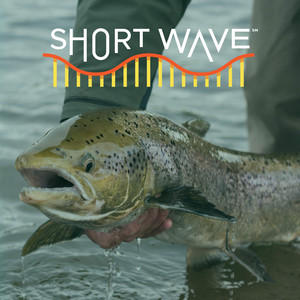
Aww. Like chimps contagiously peeing or iguanas sailing the high seas or this most recent banger, salmon on drugs.
What's that about? Yeah, salmon on drugs, specifically anti -anxiety drugs.
How are salmon getting ahold of not that they have hands, but how are they getting ahold of anti -anxiety pills?
Basically through us.
So, when humans take medication, like for anxiety or bacterial infections, our bodies don't use all of it and we end up peeing out some of the chemicals.
That can end up in wastewater, which can get into rivers and streams, and runoff from pharmaceutical factories gets into waterways too.
All told, researchers have found more than 900 different pharmaceutical ingredients in waterways around the world.
900 different ingredients.
That's a lot. Yeah.
How does this then affect the fish and other aquatic creatures?
We're not entirely sure.
Scientists have been trying to figure out what all this pollution could be doing to fish, and most of that has been done in the lab.
Those experiments have shown that giving fish anxiety meds, for instance, kind of messes with their behavior.
How so? When researchers give fish medicine on purpose, what happens?
Yes, so if researchers give fish, say, a benzodiazepine like Xanax, or an SSRI like sertraline in the lab, these fish become more antisocial and more prone to take risks.
But it's hard to say how these drugs affect their behavior out in the wild.
We can't, you know, dump a bunch of pharmaceuticals into the river.
That's Jack Brand. He's a biologist at the Swedish University of Agricultural Sciences, and he worked on a study that kind of did the next best thing from a scientific perspective.
Okay. The study was published in the Journal Science this past month.
The team implanted pharmaceuticals in Atlantic salmon in Sweden and monitored how two drugs in anxiety med and a pain med influenced their migration behavior.
I'm so curious what happened?
Something kind of unexpected the anxiety medication actually improved the migration success of the salmon. Wait, so the drugs helped?
In this narrow sense yeah they did seem to help, But that's not the whole story.
Okay, so today on the show, how scientists managed to drug salmon in the wild, what pharmaceutical pollution could be doing to aquatic animals worldwide, and what we can do about it.
You're listening to Shortwave, the Science Podcast from NPR.
This message comes from Charles Schwab.
When it comes to managing your wealth, Schwab gives you more choices.
like full service wealth management and advice when you need it.
You can also invest on your own and trade on thinkorswim.
Visit Schwab .com to learn more.
This message comes from Mint Mobile.
If you're tired of spending hundreds on big wireless bills, bogus fees and free perks, Mint Mobile might be right for you with plans starting from $15 a month.
Shop plans today at mintmobile .com slash switch. Upfront payment of $45 for a 3 -month 5GB plan required.
New customer offer for first 3 months only.
then full -price plan options available taxes and fees extra see Mint Mobile for details.
This message comes from Schwab at Schwab how you invest is your choice not theirs that's why when it comes to managing your wealth Schwab gives you more choices you can invest and trade on your own plus get advice and more comprehensive wealth solutions to help meet your unique needs with award -winning service low costs and transparent advice you can manage your wealth, your way at Schwab.
Visit Schwab .com to learn more.
Okay, Jon, so let's back up a second.
Because pharmaceutical drugs are designed to work on human brains and bodies, right?
So how do they end up affecting the brains and bodies of fish?
Yeah, so it turns out a lot of drugs that act on our minds target parts of the brain that have a deep evolutionary history, and so they're shared by lots of different animals.
Mm, okay. So they can work on salmon in similar ways that work on humans.
Now, it's not like fish are literally popping pills like we would.
What's happening is the pills are getting super -deluded in rivers and entering their bodies through their gills.
Oh. Yeah. But even with super -low concentrations, like what a fish would encounter in the wild, these drugs are still altering their behavior in the lab.
This all makes sense.
It sounds like a big problem.
So there have been a lot of experiments to understand the problem on a deeper level, but way fewer field experiments.
So how are researchers studying the effects of drug exposure in the wild?
So researchers put these slow -release capsules into the bodies of over 250 juvenile hatchery -raised Atlantic salmon. The capsules released two drugs, a benzodiazepine called Clobazam, used to treat anxiety, and an opioid used for pain management called tramadol.
So why these two drugs, Clobazam and tramadol in particular.
In humans, these drugs can cause harmful interactions and so the researchers wanted to see if combining them had like extra bad effects.
Yikes, OK. They're also found in lots of rivers around the world, but not in the river where these particular salmon live.
OK so this sounds like a very good river in which to conduct this study.
Yeah, yeah exactly.
Overall they had four different treatments, No drug, only clobazam, only tramadol, and both.
Okay, well, what did they do next?
They also implanted these tracking devices, so the scientists could follow the fish as they migrated from a release site in a Swedish river out to the Baltic Sea.
So they put like GPS on the fish?
Not exactly. They were like little devices that emit a sound and then the researchers placed a bunch of receivers along the migratory route that pick up that sound, allowing them to kind of like reconstruct the journey.
Oh, so it's like air tags for salmon?
Yeah. Alright. So they have these experimental conditions.
They have the salmon trackers.
What did they find?
It was a bit of a surprise.
So one drug, the pain medication, didn't seem to make any difference.
But it turned out that fish exposed to clobazam were actually more successful in reaching the Baltic Sea than salmon who weren't exposed.
Interesting. Let's break this down a little bit.
why would an anti -anxiety drug like clobazam make fish better at migrating?
Yeah, the researchers aren't 100 % sure, but one part of their results hints at an answer.
So this route, this migration route is not exactly like a lazy river.
There are two hydro -powered dams, each with a series of turbines that the fish have to cross to get to their destination.
Those can be pretty hairy.
Here's Olivia Simons, a salmon biologist at the Norwegian Institute for nature research. Basically with turbine passage, you can get injuries, which are of course not good if you have a long way to swim.
But you also get mortality.
So if they're struck by a blade, they can die.
So that's not good.
It's tough out here being a salmon. Yeah.
So non -drugged fish really took their time navigating these dams. Like, I imagine them waiting together in a group and going, Oh, not yet.
Wait, wait. Okay. But the clobazam exposed fish did it two and a half to three times faster.
Those drugged fish were like, I'm ready.
Yeah, here's how Brand explained it.
So we actually found that more clobaxam exposed fish eventually migrated through the river and reached the Baltic Sea, their destination, more than unexposed fish.
Poor salmon friends.
So, the anti -anxiety meds made those salmon, I guess, migration risk -takers, but it left those unmedicated salmon behind.
Yeah. On the face of it, it seems like this study is basically saying that it's good to give salmon benzos.
But the authors caution against that interpretation.
Yeah. I imagine that taking more risks might help fish reach the Baltic Sea faster, but it could pose problems once they get there.
Exactly. A follow up lab experiment they did found that Clovisam made salmon less likely to shoal with other salmon. Shoaling is when fish group together for safety in numbers kind of thing, and setting off on your own could make it easier for ocean predators to pick you off.
Yeah. Lone wolf. Lone salmon behavior.
Clovisam essentially made them more antisocial and willing to live a bit more dangerously.
Scaled up, a lot more antisocial and risk prone salmon could ultimately shrink the population.
And that could cause problems for the whole ecosystem.
Now, Jon, migration is just one part of the Atlantic salmon's life cycle, right?
So how else do the drugs affect them?
Yeah. So it's honestly a little bit of a limitation of this study in that it's just looking at this kind of narrow slice of an animal's life.
Showing that drugs can influence behavior in the wild was still a huge accomplishment, but there are still a lot of unknowns.
And clobazam is just one drug.
But you said earlier that over 900 different pharmaceutical ingredients have been found in rivers and streams worldwide.
Yeah, exactly. Here's what Karen Kidd, an eco -toxicologist at McMaster University, had to say.
You think of the soup of pharmaceuticals that are going into our rivers, you know, that's a huge unknown.
We have no idea what those anti -anxiety medications, plus the analgesics, plus the antibiotics, plus the antiepileptics, plus the chemotherapeutants, etc, etc. collectively are doing to fish and other aquatic species.
Yeah, absolutely. So is there anything we can do as consumers or just as a society about pharmaceutical pollution that doesn't, you know, require people to stop taking drugs that make their lives better?
Yeah, there definitely are things we can do.
One way is by designing wastewater treatment plants that do a better job filtering out drugs.
A study from a few years ago actually found that pharmaceutical pollution in rivers is often worse in low - to middle -income countries because wastewater management infrastructure there doesn't catch it all.
Interesting. OK, so better filtration systems. What else, John?
There's also a push to design greener drugs — basically tweaking pharmaceuticals to degrade more easily in the environment, but still be just as effective in humans.
That's so interesting.
Because right, there's greener cleaning products out there, greener makeup products.
Greener medicine could totally be a thing.
Yeah. And these solutions aren't silver bullets, but they could lessen our impact.
And with climate change and habitat destruction already majorly disrupting animal lives, it's important to try to do what we can to ensure our waste isn't disrupting their behavior too.
John Lambert, another incredible science story.
Please come back anytime.
Thank you so much. Thank you.
This episode was produced by Hannah Chin and edited by me, Emily Kuang and Rebecca Ramirez.
Tyler Jones checked the facts, Kwesi Lee was the audio engineer, Beth Donovan is our senior director, and Colin Campbell is our Senior Vice President of Podcasting Strategy.
I'm Emily Kuang. And I'm Jonathan Lambert.
Thank you for listening to Shortwave, the science podcast from NPR.
Support for NPR and the following message come from Edward Jones.
A rich life isn't always a straight line.
Unexpected turns can bring new possibilities.
With a hundred years of experience navigating ups and downs, Edward Jones can help guide you.
Let's find your rich together.
Edward Jones member SIPC.
This message comes from Mint mobile.
Mint mobile took what's wrong with wireless and made it right.
They offer premium wireless plans for less and all plans include high -speed data, unlimited talk and text and nationwide coverage.
See for yourself at Mintmobile .com slash switch. Support for NPR and the following message come from Rosetta Stone.
The perfect app to achieve your language learning goals no matter how busy your schedule gets.
It's designed to maximize study time with immersive 10 -minute lessons and audio practice for your commute.
Plus, tailor your learning plan for specific objectives like travel.
Get Rosetta Stone's lifetime membership for 50 % off and unlimited access to 25 language courses.
Learn more at Rosettastone .com.