Have you ever wondered why we call french fries french fries?
Or why something is the greatest thing since sliced bread?
There are answers to those questions.
Everything Everywhere Daily is a podcast for curious people who want to learn more about the world around them.
Every day you'll learn something new about things you never knew you didn't know.
Subjects include history, science, geography, mathematics, and culture.
If you're a curious person and want to learn more about the world you live in, just subscribe to Everything Everywhere Daily wherever you cast your pod.
before we get started here's a message for the adults who are listening support for but why comes from progressive insurance do you ever think about switching insurance companies to see if you could save some cash progressive makes it easy to see if you could save when you bundle your home and auto policies try it at progressive .com progressive casualty insurance company and affiliates potential savings will vary not available in all states This is But Why, a podcast for curious kids from Vermont Public.
I'm Jane Lindholm. On this show, we take questions from curious kids just like you, and we find answers.
We humans eat a lot of food.
Three meals a day, plus snacks, that really adds up.
You know, food is essential for keeping us alive, but it's way more than that.
Food makes us feel pleasure, or sometimes revulsion, when you're grossed out by something on your plate or in your mouth.
Food helps us bond with friends and family.
it's a way we learn about and share our culture.
So it stands to reason that you have a lot of questions about food.
And it's been a while since we did an episode all about food.
So today we're going to talk with a guy who thinks about food and writes about food and talks about food and makes food all the time.
I am Kenji Lopez -Alt.
I'm the author of The Food Lab and The Walk, as well as the children's book Every Night is Pizza Night.
And I host a YouTube show called Kenji's cooking show.
Kenji also helps us figure out how to make good food.
I write recipes for home cooks.
So I try and help people make food at home more easily or better.
I try and make people feel more comfortable in the kitchen.
I think kids might be surprised to know that that can be a whole job.
Yeah, it is a whole job.
Yeah, well, because nobody's born knowing how to cook.
And a lot of people are lucky enough that they learn how to cook from their parents or perhaps perhaps someone else in their household growing up.
But a lot of people don't do that.
And they find themselves out in the world having to feed themselves or feed their friends and family.
And they don't really know how to do it.
They're just kind of plopped in there and they've got to figure it out on their own.
So my job is kind of to guide people to help them do that with some amount of confidence.
And my goal has always been to think about myself when I was first learning how to cook and to sort of to write to myself as if I was...
The books and the material that I wish I had when I was learning how to cook.
Kenji says you can get a lot of insight into people by learning about what they eat.
Humans are social animals and we like to interact with other humans and learn from other humans and feel a bond with other humans and a connection with them.
And food is one of the ways that everybody in the world does that.
So food becomes part of our social and cultural identity.
So I find that my favorite way to travel around and learn about people is by going around and eating the food and experiencing food in the way that people do, because it tells you a lot about how they think about the world.
It tells you a lot about the climate they live in.
It tells you a lot about sort of what sort of family structures they might have, what customs they might have. So, you know, food is a thing that we do, most of us do multiple times a day, every day.
And most of us do it in a somewhat social way.
We feed each other, we nurture each other.
You know, food for me is also a way of showing care and love for other people.
You don't have to travel to faraway places to start to understand different food cultures.
Look around you when you're visiting a friend next time.
Do your friend's meals look different from yours?
Does their family have rituals or customs when they all sit down to eat that are different from how your family eats a meal?
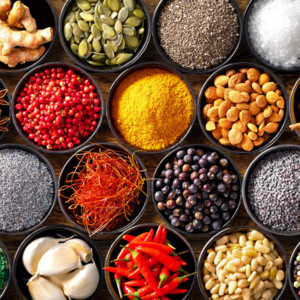
What kinds of spices do they have out on the counter?
Are they the same as the spices at your house?
What do those spices smell like?
Familiar? Or do they tickle your nose in new and interesting ways?
And if you spend time in a school cafeteria, what kinds of meals do they serve at your school?
It's probably a mix of ingredients and flavors that are familiar to you With some new things thrown in now and then to get you to try something different But if you went to school somewhere else, those cozy comfort foods might not be the same Hi, I'm Rowan I'm four years old And I'm from Rhode Island Why do some people like other foods that some don't, but they're all really good?
Hi, my name is Maya.
I'm six years old, and I live in Kalamazoo, Michigan.
Why does food taste different to different people?
My name is Noy. I'm six years old.
I'm from Western New York.
Why does one person like one food while another person doesn't?
My name is Elena. I am 7 years old.
I live in Mesa, Arizona.
Why do different people like different foods?
When you think about taste, you think you've learned that you have taste buds on your tongue, and those are your taste receptors, and those are the things that tell you what something tastes like.
But food is actually — the sensation of taste is a lot more complicated than that.
Not only do we have receptors on our tongues, but when we're eating, we also we also have receptors in our nose we're taking in smells.
We also have visual receptors.
We're looking at the food, we're hearing it crunch, we're feeling the texture of it in our mouth.
So there's this whole host of sensory data that the sensors in our body are connecting.
So your tongue doesn't have a brain.
All it is, is a tool.
It's a piece of sensory equipment.
And so what the tongue does is it detects certain things and then it sends those signals to the brain.
And it's not until all that information from our tongue, our nose, our eyes, our ears, you know, the sensation of touch in our mouth, all of those signals get sent to our brain.
And then our brain does some very, very complicated computing on it, you know, so there's, you're taking that information and sending it through the sort of thought matrix in our brain.
And then we finally say to ourselves, okay, this tastes good, or this doesn't taste good.
And so even if our tongues might be detecting the same things, or our noses might be detecting the same things, our brains are never the same, because we all have different experiences or we might, you know, you might even be in a different mood from one day to the next.
Wait, our mood can impact how we taste food?
Kenji says yes. And he's even got an example.
Last summer, I did this experiment on an auditorium with a thousand people where we had every person taste a piece of chocolate while a violinist was playing some really upbeat, happy music.
And then we had them taste another piece of chocolate chocolate when a cellist was playing a sort of somber piece.
And, and then afterwards we asked people which, you know, which chocolate tasted sweeter, which chocolate tasted more bitter.
And they almost all said that the one that was being eaten while the violinist played the happy piece tasted sweeter and better.
The thing is we didn't tell the audience what we were doing.
You know, the music was just kind of incidental in the background.
And we told the audience initially that it was two different pieces of chocolate, but in fact, they were the exact same piece of chocolate.
And so even, even just the, the different stimulation they were getting from their ears made the chocolate taste different.
And, and you, you know, you know this because if you've ever been to the beach, you know, you might want a glass of, of really nice cold lemonade on the beach because you're feeling hot, you're feeling like nice summery weather, but you don't want a glass of cold lemonade when you're coming in from the snow on a cold winter day in the same way that you don't want to drink hot chocolate while you're on the, on the beach, So depending on a whole host of different things, our upbringing, the food that you grew up with is going to produce certain memories in you, some of them more pleasurable than others,
and not everybody had the same upbringing.
So things that your mother made that you especially loved when you were a child, those are going to give you a taste memory that's going to give you a sort of sense of satisfaction and make you like the food more.
Hi, my name is Eden.
I'm five years old.
I live in Ottawa, Canada.
Why are some foods spicy and some aren't?
Hello, my name is Nathan.
I live in Seattle, and I'm six years old.
And my question is, why do some people like spicy stuff?
Hello, my name is Geoffrey and I'm five years old and I live in Seattle, Washington.
Why do I find stuff spicy and my parents don't find some stuff spicy?
The chemical that produces the sensation of spiciness, of heat, it's a chemical called capsaicin that's produced naturally in a lot of pepper varieties.
And we can actually measure exactly how much capsaicin is in a certain pepper.
So we can say definitively, you know, this pepper is spicier than that one.
What we can't say, however, is what does spicy mean to one person versus the next in the same way that, you know, some person, somebody might find it, you know, when they stub their toe, they might find that to be extremely painful.
And someone else might just say, oh, it's just a stubbed toe, you know?
And so people have different levels of tolerance for pain in the same way that they have different tolerance levels for heat, which makes sense because the spiciness that we detect when we're eating spicy foods is literally the same as we detect when we're when we're feeling a burn, you know, a physical burn from a fire or a physical injury.
There are receptors on our tongues called TRPV1 receptors, and those are the receptors that sense heat and pain.
and capsaicin actually binds to that receptor and stimulates it so we get the sensation of burning and hurting even though we aren't so it mimics heat.
Wow I didn't realize my brain was interpreting spicy food the same way it interprets something that's really hot.
The other thing that spicy foods can do is because our body thinks it's heating up or it's getting hurt it'll actually cause some of the same reactions that we get when we start to heat up you know so our blood flow will increase.
We'll have a boost of serotonin.
Serotonin is a mood -changing chemical that our body produces that when we feel pain, our body produces serotonin to sort of help us fight through that pain.
And it also gives us a sort of pleasurable experience, which is why some people really love eating spicy foods because they love that rush of adrenaline and serotonin that they get.
It can also cause your body to sweat because you think you're getting hot.
So you'll find that oftentimes spicy foods are eaten in hotter climates.
Partly it's because that's where peppers tend to grow.
But it's also theorized that it's because spicy foods help people deal with the heat.
It helps our bodies produce more sweat.
And when you sweat, body cools down.
So eating spicy foods can actually help you tolerate heat a little bit better.
But as far as, you know, perceiving different levels of spiciness, a lot of it just has to do with building up tolerance, you know, in the same way that you can exercise your muscles so that they get stronger at riding bicycle or you can work through.
When I worked in kitchens, when I first started, being on your feet 10 to 14 hours a day, it causes a lot of pain in your feet, but eventually you get used to it.
So in that same way, the more spicy foods you eat and the earlier in your life you're introduced to them, the more heat tolerance you'll get and the less hot some certain foods will taste to you compared to someone who doesn't have as much experience.
So that helps answer your question, Gingifar about why your parents are able to eat much spicier food than you are without feeling like it's too spicy or maybe even spicy at all.
The more spicy food you eat over time, the more you'll get used to it.
But Kenji also says it's totally fine not to eat or like spicy foods.
Yuduyu. My name is Jack and I am five years old.
I live in Okinawa, Japan.
Why are some foods spicy in your mouth and some foods spicy in your nose?
I love this question because it's so true.
When I eat really spicy Thai food, I taste it in my throat and my mouth and my lips.
But when I have wasabi with my sushi.
The wasabi feels like it's shooting right up my nose if I eat too much of it.
Yeah. Well, so spiciness is almost always associated with capsaicin.
When we eat things like, say, mustard or wasabi, the types of things that kind of go up the back of our nose and really give us that tingling in our nose, I suppose that's also spiciness.
It is a different kind kind of spiciness.
So that's produced by a chemical called allyl isocyanate.
Isothiocyanate? I can't remember off the top of my head.
It's a big word. AITC.
AITC is how it's abbreviated.
We looked it up. It's called allyl isocyanate.
So AITC, similarly, is going to bind to those same receptors that trigger the sensation of heat and pain.
However, it's a much more volatile molecule.
So capsaicin is a relatively large, heavy molecule that is oil -fat soluble and will sort of sit on our tongue and coat our tongues.
Whereas AITC is a volatile molecule, which means that it's much more prone to sort of jumping off into the air.
It's very light and it's prone to jumping up into the air.
And so when you eat a food that's heavy in AITC, rather than attacking our tongues directly, it's more likely that it's going to jump up into our noses or go up through the back of our throats up into our noses, where then it will bind to those same receptors in our nose.
So instead of feeling the pain on your tongue, you feel it in your nose.
On the other hand, because it's so volatile, it also generally doesn't last as long.
So capsaicin can stick to your mouth and make you feel the burn for, you know, 10, 20, maybe even 30 minutes before you stop feeling it.
Whereas AITC generally lasts more like, you know, 30 seconds to a minute.
You get we get this really intense feeling that then very quickly dissipates as well.
What is it that people like about spicy food?
People who don't like spicy food are like, it's awful.
And people who like it, it's like, I like it, it enhances the flavor, but why do we like that sensation of something burning our throats or our nose?
Spicy foods do enhance other flavors because they make us more alert.
They make us sort of more attuned to our senses.
They give us that sort of fight or flight response that our body, you know, when our body senses there's some kind of danger, something's going wrong, all of our senses get heightened.
And so you do, you know, when your, when your body is getting triggered by these spicy foods, you're getting a very mild form of that response.
And so you do end up sort of noticing other flavors more.
So some people say, especially with Thai food, you know, if you've ever eaten a Thai dish or like a central Thai dish that without any spice to it, it can taste sort of almost like overwhelmingly sweet where the, where the, where the sugar or some of the, or maybe some of the acidity really blocks out some of the other, the flavors of the the actual ingredients that you're eating, you know, the vegetables or the meat.
And then when you balance it with that spiciness, those sort of more subtle flavors come forward. It tames the overt sweetness.
It tames some of those other sensations that you get on your tongue.
It allows your body to really pick up the aromas and really attunes it to the aromas.
Coming up, a flavor as divisive as spiciness.
We'll talk about pickles.
This is But Why, a podcast for curious kids.
I'm Jane Lindholm. Today, we're talking about food with chef and food writer Kenji Lopez -Alt.
We're exploring flavors we like and flavors we don't like and some of the sensations we get from food like spiciness in our throat and nose.
Do you like spicy food?
Do you put hot sauce on your scrambled eggs or pepper flakes on your pizza?
I do. But I used to eat a lot more spicy food than I do now so I feel like I've lost some of of my spice tolerance.
Let's talk about another thing some people love and some people absolutely do not like even a little bit.
Pickles. Are you a pickle person?
Let's crunch into it.
My name is Bridget.
I'm five years old.
I'm from Grayley, Ontario.
And my question is, when was the first pickle made?
When was the first pickle made?
Do you know? That would be almost impossible to tell because likely pickles were an accident, in the same way that likely most fermented foods were an accident.
You know, pickles, the way you make a pickle, the simplest way you make a pickle is you take a vegetable or meat, you can, you know, you can cure meat, which is essentially pickling for meat, and you pack it with some salt.
Pretty early on, humans discovered that salt preserves food, that things that were stored near salt wouldn't go bad as quickly.
And when you leave a vegetable sitting by salt for a long time is going to naturally pickle.
What the salt does is it prevents the growth of things like mold and certain bacteria that are harmful, but it allows for the growth, the sort of the controlled growth of bacteria that can actually be helpful.
And, you know, yeast and bacteria and things that are going to produce the sort of sour, pickly flavors without actually harming the nutritional value of the food.
Hi, my name is Eli, and I am eight years old, and I live in Idaho.
Why are pickles crunchy from cucumbers?
Vegetables, you know, all plants are made up of cells that have cell walls, and they're kind of stuck together by a glue, a carbohydrate glue called pectin.
And so when a vegetable goes limp, the reason it goes limp and soft is because it's lost a lot of its moisture, or it could be because the cell walls start to break down.
So the cells themselves are starting to get soft. So a crunchy vegetable is crunchy because it's packed with water and because its cells are really nice and intact.
What happens when you pickle things is that you're packing them in what's called a hypertonic solution of salt solution.
So it's something that is very salty and it's salty enough that it actually draws moisture out from inside of the vegetables.
And so your vegetables are going to end up up, naturally getting a little bit softer.
In addition to that, the cell walls can start to break down, the pectin can start to break down.
And so what you need to do is introduce some elements to make sure that pectin doesn't break down as much and that the cell walls don't break down as much. Typically, natural ways of doing it are things called tannins, which are antioxidants that you find in things like tea leaves.
So some people recommend putting a half teaspoon of tea leaves into your pickle jar.
If you want to keep the pickle fresh, the flowers of a cucumber can also contain tannins.
So you might add some cucumber flowers directly into the jar with it.
Typically though, when you're, when you're talking about commercial pickles or even home pickling, we add a chemical called calcium chloride and calcium chloride is a, it's a, it's an edible chemical.
But that, that is also going to sort of help those, keep those cells plump and sort of firmly connected to each other and that's why pickles stay crunchy.
If you don't add any of those things, you will in fact get soft cucumber pickles.
Salt is a big factor in making pickles and some of you have questions about salt.
Hi, my name is Zachary.
I am from Miami, Florida and I am eight years old.
Why is sea salt called sea salt?
I thought all salt was from the sea.
At some point, all salt was in the sea.
That is true. What we call sea salt is sea salt that we specifically today get from the ocean.
So all salt was in the sea, but we have things called salt mines, you know.
So you can go into mountain ranges and dig and find big deposits of salt under the ground.
And so a lot of salt comes from mines.
However, at some point in ancient history, that salt was all part of an ocean.
So a lot of our mountain ranges today, you know, I was just in Utah with my kids in Moab, which is a desert now, you know, a mountainous desert.
But at some point, that whole area was underwater, under an ocean.
You can find the fossils of sea creatures high up in the mountains there.
All that water, as it evaporated, left large amounts of salt deposited in the earth.
Over the millions and millions of years that mountains take to form, some of that salt ended up underneath rocks, underneath silt, underneath petrified mud flats, things like that.
You end up with salts that was, at some point, in the ocean, but is now now in mines.
If you go out to, say, Salt Lake City in Utah, you know that there's a big salt lake out there that is not part of the ocean, but it's still very salty.
And that's all ancient ocean salt that is now dissolved in a lake.
And so what we refer to as sea salt today is salt that is still in the ocean today that we are drawing out of the ocean.
So typically the way that we collect harvest sea salt is we have very long, flat trenches around the ocean where seawater collects and then we allow that water to uh evaporate uh with the sunlight and so and as the water evaporates the salt gets more and more concentrated uh until eventually it can't there's not enough water for the salt salt to stay dissolved in um and so it forms these crystals and depending on sort of the specific mineral content you know salt all salt is mostly sodium chloride in fact all salt is sodium table salt the salt that we use to season our food is sodium chloride
but depending on where we harvested our salt from they could have other trace elements and minerals in there that are going to slightly affect the flavor, though not too much. But what it can really affect is sort of the shape of the salt crystal that forms. And so you might see salt crystals that form into these sort of perfect pyramids.
You might see salt crystals that form into sort of cube or gemstone -like sort of moist piles.
Or the salt that we make commercially forms into these tiny, perfect little cubes because we eliminate all of the materials and the minerals and other compounds that might make it change its shape.
And it can change the color, too, depending on where it's from.
Oh, yeah, yeah, yeah.
So we get, you know, from Hawaii, you can get black salt from the volcanic, you know, from the minerals that come out of the black volcanic rock there.
You can get pink sea salt from Hawaii as well that comes from the materials in clay, or the pink sea salt from the Himalayas that comes from the minerals there.
You get sel gris, which is like a gray sea salt from France that forms from the sort silty waters in the ocean there.
So yeah, depending on where your salt is from, those minerals can absolutely change the texture, the color, and well, in some ways the flavor, although really the main flavor changes come from those textural changes.
A crunchy, salty pyramid is going to taste different from a sprinkle of very fine salt, for example.
In the same way that, say, a ruffled potato chip tastes different from a flat potato chip.
Hi, I'm Sam. I'm five years old and I live in Irvine, California.
Why do we eat different foods for different meals?
Why do we eat different foods for different meals?
We have customs where we think of maybe scrambled eggs for some people as only a breakfast food and it would be weird to try to eat it for dinner.
So why do we have these customs about when we eat certain foods?
Well, you know, a lot of that is just purely cultural and things that have developed within different cultures over the years because in the US, for example, you might have eggs or something sweet, some sort of sweet pastry for breakfast. But if you go to Vietnam, you might eat a bowl of noodles for breakfast. If you go to Japan, you might eat some grilled salted salmon and a bowl of rice for breakfast. You go to France or Italy, and you might eat pastry and a cup of coffee for breakfast, a slice of bread.
So it's not really true that we eat certain foods.
depending on where you are, those foods are going to change.
What you can generally say, though, is that most breakfast foods tend to be sort of really energy dense, relatively quick foods that can either be prepared quickly the morning of or can be prepared the night before, the day before, and that can be sort of taken on the go because generally, you know, you're waking up, you don't want to put you don't have five or six hours to put into your meal and you need a lot of energy for the start of your day.
And so that's why we tend to see sort of really fast, easy to cook things like eggs, pastries that could be made the night before, breads that could be made the day before, things like that for breakfast. Hi, my name is Danica.
I'm nine years old.
I live in Atlanta, Georgia.
Why do we eat dessert after a meal and to have like before a meal or in the middle of a meal?
You know, dessert was is a concept that only exists because of we live in a time of great abundance and excess.
You know, we're able to create these sweet, elaborate concoctions that that when we were evolving, we certainly couldn't.
And so we discovered, OK, sugar tastes good.
But you know what? If you eat too much of it, it can make you sick, can make you unhealthy.
So sugar is, you know, what we call a treat.
And so desserts are generally treats.
And so you want to eat your meal before you eat your treat so that you don't fill up your treat and you get the nutrients you need.
So I think it is just a learned behavior that we realized, hey, we need to get the good stuff before we can get to the fun stuff.
Dessert is always a good place to end an episode, but I want to offer you one more thought before we finish up.
We've had a mixture of science and culture in today's episode, and that's perfect because there's a lot of both when we think about food.
But there's something really key that we haven't talked about that applies to both science and culture.
And that's just how important cooking is to human evolution.
Cooking food transforms some of the chemicals and structures in the ingredients we eat.
It can make food taste really different, much better in some cases than it was raw.
But it also often breaks down the food to make it easier for our bodies to digest. And it can make food safer by killing bacteria.
Cooking is one of the things that makes humans unique in the animal kingdom.
A lot of evolutionary scientists speculate that one of the biggest advances for humans as far as being able to evolve was the invention of cooking, because it suddenly meant that we didn't have to spend as much energy digesting our food.
So if you look at most animals, they actually have a much larger digestive system compared to the size of their bodies than humans do.
So a cow, for example, has four very large stomachs that takes up a big portion of its body.
and it spends a lot of time eating and digesting its food humans on the other hand we have a on the other hand have a pretty small stomach and it's because we have evolved to eat our food cooked and so we can readily grab the energy from it and don't have to spend all of our time cooking and we can spend our time doing other fun things you know we can do other productive things and other fun things we can play we can run around we can build skyscrapers we can study food and do science you know there's all these other things that you can start doing once you have time freed up because you're not spending
all of your time looking for and digesting food.
Wow, think about that.
One of the key things that makes us human and has given us the ability to use our big brains for all kinds of things other than just finding and eating food is that we learned how to cook.
So maybe you'll spend some time with your adults this year learning some new cooking skills.
What do you want to learn how to make?
Pizza? Cake? egg, bibimbap, collard greens, masur dal.
Think about what you enjoy eating and what you think you might enjoy cooking, and then get some help and learn how to cook it.
Then you can experiment.
Try new ingredients in that meal or different spices, maybe more pepper and less salt, or maybe a little more milk.
Maybe not if you're baking, but if you're cooking a different kind kind of meal.
Cooking can be so fun, and you're not only feeding yourself, but you're showing love to the people you care about.
So, on that note, don't forget to appreciate the people who are cooking and caring for you, too.
That's it for this episode.
Thanks so much to Kenji Lopez -Alt for answering all your great food questions.
He's got a book for kids called Every Night is Pizza Night, and you might enjoy listening to The Recipe, a podcast for adults he co -hosts with Deb Perlman.
Their most recent episode is all about burgers.
Now, as always, if you have a question about anything, have an adult record you asking it.
You can do it on a smartphone using an app like Voice Memos.
And then have your adult email your file to questions at butwhykids .org.
We can't use all of your questions in our episodes, but we listen to them all and we love hearing from you.
But Why is produced by Melody Beaudet, Sarah Baik, and me, Jane Lindholm at Vermont Public and distributed by PRX.
Our video producer is Joey Palumbo, and our theme music is by Luke Reynolds.
If you like our show, please have your adults help you give us a thumbs up or a review on whatever podcast platform you use to listen to us.
We'll be back in two weeks with an all -new episode.
Until then, stay curious.
From PRX.