I'm Ayesha Roscoe and this is a Sunday Story from Up First, where we go beyond the news of the day to bring you one big story.
Five years ago, rioters stormed the U.S.
Capitol here in Washington to try to overturn the 2020 election.
It was the largest demonstration of domestic political violence in modern memory.
Since President Trump began his second term, some people fear more unrest.
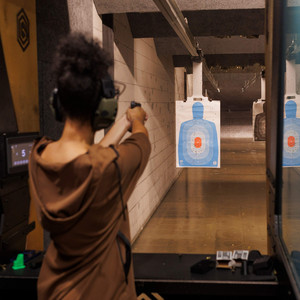
My colleague, Frank Langfet, has been looking into how some people are responding to this fear, which led him to a gun range in Maryland to meet someone who goes every week.
His name is Charles.
This is a Smith & Wesson 380.
And then my next gun will be the Glock.
And I already have a shotgun.
Charles bought his first gun in the last year.
He showed Frank how he's practicing reloading his pistol.
So this is a task I would stumble over.
Putting the bullets in it.
Yeah, and you want to kind of be comfortable with everything, because the thought is that when there's an actual situation or event, you don't want to be fumbling around.
When we come back, NPR's roving national correspondent, Frank Langfitt, tells us what's driven Charles to embrace guns and the growing national trend he represents.
We'll be right back.
Support for this podcast and the following message come from Strawberry.me.
Be honest.
Are you happy with your job?
Are you stuck in a job you've outgrown or never wanted in the first place?
Are your reasons for staying really just excuses for not leaving?
Let a career coach from Strawberry.me help you get unstuck.
Discover the benefits of having a dedicated career coach in your corner and get 50 off your first coaching session at strawberryme.
This message comes from Carvana, who makes buying and financing your next car easy.
Thousands of vehicles, terms up front, and 100% online.
Even get it delivered to your door.
Buy your car the easy way with Carvana.
Delivery fee may apply.
Public media counts on your support to ensure that the reporting and programs you depend on thrive.
Make a recurring donation today to get special access to more than 20 NPR podcasts.
Perks like sponsor-free listening, bonus episodes, early access and more.
So start supporting what you love today at plus.npr.org.
We're back with the Sunday Story.
Frank Langfitt, welcome to the program.
Great to be here, Aisha.
So Frank, what drew you to this topic and to Charles?
Yeah, you know, Aisha.
For years, really decades, the stereotypical image of American gun owners has been white, rural and Republican.
And Charles, he's none of those things.
He's Black, liberal, and lives in the suburbs.
Charles did not buy guns for some of the typical reasons we usually think of, like hunting or self-defense against random crime.
Instead, he's bought guns because he's afraid of some of President Trump's policies and what some of his supporters might do.
So what's Charles, like, specifically afraid of?
He told me over Trump's second term, he's seen a lot of things that scared him.
The arrest of a foreign student who criticized her university's policy on Israel.
Hands behind your back.
And the handcuffing of a U.S. senator.
Charles worries that ordinary citizens like him could eventually be targeted.
What I'm talking about is protecting myself from a situation where there may be some kind of chaotic civil unrest and the streets become something we don't recognize.
That civil unrest that you expect would be triggered by the president or the administration through rhetoric?
He has it all.
He could dispatch citizens or the government.
It doesn't matter.
He could do both.
And I'm not saying that that's what's going to happen.
What I'm saying is none of this is out of the question any longer.
That's really striking to hear.
Of course, Charles, he's just one person.
How do we know that he represents something bigger?
How many people did you talk to?
I did more than 30 interviews over seven months and I talked to new gun owners, people who help run gun clubs for those on the political left, as well as firearms trainers and academic researchers.
And Aisha, I found a lot of evidence that more liberals, people of color like Charles and LGBTQ folks are buying guns out of fear.
This is just a small sample of what I heard from gun clubs and trainers.
Since the second inauguration of Trump, we have seen an incredible increase in interest in training with firearms.
We have seen an increase of membership across our chapters of around 40%.
I've never seen a surge like this before.
That was David Phillips.
He's on the training team of a group called the Liberal Gun Club, followed by Hope, who helps lead the Socialist Rifle Association, and Thomas Boyer with the San Francisco chapter of the Pink Pistols.
The Pink Pistols motto is, armed gays don't get bashed.
Now I should add that many of the gun owners I talked to for this story, like Charles, they didn't want their full names used.
They're afraid of being harassed or worse.
So can you tell me more about these clubs for liberal gun owners?
They provide a haven for liberals to train and learn about guns.
The Liberal Gun Club, for example, has chapters covering 38 states.
The club's been around for more than a decade and a half.
And Phillips told me that club membership has grown by two-thirds since November.
That's from 2,700 members to 4,500 members.
And requests for training have quintupled.
Phillips says people coming for training have the exact same fears that we just heard from Charles.
The concern is about the supporters of the right wing who feel that they have been given permission to run roughshod at least, if not commit outright violence against people they don't like.
And it's not just liberal gun groups who are saying this.
Even traditional Second Amendment groups say they see more liberals seeking gun training out of fear.
This is Taylor Rhodes.
He works for the National Association for Gun Rights.
It's definitely common knowledge at this point.
I think we saw a little bit of it, you know, right after the first Trump inauguration.
So you have people who are telling you they're afraid of President Trump's policies and his rhetoric, as well as you know potentially, what some of his supporters may do.
What does the White House have to say about all of this?
Well, I reached out to the White House, of course, and spokeswoman Abigail Jackson.
She dismissed this reporting and she called it disingenuous.
And I'd like to read you a part of the statement that she sent me.
She says, quote this type of biased and left wing coverage is why NPR no longer receives taxpayer money.
That's something we can all celebrate.
And President Trump has weighed in on the issue of political violence in America.
He blames it on what he calls the radical left.
Trump, of course.
He cited his near assassination at a rally in Pennsylvania, though investigators still haven't established a clear motive for that shooting.
And the president has also cited, of course, the killing of Charlie Kirk, a political activist who, as everyone remembers, was assassinated at a university in Utah.
Here's what the president said from the Oval Office just after that happened.
It's long past time for all Americans and the media to confront the fact that violence and murder are the tragic consequence of demonizing those with whom you disagree, day after day, year after year, in the most hateful and despicable way possible.
For years, those on the radical left have compared wonderful Americans like Charlie to Nazis and the world's worst Mass murderers and criminals.
I mean.
It is a fact though, that President Trump does also speak very harshly about the many people and groups that he doesn't like, right?
Yes.
Some liberal gun owners that I talked to, they made this exact point from their perspective.
It's the president who demonizes others, whether it's undocumented immigrants.
They're poisoning the blood of our country.
That's what they've done.
...or political opponents.
We pledge to you that we will root out the communists Marxists, fascists and the radical left thugs that live like vermin within the confines of our country.
Frank.
So the people that you talked to these were people who had, until recently, been maybe anti-gun or didn't really have experience with guns.
Exactly.
How do you get to this point of I'm going to go out and buy a gun?
I was really curious about that.
So when I went to the range with Charles, I talked to him about it.
And he told me back when he was a kid, guns of any kind were forbidden in his house.
I grew up in Brooklyn, New York, out of the 70s.
Back then it was a very, very tough neighborhood and a lot of crime.
And my mother was very strong in the church and she forbade me to have any sort of guns to play with.
So I couldn't even play with a water gun.
Charles' view of guns really changed after President Trump got a second term.
And Charles began to think a lot differently.
I have a family.
I have daughters.
I have a wife.
I have a home.
If there's ever civil unrest, anyone who's ever going to try and break into my home to get whatever to harm myself and my family I want to be prepared and protected as the father of the home.
And Charles isn't the only person in his household thinking about self-protection.
When I met him at the range, he'd also brought along his daughter.
Her name's Charlie.
She's 19 years old.
I've never used guns before.
I never really did anything with guns or paintball or BB guns.
But there she was, pointing a pistol at a target, working on her aim and technique.
I'm getting better with headshots.
I think that the trick is that you just have to raise your shoulders up a little.
Charlie's here at the range with her dad to learn how to protect herself.
Of course, she worries about random crime.
She also is afraid of being targeted because of her race.
The day after the election, a man drove onto her college campus and yelled racial slurs at black students.
Some people.
They hate us so much that they really try to make it known how much were not wanted here.
Black people, women and also I feel like who's targeted now is just liberals, because of Trump's second term.
Knowing how to shoot, how does that make you feel?
It makes me feel strong, I'm not going to lie.
You know this is a father-daughter day at the gun range in 2025, and not who you would necessarily expect.
No, but among liberals and people of color these days, we're seeing more scenes like this.
Now this trend of you know Black people liberals, LGBTQ folks, you know buying guns, it didn't just start on election night in 2024, right?
No, this has been building for years.
I talked to a man named David Yamani.
He's a professor of sociology at Wake Forest University and actually he's been studying this for a long time.
We definitely saw something similar happening in the COVID year of 2020, where we rolled straight from the pandemic into the summer of the George Floyd murder protests and then rolling straight from there into a contested presidential election.
And there we do have some data.
We do know that in that year that new gun owners were disproportionately affected.
African-American.
They were disproportionately female.
And while we're focusing on the last year, I think it's important to note that more liberals have been buying guns even before President Trump entered politics.
In 2022, the University of Chicago, they put out a study that found that 29 of Democrats or Democrat-leaning people nationwide had a gun at home.
Now that's seven percentage points higher than it was a dozen years earlier.
But Isn't it also true that you know when Democrats get in office, then a lot of right leaning people go out and buy guns?
Yes.
Politics can drive sales on both sides of the aisle.
I'm going to give you a couple of examples.
When Barack Obama was elected in 2008, it did trigger a buying spree, because some people were afraid that he would enact more gun legislation.
And if you think about California in 2019, that was the year that they put in a law requiring background checks to buy ammunition.
And that also sparked some panic buying.
Is there any way to know just how many people are actually buying guns these days because they're scared of the political environment?
I wish there were, but no, the answer is no.
When people buy a gun in the United States, of course, they don't have to say why.
But I did look at Google Trends, and it was interesting.
I put in the phrase how do I buy a gun?
And I saw that it spiked a number of times in the last year.
And so when were those occasions?
Yeah, pretty interesting.
Around the time of Trump's election, his inauguration, the first immigration enforcement blitz that was back in January and the day when Trump held a military parade here in Washington.
When we come back, we'll hear from another group that's arming up, trans people.
This message comes from NPR sponsor Adobe.
Introducing the all new Adobe Acrobat Studio, now with AI powered PDF spaces.
Need to turn 100 pages of market research into five insights with a click?
Templates for a sales proposal that'll close that deal?
Or an AI specialist to tailor the tone of your market report?
You can do all that with the all new Adobe Acrobat Studio.
Learn more at adobe.com slash do that with Acrobat.
Are you thinking about making any changes in the new year?
The Life Kit podcast is here to help.
In each episode we have research-backed strategies and expert advice on everything from meal prep to strengthening relationships, to paying down your credit card debt.
Make your resolutions stick.
Listen to the Life Kit podcast on the NPR app or wherever you get your podcasts.
We're back with the Sunday story.
Frank, earlier we heard from Charles and his daughter, who they're both black.
But you also mentioned that more LGBTQ people have been buying guns.
Like, what are they telling you?
You know, they feel Aisha the ones that I talked to that the Trump administration has it out for them.
Here's just a couple of examples that they cite.
You know, the president ordered federal departments to define gender as unchangeable and assigned at birth.
He also banned transgender people from serving in the armed forces.
I've been talking to Dana, who works as a software engineering consultant in the Boston area.
Like Charles, Dana grew up in a very anti-gun household and also, like Charles, does not want their name out there.
Now, Dana had done a little bit of training with the Pink Pistols.
That was a group we heard from earlier, which caters to LGBTQ folks.
But watching the riot on January 6 2020 really changed the way Dana thought about the need for firearms.
Basically the complete breakdown of forces of the state to maintain any kind of order in that situation made me realize that if we had that level of political violence pent up in America that I was very likely going to become a target.
About two years later, Dana got a license to carry a concealed firearm and began buying guns.
So I have two pistols and one, two, three, four AR-style rifles.
Now, Dana identifies as non-binary transfeminine.
I first talked to Dana about the Trump administration all the way back in June.
I have been absolutely terrified.
I'm fortunate enough to have the financial privilege to start the process for getting out, getting out of the country.
I mean, where is Dana planning to move?
Europe, but Dana doesn't want to say specifically, but you can imagine.
We're talking about a warmer climate.
And so, as the summer wore on, Dana and other trans folks say they saw more moves by the administration.
That really worried them.
Late August, you'd remember, there was a mass shooting at a Catholic school in Minneapolis.
Huge news in the United States.
And there were questions about the gender identity of the shooter.
Now afterwards, a number of news organizations reported that senior justice officials were considering, you know, trying to classify trans people as mentally ill to bar them from owning firearms.
So did anything ever come of that?
No, it did not go anywhere.
And I checked in with Dana last month, and Dana's much less concerned about that issue right now.
We kind of realized that in order to do this, you know, the amount of effort that the DOJ would have to go through would be kind of enormous.
And trans people got a boost from what might otherwise seem like an unlikely source.
The NRA came out and said, we may not like trans people having guns, but we are not.
We are opposed to the federal government stripping guns away from any particular, any non-criminal offense.
The NRA did not mention trans people specifically, but made it clear that it opposed sweeping gun bans of any kind.
I was pleasantly surprised.
I didn't necessarily expect them to come out with a statement.
And how important do you think that was to killing the idea?
I think it was very important.
So fear of the administration instituting a gun ban, actually united liberal, trans people and conservative Second Amendment groups.
Exactly.
I think it says a lot about how the president's policies to limit individual freedoms can actually unite people who are usually on opposite sides of the fence.
You mentioned that you did these interviews over many months.
President Trump has made big, bold changes since he took office last January.
Have the attitudes of any of the people that you've interviewed changed since you first talked to them?
I haven't had a chance to call everybody back.
But when I talked to Dana last month, the tone was actually very different.
I am feeling significantly better, significantly more positive.
Dana said they've seen more collective action against some of the president's policies, including people challenging ICE raids.
It is people getting activated and getting out of their little helpless cages.
For a long time I felt like the American populace was basically asleep and was not going to do anything.
And it was just going to sort of silently roll over and let fascism come along.
And I should add something here.
You know, President Trump has repeatedly denied that he's a fascist.
And instead, that's how he describes some of his opponents.
Did Dana's change in attitude surprise you?
It did.
I was not expecting that.
And that's why it's so important for reporters to check back with sources over time when we can.
Reporting, it's often just a snapshot.
And I always find I learn so much more if I can continue the conversation.
So does this mean Dana is giving up their guns?
No.
Dana still has the pistols and rifles and still plans to move overseas.
But it doesn't feel quite as urgent.
So we've heard from the liberal gun club and Dana learned to shoot with the pink pistols online.
Frank, why do you think people on the left and minorities seek out these kind of training groups?
Yeah, I asked that question to a trainer I've been talking to for the last few months.
My name is Alessandro Padovani.
I'm originally from Italy, but I've been living in California now for over 20 years.
Padavani runs this company called Progressive Defense Training and he says there are things that he saw in the industry that alienate progressives and other kinds of minorities.
Padavani says sometimes he would come across teachers who were outspoken in their right-wing politics and came off as really macho.
Classic examples are people that teach an entry-level class but they're decked out like they're special forces people.
I remember a class in Sacramento all places where obviously the instructor was making joke about all the libs and how, if there ever is a civil war, you know they don't stand a chance because they hate guns.
Padavani's white and he says he's also come across trainers who made disparaging comments about minority groups.
Like, why do gay people want to get into firearms?
You know, they're gay anyway.
Implying, you know, they're not good at fighting or defending or they're effeminate.
So Padavani, what he's describing is that some trainers create what it sounds like a very toxic environment.
Like, is that common?
Well...
You know Padovani and the other trainers that I talked to.
They emphasized there are a lot of politically conservative trainers who do a very good job.
And I want to say when I went to this range with Charles Aisha, it was very, very welcoming, completely professional, no sign of politics one way or the other.
But Padovani says enough people have had bad experiences or fear bad experiences that it's created a market for his services.
Frank, I have one final question for you.
People you talk to said they fear political unrest and they worry that you know fellow citizens might attack them.
How likely do they think that is?
Like, do they think that this is a real possibility now?
I pressed them on this because I was like you like okay, how likely – what do you think is really going to happen?
All of them said they did not expect this to happen.
When we first talked, Dana put the risk at 20% tops.
And everybody – I want to reemphasize this – was very clear that they would not engage law enforcement.
Right.
I asked people under what conditions they might have to mount some kind of armed defense, and Dana cited the example of, let's say, a hate group threatening a nearby neighborhood.
Charles worried.
As he said before, we've heard about civil unrest in which people might possibly target his home.
I'm not talking about the government.
I'm talking about other humans, other citizens, other Americans, other people that feel somehow that I have something that they're going to take.
And that is my mentality.
And I was never, ever, ever like that.
Now Charles hopes he never has to use the skills that he and Charlie were showing me when we were at the shooting range.
But he also said that if you know the nation were to turn violent and unpredictable, he'd really regret not owning guns and not knowing how to use them.
As a man, as a father, as a husband, How remiss and derelict will it be for me to not be prepared?
Frank, thank you so much for your reporting on this.
Thanks for the opportunity to talk about this.
I learned a lot over the last few months talking to these folks.
That was NPR's roving national correspondent, Frank Langfitt.
This episode of The Sunday Story was produced by Thomas Coltrane and Andrew Mambo.
Liana Simstrom and Catherine Laidlaw edited this episode.
Fact-checking by Susie Cummings.
The engineer was Kwesi Lee.
The Sunday Story team also includes Justine Yan and Jenny Schmidt.
Our executive producer is Irene Noguchi.
I'm Ayesha Roscoe, and Up First is back tomorrow with all the news you need to start your week.
Until then, have a great rest of your weekend.
Want to hear this podcast without sponsor breaks?
Amazon Prime members can listen to Up First sponsor free through Amazon Music.
Or you can also support NPR's vital journalism and get Up First Plus at plus.npr.org.
That's plus.npr.org.
This week on the NPR Politics Podcast.
Barely more than a week into the new year, there's plenty to break down and try to understand.
In Venezuela and beyond, questions about the changing role of America on the world stage.
And in Minnesota, a deadly ice shooting.
Follow us each day for facts, perspective and analysis on the NPR Politics Podcast.
Listen on the NPR app or wherever you get podcasts.
This week on Consider This, the deadly ICE shootings in Minneapolis.
That city's police chief told us he was already concerned with how federal agents were doing their jobs.
Truly, the manner how this enforcement action is being conducted.
An immigration crackdown gone wrong on Consider This.
Listen every weekday afternoon on the NPR app or wherever you get your podcasts.