
[The Strategic Role of Liquefied Natural Gas (LNG) Amidst the European Energy Crisis]-[Why will we be using liquefied natural gas to heat our homes this winter?]
📋 Summary
The Geopolitical Catalyst for Energy Diversification
The current global energy landscape is undergoing a profound transformation, primarily driven by the ongoing Russia-Ukraine conflict. As the podcast highlights, "talk of energy has been storming the headlines of late," reflecting an "unprecedented energy crisis" that has gripped Europe. Historically, Russia served as Europe's "main energy supplier," but the geopolitical fallout has made "reducing dependence on Russian energy" a critical imperative for the continent. With the imposition of international sanctions and accusations of Russia "sabotaging gas pipelines," Europe is facing soaring energy prices that show "no signs of slowing down," necessitating a rapid pivot toward alternative fuel sources.
Understanding Liquefied Natural Gas (LNG)
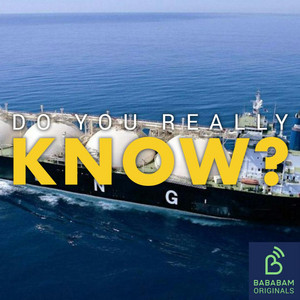
In response to this supply instability, the United States has positioned Liquefied Natural Gas (LNG) as a primary solution. LNG is essentially "natural gas condensed into a liquid state," composed primarily of "methane" with smaller quantities of "ethane." The production process is highly technical; it occurs in "cryogenic factories" where the gas is cooled to "minus 160 degrees Celsius."
What makes LNG a revolutionary tool in energy logistics is its versatility: it is possible to "regasify LNG" back into its usable form upon arrival at its destination. Unlike conventional pipeline gas, which is geographically bound, LNG can be "transported by sea" using specialized "LNG carriers." Safety is paramount in this process, with gas stored in "full containment storage tanks." This dual-tank system—comprising an "inner tank" for the liquid and an "outer tank" for security—ensures protection against "leaks or spillages," while high-level insulation maintains the necessary liquid state.
Why LNG is the Current Global Game-Changer
LNG has emerged as "Europe's best known alternative option to Russian energy." The economic shift is significant; as reported by Forbes, LNG was the "fastest growing top 100 US export in 2019," and Western Europe has become the "third fastest growing market for the US" compared to the previous year.
While the United States is a key player, the global supply chain is diverse. According to Statista, as of July 2022, "Australia has the largest production capacity for LNG," followed closely by Qatar. Other essential producers include nations like "Malaysia, Algeria, Russia, Nigeria, and Indonesia." Additionally, Africa is increasingly attracting "Western imports" due to the presence of significant "offshore deposits."
Ultimately, the ability to bypass traditional pipeline infrastructure and transport gas directly from the "country of origin" to the consumer is described as a "game changer." By diversifying energy sources through the maritime transport of LNG, countries are better equipped to mitigate the risks of geopolitical volatility, ensuring that heating homes during the approaching "long cold winter" remains a manageable challenge rather than a catastrophic failure of infrastructure.
Deep Learning with ListenLeap


