I'm curious to know why inbreeding leads to such poor offspring.
Well, it does and it doesn't.
I think this story has been asymmetrically propagated.
Let me tell you why it causes problems and then let me tell you the other side of the story.
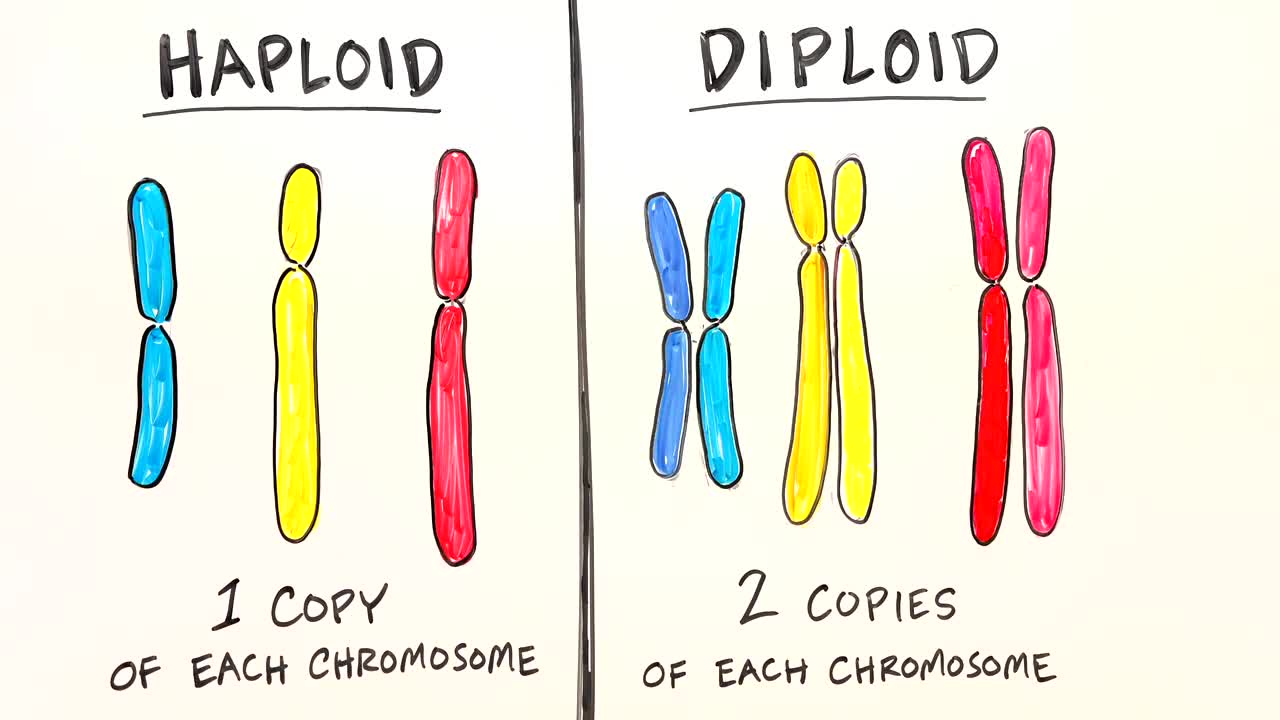
We are diploid creatures, meaning that we have two copies of all of our genes.
Genes differ in the parameter called dominance.
So there's some genes that you can have two different copies, and if you have one copy, that's what affects the phenotype.
So eye color would be this sort of thing.
I happen to know that I have a blue-eyed gene that I got from my mom and a brown-eyed gene that I got from my dad.
How do I know that?
I know that because my mom has blue eyes.
In order to have blue eyes, you have to have two copies of the blue-eyed gene, which means that when she had me, she had no choice but to pass one of those on.
So I got a blue-eyed gene and my eyes are brown, which means I also got a brown-eyed gene.
So I'm heterozygous.
And the blue-eyed gene is hidden completely.
It is a recessive.
There are many instances in which a recessive gene is bad, often devastatingly so.
And the reason for that is because one of the ways that a gene becomes recessive is when you take a functional gene and you break it.
And you get a mutation that takes a gene that successfully produces a protein and the code gets changed and suddenly that protein doesn't work.
Now it's recessive because you have a good copy of the gene and maybe that gene actually has a regulatory apparatus that detects how much of the product you need and it keeps producing from that functional gene more product, until you get to the point that you don't need more, in which case you won't see the broken gene because the non-broken allele will be working overtime.
You feel the same.
So the important thing though, is because there are many of these broken genes that are recessive.
They circulate because there's no downside to having one.
There's a downside to having two, but if you only have one, you're not paying a cost, or at least not a substantial one.
So the estimate is that each of us is walking around with something like eight, on average, devastating recessive alleles somewhere in our genome and that we don't know anything about it because we have a functional copy of the gene in question and we live our lives blissfully unaware, and that these things are rare.
Each one is rare and you just happen to, by lottery, have gotten eight at random devastating, deleterious recessive genes.
But if you breed with your sister, the odds change radically, because she is likely to have inherited some of the same deleterious recessives from your parents that you did.
So in the population of you and your sister those very rare deleterious recessives that you have are suddenly not rare anymore.
And the chances are that when you produce an offspring with your sister, your offspring is going to get a pair of deleterious recessives at one locus that will cause that devastating phenotype.
So inbreeding is bad. and we get inbreeding depression.
That means the decrease in fitness that comes from breeding too close.
Now it's interesting how quickly this tails off.
Historically speaking, marrying one's first cousin wasn't all that rare.
Interestingly, Darwin did marry his first cousin, and he had a child who was enfeebled, probably the result of deleterious recessives that he wouldn't have known anything about because the understanding of genetics had not arrived yet.
But marrying a cousin is distant enough that the chances of a deleterious recessive coming together in a homozygous condition is low enough that it's not an insane thing to do.
However, think about the following puzzle.
The best win you can get evolutionarily is if you have the opportunity to produce offspring in a landscape that is hospitable to you but is not full of your competitors.
In a population.
The number of individuals of a particular species that the environment can tolerate is called the carrying capacity.
And populations tend to exist very close to their carrying capacity because, to the extent that there's more resource than there are creatures, population will grow until there isn't more resource than creatures.
So populations rise to carrying capacity.
One of the logical outgrowths of that is, in general, the expectation for an individual is that, on average, they will replace themselves in the population and no better.
An individual in a sexual species will produce two offspring, each of which is half related to them.
That's what you should expect.
Now, the variance can be very wide.
You can have some individuals producing lots more than replacement and most individuals producing none.
That's a common pattern.
But nonetheless, on average, you should expect replacement and no better, because the population is probably already at carrying capacity.
But imagine for a second that you are a pregnant female bat that gets blown off course in a storm and finds yourself on an island where you don't have any competitors.
The food you eat is there or something that will do is there, and you have no competitors, and the island is big enough to have 10000 of your species at carrying capacity.
Well, now you've gone from being an animal that had a likelihood of replacing itself in the population by producing two surviving offspring, and now you could found a population with, did I say, 10000.
That's a massive win compared to the expectation, right?
You've won the lottery, except for one thing.
Somebody's going to have to do some inbreeding.
There isn't another bat of your species other than your offspring.
So the question is, do we imagine that natural selection will say, well, you got close.
You almost won the lottery, but sorry, inbreeding sucks.
Or do we imagine that inbreeding is actually something that many of the successful populations that we know today went through and somehow survived?
That's the thing you need to realize is that most of the populations we see have been through intense bottlenecks of one kind or another either close calls where the population got driven to a very low number, or cases where an individual stumbled into a habitat that they weren't in before.
And I would argue that there are probably multiple adaptations that are responsive to this, one of them being the recent discovery I think totally predictable that many creatures actually can produce offspring without sex, under the right circumstances.
And we've seen this now many times with things like sharks and fish.
Well, sharks are fish.
I don't know what I'm talking about.
But we've seen many cases in which vertebrates have successfully cloned themselves or something very close to it.
I would argue this would be triggered by loneliness, basically the discovery that You're well-fed but you don't have – there's no mate anywhere can trigger this.
Certain clades we've never seen it in, mammals for example.
But the idea that populations will have faced many situations in which inbreeding is the only way forward.
But if you can get forward, the win is spectacular.
Therefore, inbreeding will be tolerated better than we expect, and we've seen lots of empirical evidence.
Sea otters and northern elephant seals both had their populations driven to less than 100 and have bounced back marvelously.
So there was a lot of inbreeding in those tiny populations.
Somehow we have thriving populations today that are derived from them.
What happened?
Well, I would argue that it's from the following thing.
When deleterious recessive genes or alleles are rare, they don't come into contact with each other.
And so selection can't see them.
That's why they're lurking in our genomes.
They're invisible to selection because the other allele does the work.
When inbreeding is forced by a bottleneck of one kind or another, suddenly selection can see those deleterious recessives and it can act against them.
So my argument would be and I think the answer to your question is that inbreeding is initially very costly.
But it quickly, the cost quickly drops.
And that that's the part of the story we don't tell.
The cost quickly drops and lots of inbreeding has happened in every clade we see currently.
And it is one of the things that is, if not anticipated, certainly tolerated by selection, much better than we would imagine.
Hey everybody, maybe you've noticed that our civilization seems to get more insane with every passing day.
The corporate media is a major cause of this insanity, because their entire business model is based on selling narratives and pushing propaganda.
This is why I use Ground News, which is the sponsor of today's video.
They've been endorsed by the Nobel Peace Center as an excellent way to stay informed.
Avoid echo chambers and expand your worldview.
For example, I found this story interesting about China's Are You Dead app.
I can see that nearly 200 sources covered the story and it's a fairly even distribution between the right, left and center.
However, the left focused on the virality of the app and how its name will be changed to something less offensive, while the right focused on the implications of a society where so many people live in isolation.
Ground News is the only app and website that gives me a bird's eye view of the media landscape by gathering news from sources all over the world so I can see who's pushing what narratives and compare how different sources covered the same story.
For every story I get a quick visual breakdown of the source's bias, factuality and who owns the source.
So if you're looking for a way to be informed without being misinformed, subscribe to Ground News through my link groundnewscom, to get 40 off the Vantage plan for unlimited access to every feature.
This is the plan I use.
Ground News is providing a valuable service, and I hope you check them out.