This is Planet Money from NPR.
Mike Meers is a biologist and an assistant professor at Washington University in St. Louis, Missouri.
He runs his own lab.
Does everybody wear a white lab coat?
Yeah. If eH &S is listening, yes, everyone is wearing a lab coat.
Okay. He studies how our DNA influences diseases like cancer.
And he's been doing pretty great.
But lately, university life has been ugh.
We talked about it in a language I don't usually speak.
Is there an emoji that best represents how you felt the last few months?
It's shifted. I think in like early February it was like the panic emoji.
Mike is one of thousands of researchers all around the country who are suddenly at risk of losing their jobs because the Trump administration is cutting or threatening to cut funding for their research. In some cases, huge pieces of it.
The thought of those cuts is panic emoji, crying emoji, or, I don't know, poop emoji.
You could work that one in there too, yeah.
If you can't tell, neither one of us is super emoji literate.
Might be like the red angry emoji, or it might be the sort of exhausted emoji.
If there was sort of like a keep calm and carry on emoji.
Yeah, that's not an emoji.
I really have to get a big grant in the next couple of years, or else the money is going to run out at some point.
Mike's got nine researchers in his lab and right now he's gearing up to get this crucial grant from the National Institutes of Health, the NIH.
The big one he's applied for would bring in $300 ,000 every year for a half decade.
And the proposal he submitted is as detailed as you'd expect.
Salaries for people in his lab.
His salary. Software.
So let me try to bring up a budget justification I have here, uh.
The project is to watch what happens to DNA over time, and he needs all kinds of materials.
Tissue culture plates, cryovial tubes, centrifuge tubes, antibiotics, chemotherapeutics, small molecules inhibitors.
In another grant, he's asking for equipment.
I submitted a line item request for a new fluorescent microscope, but that still costs like $100 ,000.
Oh, my goodness. If he gets the money, it's not like he gets some big check in the mail for 300 ,000 dollars.
Yeah, yeah. No, it doesn't go to me.
It doesn't belong to me.
Right? It belongs to the university.
These potential grants are a tiny, but vital piece of Washington university's budget.
The university actually gets lots of tiny pieces like this.
Right now, they have around 1 ,500 NIH grants.
And if you add up all the checks WashU received last year from the government, it was nearly a billion dollars for just this one school.
But since January, the federal government has been threatening to cancel massive amounts of university funding, and in some cases they already have. Harvard is battling over billions of dollars, Columbia lost $400 million, and Johns Hopkins has laid off 2 ,000 people because of cuts.
It's stressful out there if you're a researcher.
And Mike was one of the few willing to talk to me about it.
It feels as if everyone is kind of scared.
Totally, yeah. Yeah.
I mean, I think - yeah.
And I'm right there with them, right?
Like I don't - I certainly I don't wanna mark them.
I think all of us wanna just do our work, right?
And we wanna - we wanna do what it is we came here to do, which is, like, do some cool science and help people out.
I worry that by sort of laying low, we're actually maybe undermining our future ability to actually do that.
Hello and welcome to Planet Money.
I'm Erica Barris. And I'm Mary Childs.
American universities have long been the envy of the world, but this fight over federal funding, it could change that.
So is this the beginning of the end of universities as we know them?
Today on the show, we walk you through the history that made our universities what they are today.
And we also get our DNA researchers, Big Boss, the head of Washington University, to open up his books to show us where all their money comes from and what will happen if some of it goes away.
Our institutions are individually going to be weaker.
And what that means practically is that as a nation, we're going to be weaker.
This episode is part of our occasional series looking at how the Trump administration and Others are challenging a set of economic ideas that date back to World War II.
Ideas that placed the U .S. at the center of the economic universe.
Things like it's good for the U .S. if dollars are the world's currency or in this episode, investing in university research will pay off.
We're calling our series Pax Americana.
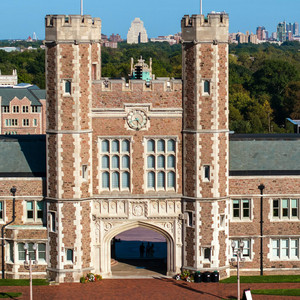
Washington University is a 172 year old elite private university in St. Louis, Missouri.
The administration building looks like a literal castle with battlements on top and everything.
And it is out of that building that the chancellor of Washington University works.
So you are like the person who is guiding the ship essentially?
Yes, I'm the person that's guiding the big old complicated ship.
Andrew Martin is guiding the ship on which our DNA researcher is just one of many sailors.
I feel like it's probably been a busy few months for you.
Totally. I mean the pace the pace of things coming out of the federal government it's almost something every day.
Whether a new executive order, requests for information, you know possible change in regulation and the like.
That velocity has been pretty challenging.
In the last few months the Trump administration has pulled visas from students, including some at Washington University.
They've told Harvard they can no longer have international students — currently more than a quarter of the student body.
Trump has issued executive orders prohibiting diversity initiatives.
And the government has canceled research grants all over the country, including millions for a handful of projects at Wash U.
And not only did they stop any future money, but we were asked to return all unspent money as well.
oh wow that's the reality of what happens when you cancel a contract to do research um did you have to let anyone go yes we've had to let some employees go who were employed on specific research grants when it comes to nih funding washington university is getting around a billion dollars a year it's among the nation's top recipients of federal money so the idea that it's starting to go away I don't know what washington university is going to look like in six or 12 months.
I think as we think about higher education systemically we have the same concerns.
Has there ever been a time when this relationship between the federal government and the university has felt so fraught?
Not in my lifetime.
Now a university is two big things.
One, a place where people go to learn.
But also it's a research incubator.
And the system we have, where universities get tons of federal funding, has been in place for the last eight decades.
Universities and the federal government entered into an agreement right after World War II.
And the purpose was to build the very best scientific research engine in the world.
And we did it. And we're concerned that some of the actions that are being taken are going destroy something incredible that we've built together since the end of World War II.
That story of how we got the system we have today began with this guy named Vannevar Bush.
Vannevar was the first presidential science advisor.
He ran the Office of Scientific Research and Development during the war.
The first project that he got famous for is now infamous.
He decided to bring some of the best scientific researchers in the country together to develop weapons, specifically a bomb that would be so ferocious no country would ever attack the U .S. again.
That endeavor is not so fondly remembered as the Manhattan Project.
And though that project itself was controversial, it threw a spotlight on the power of research. So after the war ended, Vannevar was like, Federal Government, what else could we develop if we threw some money at the great minds at all these universities?
Let's do it. Let's start funding research at universities." And people from both sides of the aisle were on board. People were like, we should keep doing some of this.
This is Elizabeth Popp Berman, professor at University of Michigan, who wrote a book called Creating the Market University, how academic science became an economic engine.
How does the system work?
Where does the money come from?
How has this changed over time?
That is literally why I called you, so.
Elizabeth says, before the war, universities were almost entirely funded privately or by states.
And there was some research at those universities, but most happened instead in private companies.
Westinghouse, Bell Labs, they were paying scientists to invent things that they could sell like early semi -conductors, transistors, or the railway airbrake.
But Vannevar argued America's private sector didn't have enough incentive to conduct basic research. Because some research isn't commercial, you can't immediately make money off of it.
Also, it can take years and sometimes it doesn't pan out.
The point was we should take risks on research. Invest in it even before we know its outcome.
And Vannevar believed the best place for that research was American universities.
They'd be able to train the next generation.
There was this historic moment where Vannevar wrote a report called Science, the Endless Frontier.
It was like a call to arms for the federal government to help university researchers open new frontiers.
He wrote, If the College's universities and research institutes are to meet the rapidly increasing demands of industry and government for new scientific knowledge, their basic research should be strengthened by use of public funds.
Initially, a lot of the research was oriented towards defense because we'd gone from World War 2 to the Cold War.
We've had advances in things like radar and sonar, and who knows what the next advance is gonna be that's gonna help us kind of maintain our defense edge?
Right, other Rs of all kinds.
Yeah, other Rs, yeah.
But Vannevar also wanted to broaden the focus to new frontiers of all kinds.
There's actually this interview of him from back then with Edward R. Murrow.
He talked about the importance of competing with the Soviet Union and the world in all the ways.
Economic way. By trade.
By political maneuvering.
And by science. There is going to be a great surge forward of the biological sciences.
In this interview at his home, Fanny Burr is rocking a three piece suit?
Maybe tweed? And his signature rimless glasses.
New light is being thrown into dark corners everywhere.
Knowledge is building up.
And in my opinion the dam will break and there will be money applications and very important ones.
There was some debate about how exactly to throw light into which dark corners.
Like, would this new federal funding system be top down?
Would government officials decide what research should be done and who should do it as in the Manhattan Project?
Or would this funding system be more scientist driven.
Independent. Like scientists would decide what was interesting or pertinent or necessary and propose research. Find their own new frontiers.
And that's the system we chose.
Science driving science.
And it wasn't just about research for research's sake.
This was also about fostering American influence around the world.
The U .S. was taking on this new worldwide leadership role, the dollar became the world's reserve currency, the US was helping European countries rebuild after the war.
And now, the federal government would start funding research at universities for the sake of learning and also to place the US at the center of the intellectual and economic universe.
So a new research economy was born.
Scientists at universities would submit proposals, their own peers would review them and decide which projects to fund.
And the federal government would hand over the money.
This system took off.
More Americans than ever went to college, people from all over the world came to the U .S. to study and work.
The grants grew, the science flourished, and the universities got bigger.
And over the decades, the federal government did a couple things that strengthened that symbiotic relationship even further.
First in the 1960s, the U .S. passed Medicare and Medicaid.
paid. Health care was suddenly this growing industry.
And with that came millions more dollars in research funding, this time from another federal agency, the National Institutes of Health.
So now the health care side of universities grew.
Universities partnered with or purchased more hospitals—they got bigger.
And the grants for medical research got bigger.
Now we have what we call eds in med cities, where medicine and education are huge economic drivers.
And Elizabeth, who wrote the book about all this, she says all this federal money going into universities also grew other big industries.
Silicon Valley, biotech. —These are new industries that are very clearly grounded in research that was originally done in universities.
And so, just like at the end of World War II, the long -term benefits are hard to predict, but they're also really large and significant when they do come.
In 1980, the federal government gave American universities one more big boost. It was a few years after Vannievar Bush died.
We were coming out of the 70s when the economy wasn't so great, so Congress made a key change that would add to the wealth of universities.
They changed who could own the ideas that university researchers came up with.
Before this, federally -funded research was thought to be for the public good.
There was kind of a little bit of an anti -patent attitude in general that we're universities, we create stuff that's supposed to be publicly available knowledge and so this isn't something that's appropriate for us to be doing.
Then Congress changed the law to say actually universities can patent their inventions and research, so now universities could profit from licensing the innovations created in their labs.
Things like inhalable COVID vaccines, the computer mouse, drone technology.
Google search code.
Today, universities issue nearly 5 ,000 new patents a year.
So that big idea that Vannevar Bush had after World War II to fund independent research at American universities grew into the system that we have now.
In 2023, the federal government spent $60 billion on research and development at universities, more than 30 times as much as they spent in the early 1950s, even adjusted for inflation.
Has there been too much government money going towards funding research?
I think there's lots of ways you can imagine it being better, places where you could want to reform it.
Over the past few decades, there have been many criticisms of how big, rich and powerful some universities have become.
Like, should we really classify some of these institutions as non -profits?
And how much does the public benefit from federally funded, slow painstaking scientific research?
Since January, the Trump administration has been attacking universities, saying the quote left -wing ideology at elite schools doesn't reflect the population of the United States.
The administration has accused universities of allowing anti -Semitism on their campuses and has told some of them that if they want to continue receiving federal funding for research they have to change how they run things.
At Washington University, the grants that have been rescinded are related to diversity, equity and inclusion efforts like a stem focused training grant for students from underrepresented backgrounds.
Research focused on minority populations, women, gender vaccines.
When I asked NIH about the cuts, a spokesperson referred me to a 63 page documents of all the cuts they've made, and to a White House statement that in part read that the US spends too much on projects that quote, do not promote the interest of the American people.
But funding Funding for all kinds of science is at its lowest level in decades.
And at Harvard all research funding is being withheld, because the university has refused to comply with the administration's long list of demands, most of which aren't related to science.
So, heads of universities across the country are watching to see if a whole system of independent research decades in the making is going to be dismantled, grant by grant, cut by cut.
And they're trying to figure out what to do.
After the break, we dive into Washington University's audited financial statement with the guy who commands the ship.
People who run universities, they talk all the time.
They have big meetings all over the country and the Chancellor of Washington University says that this year, they have a different vibe.
What are those meetings like?
So everybody looks tired.
We're all uncertain about what the future looks like.
So between meetings Andrew Martin says there's a whole lot of texting going on.
Is there like a big president group text chain?
No. No. There is not.
Some of us aren't that tech savvy.
So, individual texts with Andrew's closest 12 president -chancellor friends, and one of the things they're asking each other is, if their funding gets cut, how are they going to survive?
So I asked, can we actually look at your university's whole entire big budget?
I can certainly talk about it.
Okay. I know the information well.
And he did send it to me, last year's 35 page audited financial statement, showing what they own, what they earn, what they saved, and everything they're spending.
We focused on the amount of money coming in.
And the thing that I wanted to understand, what does it take to run a university of this size?
And where does that money come from?
So the easiest way to think about it is like a big pie.
Last year's total pie was a little over five billion dollars.
So first up, what portion of the pie came from the federal government?
Andrew showed me that it was about one fifth of the pie.
20 percent. So Washington University got about seven hundred million dollars in federal grants last year.
But they also got hundreds of millions more from the federal government because of something called indirect cost payments.
So not the direct costs like the microscope for our DNA researcher or the centrifuge tubes, but indirect costs like the counters in his research lab, the chair he sits in.
There are certain things you can't put on a grant.
You know, you can't put a building on a grant.
Most equipment you can't put on a grant.
Light bulbs probably.
Correct. Every school negotiates how much of that overhead money they'll get.
Like, we need the grant plus an additional percent.
So for Washington University, Andrew told me, they get about $700 million in grants and then $250 million or so for overhead.
And all that money could be in jeopardy.
The grants, the percentage they get on top of those grants.
It has all been thrown into question in recent months.
So Andrew and I went through all the other sources of income for Washington University, all the other pieces of the pie, to understand what, if anything, could expand if the federal money went away.
There were basically three other major sources of revenue.
And the first one was kind of surprising.
Washington University's biggest source of revenue actually comes from what their physicians charge for seeing patients.
The doctors at the university partner with hospitals in St. Louis, and when they see patients, they get insurance payments, and that makes up about half the pie.
About $3 billion comes in from patient care revenue, and that actually swamps the rest of what we do at the university.
Okay, so that's a lot of money.
It's a lot of money.
So if the university wanted to make up for cuts to its federal funding, it could maybe get its positions to see more patients.
Andrew says, yeah, great, but the problem is that's difficult in a city like St. Louis that is not growing.
He hopes to make that piece of the pie bigger, but he says it can't replace federal research grants.
So, next up in the pie of revenue, all the payments the school collects—everything from parking to serving lattes in the café to, the biggest part, tuition.
But in the pie overall?
Tuition is actually a little part of the pie.
All the tuition adds up to about 500 million dollars.
The rest is a few hundred million more.
So if they wanted to use this piece of the pie to fill in for federal money they might they'd have to increase tuition or reduce financial aid.
OK, so we've got the income from hospitals, the income from payments and there's one more big chunk of the pie, it's the one that people always imagine is gonna solve all the problems at big universities, the endowment.
Washington University has $12 billion in endowment money.
It's the 15th biggest endowment in the country.
And the thing to understand about endowments is that lots of that money is earmarked for specific purposes that the donors choose, like specific scholarships or named professor chairs.
And the other thing to understand about endowments is that the endowment itself is making money for the university every year.
That endowment money is invested.
So if they spend it down, they're going to reduce their A piece of the pie?
Gone! Andrew told me, every year they earn about 8 % on their endowment, and they spend about 4%, which comes out to about half a billion dollars a year.
And he says they need to save the rest. So endowments aren't like piggy banks.
We could go to maybe 5, 5 .5%, but anything beyond that would mean that we would start degrading the corpus of the endowment.
And the way I think about it is that, you know, You never would take out a mortgage on your house to pay for your food bill.
Andrew told us the endowment is there to generate more interest. They need it to grow, not dwindle.
So if the school doesn't want to dip all the way into its endowment and doesn't actually turn a profit from tuition and can't immediately just produce thousands more medical patients, what then?
Well, Andrew told me, the university does have a cash reserve.
It's not a source of revenue, it's emergency money.
If you look at our financial statements today, our total cash reserve is a little north of 2 billion dollars.
Okay, that seems like you could use that, what would be the harm in using that?
We can't use all of it.
You can't just take a stack of 2 billion dollars and say all right, we'll fix this problem.
Correct, because the problems that we're facing are long term structural problems. Yeah, two billion dollars could make up for a couple of years of research, and he says he could use some of that cash reserve, but then what?
Universities, they are an incredibly complicated ecosystem.
They're where people go to get educated, but they're also where people do research, and where doctors do their jobs, and they are 300 -acre coffee shops and landlords.
And it's a virtuous circle.
If they get the federal funding, they'll get the tuition dollars, and the parking lot money, and the big gifts from alumni.
It's all these different streams of revenue, all intertwined.
So in this precarious moment, Andrew is making some difficult and complicated decisions – figuring out what staff he can lose, deciding not to break ground on a new building, changing how the endowment is invested.
But he sees even those as short -term solutions.
Andrew and the other President -Chancellor friends he's texting with, they're trying to rethink what the entirety of a budget and mission of an American university will look like.
Especially when the rest of the world is still clamoring to compete.
Higher education is a global market.
There are people dying to attract as many students from around the world as we do here in the United States.
There are other countries, particularly China, that are investing heavily in research and technology and biomedical science because they see an opportunity to very quickly become as competitive as we are in the United States.
I would hate for us as a country to lose the battle that we've already won.
And when Andrew goes to Washington, DC, every month to talk with lawmakers, he's focusing more on the basics.
Trying to make them understand the value of everything that happens at Washington University.
How much, just like Fannie Burr Bush argued decades ago, it does benefit all Americans.
That the money the government spends, it's an investment.
it will pay off. If you're new to Planet Money, welcome!
Come on in. We've got all kinds of shows for you, everything from how the US dollar became the world's reserve currency to how a month of tariff uncertainty affected the economy.
This episode was produced by Willa Rubin and edited by Mary Ann McCune.
It was fact checked by Sierra Juarez and engineered by Harry Paul.
Alex Goldmark is our executive producer.
I'm Mary Childs. I'm Erika Barris.
This is NPR. Thanks for listening.