Do you ever feel like no matter how many hours of sleep you got, you're still fatigued?
We have to be able to differentiate sleep from the different ways that we can rest.
On the Life Kit podcast, the seven types of rest and why each one is important to living a full, healthy life.
Listen to the Life Kit podcast in the NPR app or wherever you get your podcasts.
You're listening to Shortwave from NPR.
Happy early Valentine's Day, short wavers and singles awareness day.
And if you love Parks and Rec like I do, Galentine's Day.
Every February 13th, my lady friends and I leave our husbands and our boyfriends at home and we just come and kick it breakfast style.
It's like Lilith Fair minus the angst.
Seriously, that scene changed my life.
But yeah, this time of year, love and connection are on a lot of people's minds.
And I recently met someone who studies a particular behavior, often used to show each other how we feel.
I'm talking, of course, about a kiss.
You know, most people have had a kiss, whether that's romantic or more platonic.
So I think people are really interested in that.
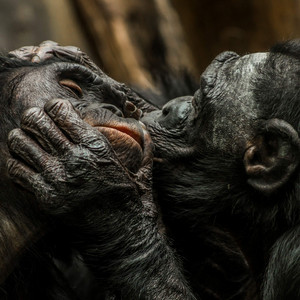
And then also surprised, you know, the first question is, what other animals kiss?
Oh, God, which ones?
What do they do?
What does it look like?
Matilda Brindle is an evolutionary biologist at the University of Oxford who has studied the evolution of kissing.
So, you know, I get wheeled out at parties quite often.
And by the way, she says that not all human cultures kiss.
In Western society, at least, it just does seem like this huge, huge cultural phenomenon.
You know, movies end with a kiss.
We have the kiss of life or the kiss of Judas.
All of these really important kind of cultural things.
She's awoken with a kiss.
She literally can't wake up until someone puts lips on her.
Exactly.
Exactly.
It's this amazing, weird thing we do that looks totally pointless and kind of a bit gross and, you know, counterintuitive.
We're probably sharing loads of germs when we do it.
Oh, yes, we are.
80 million bacteria are estimated to be transferred on average in a 10-second kiss.
Yeah, I mean, that's just bonkers, isn't it?
So today on the show, the evolutionary conundrum of kissing.
Why do we do it?
What other animals lock lips?
And is kissing a biological behavior or a cultural one?
I'm Emily Kwong, and you're listening to Shortwave, the kiss and tell science podcast from NPR.
It is hard to get a house.
Getting that down payment together, brutal.
You shipped off to Djibouti to afford a down payment for a house?
Yes, sir.
100%.
On Planet Money, the high price of housing, what the Trump administration is trying to do about it, and will it work?
Listen on the NPR app or wherever you get your podcasts.
Bad Bunny gave one of the greatest Super Bowl halftime performances of all time.
We'll tell you why and what this performance means at this particular political moment.
Listen to a recap on Pop Culture Happy Hour via the NPR app or wherever you get your podcasts.
On the ThruLine podcast from NPR, the former slaveholder who took on the KKK and won.
He became more and more and more militant as time went on.
Listen to ThruLine in the NPR app or wherever you get your podcasts.
Okay Matilda, you came on our show a few months ago to talk about the evolutionary history of kissing.
I did.
Specifically in primates.
I haven't stopped thinking about it.
So you're back.
Well, I'm very happy to be back.
Why is kissing such an evolutionary conundrum?
It's an interesting one.
I think the key here is that kissing seems like a very unhygienic and vulnerable thing to do, particularly if it's a kind of sloppy kiss and there's a lot of tongue going on.
We know that there are loads of bacteria exchanged.
And that is dangerous.
You know, we can get all sorts of diseases from kissing.
And then the other aspect of it being vulnerable is that we have teeth, you know, which sounds really obvious, but actually I had braces.
I understand.
Well, there you go.
Putting your mouth next to someone's face is potentially a dangerous thing to do if you're not sure they like you.
Particularly, you know, if you're a polar bear, that's some big teeth you're coming up against.
And that is potentially problematic.
So you're putting yourself in this vulnerable position, both in terms of pathogen transfer, but also physically you could die be quite hurt by this.
Well, wait, can you go back to the part where polar bears kiss?
They kiss.
Yeah.
And we're not quite sure why.
I would recommend looking this up on, you know, YouTube or another video sharing platform, not while you're eating.
I just cannot stress that enough.
There is a lot of froth and foam going on and we're not sure why this is.
Oh my gosh.
Oh my gosh.
I'm sorry.
I'm watching this video of polar bears from the budapest zoo and it is like their mouths are foaming.
It's like a car wash in between their mouths.
Yeah, it's a frothy nightmare.
So you, you consider this kissing.
How do you define kissing?
So we define kissing as a non-agonistic interaction, so that just means it's not aggressive.
Intraspecific, which means between the same species, oral contact, which is just mouth to mouth, with some movement of the lips or mouth parts and no food transfer.
Okay, so non-aggressive, same species, oral contact.
Yeah.
That's possibly the least romantic definition of kissing imaginable.
Well, we needed this very clunky definition because we want to understand the evolutionary pathways that this has taken, which means that we've got to have a wide enough definition that it's applicable to polar bears and humans and ants and albatrosses and all of these different animals, you know, that might not even have mouths or lips.
Sorry,
So that's why we had this kind of wide definition, and we fully acknowledge that it is not a sexy one.
I mean, but check, check, check, check, check, check for these polar bears.
They looked like they were having a great time.
Yeah.
It was tender in its own aggressive way.
What other animals kiss that you think would be surprising to most people?
Well, ants.
Another one is albatrosses.
The birds.
The birds, yeah.
And obviously, again, they don't have lips.
I think there's a David Attenborough clip somewhere on the internet of this.
Okay, albatrosses, ants, and what's the third one?
Prairie dogs kiss one another.
Oh, really?
Yeah.
There's some very sweet, nothing like the polar bears.
There's definitely videos of them out there as well.
Oh, my gosh.
Yes, a tiny bit of oxytocin was released as I looked at this photo of these two prairie dogs.
One of them is caressing the other's face.
I know.
Romantic.
Okay.
Okay, so you found out in your research, by tracing the phylogenetic tree of kissing through primates, you found out that kissing was likely present in the ancestor of all apes who lived 21 million years ago.
Who was this ancestor?
Yeah, I mean, this is a great question.
So unfortunately, we don't know exactly who the ancestor was.
There's kind of fossils floating around that time that... could be similar to this ancestor.
A safe bet for what they might have been like comes from an ape from the Miocene.
I think it's probably pronounced Pleiabates Cataloniae.
I think it was found in Catalonia in Spain.
It lived around 11.5 million years ago.
Wow.
And they look relatively similar to modern gibbons, but they won't have been so good at swinging through the trees.
They seem like they might have been a lot slower.
Okay.
Now, a lot of primates kiss.
You have watched a lot of that footage and described two types kinds of kissing.
There's platonic kissing, so that's when say, chimpanzees kiss after an argument and like patch things up with each other.
And then there's sexual kissing, which bonobos do.
Yeah basically, you know, using a lot of tongue, it's described as very sensual.
Wow uh, yeah.
But like when you are watching footage of primates kissing to catalog who kisses and how, how do you distinguish between the two, between platonic and sexual kissing?
Um, I think the difference is mainly the environmental context that we're looking at.
So we would know that sexual kissing is sexual kissing because it tends to be surrounded by other sexual behaviour, whether that is full intercourse or some other thing that primates do all sorts of things.
Sexual behaviours.
When I'm thinking about these things generally, I'm trying to understand them from the perspective of animals that don't talk.
As someone studying animal behaviour, we cannot ask them this.
And so all we can do is observe them.
And so for me, the kind of the shorthand for assessing that very roughly at the moment is okay.
Was this occurring in a sexual context, or was it occurring in a sort of affiliative, more platonic context?
Was it parent-offspring kissing or two friends, that sort of thing?
Well, looking at the data that you have, What are the leading hypotheses on why sexual kissing evolved in primates?
Yeah, that's a great question.
So there are two leading hypotheses, I would say.
The first of which is associated with kind of mate assessment, I suppose.
Do I want to have babies with this person?
Yes.
Do I want to have babies with this person?
That is exactly correct.
Or this gibbon.
So you've got this idea of a kind of mate selection.
Now, that could be something as simple as they don't smell very well.
You know, they smell a bit ill.
I actually don't think that I'm going to copulate with this individual.
Or it could be something a little bit more complicated where they could be testing to see whether they're more genetically compatible.
There's some evidence to suggest that We can use kind of olfactory clues to tell whether someone's major histocompatibility complex is similar to our own, or how similar that is.
And it makes sense to mate with individuals that have more dissimilar major histocompatibility complexes, because that might kind of improve our immune function by having this kind of greater diversity.
Wow.
You want someone whose genes will lend themselves to an immune system that's different than yours.
Yes, exactly.
That's one hypothesis.
Then the second hypothesis is this idea of... pre-copulatory arousal.
So, coming back to the idea that romantic or sexual kissing occurs within the context of sex, having this kind of more comfortable copulation is potentially going to increase the chance of fertilization.
So if you've got to the stage where you think okay, I do want to mate with this individual, I'm going to make this investment then, then it just might be tipping the scales in favor of being fertilized by that individual.
Gotcha.
Let's talk about platonic kissing for a little bit too.
Apes do this.
They kiss and make up after they fight.
Yeah.
There's plenty of cultures, human cultures, of greeting.
You kiss people on the cheeks or even the lips.
Why do we think platonic kissing evolved?
Yeah.
So again, I think there's a release of oxytocin associated with this which helps us to bond, makes us kind of want to do this more.
And that's really important between parents and their kids.
That's a super useful thing to be able to do.
And then the other element of this is, again, sharing the microbiome.
We know that that's very useful for babies, particularly new babies.
It's healthy for their mothers to kiss them a lot, because they're sharing their microbiome and again increasing that immunity.
It's potentially useful for mitigating social tension and kind of just smoothing over social relationships in general.
So it's not just about bonding or kind of, potentially passing on helpful microbes.
It can also have this social role in lots of different species.
And I think really in different species, it's going to be a patchwork of these different functions.
So these are useful reasons to kiss.
Is platonic kissing in human cultures now... more prevalent than sexual kissing?
Do we know?
I think that depends on the species, to be honest.
So platonic kissing is certainly more prevalent in chimpanzees than in bonobos, where it's predominantly, if not all, sexual kissing.
And then in humans, it differs between individuals.
It differs within societies.
People forget the flexibility of behavior and the fact that Cultural variation is absolutely the rule, not the exception.
Yeah.
Well, I mean, does that suggest to you that kissing is something we teach each other to do?
Even though it has an evolutionary origin, is this a learned behavior?
Yeah, I think we do teach each other to kiss.
We kind of see other people do it.
And, you know, nobody's first kiss is good, is it?
Mine certainly wasn't.
Yeah, exactly.
This is something you learn.
I think that there's a strong element of teaching and culture in this.
And, you know, like if you look at over here in Europe, the way we kiss one another on the cheek.
However many cheeks that is, that changes wherever you go.
You know, humans are a primate.
We're extremely flexible.
Just sexuality in general is extremely fluid in primates.
And so I don't see why kissing should be any different.
But it certainly doesn't have to just be cultural or evolved.
There's an interplay between the two.
Where do you hope this research goes next?
What do you want to look into?
I would just like to see people routinely collecting data on other sexual behaviors as well, particularly non-reproductive sexual behaviors.
I think we need to take these behaviors seriously seriously, we need to look at them, we need to collect data, because I think we're going to find some incredible stuff.
We just need to be brave enough to say okay, maybe this is societally a little bit uncomfortable to look at, but actually it doesn't matter, because there's so much to be discovered, there's so many important things out there that we can learn from this, and so that's where I'd like this research to go.
Matilda, thank you so much for coming on the show.
Thank you very much for having me.
This was great fun.
This episode was produced by Hannah Chin.
It was edited by Rebecca Ramirez and fact-checked by Tyler Jones.
Robert Rodriguez was the audio engineer.
I'm Emily Kwong.
Thanks for listening to Shortwave, the science podcast from NPR.
Sources and Methods is NPR's national security podcast.
When world news changes by the hour, we help you zoom out to understand shifting alliances, global flashpoints and what is really happening in places like Iran Venezuela, Greenland.
Our reporters on the ground connect the dots to explain a world order changing beneath our feet.
Listen to Sources and Methods on the NPR app or wherever you get your podcasts.
This year on ThruLine, NPR's history podcast.
For generations, an American quest has shaped the world.
Life, liberty, the pursuit of happiness.
Now, 250 years in, what is that pursuit really about?
Join us each Tuesday for an essential new series America in Pursuit from ThruLine on the NPR app or wherever you get podcasts.