Discussion keeps the world turning.
This is Roundtable. There are trojan and elderly people.
There are young folks who have simply grown tired of doom scrolling and social networking and they are looking for a cell phone that has the simplest capabilities like texting and making phone calls and maybe navigation and taxi hailing.
Perhaps a bit more. But they scrolling increasingly more difficult for them to find their ideal gadget.
Hello, I'm Lyming and this is Roundtable.
Today with Lee and Steve Hathley, let's find out whether there are any alternative gadgets for tech load-eyes of our times.
When I say tech load-eyes, I'm talking about young people who have grown really tired of staring at a screen and reading online novels and watching their young people that are sick of that.
I'm sure they are. If I still qualify as young people, then yeah, I'm one of them.
There are people that are looking for a simpler version of smartphones or should we call them dumb phones.
I think there is this trend observed not only here in China but also worldwide that, especially young people.
Even though it is a small percentage, some young people are turning back to this sort of feature phone or what we call it as dumb phone.
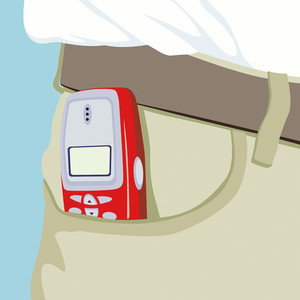
Well when it comes to the definition of what is actually a dumb phone, it is actually a type of mobile phone that retains the form factor of earlier generations of mobile phones.
Meeting that is quite different from the smartphones that we are using nowadays and it can be flip phones or not.
And these phones have buttons that you can press and of course.
Do you think you're imagining that?
The screens are not touch screens and the operating system is also simpler than what we have Android or iOS.
And also they have limited features than smartphones of course.
And you can text, you can call somebody and some dumb phones or some feature phones can also allow you to listen to music and also play games.
Some also have access to internet but some don't.
So basically these are very very basic mobile phones that guarantee your basic, sit texting and calling functions and maybe gaming.
The irony is that I treat my smartphone like a dumb phone.
I use it for calling and texting and taxi hailing and GPS services and the internet and that's about it.
Now a blackberry would suffice.
I know. I know. That's why I never get the newest.
Do you guys get the newest model of phone when it comes out?
My mom is 2020. Oh, years as four years old.
Yeah, I will actually upgrade my mobile phones although that's not really something I want but I have a partner who is super into this tech thing and he thinks the updated version is always the best and especially from mobile phones.
I always stay three versions behind.
And then when the new one comes out so when it comes out next year, I'll upgrade to the following year for me but that's still three years ago.
So it's new to me but it's not new to anyone else.
It works for me. Yeah, I only update when I have to when the old phone couldn't operate anymore because you know with each update of the operating system, the company well, sneakily makes your phone slower and also with the upgrade of software on your phone, they're getting bigger and bigger and they require more RAM and therefore until such point when I phone couldn't support
the latest software, I wouldn't change a file.
It is very technical answer.
Is it not really good? I just kind of go if it looks cool or not.
So where do we know that this is not a new thing because dumb phones, well they weren't called dumb phones before smartphones came along.
They were just called phones.
These have been around for a long time.
They've made a comeback.
But where are we now with dumb phones?
Well, I think you can argue that dumb phones are only for those people who are that lived in 1990s because that were super popular in that period of time.
But very interestingly, I think now some phone manufacturers, they are also producing new dumb phones, one example is a company called No Technology.
They have developed No technology.
No technology, yes. Almost like anti tech.
A company called No Technology is developing some new technology.
Basically, that's a phone with a sleek form factor but with a much more boring interface meaning no icons just a test and only two colors and two fonts.
Yeah, I bet they do that on purpose, right?
They're called Kindles to make the interfaces boring as possible so that you're not even tempted to open your phone unless you absolutely have to.
But temptation is a big issue here, right?
Because if you can't resist the temptation then you can buy all means lived with your current smartphone.
Yes, you can dumb it down, you can delete all the unnecessary files.
Yeah, but me and nobody does that.
But what is unnecessary here?
Yeah, I mean sure, it's like if you're doom scrolling all day long then the simple example or the simple answer is, well just delete the app.
A few smoke cigarettes, the simple answer is stop smoking cigarettes.
But those are two difficult things for people to accomplish, right?
Which is why dumb phones are a necessary thing I suppose.
Yeah, they're still comprised about 2% of the handset market and some estimate the feature of themselves in the US alone could hit 2.8 million by the end of the year.
So that's the people are still looking for them at least 2% of us.
Yeah, the market is there.
That's just a little bit smaller but it used to be a whole lot bigger.
Back in 2011 feature phones are dumb phones.
They accounted for 60% of the mobile telephones in the United States and 70% of mobile phones sold worldwide.
And that was a year when smartphones existed, right?
2011, they had been around.
2011, that's when well, touchscreen smartphones began taking the market.
And iOS and Android. Since then it's kind of been downhill for dumb phones but they're making a comeback now.
And there's parts of the world where they still dominate too, right?
In 2022 almost 80% of feature phone sales came from the Middle East and Africa and India.
So there are markets in the world where dumb phones or feature phones are still ruling the roost so to speak.
Yes, I think an interesting trend is that although we might consume that, or dumb phones or feature phones that have been declining in the market, but I mean according to June 2023 report by Eura News actually according to the chief marketing officer of Nokia phones and HMD global, they're seeing the market for flip phones up 5%.
And that's why they're also doubling their market share for flip phones in 2022.
And they think it's quite important for them because they think that consumers, they are increasingly wanting to have this digital detox, especially among a smaller percentage of younger consumers here, but they are also ready to embrace this trend.
But I think one, that's just one perspective from one phone maker.
But for a lot of, I mean phone manufacturers, their concern is also that is it worth to reproduce this sort of new dumb phones for a smaller percentage of consumers were willing to use it.
Or the handset makers themselves is it worth it?
I think the answer is no.
It's too small. It's too small a percentage of the market.
Right. It's a very small share of the market.
And also when we talk about smartphones, oftentimes we don't just talk about the gadget or the device itself.
Sometimes depending on what company you're looking at, the business also benefits from other sales.
For instance, it's being suspected.
In fact, I think most of people would agree that Apple, the company that makes iPhones and iPads is not only a device company, it's not, although every season people are looking at the sales of its iPhone and iPad and it pretty much affects their stock prices.
But if you look further, if you look further beyond the sales of the products and perhaps into the future, then when everybody already has a smartphone, then they are likely to spend their time on their phones.
They are likely to purchase apps and services on their platforms.
And Apple still charges companies and developers, certain percentage of money from their sales on their devices.
So one perspective to look at tech companies that they are actually content providers on top of the gadgets that they're providing.
It was the strategy of Amazon to try and sell their Kindle devices.
Add a loss, some perhaps, some would argue that they are losing money from selling Kindles.
But the hope is that people who own Kindles will go on and use their platforms to buy books.
This end goes for smartphone companies.
Which is why they're willing to take a loss on the Kindles if they do because they see it as a long-term investment.
Right. Likewise, I don't think smartphone makers are willing to spend more money developing new models to which they wouldn't necessarily benefit from going forward in the long term.
There's a web site. A less.
A less. They have a novel idea.
They can really tap into people's thirst for detox and the simple way of light living and then push people $600 for a benefit.
Yeah. But as you just mentioned, if the companies that are producing these smartphones are also making money from app purchases or things installed on their phones later musings.
Yeah. Exactly. Then with the dumb phone, you don't install anything.
So once they make that initial sale, that's it.
That market is probably not likely to upgrade their dumb phone the following season.
Right. Before I interrupt you and I apologize for that.
There's a website called Million Insights.
They distribute market research reports and they say that the market size value in 2021 was $6.7 billion for dumb phones and they project that to be in 2028, $3.1 billion less than half.
So it's a market, but it's a niche market, it seems.
And handset makers probably know incentive to, and they might make one, but they're probably not going to pay too much attention to the sales.
Maybe the market is not really so promising about this new dumb phone usage trend, but you can't really think that.
I need to know that on social media, both here in China and in the world wide, there is a trend of, I mean, a discussion about bringing back flip phones, for example, as the end of January this year, the hashtag bring back flip phones on TikTok was sitting at nearly 60 million views.
And also on social media platform Reddit, there is a subreddit called R-slash dumb phones.
That is a community about dumb phones.
And in this area, users are encouraged to join the revolution and enjoy the simple life.
And they're going to join the revolution.
Isn't it interesting because only one means?
So for young people, they seem to be really determined to embrace this digital detox by saying no to smart phones.
Yeah, I remember a question I asked my university professor, Dr.
Terry Whalen, in our poetry class one day.
And I said, Dr. Whalen, if we're continuing to make art as a society, aren't we going to eventually run out of things to make ways to express ourselves?
And he said, yeah, but what's old becomes new again.
And if you look at different forms of art, fashion, music, for example, disco made a big comeback around the world in 2024.
Probably true for phones here too.
Flip phones were not cool for a very long time, but they've been not cool long enough that they can now become cool again.
They will probably be reincarnated in a different form.
I mean, there are foldable phones that Samsung and Huawei have made, but when they unfold, they're actually a bigger screen.
Yeah, exactly. There's quite cool.
So it defeats the purpose.
Sure they are, exactly.
And so other than people who want to detox, who want to get off the grid, who want to live a simpler life, there are also other groups of people who would like to buy feature phones and young people, very young kids.
I think parents might be concerned that they don't want their kids to be exposed to a screen at such an early age.
So that is, it is a potential consumer group.
And then the other group sadly wouldn't be the mainstay of the market if it's still growing.
And that is the elderly generation who have not been educated to use the smartphone that we know we are still familiar with, but this is a population or democratic graphic that we're only diminished going forward.
You're right. It's easier for the elderly to use a dumb phone than to try to familiarize themselves with the apps on a smartphone.
When I talk to my dad on video call, I mentioned before on the show, I think that I speak a lot with his forehead because he's not familiar with where the camera is on the phone.
I don't try to teach him anymore.
Other groups that might be interested, parents, you said parents who want their really young children to have a phone but yet not have a smartphone, but also parents who are looking to get their kids away from the addiction if we can use that word of social media.
If they're scrolling too much, if they're on apps too much, if they're gaming too much on their phones, then taking away the smartphones, say, yeah, you can have a phone, but it's going to be a dumb phone.
There's a market there too, I would guess.
Nothing that makes sense because I just find a very interesting research about how impactful about using the traditional feature phones could be related to your use of social media platforms because the devices prioritize essential telephone functions such as making calls and sending text messages.
And according to this real research and online survey app, they eliminate the temptations of social media platforms that consume an average over seven hours a day for more than 50% of teenagers.
And that's according to the survey done with over 40,000 participants because when you look at how widely young people are participated in social media platforms, you have to make that that's a problem because that is also directly linked to a rise of anxiety, depression, and also psychological problems.
Perhaps even though I'm bullying.
Yeah, exactly. All that is removed if everyone had a dumb phone.
But again, while we are on the topic, there's one more question that I'm quite curious about.
That is, what do you envision the next generation of smart device to be?
Because we have to face it, we are about more than a decade into the age of smart phone.
And the makers, manufacturers, there are not exactly that innovative anymore.
And the new products are not as exciting as they used to be.
So we are growing tired of the screen of the smart phone.
What's the next device?
Wearable watches? They've been in existence for quite a few years.
But they're not there yet.
And people don't really want those, right?
The wearable glasses, this aren't really going to catch on.
VR glasses? Yeah, well, the VR glasses are, remember Google Glass when they came out with that?
That didn't really take off either.
And the vision bro, simply, is too expensive.
Yeah. The average consumer.
And it's too cumbersome.
It's too heavy on your head.
I wouldn't think too. What's next?
That's a great question.
Smart phone makers seem to, you know, the internet speed and connectivity, 4G, 5G.
I remember when 5G came out.
I was bored with it within like two weeks.
I was like, when 6G coming, you know, we've been spoiled.
There's screens have gotten bigger.
The apps, I mean, everybody has a million apps on their phone.
Internet of things. Yeah, yeah, the connectivity of device to device, that's right.
But what's next in terms of how we communicate with each other?
That's a great question.
I don't think they've figured that out yet.
The people who create these devices.
I'm sure somewhere down the road, he's going to be brain implants.
But just in between was there to follow, to replace smartphones.
And I couldn't really tell.
Perhaps smartwatches that integrate AI and voice assistance.
The days when we don't even have a phone anymore.
Right. I think your predictions are far fetched to gentlemen.
And for me, I just want to maybe have this expectation that maybe for these devices, they can be more personalized, like the pricing system that we just discussed, that maybe different users can have their own different version of devices based on your size of your hand.
That is a very practical concern for a lot of, I mean, especially female consumers.
I mean, for the technology, of course, it can like, goes forever and forever.
But for the physical devices, I think that this personalization could be one trend.
Yeah. Because themselves won't disappear because even if brain implants do become mainstream, then they still have to connect to a device.
So the device needs to be somewhere.
Well, blue two. Six G. Seven G.
Yeah, but you're talking about a brain implant in my head that can connect with you on the east side of Beijing.
And while you're on the west side of Beijing.
Right. And the connection will be instantaneous.
Oh my goodness. I think we're three thousand.
Three thousand. You'll be dead.
Well, hopefully that's not happening tomorrow for the sake of round table.
You'll listening to round table up next, a peculiar phenomena where we feel there is always room for dessert.
Looking for passion? How about fiery debate?
Want to hear about current events in China from different perspectives?
Then tune in to round table.
Where these meet west and understand it is the goal.
Welcome back. Have you ever feel like when you have a full stomach and when the waiter brings, well, you the question, sir, do you want dessert or man?
Do you want dessert? Yes, please.
That's the answer most of the time.
And the logical thing it would believe that where the heck do you get the space for that cake?
Do you have an expression in Chinese?
My grandmother used to say to me, Steve, you have a hollow leg, meaning your leg is hollow on the inside.
And that's why all that food has space to go down into your leg and into your toes.
I don't know if you have an expression like that in your head.
We have two versions for this.
Number one is a root version that you must be stuffed to death in your previous life.
The second is more euphemistic and that is I have a different stomach for dessert.
Two different stomachs.
Well, what is the scientific reason?
Is there a scientific reason for always having room for dessert no matter how much you had for your main meal?
The answer is yes, there is a scientific reason for it.
That can be explained by a phenomenon called sensory-specific satiation or SSS.
And SSS explains how as you consume a single type of food, food-related pleasure decreases.
When you sit down to a lovely peaking duck or Beijing duck and you eat that first bite, oh my goodness, it's amazing.
The second bite is very, very good.
The fifth bite will be tired of it.
So as you eat more of the same thing, then your taste buds get tired of it.
But with SSS or sensory-specific satiation, as you introduce a new flavor to your taste buds, they wake up, they get excited again, and they give you that room or that space to eat dessert.
I think I can totally understand that because that's also a very tricky thing that's been happening between me and my husband because every time when we are just dining out and I always like, okay, I'm done.
I ran pretty full. I can't really eat a bit of this dish.
Oh, you have a number of skit.
And after working out at this restaurant and when you are working alongside the street, I see an ice cream shop.
Then I would go like, oh, I want an ice cream.
I still have room for ice cream.
What kind of ice cream? Cream ice cream and also cream cake is also my favorite.
So I think that's also for me different types of flavors.
I think I have a different room for different types of flavor.
I think that's totally scientific as well.
Well, another explanation, entirely not scientific.
That is, when you're eating, you're sitting down and the food is just piled there.
When you stand up, you walk and the stuff will move down a bit and the creating more space.
Gravity is the scientific reason.
They're empty spaces when they are not lost so tightly in your stomach.
When you move and when it happens, when you pour cereal into a bottle, you realize that this is why this is why also by the way, whenever you go to a buffet, you always eat more, right?
You eat more when you go to a buffet because there's a variety of selection.
Well, the variety of selections equates to a variety of flavors, meaning your taste buds don't get bored, which means you are more likely to eat more food.
They did a study at the University of Oxford in the 1980s and they confirmed that we are more likely to overeat when a variety of foods are at our disposal because it delays satiation, which is a fancy way of saying feeling full.
Interesting. In the study, one sample was offered, one group was offered sandwiches with only one filling inside.
For example, tuna. Okay, let's go with tuna.
The other group was offered sandwiches with four different fillings.
Let's say ham, cheese, egg, and tomato.
There you go. The sample or the group that had the variety of fillings, 833 percent more.
Is that why you couldn't stop eating pizzas?
Maybe. Because the different flavors.
Yep. It depends on the toppings you have on your pizza.
Are you okay with pineapples on pizza?
Sure. Me too. You know what they call Hawaiian pizza in Hawaii?
How? Pizza. Okay. Oh, now you get it.
Oh, yeah. Okay. Why don't that's just interesting when you look at how people have different reactions towards different flavors or different types of food.
And I also want to have the small quiz for you, Steve.
Do you know that here in China?
And of course, people all around the world also enjoy eating stinky food.
Oh, like the stinky tofu.
Yes, stinky tofu. And also I think in fish also in northern Europe.
And do you know why people prefer the stinky food?
Oh, that's interesting.
Do you know the answer to this question?
I don't know idea. I'm not in stinky food.
No, I don't think. Why would people prefer it?
I don't know. What's the answer?
Well, your instinct would be while stinky so people don't really need to like it.
But there's also a scientific theory behind it called backwards smelting.
That means when you're eating the smell of food, do you roam well?
First, well, there's an internal aroma that's happening inside your body.
So do you roam well first, wafed around your mouth and then rise up to the back of your nose.
And that smell is different from basically that smell is how your brain perceives this stinky smell.
It's different from what you stif up from the food directly with your nose.
And that's different combination of different smells.
Make your brain think that, that's a very unique flavor.
So that's why I need to try it.
How interesting is that answer?
Yeah, but by that theory, I would chew on my socks after a long day at work.
No. No. That in place your socks will present more pleasant order once they're in your stomach.
I couldn't. No, I couldn't take it.
I don't believe that's the case.
Yeah. But now you know, and the next time you go out and you wonder, why do I always want some chocolate cake or why do I always want some cream cake or ice cream at the end of a heavy meal?
That's why because your taste buds are looking for more exciting flavors.
And there's also more science behind this as well.
Pollutionary purposes too, sensory specific satiety mechanism, it forced our ancestors to eat a variety of foods.
And that was because it made sure that they got a variety of nutrients to help them stay healthy.
So their taste buds getting bored thousands of years ago forced them to eat potatoes, head, carrots, and beans, and peas.
And that gave them all the nutrients they needed.
I know. We can also use the science in our favor when we are seeking to lose weight.
Or when your kid is crying out for a chocolate cake, in the latter case, if you are tired of him or her shouting for a chocolate cake, you can have him or her having chocolate cake only.
Three, four, and then put it here.
Wow, parent to be here. You're never asked for chocolate cake.
Sorry for your silence.
More. All right. I mean, what's thinking about?
It's all the time for discussion around table.
You can always find us at round table China or any podcast platform that you listen.
Thank you.