This election season you can expect to hear a lot ofnews.
Some of itmeaningful, much of itnot.
Give the up first podcast 15minutes, sometimes littleless, and we'll help you sort itout.
What's going on around the world and athome?
Threestories, 15minutes, up first everyday.
Listen everymorning, wherever you get yourpodcasts.
You're listening to LifeKit fromNPR.
Heyeverybody, it'sMaryL.
Today's episode is aboutparenting, and I'll start by sayingthis.
We know ingeneral, parents want to do right by their kids to help them develop and grow intoresilient, confidentadults.
But that can be easier said thandone.
Clinical psychologist BeckyKennedy, orDr.
Becky to herfans, knows the thing or two aboutthis.
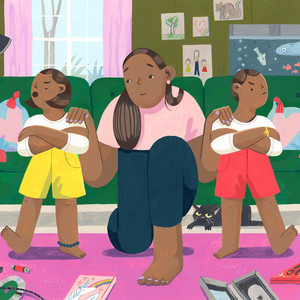
Like a lot ofpeople, she's heard all the parenting guidance that includes consequences andtimeouts, where kids are sent away when they do somethingwrong.
And when she herself was giving that kind of advice to her patients in privatepractice, she realized that this idea of disconnecting with kids when they'restruggling, it felt off toher.
I actually don't think timeouts are effective foranyone.
Right? I think leading with connection isn'tsoft,okay?
It's simplyeffective.
Connection, connecting with your kidsfirst, nurturing that connection and repairing connection whenneeded.
On this episode ofLifeKit, journalist Elise Hugh is going to chat with Becky Kennedy about her parenting philosophy and how it can lead to realchange.
Support for this podcast and the following message come fromwise.
The app that makes managing your money in different currencieseasy.
Withwise, you can send and spend money internationally at the Mid-Market ExchangeRate.
No guesswork and no hiddenfees.
Learn more about how wise could work for you atwise.com.
All that sitting andswiping, your body is adapting to yourtechnology.
Learn how and what you can do aboutit.
I really felt like the cloud in my brain kind ofdissipated.
Once I started realizing what a difference these little breaks weremaking, there's no turning back forme.
Take NPR's Body ElectricChallenge, listen to the series wherever you get yourpodcasts.
In thiscountry, some truths aren'tself-evident.
An NPR's Black Stories BlackTruth, so the collection of stories is wide-ranging andreal.
As the people who tellthem, we celebrate the Black experience for all its soul andrichness.
Search NPR Black Stories Black Truths wherever you getpodcasts.
This is myvoice. It can tell you a lot about me and I'm not changing it foranyone.
In NPR's Black Stories BlackTruths, you'll find a collection of NPR episodes centered on the Blackexperience.
Search NPR Black Stories Black Truths wherever you getpodcasts.
Allright, let's start with what this idea of good inside means toyou.
So good inside to me is in some ways like a very simple idea and it's really the idea that people are inherently goodinside.
And while I think a lot of us cansay,oh,okay, that makessense.
So I believe that'strue.
Where I think it'sreally, really powerful is when we consider the difference between identity who someone is andbehavior, what someonedoes, it frequently allows us to have agap.
Between what weknow, let's say about my three-year-oldson, let's say he's good inside and hisbehavior.
Wow, he just hid hissister.
That is not at all a goodbehavior.
And when we are basing our mindset in the idea that my kid is goodinside, then I can really activatecuriosity.
Why is my kid hitting hissister?
Okay, versus when I don't operate from thatfoundation, it's just really easy to put frustration and anger and judgment in the driver'sseat.
And then we look at our kid and really go into what is wrong with mykid.
Do I have a cold-heartedkid?
Do I have kids who are never going to getalong?
Does my kid even haveempathy?
Is something wrong with me and we all know this viralsystem.
Right, metoo.Guilty, guilty thismorning,okay?
And so really the idea of good inside is a strategy because as soon as we think about thatmindset, we can see the identity of our kid as separate from a descriptor of abehavior, which I agree is far fromideal.
That is a huge foundational idea and an importantframing.
And in covering and helping treat a wide range of parentingtroubles, everything from food pickiness to sibling rivalry to lying or even aggressivetantrums, there's another foundational idea that you really focus on and it seems to stem from this one overarching idea about having connection or establishing connectionfirst.
Can you let him pack that forus?
Yes. So let's even stay with the hittingexample.
Okay, so my kid justhit, let'ssay, his oldersister.
Okay, so that just happened in myhouse, whichyes, does happen in my house just happened at mine 12 hoursago.
Great, we're in that trenchtogether.
So, I think a connection first experience comesfrom,whoa, clearly not okay tohit.
And also I have a goodkid, he'sstruggling.
I would connect tohim, which involves aboundary,right?
So I mightsay, I'm not going to let you hit yoursister.
And then I'd actually step in and then I might look at my daughter andsay,Ouch, I know thathurt, that wasn'tokay, but I'm also going to look at my son andsay, you're having a hardtime.
I'mhere, we're going to figure it outtogether.
I'm connecting to the kid having a hardtime.
Youknow, I think in thatsituation, we're so prone to looking at the kid who is hit as the kid who needsprotection.
Now, certainly my daughter needsprotection.
That's why I'm stepping in and I'm embodying myauthority.
Butwe, I think too often don't realize our kid who actedout, they need protection from further identifying in the bad kidrole.
And so connection first allows us to still connect to a child who'sstruggling.
What do you say to folks who hear that andthink?
My kidjust, youknow, acted out in a series of unacceptableways.
And I'm going to just try and connect withthem.
Youknow, they're not going to be immediately sanctioned or punishedsomehow.
That does soundsoft. Iknow, if that person is in myoffice, the first thing I'd say islike, Iknow,right?
I getit. Like metoo. But what I would then say to the parent islook, in this office or here on thispodcast, like we have tochoose.
Am I more interested in being right or beingeffective?
Sure, you'reright. It'swrong.
Nobody likesthat. Send your kid to yourroom.
Okay,cool. Do you want to beeffective?
Do you want to actually help your kid build askill?
So that they can show up and make a different decision nexttime.
Because if you're on thattrain, I promise you I'm a goodconductor.
And we're going to end up getting to a betterplace.
But it sounds like that's something really different from what you'vedone.
So it's going to feel reallyunfamiliar.
Throughout yourbook, you write various tools like these in our parenting toolbox that we canuse.
Telling the truth is a hugeone.
Another is this shamedetection.
What is shamedetection?
How do you defineit? And how do we useit?
Yes. Shame is one of the most powerfulemotions.
I think maybe the mostpowerful.
And what's key to know is shame starts out as adaptive andchildhood.
Because shame really is a feeling that comesup.
When we believe a part of us is not connectable orattachable.
Essentially our body learns this part isbad.
Nobody wants to be aroundyou.
And you're akid. So you'rehelpless.
And so then shame literally is a freezestate.
It's a freeze animal defensestate.
And so in a freezestate, we don't listen toanyone.
We can't incorporatehelp.
We lookblank. And so actually rightnow, if everyone listening thinks about some of the most frustrating experiences with ourkids, I think it's when we have these moments withthem, which we interpret asdisrespect.
But they're probably in a state of shame because they'refrozen.
It looks like they're not hearing what we'resaying.
It looks like they're not taking in ouradvice.
Right? And to reframe those momentssays, oh mygoodness.
If I have my shame detectorup, I think I'm findingshame.
And when we know that and then we have strategies of how to deal withshame, our interventions are completelydifferent.
When you notice shame in yourchild, your man goal is surviving themoment.
Like there's nothingeffective.
You're going to say because if they're frozen in thatway.
And they're so overstimulated and they're for overwhelmed andfrightened.
The only thing that matters is ourpresence.
And the more wedo, the worse itgets.
Solike, I'mhere. I gotyou.
We're going to get throughthis.
Sometimes it's sayingnothing.
It's often saying nothing and just taking a deepbreath.
And that really changes our intervention because usually what we do in those moments when we interpret it differently is wecontinue.
Right? Or we evenchastise.
Which only increases the shame in the belief inside of see this part of me is so bad and sounlovable.
What if we have gotten disconnected with ourkids?
After moments ofdisconnection, you write that repair is often more important than the rupture because ruptureshappen.
Yes. So can you break down what are the components of a quality relationshiprepair?
Yeah, forsure. Youknow, I think a way to think about it islike, have your likeme.
It'slike,okay, I just see all of mykids.
Whatnext?Right? And I think the first step in a repair that is something we're never taught and let me beclear.
This is also the first step in repairing with a partner or with a colleague or with amother-in-law.
The first step is repairing with yourself because as long as you'rein,oh, I'm the worstparent.
Oh, I'm the worst wifefor,oh, I messed up my kid forevermode.
You areoverwhelmed. It's a freestate.
Well, how could I go to someone and offer a connection if I'mfrozen?
Right. And so that first step of repairingmyself, I alwayssay, it's not letting yourself off thehook.
If you want to let yourself off the hook inlife, blame and change yourself because it will literally make it impossible for you tochange.
Yeah. If you want to leave yourself on thehook, self-compassion and self-repair is a critical firststep.
And that's actually saying to yourself some versionof, I'm a good parent who is having a hardtime.
I didn't mess up mykids.
So that is stepone. And only after that can you go to yourkids.
Andthen, youknow, I'll give a script because it's always just concretelyhelpful.
But the key elements to a repair or some version ofsaying, you'resorry, sharing your reflections with your kid about whathappened.
And then really saying what you wish you had done differently or kind of what you wanted to do differently in thefuture.
So somethinglike,hey, I yelled at youearlier.
Or maybeit's,hey, last week somethinghappened.
And maybe you're not even rememberingit, but I'm rememberingit.
And I wanted to bring it upagain.
I yelled at you bigtime.
And you know thetruth, I was having a lot goingon, whatever it was atwork.
Or I was having big feelings that came out in a yellingvoice.
And just like we talkabout, you learning to managefeelings,well, guesswhat?
I'm still learning thattoo.
Those were myfeelings.
I was going throughsomething.
It came out in a yellingvoice.
It's never your fault when Iyell.
I loveyou. I lovethat. So much of what you teach is that to raise resilientkids, we have to do that work onourselves,right?
That we as parents have to feel goodinside, which is the underpinningidea,right?
For how we should see eachother.
How do our own pasts and the baggage from how we were raised show up so prominently in ourparenting?
And why is it so important to recognize thisconnection?
Oh, Iknow. It'slike, it's soannoying, isn'tit?
I feel itconstantly. I love for you to draw thelink.
Yeah,yeah.Yes,right?
And I think part of it islike, I do think there's this unconscious wish that our kids will healus.
And the truth is our kids triggerus.
When we'retriggered, what's happening is we're really looking to shut down in someoneelse, what we had to learn to shut down inourselves.
So here's anexample. Let's takewhining.
Wining is like a really commontrigger,right?
There are parents who hear whining and find itannoying, but don't react in ways that they're not proudof,right?
And that's thegoal. It just becomesannoying, but nottriggering.
And so why is whining sotriggering?
How does my past inform thatmoment?
And so if you're anadult, who when you reflect on yourchildhood, even if you don't rememberspecifics, if you wouldsay,oh, I definitely grew up in one ofthose, play yourself up by your bootstrapsfamily, I definitely grew up in one ofthose,oh, you're crying aboutthis.
I'll give you something to cryabout.
Type offamily. Then helplessness and vulnerability and powerlessness had noplace.
Now fastforward, however manyyears, and my kid iswhining.
My body kind of scansitself.
And it'slike, what do I know about helplessness and powerlessness andvulnerability?
And thenwe,we, that part of us that learn to shut it down inourself, jumpsout.
And so when we think about it thatway, numberone, we can have appreciation for ourtriggers.
Numbertwo, we can start to thinkabout,oh,well, it's not really about my kid notwhining.
It's about me rewiring myself around those core kind ofcharacteristics.
Sothat, I don't embrace my kidswhining.
No one doesthat. But so I show up as sturdy andgrounded, notreactive.
Yeah. One of the big insights for me after reading your book is aboutconfidence.
And what having a confident kidmeans, it's a littlecounterintuitive.
So can you share that withus?
Well, I think we've even fed this narrative that like confidence is feeling good aboutourselves.
And I just simply don't think that's what confidenceis.
I think confidence isself-trust.
And there's no time that confidence is asimportant,actually, as when we're not feeling great aboutourselves.
Like learning to trust yourself in moments oflike, this feels off tome.
Or I'm not getting what I neednow.
Or I amconfused. And I think one of my most profound realizations around confidence came from a series of sessions in my private practice years ago that were literally backedback.
The first session was parents coming to talk to me about parenting issues with their kid who they described as very hesitant andshy.
And the specific situation that they described so we could jump in with something like my kid was the only kid who didn't join theparty.
Like they knew every kidthere.
They'd been to the location like I wish I had a more confidentkid.
Right?So,okay. So then the secondsituation, what parents of ateenager, where this kid got into a ton of trouble atschool, gotsuspended.
And as he was part of agroup, that was doing some reallyinappropriate, purethings.
Wasn't like the ringleader, but like didn't sayanything, didn't stepin.
Right? Got in a lot oftrouble.
Andthis, the parents literally said to me word forwords.
Something, it was somethinglike, youknow, I wish my kid just didn't like go along with thecrowd.
Like can't they know what's right andwrong?
Like can't they standup?
I wish I had a kid who was moreconfident.
And I remember like laughing beinglike,whoa,whoa.
So when our kids areyoung, we define confidence as doing what all the other kids aredoing.
And when our kids areolder, we define confidence as being able to resist what other kids are doing and doing your ownthing.
Like,like, I feel like we're like not being that great or do ourkids.
Right? And so it really made me think we can reframeconfidence.
And the way then that reframe helps us build confidenceis, confidence is about trusting the information in your body and learning to be curious aboutit.
And that's a really different starting point than the idea of feeling good aboutyourself.
I lovethat.Okay, before we let yougo,Dr.
Becky. For those who are listening and maybe learning these approaches for the firsttime, those of us who might have older kids now and have used other methods rather than building connectionfirst, whatthen?
Is it toolate? Have I messed up mykids?
It's never toolate. If you're stilllistening, but just this is the most important thing totake, it is not toolate.
And there's a couple things I want to say aboutthat.
So you right now picture getting a call from your parent if one of them is stillalive,okay?
Or if they'renot, you find a letter that you neveropened.
And the call says something likethis.
Hey,Elise,look, I don't even know exactly how to saythis, but I've been reflecting on how I brought youup.
And there are so many things that I wish I could donedifferently.
And I don't know exactly where to go fromhere, but it matters tome.
And I want us to do bettertogether.
Like, and everyone just ran out like register what that feelslike, because I don't know any adult who'slike,oh, that'sfunny, I feelnothing.
Any adult I know would belike,wow, like that doesn't erase things thathappen.
I'm not ready to startat, youknow, point numberone, but like that makes adifference.
And here's what I know about you withcertainty.
Your kids are younger than youare.
I just know that's mathematicallytrue,okay?
And so if that would be meaningful toyou, tome, that is the body'sevidence.
It is never toolate. Parenting is the single most important and hardest job in theworld,okay?
And we get zero training forit.
And if there's one real impact that I truly want tohave, it would not be a script or astrategy.
It would be the much bigger idea that parents deserve resources andsupport.
And thatparents, in someways, we need to invest in thattoo.
Not because you're a badparent, because that's a sign of everything you're doingright.
So if this isnew, that says so much aboutyou, that you're a person who's braveenough.
And reflective enough to consider a newidea.
And I'd watch for the tendency to take those new ideas and turn them inward withself-blame.
And I'd encourage you to joinme.
I'm turning them outward to the world with a little bit ofanger.
I'mlike,yeah, what is thisbull** narrative I've beenfed?
And where can I go to get resources and support that I deserve for this incredibly important and difficult job I take on everyday?
Becky, thank you somuch.
Thank you somuch,Elise.
That was journalist EliseHugh.
For more LifeKit, check out our otherepisodes.
There's one about how to not over-indulge your kids and another about how to bond withthem.
You can find those at npr.orgslashlifekit.
And if you love Life Kit and wantmore, subscribe to our newsletter at npr.orgslashlifekitnewsletter.
This episode of Life Kit was produced by SylvieDouglas.
Our visuals editor is backHarlan, and our digital editor is MalagaGarib.
Megan Cain is our supervisingeditor, and Beth Donovan is our executiveproducer.
Our production team also includes AndyTagle, Claire MaurizioSchneider, and MargaretSerino.
Engineering support comes from Valentino Rodriguez Sanchez and JoshNewell.
I'm MaryElcigara. Thanks forlistening.
When voters talk during an electionsseason, welisten.
We ask questions we followup, and we bring you along to hear what welearn.
Get closer to the issues that people and your vote at the NPR electionshave.
Visit npr.org slashelections.
It's a high stakes electionyear, so it's not enough to just followalong.
You need to understand what'shappening, so you are fully informed onNovember.
Every weekday on the NPR PoliticsPodcast, our political reporters break down important stories and back stories from the campaigntrail.
Do you understand why it matters toyou?