NPR. This is The Indicator from Planet Money.
I'm Waylon Wong. And here with me is Ellie Katz from Interlochen Public Radio in Michigan.
Hello, Ellie. Hi, Waylon.
Good to be here. Great to have you.
And Ellie, you are in northern Michigan, which I remember had a really bad ice storm earlier this spring.
Yeah, it was like the worst ice storm we've had since 1922.
There were power lines coming down, trees coming down.
It was pretty bad. I remember just the scale of it was wild.
Over a million acres of forest land were damaged.
The pictures looked like the tops of all the trees just got sheared off.
They look like matchsticks.
It's pretty crazy. And that is in a really heavily forested part of the state.
And some people there rely on those trees for their livelihood.
I went to talk with someone like that.
His name is Dale Forrester.
Oh man, I bet he's heard all the jokes.
Yes. And Dale is a maple producer in Atlanta, Michigan.
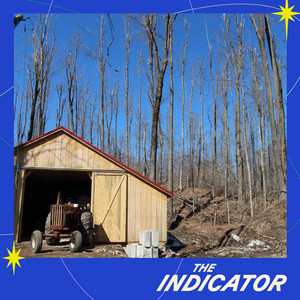
We talked right after the storm outside his sugar house, which is where he boils maple sap down into syrup and sugar.
This tree here possibly will make it, but the one back there won't make it.
So I would guess, you know, we're pretty close to 50 percent just showing you trees here that aren't going to make it.
Dale's really proud to be a maple producer.
It's been in his family for generations.
So this storm was really, really hard. Now, in many other situations where a business owner has been hit by a disaster, they have insurance.
But that is not the case with standing trees like sugar maples.
Today on the show, why trees aren't insured like other crops and what it would take to get that insurance with extreme weather events like this one on the rise.
this message comes from capital one with the venture x card earn unlimited double miles on everything you buy plus get premium benefits at a collection of hotels when booking through capital one travel what's in your wallet terms apply details at capital one dot com this message comes from capital one banking with capital one helps you keep more money in your your wallet with no fees or minimums on checking accounts.
What's in your wallet?
Terms apply. See CapitalOne .com slash bank for details.
Capital One N .A. member FDIC.
This message comes from Dell Technologies.
The Black Friday in July event from Dell Technologies is here with deals on tech like the Dell 14 Plus featuring Intel Core Ultra processors starting at $699 .99.
Visit Dell .com slash deals.
There's one main room in Dale Forrester's sugar house in northern Michigan where all the magic happens.
So this is where we actually make the syrup in this room here.
We bottle in the basement, but we, uh, this is, so this is our evaporator and then this is our kazegel ceiling.
Wow. It's tall and open and built with lumber from old maple trees.
And the evaporator he's talking about takes up almost the entire room.
It's this huge metal machine with all sorts of tubes and wires and knobs and buttons.
And that is insured.
Dale's equipment, his buildings, his final maple syrup products, even his bottles.
They all have insurance.
But the trees themselves and the taps on them are not insured.
And none of his business exists without those trees.
I tell people this one here.
God's on top. My family, my trees, and then everybody else.
I think of my trees.
Before the storm, Dale had about 10 ,000 tappable maple trees.
Those together were a huge asset.
I felt like this property was worth about $600 ,000 completely set up.
And now it's probably worth $350 ,000 at the most. I mean, that's just a fact.
Dale's 65. He told me his retirement savings will probably have to go towards replacing taps damaged in the woods and buying a whole new stand of maple trees.
And there's no insurance payout to help him with that.
And this insurance issue doesn't just affect maple trees.
We're talking timber companies, even big ones like Weyerhaeuser don't have it.
But you've also got smaller private landowners who own 20 or 40 acres of woods.
They manage those woods for timber, then harvest and sell it for profit every few decades.
And they can't get insurance either.
There's a lot of people like that.
About 60 percent of Michigan's timberland is privately owned.
Expand that to the hundreds and hundreds of millions of acres of privately owned timberland in the U .S. And we're talking a lot of timber that isn't insured.
Even most fruit trees aren't insured, just the fruit is.
I called up landowners and forestry consultants and insurance agents and kept getting the same responses.
Like, I've never thought about this before, or I've never even heard of that idea.
But people have been wondering about timber insurance for a while.
Dawei Zhang studies forest economics at Auburn University in Alabama.
Actually, back in the 1930s, Congress asked the Department of Agriculture to do a study on the timber insurance because of a fire, because of a storm, and because of insects and disease.
And 90 -ish years later, it's still not really a thing.
That's because there's just no market for tree insurance in the U .S. Dawei studied this and he says while there's no market, there is demand.
If premiums were low enough, landowners would be willing to pay for timber insurance.
And he says that magic premium number, what people would be willing to pay for, is right around 0 .2 or 0 .3 percent of their property value.
But the market rate is much higher than that, like anywhere from 0 .5 percent to 1 percent.
OK, so let's apply those numbers to Dale's maple farm and insurance costs for last year.
He could have been willing to pay the top end of that range we talked about.
So 0 .3 % on the $600 ,000 value of his farm pre -ice storm would come out to $1 ,800.
But the market rate would have been $6 ,000.
Maybe that doesn't seem like that much, but trees take years to grow and then harvest. It's decades before you see a paycheck.
check. Meanwhile, Dawei says, you've been paying a high annual insurance premium over all those years.
Dale's maple trees, for example, take 40 or 50 years to even be big enough to start tapping.
And then there's the cost of actually valuing standing trees.
When you have a house, a standard house, four -bedroom, five -bedroom, whatever, in a certain neighborhood, the property value is pretty much null.
But for forest, it's different species, different locations.
And as trees grow, they change in value every year.
Not to mention, certain types of lumber are more valuable than others, and that's constantly changing.
During the pandemic, there was a premium on evergreen trees like pine and cedar, so their value went up.
So this kind of thing, there is less statistical evidence for the insurance company to collect, to justify, to judge.
Okay, what is exactly the damage?
What species are we talking about?
And how much damage are we talking about?
That's why their price premium is so high.
So we're stuck in this endless cycle of high premiums and low demand because of those premiums and no growth of the market.
But it's not impossible.
Countries like China, France, Germany, Norway, and Finland, they all have tree insurance.
And there's basically a couple ways to make this happen.
In the first case, you have France.
Big cyclones in 1999 and then again in 2009 shredded forests there.
After that, the French government basically says forest landowners, you have to pay insurance.
A similar thing happened in China.
The government created a market.
When supply and demand don't meet, government intervention can help reduce premiums and balance things out.
But government intervention can come at a cost. Here on The Indicator, we've reported on how government intervention and subsidies can distort the market and create a moral hazard. You know, farmers may take on bigger risks if they know they won't have to carry the cost if they fail.
True. But you know, there is one other model for tree insurance.
I'm going to call it the Nordic model.
In Norway, Finland, and Sweden, timberland owners formed big cooperatives that negotiated premiums on behalf of landowners and guaranteed insurance companies lots of buyers.
Climate scientists are predicting more extreme weather events like this one in Michigan on the horizon.
And maybe that'll get more people thinking about tree insurance.
But Dauwe at Auburn University doesn't believe it will move the needle enough to lower premiums. In the meantime, Dale Forrester and other Michigan maple producers are applying for relief from the USDA, including some money for reforesting their land.
I guess we're going to plant some maples and we're going to plant some pines.
Not that I'm a pine tree person.
You can't put pine tree syrup on your waffles.
No chance. But 20 years from now, Dale can sell some pine.
And then 20 years after that, his maples will be back to full maple topping capacity.
capacity. Exactly. That's the idea.
And Dale and other maple producers are going to get a little help right now.
They advocated for their insurers to reimburse them for their maple lines.
That's all the plastic tubing in the woods that brings sap from the trees to the place where it gets boiled.
Those weren't insured before.
Now, a few Michigan insurance agencies are paying for some of those lines, which will help soften the blow from those ice storms. Ellie Katz, thanks very much for bringing us the story.
Thanks, Waylen. This episode was produced by Julia Ritchie with engineering by Kweisi Lee.
It was fact -checked by Tyler Jones.
Kaking Cannon edits the show, and The Indicator is a production of NPR.
This message comes from a ritual.
What makes ritual vitamins different?
Ritual vitamins are made with bioavailable, clinically studied key ingredients, as well as the essence of mint.
Get 25 % off your first purchase when you visit ritual .com slash NPR.