

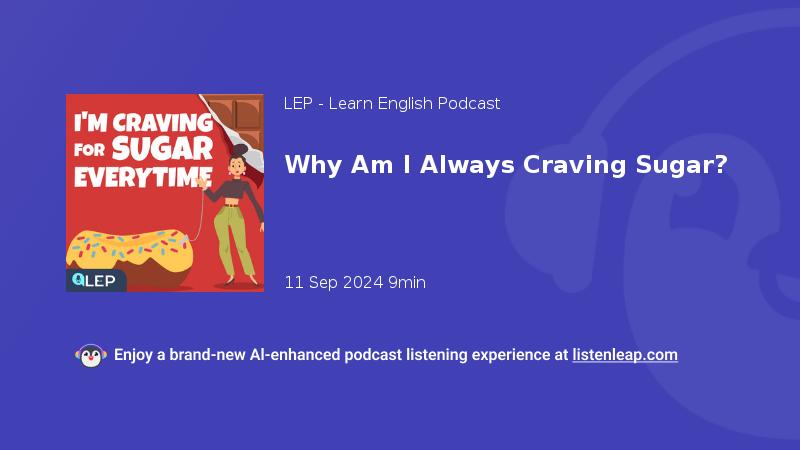
[Breaking the Sugar Cycle: Understanding Cravings and Mindful Eating]-[Why Am I Always Craving Sugar?]
📋 Summary
Breaking the Sugar Cycle: Understanding Cravings and Mindful Eating
In this episode of the 8-Minute English podcast, host Nathan facilitates a crucial health discussion between Dinah, a wellness expert, and Elliot, a student struggling with persistent fatigue and intense sugar cravings. The dialogue provides a comprehensive look at why we crave sugar, the physical consequences of overconsumption, and actionable strategies to regain control over our dietary habits.
The Anatomy of a Sugar Cycle
Elliot describes a common yet debilitating experience: feeling exhausted, consuming sweets for a "quick boost," and subsequently experiencing a "crash" that leads to further exhaustion. Dinah identifies this as a self-perpetuating cycle—a series of events that repeat in a predictable, harmful order. This cycle is frequently triggered by:
- Stress: High-pressure situations trigger the release of a hormone called cortisol, which naturally drives the body to seek out high-fat and sugary foods.
- Sleep Deprivation: When the body is tired, it instinctively looks for "quick energy," making sugar the most accessible, albeit inefficient, choice.
- Habitual Conditioning: The brain creates a neurological link between sugar and a "quick reward," reinforcing the desire to reach for sweets whenever one feels depleted.
The Hidden Health Risks
While many people view sugar simply as a source of energy, Dinah emphasizes that relying on it as a "quick fix" is deceptive. Beyond the obvious concern of weight gain, excessive sugar intake poses significant risks to cardiovascular health. It can elevate levels of "bad cholesterol" and increase blood pressure, potentially leading to long-term heart disease. Recognizing these dangers was an eye-opening experience for Elliot, who had previously viewed sugar only as a functional tool for study energy.
Practical Strategies for Improvement
Dinah stresses that eliminating sugar entirely is neither realistic nor necessary. Instead, she recommends shifting toward healthier alternatives that satisfy the palate without the negative side effects:
- Natural Substitutions: Replace processed candy and soda with whole fruits like apples, berries, or oranges, which help manage blood sugar levels. Alternatively, using small amounts of honey or maple syrup provides sweetness alongside essential nutrients.
- Regular Meal Timing: Skipping breakfast or lunch often leads to intense cravings later in the day. By maintaining a schedule of small, balanced meals, one can keep energy levels stable and prevent the body from panic-seeking quick sugar fixes.
- Mindful Eating: Dinah introduces the concept of "mindful eating," which involves paying close attention to hunger cues rather than eating out of habit or emotional distress. She advises listeners to eat slowly, chew thoroughly, and eliminate distractions like phones or TV to foster a deeper connection with their body’s actual needs.
Key Vocabulary and Reflection
To help listeners process these concepts, the podcast highlights several essential terms:
- Craving: A strong desire for something, such as Elliot’s need for chocolate.
- Appetite: The physiological feeling of wanting to eat, which often spikes under stress.
- Satisfy: To provide what is needed to appease a desire.
- Cycle: The repetitive pattern of consumption and fatigue.
- Eye-opening: A realization that changes one's perspective.
By understanding the biological and psychological drivers behind our food choices, we can move away from reactive habits and toward a more intentional approach to nutrition. As Dinah concludes, sugar is a part of life, but it must be managed carefully to ensure it does not compromise our long-term health and well-being.
Deep Learning with ListenLeap


