N. P. R. This is The Indicator from Planet Money.
I'm Weilin Wang. And I'm Paddy Hirsch. The long bond dodged the bullet last week after investors stepped up in larger than expected numbers to… Whoa, okay.
I'm going to stop you right there, Paddy.
You go away on vacation and you come back stuffed with jargon.
Maybe you should start by just telling our listeners what the long bond is.
Ah, sorry, yes. The long bond is the thirty -year Treasury bond.
It's the longest maturity bond issued by the US government.
And when you say it dodged a bullet, you're talking about that sale of thirty -year bonds that the Treasury held last week.
I am indeed, yeah. People were worried that because of the way things have been a bit rocky in the economy recently, no one would actually show up to buy the bond, which could trigger a rise in interest rates.
That didn't happen though.
It did not, I'm happy to say.
But doesn't mean we're out of the woods.
There's still a lot of uncertainty out there, and the way that the 30 -year bond performs is a great indicator of how investors feel about the economy long term.
It's actually a really interesting instrument with its fascinating history and it's kind of overlooked a lot of the time, frankly.
But something tells me you will remedy that today.
I am indeed. And today on the show, the genesis of the 30 -year, including the fact that Charlie Chaplin made a movie about it.
We'll learn why we have such a long maturity bond, and why we should probably pay a lot more attention to it going forward. That's coming up after the break.
This message comes from US Bank.
As a small business owner, you're used to doing it all.
But US Bank Business Essentials is here to help.
It's a powerful combination of checking and card payment processing that gets you fast access to the money you've earned with no monthly maintenance fee checking and unlimited digital transactions.
They even have small business specialists that work together with you to help your business reach its full potential.
That's the power of us.
Deposit products are offered by U .S. Bank National Association, Member FDIC.
This message comes from Avid Reader Press.
Legendary investor Ray Dalio's new book, How Countries Go Broke, The Big Cycle, explains the mechanics behind big debt crises.
Larry Summers says Dalio's brilliant iconoclastic approach is an invaluable resource, and Hank Paulson says it provides a solution to what is the biggest and most certain threat to our prosperity.
Read it to understand one of the greatest economic issues of our time.
Available now wherever books are sold.
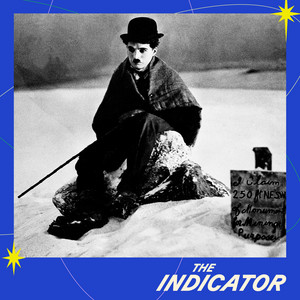
In this 1918 silent movie, The Bond, Charlie Chaplin extols the virtue of The Bond of Friendship, The Bond of Marriage, and the most important Bond of all....
The 30 Year Government Bond.
The Liberty Bond! That's the one first issued in 1917 to assist the war effort.
The US Treasury had issued a few long -term bonds before, but this was the big one.
Nearly $17 billion in four issues over the course of the war.
And this Chaplin film, The Bond was part of a big marketing push.
Yeah, but not a particularly successful one, right?
Liberty bonds did not sell as well as the government had hoped.
In fact, one issue of Liberty bonds actually defaulted.
People didn't really know what to make of them.
And when you only issue a particular bond at erratic intervals and no one knows when it's coming or what to expect it's hard to price it it's hard to know what the yield should be.
This is Eric Hilt, he's professor of economics at Wellesley College and a financial historian.
He says 30 -year bonds weren't really part of the government debt landscape back then.
Until World War Two, the US government was very small and it did not need to borrow very much, and the Treasury issued different bonds from time to time without much regularity.
It Just tried different borrowing strategies as they saw fit.
Even after the Second World War when the government borrowed a huge amount of money, the Treasury kept experimenting with different kinds of debt until the 70s.
Yeah, up to this point, debt levels had been falling but big government programs started in the 60s was starting to balloon the debt again.
Plus of course, the Vietnam War.
The government had been borrowing using shorter term debt, selling it to investors in regular auctions the way it does today, but that short -term debt was giving the Treasury a bit of an administrative headache.
If you're not issuing any longer -term bonds, then you are constantly refinancing your debt.
You have short -term debt, it's maturing all the time, you're constantly doing that.
Enter the long -term bond once again.
It helped that an effective cap on interest rates of 2 .5 % had been lifted in 1951.
And because of this, investors could show up at those auctions and bid for those 30 -year bonds and know that they were going to get a fair price set by the market and not by the federal reserve.
They jumped in. Pension funds and insurance companies were particularly enamored.
If you're a pension fund say, or an insurance company, you may have obligations that you need to fund that will probably occur 30 or more years in the future.
Right, like making life insurance payouts or paying pensioners after they retire.
And so, by purchasing a 30 -year bond, you can fund that obligation.
And the buying power of these institutions consolidated the market, encouraging the government to issue these long bonds regularly.
That, in turn, attracted other kinds of investors, including foreign investors.
30 -year bonds, like other treasuries, are also attractive to financial institutions because they are very, very safe assets.
And safe assets are valuable as collateral in transactions that basically have nothing to do with bonds, like short -term borrowing arrangements in which there's collateral involved.
The 30 -year bond was part of America's fiscal furniture through the 80s and 90s.
Then President Bill Clinton spoiled everything by balancing the federal budget and generating a surplus.
Oh, Democrats. And the government began paying down debt.
When George W. Bush came into office in 2001, his administration decided the situation was so positive that they didn't need a long bond anymore.
They stopped issuing it, and it looked as though the 30 -year bond might be doomed until Bush road to the rescue.
George W. Bush made it a centerpiece of his agenda to implement tax cuts.
And so those tax cuts, combined with very expensive foreign adventures in the form of invading Iraq and so on, reversed course with regard to the fiscal balance in the US.
So we went from surpluses back into deficit.
And we returned to a need for long -term borrowing.
Phew. The long bond was saved.
It was issued again starting in 2006, and it's been with us ever since, keeping us in long -term hok for 20 long years.
And keeping us safe.
I'm not being facetious here.
Eric Hilt says the long bond plays a vital part in the global financial system.
It's very good for our financial markets to have a long -term U .S. government bond.
And the fact that most fixed -rate mortgages are for 30 years, and the fact that a lot of corporate borrowing that's done over 30 year horizons sort of is consistent with the notion that the 30 -year U .S. government bond is a very important benchmark.
By issuing and paying down its long term debt consistently and reliably, the U .S. Treasury builds trust in the financial system.
It also reassures investors that America will always meet its obligations no matter how long ago they were made.
The U .S. government has been a very reliable borrower.
The 30 -year bond is essentially risk -free when it comes to default.
And that's what makes it such a useful market barometer and such a useful benchmark for other long -term interest rates.
And so far, the US has consistently met its obligations.
But Eric says we can't be complacent and assume that's what's going to happen in future.
Certainly some investors aren't right now.
The Trump administration has taken steps that make it look like large budget deficits are returning and will continue.
So the big bill before Congress right now involves substantial tax cuts, large increases in the deficit.
So what that would mean is in the future there's going to be a lot more government borrowing.
He says the more debt that the government borrows, the greater the risk that it may not be able to pay investors back.
That means investors will want to be paid more for that risk, which means interest rates might rise.
There is also a lot of economic uncertainty right now.
Things are very, very unpredictable.
That might also influence the prices at which investors are willing to purchase government bonds.
And there's also a great deal of uncertainty around tariff policy and other policy outcomes that could influence economic activity, which in turn might influence you know interest rates on long -term bonds.
A key factor in the decision to lock up your money for 30 years is trust. Can you trust that the borrower is going to be able to make all the interest payments that it promised?
Can you trust that it will remain solvent all of that time and pay you back all of your money when the bond matures?
That's what investors were worried about last week.
The US government may pay back its loans in two or even 10 years time.
But 30? That's a long bet to make, especially in uncertain times.
It's like keeping an eye on the 30 year bond is a great way to track the sentiment of the people who are looking far into the future and gauging the solvency of the US government over the long term.
This episode was produced by Cooper Katz -Bikim, it was engineered by Jimmy Keeley, and fact checked by Sierra Juarez.
Kicking Cannon is our show's editor and the indicator is a production of NPR.
June is Men's Mental Health Month and every year, six million men in the US suffer from depression.
If you're feeling overwhelmed, the strongest thing you can do is ask for help.
And BetterHelp can make it easy.
Take a short online quiz and connect from home with a qualified therapist. Visit BetterHelp .com slash NPR today to get 10 % off your first month.
That's BetterHelp .help .com slash NPR.