Proof.
Listeners, it's morgan bowling at america's test kitchen.
We know how important it is to cook with a good sturdy pan and smithy ironware.
Will they get the job done?
Smithy crafts cast iron and carbon steel pans proudly in the usa.
They come pre-seasoned with no chemical coatings, so they're ready to go right out of the box.
And they only improve with age as the surface becomes smoother and more non-stick over time.
When our in-house reviews team tested the carbon steel pan, An egg even slid across the surface the very first time they used it.
And these pans aren't just good looking with that iconic golden hue and sleek finish.
They're balanced, comfortable to handle, retain heat beautifully and deliver even browning every time.
Smithy doesn't just make skillets.
They have Dutch ovens, griddles, and more, all guaranteed for life.
And speaking of for life.
All of their cookware is engravable, making them the perfect family heirloom and one they'll actually use every day.
From breakfast to Sunday dinner, Smithy skillets elevate the experience of cooking at home.
Visit smithy.com to learn more and get your hands on one of these pants today.
If you had to name the most essential tool in your kitchen, what would it be?
As much as I love a great bench scraper or a wooden spoon, nothing beats a high-quality knife, and Zwilling makes some of the best.
Zwilling has been producing premium-quality German knives since 1731.
That's nearly 300 years of craftsmanship.
Take their best-selling Zwilling Pro line.
Each knife is forged from a single piece of high carbon stainless steel, has a classic three rivet full tang handle and is ice hardened for superior durability, flexibility and edge retention.
They're also hand finished by master knife smiths in Solingen, Germany.
And the ergonomic design makes Zwilling knives comfortable to use for extended periods in the kitchen.
Meal prep can actually be enjoyable with the right knife.
So if you're looking to upgrade your kitchen toolbox, consider Zwilling.
Head to Zwilling.com and shop today.
That's Z-W-I-L-L-I-N-G.com.
Hey, Lula Miller here.
I am the host of Terrestrials, a show all about animals and nature from Radiolab.
If you've ever wanted to hear a story about an octopus breaking out of an aquarium, or a squirrel that can regrow its brain, or the wild stories unfolding inside a tree stump well, we've got an episode for you.
And did I mention we sometimes break out into song?
Join us, terrestrials, over on the Radiolab for Kids feed.
Listen wherever you get podcasts.
Tracing origin stories for specific dishes is tricky work.
I first learned this lesson when I was 20 and visiting Italy in my junior year abroad.
I struggled to connect the food prepared by my Italian-American grandmother, Catherine Pizzarello, with the dishes I enjoyed in Venice, Florence and Rome.
Just one example.
They don't typically eat spaghetti with meatballs anywhere in Italy.
It turns out this combination was invented in New York by Italian immigrants.
I began to realize that the powerful narratives my family told about my grandmother's cooking were more complex and nuanced than I had imagined.
For journalist Cat Chow, that dish was a corned beef stew.
Growing up, Cat thought this corned beef stew was her Chinese family's version of an Irish dish.
Cat always thought it was her mother's attempt to assimilate to Wethersfield Connecticut, where they lived.
But this past year, Kat encountered something that would change her entire understanding of the origins and meaning of this dish.
Today on Proof from America's Test Kitchen, what happens when food travels with a diaspora?
We explore the migration paths that dishes take, what we gain or lose from our countries of origin and what ownership of a dish even means.
I'm Jack Bishop.
Stay tuned as we travel through Connecticut, Hong Kong Shanghai, Russia and Ukraine to trace the history of Lo Song Tong.
Hey, Proof listeners, it's Jack Bishop.
You know that here at America's Test Kitchen, we're all about giving home bakers the tools they need to bake like pros.
And I'm not just talking about stand mixers or baking sheets.
I'm talking about the ingredient central to so many of our favorite baked goods, butter.
Plugra is a European-style butter with 82% butterfat.
That means less water and more butterfat, which translates into tender pie dough, flaky pastries and luscious buttercreams.
Plugra butter is also slow-churned, which gives it a creamier texture that blends effortlessly into your dough.
And Plugra butter was developed by chefs for chefs, meaning home bakers like us get professional quality results in our own kitchens.
Whether you're rolling out pie dough for that holiday party or baking up pastries on a Saturday morning, consider Plugra Premium European Style Butter.
I love to cook, so no surprise, the holidays are my favorite time of year.
But I don't love the way the holidays often put pressure on our relationships with family and friends.
Issues we tend to ignore the rest of the year are suddenly front and center.
That's why many people think about therapy as the year comes to a close.
But finding an affordable, high-quality therapist is easier said than done.
Rula partners with over 100 insurance plans, making the average copay just $15 per session.
That's real therapy from licensed professionals at a price that actually makes sense.
And Rula isn't just affordable, the experience is tailored for you.
Rula considers your goals, preferences and background to provide you a curated list of licensed in-network therapists who are actually aligned with what you need.
Thousands of people are already using Rula to get affordable, high-quality therapy that's actually covered by insurance.
Visit rula.com slash proof to get started.
After you sign up, you'll be asked how you heard about them.
Please support our show and let them know we sent you.
That's rula.com slash proof.
You deserve mental health care that works with you, not against your budget.
Reporter Kat Chow is the author of the memoir, Seeing Ghosts.
She has the story.
Listeners, just a quick note that there's a mention of death in today's episode.
Earlier this year, I was on Instagram letting reel after reel play.
You know how it is.
And I found this video. from this woman who runs the food blog, Smelly Lunchbox.
Welcome back to part four of the soup or bo tong series.
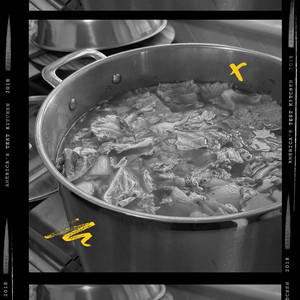
And today it's my take on a Hong Kong style borscht.
This Hong Kong style borscht, I had never heard of it.
Borscht, from what I knew, is this Eastern European dish.
A sour stew made with beetroots and beef or pork, usually with some combination of vegetables like potatoes cabbage, onions.
Usually it's bright, bright red.
When I lived in Hong Kong last year I didn't see it on menus, but maybe that's because I can't read Chinese.
As I watched the video once twice, three times, I like to sear the oxtail first for a little extra flavor, then saute the tomato paste in the oil from the oxtail, add the veggies, water and chicken broth and let it simmer for three hours.
Then finally add the potatoes.
I'm using white potatoes because they don't disintegrate as fast as russets.
Then skim off all that excess oil that comes out from the oxtails.
And just look at how tender that is.
It was this immediate record scratch.
Then add the seasonings.
I recommend seasoning to taste, especially with the ketchup and vinegar, because everyone has different preferences here.
And that's it.
I hope you like it.
Other than the oxtail and the ketchup and vinegar, the smelly lunchbox recipe looked so familiar.
I wasn't the only one who thought that.
The post had 20000 likes on Instagram and TikTok, hundreds of comments and lots of strong opinions.
People were talking about the name, why it can't be called borscht without beets, or they were basically saying this dish is German.
Or, no way, it's Jamaican.
As I was scrolling through these comments, I kept laughing a little to myself.
You know how people like to say that expression, this broke my brain?
This was a situation that broke my brain.
To explain that, we have to get a little nostalgic.
There was this stew my mom used to make when she was alive.
Every St.
Patrick's Day, she'd go to the grocery and buy corned beef on sale.
Put it in a pot with canned tomatoes, cabbage, onions, carrots.
She called it simply corned beef stew.
It was hearty, salty, the meat so tender it would fall apart.
And I remember as a kid helping her cook, I'd stand by the stove next to her.
She'd tear off a piece of that corned beef and hand it to me right there.
This was suburban Connecticut in the 90s.
My parents had come to the States from Hong Kong and Guangzhou a few decades before, and we were some of the only Chinese people in our small town.
I thought about the corned beef stew this way.
A Chinese mother in America making something vaguely Irish for her family each St.
Patrick's Day.
This was a story about fitting in, assimilation.
And who was I to question that?
For years, I didn't.
After I saw that video, I immediately pulled up the website and found the smelly lunchbox recipe.
This soup, this Hong Kong-style borscht, it's called Lo Song Tong in Cantonese.
And now my Cantonese is not so great.
I'm working on it.
But Lo Song Tong translates to Russian soup.
All of these names Russian soup, Hong Kong-style borscht it felt strange to put a name to this thing.
I'd grown up eating that I'd known as corned beef stew and thought of in this very specific way.
It made me wonder, what else am I misunderstanding about our family?
It was a soup that I had associated with this narrative of my mom, her sense of belonging and what she thought of as home.
Before I went looking for answers, I called my mom's older sister, my ima.
She's almost 81 and the family's matriarch.
I talked to her while I was making my own pot of corned beef stew.
It's a little hard to hear her.
I called her on a whim.
I explained my theory to her before I started recording.
She told me, yeah, it's all the same.
We just wanted to use corned beef.
It's cheap, filling, everybody would eat it.
And listening to my yi ma, I thought, wait, maybe this dish wasn't about assimilation.
This was about adaptation.
I don't remember that part, but yeah, the recipe that I have is from Galin, who I think wrote it down for my mom.
My aunt says that the recipe I use is actually hers.
Why did you use corned beef?
Dim gai, yeah.
My great uncle used to love corned beef, apparently.
And he used to love this dish, too.
So my yi ma would stock up on it in the spring when it was on sale, so that when he visited from Hong Kong she would be able to cook some for him.
I've been eating and cooking corned beef stew, or our version of lo sung tong, for years.
I didn't even know people outside my immediate family were cooking it.
I've been so removed from all of this context and history.
I wondered if Susanna Yu, the woman behind Smelly Lunchbox, the one who clued me into this whole story in the first place, had a similar experience with it.
So I called her up.
Oh my gosh, yeah.
Yeah, I have such a visual memory of this.
So growing up, me and my family would go to really just like one Hong Kong-style cafe.
Susanna grew up in California, the Bay Area.
She said her parents came from villages in Guangdong, where my parents are also from.
And I asked Susanna about her connection to Lo Song Tong.
She said her mom and dad would take her to the spa on Noriega Street in San Francisco.
We would go to Cafe Bakery and we would go there because they would have the most like the best deal.
You know, for our parents, that was probably one of the most important things.
Who can resist a good deal?
Cafe Bakery Restaurant is the perfect example of a Hong Kong-style restaurant a cha chan teng, which is in Cantonese translates to tea restaurant.
They serve a very specific type of Hong Kong food with Western influences.
Think diner food a deep-fried French toast stuffed with peanut butter and drizzled with condensed milk, a Portuguese chicken and rice that's baked, and spaghetti with beef in a black pepper sauce.
At Cafe Bakery.
Susanna says there was this set menu at the restaurant that she guesses cost around 10.
She says she remembers this so vividly.
There was always this long line, everybody queuing up, but it was worth it.
The first dish, you had options.
You would always get to choose between either lo sung tong or a different soup.
That's the red soup.
Usually it's like a cream of something soup, like cream of corn or cream of mushroom or something.
I don't remember which.
That cream of something soup is the white soup.
I feel like so much of Hong Kong food is so like core to the ABC experience.
ABC meaning American born Chinese.
That's the term she uses to describe herself.
So we would go to this cafe lineup, sit down and have the little bowl of soup that they would give you.
And it would just be like as big as like a mug.
You would get that much of soup.
That mug of soup, light and tangy and sweet from the tomatoes.
Susanna says that Lo Song Tong was the perfect meal starter.
And I just remember this line that my mom would say every single time she had this soup is that it's very hoi wai in Cantonese.
And it translates to being very appetizing.
So hoi is like open, and wai is like your appetite or your stomach.
And it's like it's opening your stomach to the rest of the meal.
That opening your stomach to the rest of the meal...
I hadn't heard of it before.
For my family, lo song tong was the meal, not the starter.
But anyway, after Susanna's mug of lo song tong, she would usually order this baked pork chop over spaghetti.
And she says that her parents would make lo song tong at home, and their version was pretty simple.
Parboiled beef shank or oxtail if they wanted to splurge.
I would say mine, compared to my parents, is a little bit heavier in taste, a little bit richer, maybe a little bit more catered to the Western palate a little bit.
I would say it's like the ABC version of it.
She adds ketchup and rice vinegar, tomatoes.
She also sears the meat first to add more depth to the soup.
She sautés the tomato paste to open the flavors, that type of thing.
She says it's slightly more elevated.
Susanna mentioned how, in a way, what I'm talking about corned beef or lo sung tong, whatever it's called and the mystery surrounding it.
This is exactly why she created Smelly Lunchbox.
I feel like soup is something that almost every ABC grew up drinking in their household, but it's something that is so.
What is the word for this?
We have no idea what the names of the ingredients are that go into these soups.
Like, what is the word for it?
It's so mystical.
Like, I'm trying to demystify it, basically.
Yeah, yeah.
And it's like, you don't know the proportions.
I don't even know the name of these soups.
Yes.
I don't know the name.
I don't know the ingredients.
And even like the ingredients itself, if you go to like a Chinese herbal shop, like oftentimes, they're not even translated right.
Like I've had to like correct names in my recipes before because I later found out that it was like the wrong name.
There's so many... things that hinder us from learning this huge, huge part of our food culture.
Susanna's right.
There are so many things that hinder us from learning about our food culture that, like in the case of corned beef stew, I didn't know what questions to ask in the first place.
I mentioned before how lo song tong means Russian soup.
To break that down, lo song means Russian.
Tong means means soup.
I wanted to know more about that, how food moves across country lines and gets transformed.
This felt like such a specific question, which I posed to this man.
I'm Sidney Zhang, Qin Hong in Chinese.
I'm now a professor in the Department of Anthropology in Chinese University in Hong Kong.
And you're also the author of Hong Kong Foodways.
Yes.
Oh, you got my book.
In Sidney's book he writes about how folklorists and anthropologists have been using the term foodways since the 1970s to talk about when food bumps up against cultural or sociopolitical meanings.
Foodways is what Sidney describes as the eating habits and culinary practices of a people, region or historical period.
These foodways.
They affect not only what we eat, but also how, why and under what circumstances those food choices are made.
I told him about my family's corned beef stew, that whole story.
And Sidney, ever the anthropologist.
He had a lot of questions about those circumstances my family and I made in our food choices.
When I read what you mentioned just now that your family, your mother, cooked this soup at home, I was a bit surprised, because most people in Hong Kong don't do that as a regular kind of soup at home.
He wondered, for example, if my family was from Shanghai.
I told him no.
He told me that people in Shanghai are more likely than Hong Kongers to make lo sung tong at home.
Do you remember whether she put beef inside?
Here, he's asking about my mom's recipe.
Yes, she would put this beef that had been basically salted.
I actually don't know what Corned.
So corned beef is, do you know what corned beef is?
Yeah, but when you say corned beef, I I explained to Sydney the whole story about how the type of corned beef my family uses is fresh and how I thought it was normal that we used corned beef.
At this point we'd been talking for maybe 10 minutes and already I got the sense that my family's version of Lo Song Tong was so different than what he had had.
I haven't heard anyone who put the corned beef into a soup.
I mean, same.
That would make two of us, besides my family.
The more people I relayed the whole story about corned beef stew and mo song tong to how I always thought this iconic Hong Kong Chinese dish was Irish, the more ridiculous I felt.
How could my sisters and I not realize what we were eating for decades?
Turns out, maybe my sisters and I weren't so much to blame.
Because the history of Lo Song Tong is much more winding than I had ever imagined.
After the break, Kat explores the foodways that made her mother's corned beef stew possible.
And now, back to our story.
Sidney, the anthropologist who studies Hong Kong foodways, says historically there are two routes of Western food into Hong Kong.
One from Guangzhou, a mixture of British and French food.
And then there's also from Russia via Shanghai.
After the Russian war in 1917, so Russians in some area, they came to Asia.
They were escaped from their countries and came to Asia.
To understand how Lo Tsung-Tung came to my family and Hong Kong and Shanghai, we have to go back to that period when Nicholas II was the Tsar of Russia.
He was forced to abdicate the throne.
1917, Russia.
Then, just eight months later, Vladimir Lenin led the overthrow of the provisional government in what's known as the Bolshevik Revolution.
And all of this kicked off Russia's civil war.
All of Russia was in a turmoil.
Everywhere life was uprooted.
It turned and seeped as though in some giant boiler.
There were two main groups of people fighting.
The Red Army, which supported a Bolshevik-led socialist state, and the White Movement, which historians say was united in their anti-Bolshevik stance.
White Russians, or white emigres, as they're sometimes called, fled Russia.
They went to cities in China like Harbin and Shanghai.
And by the mid-1920s, there were an estimated 300,000 white Russians in China.
These Russian immigrants were considered political exiles, and they were effectively stateless.
So with nowhere to go, they settled into life in China.
And they brought with them some comforting food, like borscht.
And then the Chinese adopt it and try to make it.
But we don't have beetroots.
Beetroots were hard to come by.
So we adopt tomato as the basic ingredients for this soup.
And also people start putting more meat into the soup to make it more kind of tasty.
A classic case of adapting.
Just as my family adapted Lo Song Tong, I imagine those early Russian immigrants making a similar kind of calculus.
Maybe they were missing home.
They wanted something familiar, so they tried to make borscht.
They didn't have all the ingredients, so they worked with what they had.
And that's how Lo Song Tong came to be.
In the decades after, there were countless Western restaurants in Shanghai, many of them Russian.
But this boom of Russian shops and restaurants was relatively short-lived.
The Japanese invasion of Shanghai in 1937 pushed out hordes of the city's residents.
And during China's communist revolution, people fled the mainland for Hong Kong.
Those people included the white émigrés and my family.
In Hong Kong Foodways.
Sydney writes that the Russians who came to Hong Kong brought all sorts of foods with them Beef Stroganoff Chicken Cave, Dou Song Tong.
Eventually, they all made their way into Cha Chan Tangs.
And according to Sydney, Cha Chan Tangs are more than just a restaurant.
I think Cha Chan Tang is a concept.
It's a concept almost like a cultural inclusiveness, that they can bring anything together.
A concept almost like cultural inclusiveness.
I hadn't thought of Cha Chan Tangs that way until Sydney put it like that.
And also welcome any kind of people, no matter you are a different age, different gender, different class, different like work in different sectors.
So you'll feel comfortable to go there.
Not only to go there, but you also can share a table with any strangers.
When I asked a couple of friends who were born in and currently live in Hong Kong if there was a standard lo sung tong, one told me that she categorized the dish into two varieties.
The home-cooked variety, which her family made with pork instead of oxtail.
And then there was the cha chan tang variety.
The cha chan tang variety of Lo Song Tong is like the Chinese-avide version of minestrone, which has corn and kidney beans in it.
When they told me this, I felt less bad.
Like, okay, maybe it's not unreasonable that I didn't recognize this soup out of context.
Maybe this isn't a sign of how I just missed this huge cultural thing.
Beans, corn ketchup no ketchup pork beef, the many variations of lo song tong, of this Russian soup, of this borscht.
They seemed endless.
There's another layer here about borscht itself.
So it was the Russian emigres who brought borscht to Shanghai, then Hong Kong.
And borscht itself, its origins, they're not Russian.
I talked to a Ukrainian food anthropologist and historian, Ilhor Lailo.
He's at the University of Kansas now.
I asked him, can you tell me about the original borscht?
So the first historical mention of borscht dates to 1584, when German traveler Martin Grunewald referred to it while traveling from Europe.
Those Ukraine lands to Moscow.
As the story goes, he stopped for a break in Kyiv, in the capital of Ukraine today, and noted that residents are very fond of this dish and prepare for themselves.
So it's very interesting that he said oh, no one is interested to sell this borscht because everyone know the personal recipe and trying to prepare for themselves.
Grunewig also noticed nobody was bothering to sell borscht.
They had their own home versions and recipes.
So why bother?
It can be said that this is very democratic dishes.
That's what I would like to remark.
You know, because every ingredient for the borscht in the past and right now in Ukraine as well, so you can find in your backyard.
So it's enough to go in your backyard and you can find everything except of the meat.
I thought it was interesting how Ilhor described borscht as this democratic dish.
Everyone can make it.
Everyone can find the ingredients easily.
It reminded me of what Sydney Djerng was saying about how cha chan tengs are all about inclusiveness, that they're more this concept than a restaurant itself.
There's this kind of every-person unifying thing with borscht and with cha chan tengs and, in a way, with lo song tong.
Food travels with people as they cross borders.
They're transformed with what's available, with what those people have in their new countries, their new homes.
So in my perceptions that borscht like a dish sounds like a jazz.
So we have as the same ingredients.
Doesn't matter in which place of the world we are living for, but every of us can be make the personal taste and personal recipe of the borscht.
It's the same with universal recipe like a pizza or paella in Spain.
In 2022, UNESCO announced that borscht was in need of urgent safeguarding because of Russia's invasion and war.
This recognition from UNESCO that Borscht was important and symbolic, for many Ukrainians like Ilhor, this was affirmation of Borscht's roots.
When Russia launched its military invasion of Ukraine, Ilhor came to the US to teach at a university in California through the Scholars at Risk program.
Ilhor says borscht became even more political after the invasion.
What it was labeled on menus, Russian borscht or Ukrainian borscht, was this symbolic flashpoint.
After the 2022, the many restaurants in Russia decided to clean the name Ukrainian from recipe books, from menu, from everyday life.
He described this specific example a campaign in Russia to refer to Borscht as small Russian Borscht.
Ilhor says this is a good example of how a dish can be a part of a geopolitical conflict, a war.
In his eyes, calling Borscht small Russia was akin to calling Ukraine the country small Russia.
But in the moment when Borscht has landed on the list of the UNESCO, it was like, we done.
So the people said right now we have a special international document, that this is our dish and it's finished with a discussion between us and Russia.
So here, corned beef stew, which my family altered in suburban Connecticut, was actually lo sang tong, or Russian soup which is borscht, which is, as we just heard, Ukrainian soup.
After thinking about what Susanna, Sydney and Ilhor told me, maybe my family making this dish isn't so random.
It's just part of this big convoluted tradition of making do.
Continuing that tradition, I headed to my oldest sister Steph's house in the New York suburbs and I spent a Saturday afternoon making that stew.
We sat down to eat.
My sister and her three kids and our dad.
And we poured the stew over rice like we always used to when my mom made it many years ago.
My sister's seven-year-old son really wanted to rate it.
On a scale of one to ten, Momo, I guess, what do you think about this dish and why?
I like eight or seven.
Eight or seven?
Okay.
Why eight or seven?
I like the beef.
Mama!
The rice, the soup.
And the potato.
And the carrot.
I think that's all I tried.
I didn't try the lettuce yet.
By lettuce, he meant cabbage.
Later, he changed his rating to 8 or 9.
I turned this question to my dad who, interestingly enough, like my sisters and me, despite growing up in Toisan and Hong Kong, also had no idea that this corned beef stew was lo song tong.
Yeah.
Daddy, what do you think about this soup?
Yeah, very good, yeah.
Later my dad told me I should have cooked the vegetables longer, which noted.
I appreciate that honesty.
The next day, I brought the lo song tong, an hour to my yi ma's condo in Connecticut.
We had the typical greeting.
How are you?
Hi!
Hi!
My aunt grabbed my face, looked at it for a long time, asked if I had lost weight.
Hi, Kaomo.
My other aunt, my Kaomo, arrived and I knew this was going to be a typical visit, completely honest.
They spent the first 15 minutes heating up the lo song tong and giving me advice.
The potato make the soup Little bit thick.
Smart, smart, smart.
Yeah, that's better.
I like it.
My yi ma was standing at the stove while my kao mo mashed up some of the potatoes.
Oh, I'm so happy to be doing this.
Now you guys can teach me how to make this better.
We have... You use the regular tomato, right?
Yeah, crushed tomato.
I like it because I add the...
You know, the paste tomato.
It occurred to me that these two women, my aunts, they're the closest I have to a mother right now.
My mom died when I was too young for me to ask her the sorts of questions I have now as an adult, including specific ones about lo sung tong.
My yi ma said she first had lo song tong at cha chan tengs and hotel restaurants in Hong Kong around Christmas time.
Special occasions, which tracks with what Sydney told me.
I finally asked her, what's up with the corned beef?
Yi ma, were you the first person to try this with corned beef?
Yi zheng was my aunt's late husband.
Oh wow, how did Yi zheng...
From the restaurant, because when he was young, he was working in his father's restaurant.
And then his father's restaurant cooked all those, the same thing, for the people, for the workers.
Why do you think Yi Zhong's family used corned beef?
My aunt.
She said that this came from her father-in-law, whose English was quite good because he had once been a soldier, which allowed him to interact with more non-Chinese people.
And later he worked at a Chinese restaurant in Boston where his boss, a Chinese guy, was married to a white woman.
That's where he was exposed to corned beef.
It's not clear who the first person was to put corned beef into Lo Song Tong, Yi Zheng, or his dad.
But I appreciate this theory.
It's neat to think about corned beef stew possibly originating with my yi ma's father-in-law's generation.
I could keep tracing the history of my family's lo song tong, follow the path of corned beef, of tomatoes and Chinese cooking, but I'll stop here.
Because what I keep coming back to is how food adapts.
Just as Russian emigres swapped beets for tomatoes, My mom and her sister swapped oxtail for corned beef.
Food moves with us.
We bend it to our tastes, our circumstances.
I can't ask my mom if she made corned beef stew because she missed Hong Kong.
I can't ask why she didn't just tell us it was called lo sung tong.
Maybe instead of being so concerned about whether corned beef stew meant my mom felt this way or that way about being in the US, I can think about lo song tong like this
Whatever you call this dish, it's adaptable.
Ilhor used the word democratic.
I think he was getting at how, no matter your circumstances for dishes like borscht and its many versions, what you put in it, where you eat it at a cha chan teng in Hong Kong at a cramped table next to strangers at your own kitchen table that openness means there can never be just one version.
There are countless borschts, countless lo song tongs.
Sidney wrote in his book, Hong Kong Foodways, about UNESCO's list of intangible cultural heritage.
He said, we may never find the right moment for preservation.
We're often too late or too early, But still it's important to pass down traditional food ways for the next generation.
I think of my mom standing by the stove, handing me pieces of corned beef to taste.
My dad texting me while I was away at college to tell me he had made the stew too.
My sisters emailing notes and changes to the recipe back and forth.
My yi ma and my cow mo making their own versions.
And now, new memories. cooking it for my niece and nephews, my oldest sister, my dad, my aunts.
That's what food memories do.
And that's why foodways are so important to map out.
They carry the past.
They ground us in the present.
And sometimes they show us this hint of what we might pass on in the future.
Kat Chow for bringing us today's story.
Listeners, we'll be back in two weeks, just in time for Thanksgiving, with a brand new episode.
If you like Proof, be sure to subscribe wherever you listen so you can get new episodes as soon as they drop.
And while you're there, why not leave us a rating or write us a review?
It really helps other people find the show.
This episode was hosted by me, Jack Bishop, and the podcast is made by the following cast of characters
I'm Yumi Araki, the managing producer.
I'm executive producer Caitlin Kelleher.
I'm senior producer Alex Kern-Cardarelli.
I'm associate producer Angelica Quintanilla.
I'm associate producer Louise Kern-Kensler.
And I'm Kyla Forman-Andrade, the TV and podcast intern.
Audio services are provided by Ultraviolet Audio, with scoring, mixing and sound design by Matt Boynton.
Brian Campbell of Signal Sounds composed our theme music, additional music by Kyle Forrester and Jordan Pearson, and Margolis is our director of post-production and our director of production is Diane Knox.
Fact-checking and additional research by Sarah D. Collins.
Special thanks to Kat's family, Aaron Louie and Garrick Yu, and to everyone else who spoke to Kat, for this story.
Nina Gianelli is the Senior Vice President of Television, Video, and Podcasts.
Dan Souza is the Chief Content Officer, and Dan Surratt is America's Test Kitchen's CEO.
Proof is a production of America's Test Kitchen.
This podcast is part of the Airwave Media Podcast Network.
Visit airwavemedia.com to listen and subscribe to their other fine shows.
Wave Media Podcast.