NPR.
This is The Indicator from Planet Money.
I'm Waylon Wong.
And I'm Darian Woods.
There is a transformation taking place in northeastern Louisiana.
Trucks rumble down two-lane highways en route to a massive construction site.
When the project is completed, in a few years, this rural landscape will be home to a cluster of buildings totaling 4 million square feet.
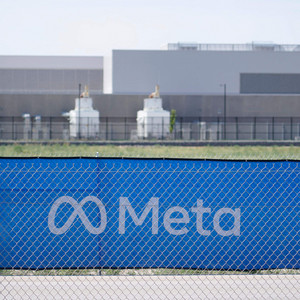
These buildings will be tech company Meta's largest AI data center.
Meta calls the project Hyperion and says it will be able to channel up to 5 gigawatts of energy.
That's enough to power 5 million homes by one estimate.
But in this case, it will be powering Meta's AI ambitions.
This data center comes with a roughly $30 billion price tag.
So where did Meta get the money from?
Today on the show, we explain the unusual financing behind this project and why these kinds of deals are raising fears of a potential AI bubble.
This message comes from AT&T.
America's first network is also its fastest and most reliable.
Based on RootMetrics, United States Root Score Report 1H2025, tested with best commercially available smartphones on three national mobile networks across all available network types.
Your experiences may vary.
RootMetrics rankings are not an endorsement of AT&T.
When you compare, there's no comparison.
AT&T.
This message comes from Capital One.
Banking with Capital One helps you keep more money in your wallet with no fees or minimums on checking accounts.
What's in your wallet?
Terms apply.
See CapitalOne.com slash bank for details.
Capital One N.A., member FDIC.
This message comes from Dell Technologies.
Your new Dell PC with Intel Core Ultra helps you handle a lot when your holiday to-dos get to be a lot.
That's the power of a Dell PC with Intel inside.
Get yours at Dell.com slash holiday.
Our AI zeitgeist comes with some new vocabulary.
One of these words is hyperscaler.
This can refer to the corporations that provide cloud services, like Amazon, or it can refer to the massive data centers these companies run.
Either way, hyperscaler means enormous computing power.
And Meta's Hyperion project is one of several hyperscale AI data centers that have come online or are being built.
Elon Musk's XAI has one in Tennessee.
And OpenAI is building a facility in Texas.
Davil Shah is a director at the credit ratings agency S&P.
He specializes in infrastructure.
That's everything from trains to cell phone towers to, these days, data centers.
And Davil says Meta's Hyperion project stands out.
The size of this data center and everything about this data center is unprecedented.
Meta has talked about developing something called super intelligence.
That's a kind of AI whose power is even greater than what the human brain can achieve.
It's sounding expensive.
Yeah, isn't it?
And Meta is a company with deep pockets and excellent credit.
But it's not using its own cash or taking out a traditional bank loan for this project.
That's because Meta has already borrowed lots of money through the usual channels.
Taking on more debt could ding its credit rating.
And Meta wanted help shouldering the risk of this huge build-out.
Hyperion Data Center is key for Meta's AI ambitions, but they want a partner who would share ownership risk with them.
And so Meta turned to a company specializing in private credit.
These are lenders that operate outside of the traditional banking system.
They are a massive market, estimated at more than 2 trillion, and they are helping fuel the rise of AI data centers.
Meta's partner in the Hyperion project is a private credit firm called Blue Owl Capital.
The two companies agree to share ownership in the data center.
Meta's stake is 20% and Blue Owl gets the remaining 80%.
And, most importantly, Blue Owl not Meta is the one borrowing most of the money to build the data center.
This keeps the debt off Meta's books.
And how much debt are we talking about?
Well, Blue Owl formed a legal entity called Beignet Investor LLC.
It's named after the deep fried pastry that's famous in New Orleans.
Beignet Investor sold $27 billion in bonds to Wall Street investors.
That money will be spent on construction.
Now Blue Owl is on the hook to pay back investors because remember, it is the one that borrowed the money and not Meta.
And Blue Owl plans to get this money by collecting rent from Meta, because Meta is leasing the data center.
So to recap, Meta will pay rent to use the data center.
That rent money flows to Blue Owl.
Blue Owl uses the money to pay back bondholders.
Yes.
And this rental arrangement brings us to something that Darvill says is unique about the Hyperion deal.
Meta gets to renew its lease on the data center every four years.
In other transactions, we do see the lease terms are 10, 15, 20 years long.
But in this case, the lease terms are unusually short.
Now, this gives Meta a lot of flexibility.
If it changes its mind on its AI plans, for example, it could walk away from Hyperion.
But Davos says Meta offered certain guarantees to investors.
Here's one example.
If Meta decides not to renew its lease, Blue Owl will sell the data center.
And then if the property doesn't fetch a certain price, Meta will make up the difference.
What is important from the investor's risk perspective, their risks are covered.
If Meta decides to leave, they will get their money back.
That protection is a big reason why Dovel and his team gave the Hyperion deal a high credit rating.
But the metadata center is just one of many AI-related projects with high price tags and non-traditional financing.
Morgan Stanley calculates that companies could be borrowing more than 1 trillion to fund data centers by 2028.
If you have retirement money invested in bond funds, you might even be holding some of this debt.
And when there's billions of dollars flowing between companies and through financial markets.
Well, this is where nervous chatter about bubbles tends to start.
Just look at recent jitters in the stock market tied to these fears.
And people like Paul Kudrowski are making their worries known.
He's a venture capitalist who also advises hedge funds.
And Paul says the billions of dollars flowing into AI data centers have the hallmarks of a financial bubble.
There tends to be a great technology story underneath them.
AI is a great technology story.
They tend to have loose credit.
It helps to have, weirdly enough, a real estate component.
Many of the largest bubbles in U.S. history had to do with real estate.
And it helps to have a government involvement.
So the weird thing about this bubble is it's the first bubble in modern US economic history that combines all of those.
Yeah!
That's a big, sorry, you gave me a jump scare.
That was a big statement.
I know.
It jump scared me too, whatever I realized.
I was like, oh my goodness, this is the most unusual bubble in US economic history in the sense that it combines speculative real estate.
Data centers are speculative real estate.
It combines government.
We think we're in an existential battle with China.
Loose credit.
We have private credit companies and others funding this stuff.
An unbelievably strong technology story.
We have all of those pieces in a single bubble.
You're ready to call it.
If you had all of those pieces conspiring at the same time and constituting more than 30 of US stock market capitalization.
If that's not a bubble, then I think we need to reboot the English language.
Other people in the industry say the massive amount of spending on AI, data centers and chips is what's necessary for the future and that there's enough demand to justify the build out.
The CEO of CoreWeave, a data center company, told The Wall Street Journal recently that he doesn't think there's a bubble.
He said the world will finance good deals that are driving us forward.
And Dhaval Shah at S&P says he considers Meta's Hyperion deal to be a good deal.
He doesn't think investors will get burnt, even if this particular project goes sideways.
I think it's yet to see whether this is AI bubble or not.
But look, from our perspective, you know, investors are appropriately protected.
Paul Kudrowski, however, is still worried.
He says that even if Hyperion bondholders are OK, there are many other investors and debt-laden tech companies who have nothing to do with the meta deal that might fare worse.
The trickle-down effect would be that immediately would begin to see defaults on some of the more suspect centers.
So, even if the damage isn't done by the Hyperion data center, the consequences of Meta walking away in four years will be immense in terms of collateral damage across people who are much more debt-encumbered and will not make the make-whole payments.
They're going to default straight up.
We contacted Meta and Blue Owl to ask them about Paul's concerns, and they did not respond.
Meanwhile, it seems like investors are alternately skittish and hopeful.
The SP 500 fell around 2 last week but rallied on Monday, led by shares of Google parent company Alphabet.
This episode was produced by Corey Bridges and Julia Ritchie with engineering by Sina Lafredo.
It was fact-checked by Sarah Juarez.
King & Cannon is our show's editor, and The Indicator is a production of NPR.
There are a lot of great NPR podcasts out there, but we want to find the best one.
Obviously us.
So we are voting on it.
NPR is celebrating the most memorable episodes of the year and you get to crown the winner of NPR's first People's Choice Award.
Vote for the indicator at npr.org slash people's choice.
Again, that's npr.org slash people's choice.
May the best pod win.
This message comes from PACA.
Everyone's got that one hoodie they practically live in, but the PACA hoodie, it's on another level.
Softer than cashmere, warmer than wool and still breathable, this alpaca fiber hoodie goes from airport to mountain trail to couch without missing a beat.
And right now, for a limited time.
You'll get 30 off when you purchase three or more items during their Black Friday Cyber Monday sale.
Now's the perfect time to level up your hoodie game at go.pacaapparel.com slash NPR.
This message comes from NPR sponsor, Capella University.
With Capella's FlexPath learning format, you can set your own deadlines and learn on your schedule.
A different future is closer than you think with Capella University.
Learn more at capella.edu.
This message comes from Capital One.
Banking with Capital One helps you keep more money in your wallet with no fees or minimums on checking accounts.
What's in your wallet?
Terms apply.
See CapitalOne.com slash bank for details.