This BBC podcast is supported by ads outside the UK.
If journalism is the first draft of history, what happens if that draft is flawed?
In 1999, four Russian apartment buildings were bombed.
Hundreds killed, but even now we still don't know for sure who did it.
It's a mystery that sparked chilling theories.
I'm Helena Merriman and in a new BBC series I'm talking to the reporters who first covered this story.
What did they miss the first time?
The History Bureau, Putin and the apartment bombs.
Listen on BBC.com or wherever you get your podcasts.
Available now on the documentary from the BBC World Service.
China is developing its ambitious polar silk road through the cold and volatile waters of the Bering Sea that borders both Russia and the United States.
Join me, Anna Hulligan, as I travel to Alaska to explore why China is increasing its presence around America's last frontier.
Listen now by searching for the documentary wherever you get your BBC podcasts.
This is the Global News Podcast from the BBC World Service.
I'm Janet Jalil and in the early hours of Thursday, the 15th of January, these are our main stories.
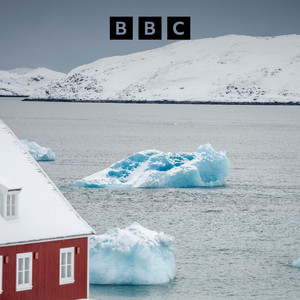
High-stakes talks on Greenland's future at the White House failed to dissuade the US president to drop his demand for the Arctic island.
Donald Trump says he's been told on good authority that the killing of protesters in Iran has stopped.
After days of threats against the regime, is he backing away from military action?
A leaked recording of the Taliban in Afghanistan, obtained by the BBC, reveals political divisions between hardliners and pragmatists.
Also in this podcast, the International Space Station carries out its first medical evacuation.
There's always a lot of thought that goes into the contingency scenarios.
So whilst this hasn't happened before, it's often been trained for and considered.
Four astronauts leave the station a month early after one of them develops a serious health issue.
A high-stakes meeting at the White House over Greenland's future has failed to make a breakthrough.
President Trump has long made it clear that he is intent on taking over the huge Arctic island, a self-governing territory that's part of Denmark, possibly by military means.
That's alarmed his NATO allies in Europe so much that on Wednesday the foreign ministers of Denmark and Greenland went to Washington for a meeting with the US Vice President JD.
Vance and US Secretary of State Marco Rubio.
Greenland's foreign minister, Vivian Motzfeldt said, although the talks were cordial, big differences remained.
I think it's very important to Say it again how important it is from our side to strengthen our cooperation with the United States.
But that doesn't mean that we want to be owned by the United States.
But as allies, how we can strengthen our cooperation, it's all our interest.
Speaking to reporters after the meeting, President Trump reiterated why, in his view, the US needed Greenland.
If we don't go in, Russia's going to go in, and China's going to go in.
And it's not a thing that Denmark can do about it, but we can do everything about it.
Well, we're going to see.
I mean, look, we're going to see what happens.
We need it for national security, and that includes for Europe.
Our North America correspondent David Willis told me more about the outcome of the talks.
The foreign ministers of Greenland and Denmark looking extremely downcast as they face the media at the White House following that hour-long meeting with the Vice President JD.
Vance, and the Secretary of State, Marco Rubio.
Lars Locke Rasmussen said there remained what he called a fundamental disagreement with the United States over Greenland.
And he added that President Trump's suggestion that the United States conquer the territory was simply unacceptable.
Greenland, Denmark and the US have now agreed to set up a working group to discuss Greenland's future.
But the two foreign ministers didn't display very much optimism.
I think that that would lead to the sort of compromise that they would be willing to accept.
And how credible are President Trump's claims that the U.S. has to have Greenland?
He's talked about how control of the territory is critical for his planned missile defense system, Golden Dome.
Yes, that's right.
And before that meeting, Donald Trump doubled down on his insistence that the United States needs Greenland for the so-called Golden Dome project.
That's a $175 billion plan designed to protect the United States against missile attack.
And Mr Trump made the point that in his view, NATO becomes more powerful, more formidable and effective than with Greenland in the hands of the United States, than it would be otherwise.
Denmark's view unsurprisingly is that Greenland already hosts a US military base which contains the sort of radar systems that warn of any possible imminent attack by Russia, and that, under the current agreement between the Danish and American governments,
The US can deploy more troops in Greenland to expand its security capabilities there, but it has chosen not to do so since the Cold War.
And Denmark also makes the point that seizing a NATO member's territory, as Mr Trump has of course threatened to do, actually makes the United States less secure, because it serves to destroy one of the most secure alliances currently in existence, namely NATO, to counteract any threat from Russia and China.
David Willis, and staying with Donald Trump, will he or won't he?
That's the question that the world has been asking over whether Donald Trump will strike targets in Iran following the brutal crackdown on anti-government protests there.
Some American and British military personnel have been evacuated from a huge US airbase in Qatar, and the UK has closed its embassy in Tehran.
All this in anticipation of Iranian retaliation that would surely follow any US military action.
Well, then on Wednesday, President Trump announced that he'd been told that the killings in Iran had stopped and that there would be no executions of protesters, including 26-year-old Irfan Soltani, who was supposed to have been put to death less than a week after being arrested, but seems to have been spared for now.
We've been told that the killing in Iran is stopping and it's stopped and it's stopping.
And there's no plan for executions or an execution or executions.
So I've been told that a good authority.
I'm sure if happens, we'll all be very upset, including you will be very upset.
But that's just gotten to me from information that the killing has stopped.
The Iranian foreign minister, Abbas Arachi, appearing on Fox News, seemed to confirm this, denying that there was any plan to hang demonstrators.
The Iranian government says it's back in control after more than two weeks of protests, but it seems at a terrible cost.
One human rights group says its figures suggest more than 3000 people have been killed in the crackdown.
This demonstrator left Iran on Tuesday.
Their words have been voiced by a BBC producer for their safety.
Many children died.
Ten years old, eight years old.
Security forces were on motorbikes.
We threw gasoline on the street.
I saw some people light the gasoline and the men on motorbikes were caught in the fire.
It was the only way to protect ourselves.
I saw 20, 30 people die.
They took them to the side of the street and then continued protesting.
It was like a war, but only one side had guns.
I asked our chief international correspondent, Lise Doucette, if Mr Trump, after days of threats against the Iranian regime, was now backing away from military action.
President Trump has made it clear time and again in moments like this that he likes to keep people guessing.
Remember last year when he made the decision to strike Iran's nuclear sites?
He had said, well, I need two weeks to think about it.
And then he attacked within a few days, surprising everyone.
So saying, oh, it looks like the executions have stopped.
Is he trying to buy time?
Is it an element of surprise?
Is he getting new information that is causing him to think twice?
He seems to be still making up his mind about what is happening on the ground in Iran.
Remember, he said, I like winning.
The end game is to win and to win in Iran.
What is his calculation now?
There's all these cautionary steps, giving the impression that he's about to do something.
Embassies telling their nationals to leave Iran.
US and UK military taking out non-essential personnel from Al Udeid base in Qatar.
The US'.
's biggest military base.
So everyone is thinking, is it going to happen or is it not?
And that was something they did before those US strikes last year on Iran, taking their personnel out of that base.
Yes, all those steps for the last two days.
First of all telling US citizens who are in Iran to leave, then the US pulling its troops out of the Al Udeid base, followed by the British.
Last year, when Iran retaliated for the US strike, it was the Al Udeid base which came under attack.
Given all that, if Mr Trump were to order strikes, what would they be on, and what effect would it have on an Iranian regime which is determined to do everything it possibly can to cling on to power?
He is said to have been presented with a range of options.
We don't know what they are.
We can only speculate.
But could it be symbolic, something which doesn't cause a lot of damage but sends a very strong signal and is a warning salvo?
Is it something which goes to the heart of the regime and actually threatens those who are in power?
So in other words, a message to the leadership.
Is it even more blistering?
Is it a huge salvo hitting, for example, the assets, the bases of the Islamic Revolutionary Guard Corps?
They are the most formidable of forces in the Islamic Republic.
There is a range of options for the biggest military in the world.
President Trump, as the commander in chief, has a very big toolbox with very sharp tools.
Military, cyber, sanction, sending Starlink terminals.
He could do a lot and do a lot of damage, but there are consequences with each choice.
Regimes are not brought down in that way.
We don't really know what President Trump is going to do tonight or tomorrow.
We don't know what his endgame in Iran is.
Is he thinking of democracy?
Is he thinking of regime change?
Is he thinking of just sending a strong message?
Is he going to help the protesters?
Who's he going to back in the opposition?
None of us know.
And quite frankly, President Trump may not know.
And if he does do something, I think a lot of the protesters will say it's too late.
Have the protests been completely crushed now, given the high number of deaths?
Well, his last long post on truth social, which in capital letters help, is on the way to the protesters.
By then, the protesters had left the streets.
By then, the Iranian security forces use of lethal force had diminished. send people away.
It was just simply too dangerous.
Iranian journalists said to me, you'd have to have a death wish to go out into the streets.
There may still be pockets.
The near total internet blackout means that Iran is literally in the dark.
There's lots happening that we just don't know.
But what we do know from everything we hear is that roar on the streets has largely subsided for now.
And that's what President Trump was saying.
And let's see what happens next.
Liz Doucette.
Well, the anti-government protests in Iran are raising the international profile of a film set in Tehran, a powerful critique of the regime.
The revenge thriller It Was Just an Accident is the work of one of Iran's leading dissident directors, Jafar Panahi.
The film has been picking up numerous awards at major festivals and could be in contention for an Oscar nomination.
Tom Brook has been to meet Jaffa Panahi who's been promoting his film in the US.
Shot in secret in Tehran.
The film It Was Just an Accident is widely seen as a condemnation of authoritarianism.
It tells of former political prisoners involved in the abduction of a man they believe tortured them.
It comes from dissident Iranian filmmaker Jafar Panahi.
Over the years, his filmmaking has displeased the authorities.
He served time in prison for charges which they have termed as propaganda against the Islamic Republic.
It's good to meet you.
He told me it was not an accident was, in a way, honouring political prisoners he spent time with in jail.
It is only natural that when I left the prison I would be thinking about them and their stories and their experiences.
And the fact that they were still inside prison really affected me to the point that I thought I need to be unloading this burden that I feel on my shoulders, and I need to be putting this burden down and paying my tribute to them.
This film is the result of my own personal experiences and the experiences of people that I'd heard about in prison.
The profile of It Was Just an Accident has been on the rise ever since it won the Palme d'Or.
That's the top prize at the Cannes Film Festival last year.
It's gone on to pick up numerous awards at events here in the US and elsewhere, and that hasn't exactly pleased the Iranian authorities.
They've taken punitive measures against the filmmaker.
In December, he was sentenced in absentia to another prison term.
Over the years, he has always managed to make films, whether under house arrest, using a mobile phone or shooting in secret in Tehran, as he did for his latest picture.
It was just an accident has brought him a lot of respect within the international film community.
Eric Cohn is a film producer and programmer who is a big fan of the Panahi movie.
It was just an accident.
It was one of Jafar Panahi's greatest films because it's a true act of courage.
He's literally risking jail time to make this movie.
But it's also a culmination of the stories he's been telling for years and years of people living in a persecuted society figuring out a path forward.
The headlines from Iran in recent days have heightened interest in Panahi's film.
While he's been picking up awards and promoting his picture in the US, he's been mindful of developments in Iran.
What must happen here has to come from within the country and has to be reached by the people themselves.
It cannot come from the outside by any political power.
But it has to be decided and collectively experienced by the people.
Of course, foreign powers might be able to manipulate it, might be able to affect it one way or another.
But they cannot do anything that people themselves will not find important and will not reach.
While it was just an accident to face a strong competition from other non-US films vying for Oscars attention, it is favoured to be nominated for an Academy Award for Best International Feature Film next week.
If that happens, it will be recognition not just of Jaffa Panahi's artistry, but also for his steadfast commitment to never give up to make powerful cinema, whatever the obstacles.
Four astronauts are on their way back to Earth after their mission at the International Space Station was cut short because of an unspecified medical issue.
Their space capsule is expected to splash down off California.
This is the first medical evacuation since crews first started going to the station a quarter of a century ago.
This report is from our science correspondent, Pallab Ghosh.
Now coming through the hatch is Roscosmos cosmonaut Oleg Platonov.
This is his very first visit to the International Space Station.
Last August, a new crew for the International Space Station.
Following Platonov through the hatch were Japan's Kimi Yu and NASA's Zena Cardman and Mike Fink for a scheduled six-and-a-half-month mission.
But last week a spacewalk to prepare the ISS for new solar panels was cancelled because one of them fell ill.
The crew member has not been named for reasons of medical confidentiality, but NASA said their condition was stable and that the four strong crew would be brought home as a precaution.
On Monday, NASA's Mike Fink, with the rest of the crew in the background and none of them looking visibly unwell, handed command of the space station to cosmonaut Sergei Kuzmichkov.
So Sergei, do you accept command of the International Space Station?
I accept command of International Space Station.
The incident underlines the dangers of space travel, according to Libby Jackson, head of space at the Science Museum.
There's always a lot of thought that goes into the contingency scenarios.
So whilst this hasn't happened before, it's often been trained for and considered.
It's just really part of going into space that you're a long way from home As well.
As could Sverchkov cosmonaut Sergei Mikheyev and NASA's Chris Williams remain on board to keep the ISS safe and running?
Still to come... Traditional cooking didn't develop with modern food hygiene rules in mind.
It was based on experience and common sense.
The chef of a Michelin-starred restaurant says he's not embarrassed after being given a rather different award a very poor hygiene rating of just one star.
If journalism is the first draft of history, what happens if that draft is flawed?
In 1999, four Russian apartment buildings were bombed, hundreds killed.
But even now, we still don't know for sure who did it.
It's a mystery that sparked chilling theories.
I'm Helena Merriman and in a new BBC series I'm talking to the reporters who first covered this story.
What did they miss the first time?
The History Bureau, Putin and the apartment bombs.
Listen on bbc.com or wherever you get your podcasts.
This is a powerful examination of how we live and a breathtaking meditation on how to live better.
Evil spirit insane from a world without life or death.
He has come to take Chris.
Start listening to Zen and the art of motorcycle maintenance, available to purchase wherever you get your audio books.
Even as humanitarian conditions in Gaza remain atrocious, with hundreds of thousands of people living in tents, enduring winter storms and floods, Donald Trump's envoy has announced the start of the second phase of the president's plan to end the war in the Palestinian territory.
Phase one saw Hamas and Israel agree a ceasefire in October.
Israel still doesn't allow international journalists to report from Gaza, so John Donison is following developments from Jerusalem.
So phase one, of course, of Donald Trump's peace plan saw the release of the remaining Israeli hostages held by Hamas in exchange for the release of Palestinian prisoners held in Israeli jails.
We've now had the announcement of phase two.
Now, what that is meant to see is the establishment of a government of technocrats within Gaza, so figures from civil society, not terrorists from Hamas.
The names of those individuals have been announced today.
But it is also meant to see the disarmament of Hamas and also the full withdrawal of Israeli troops from Gaza.
Now, that is problematic.
First of all, Hamas so far have said they are not willing to give up their weapons, and Israel has given no indication that it's ready to fully withdraw.
It wants to remain in place in gaza, it says, to provide security.
The second point is, you know, we've got a ceasefire in place in gaza for three months, but it is fragile at best.
In the past three months, since that ceasefire was announced in october, more than 430 palestinians have been killed.
And then You've got the issue of the conditions in Gaza, which continue to be absolutely bleak.
More aid has got in, but it's not enough.
And, you know, over the past week, we've had some truly awful weather here in the Middle East.
Very, very heavy rain, heavy winds.
And you've got hundreds of thousands of people in Gaza living in tents.
We've seen tents being ripped apart, blown away in the wind.
It's cold.
It's flooded.
It's grim.
So progress cannot come soon enough.
But there's a lot of caution that's got to come with this announcement, because a lot of the detail was missing and a lot of what the future of Gaza holds remains very unclear.
Divisions in the repressive militant group that rules Afghanistan have been laid bare in a leaked recording obtained by the BBC.
In it, the Supreme Leader of the Taliban warns that the divisions inside the group could bring down his government.
A year-long investigation by the BBC Afghan service found that two groups are competing for leadership.
The Taliban denies that there's a power struggle between hardline ideologues and pragmatists who want to ease the harsh restrictions on women and girls in order to end Afghanistan's international isolation.
Zia Sharia told us more about the Taliban leader's warning.
He's one of the most secretive leaders in the world.
Now, in a leak obtained by the BBC, the Taliban Supreme Leader, Hebatullah Akhundzada, appears to confirm rumours of divisions at the top of the Taliban leadership.
The recording is part of a speech he gave in January 2025.
They will raise such issues that cause disagreements within the body of the government.
One will criticize another.
So the system becomes weak and divisions increase.
As a result of these divisions, the Emirate will be destroyed and will simply come to an end.
The BBC Afghan service carried out more than 100 interviews, including with current and former Taliban members.
It found two distinct groups at the top of the movement with competing visions for Afghanistan.
One aligned to Akhundzada and his hardline policies, including the continued ban on women's education beyond primary school.
The other said to favour more international engagement and giving women wider access to education.
The BBC has found that in September, Taliban officials in Kabul reversed a decision by a movement's leader to switch off Afghanistan's internet and phone networks, a move described by a government insider as close to rebellion.
A senior Taliban spokesman denied there was a split but acknowledged that differences in opinion exist, which he equated to a difference of opinion in a family.
Zia Sharia.
As we record this podcast, the bodies of Cuban military personnel who were killed during the US operation to seize the Venezuelan president, Nicolas Maduro, are due to be flown home.
Relatives, friends and government officials will pay tribute to them at a funeral with full military honors, before they're then transported to Revolutionary Armed Forces headquarters where the public will be able to pay their respects.
Cuba's relations with Venezuela have been strong for decades, with Cuba exchanging doctors and security personnel in return for oil.
But President Trump says those days are over.
Our Central America and Cuba correspondent, Will Grant, told me more about how so many Cuban security forces were killed during the US raid in Venezuela.
Well, it does reveal the extent of the relationship in security terms between the Venezuelan government and Cuba.
Of the Cubans who died or who were killed, we know that many of them were tasked with actually protecting Venezuelan President Nicolas Maduro.
So when the US Delta Force troops entered his compound and entered into a firefight with those troops,
That is where a significant number of the 32 will have lost their lives.
Others would have been Cuban soldiers based at some of the military targets that were hit by US forces.
But it was interesting in that it has been years that Cuba has basically denied having military and security and intelligence personnel in Venezuela and, in the wake of this attack, had to accept that they were there and are now repatriating the bodies.
And there are claims that the US military used a mystery sonic weapon during the raid.
What more do we know about that?
Well, not a huge amount.
It is reporting that hasn't been verified or stood up by the US government at this stage.
But there is suggestion that there was some kind of sonic weapon being used, that the US has acquired this technology and was using it in the wary of these reports, because although there are quotes from Venezuelan sources, we don't have anything substantial yet at this stage or substantiated by the US government.
So there is a suggestion that the Americans have acquired something akin to the technology that was believed to created the Havana syndrome, which targeted US diplomats a number of years ago.
And, as you say, the fact that there were so many Cuban security personnel guarding President Maduro shows how close Cuba and Venezuela have been over the years.
Where does this US raid leave those relations?
And can Cubans survive without Venezuela's help, particularly its oil?
Well, in a very precarious situation, to be honest.
I've been talking to Cubans constantly since I've come to the island.
And of course, there is real concern on the streets about what all this means.
The idea of losing their most important energy benefactor, the most important, in a sense, economic benefactor, in Venezuela under Hugo Chavez and latterly under Nicolas Maduro, is a very, very worrying concept.
Cuba is in the grip of an acute crisis. energy crisis at the moment.
There are rolling blackouts the length and breadth of the island.
The idea that Del Cid Rodriguez is leading an interim Venezuelan government bends to Washington's will and breaks that relationship with Cuba is deeply worrying for people on the island.
Will Grant.
People in Uganda are voting today as longtime president Yoweri Museveni seeks a seventh term after nearly four decades in power.
His main challenger is the pop star turned politician, Robert Chagulani, better known as Bobby Wine, who's running for president for the second time.
But as Richard Gagoi reports, the odds are stacked against him.
More than 20 million Ugandans are casting ballots in one of the country's most closely watched elections.
The UN Human Rights Office says the vote is being held in a climate of fear and repression.
Hundreds of opposition supporters have been detained ahead of polling day.
Authorities have imposed a nationwide Internet shutdown, citing concerns over disinformation and election-related violence.
President Yoweri Museveni has amended the Constitution multiple times to extend his rule, making an upset unlikely.
But the opposition leader Bobby Wine wants a cool call for protests and even seek US intervention if the vote is rigged.
Richard Kugoy.
If you're picking a place to go for dinner, a bad food hygiene rating isn't usually a great sign.
But what if it was one of the top restaurants in the country?
Unni's here, twice named the best restaurant in the UK, has been given one out of five in its official hygiene inspection.
But the chef says it's not a problem.
Will Chalk explains.
If you want to picture this restaurant, it's less place you might pop in for a sandwich and more four-hour-long two-Michelin-starred fine dining experience costing more than 600 per person.
Honest here is a tiny 20-cover former coaching inn.
It's run by a chef who's ripped up the culinary rulebook, Gareth Ward.
That's how it was billed on British TV show MasterChef The Professionals back in 2019.
That ripping up of the rulebook means Gareth Ward is a big fan of specialist cooking techniques.
Inspired by East Asian cuisine, he also serves a lot of the food raw.
His mission to take diners on a journey through a tasting menu of up to 24 courses, many of which revolve around ingredients aged in the restaurant's bespoke Himalayan salt chamber.
When hygiene inspectors visited in November, they said cleanliness needed to be improved and major changes made to how food safety was managed.
But Gareth Ward has told the BBC he's not embarrassed or upset and that people who think outside the box often have to deal with this kind of stuff.
Restaurant critic Giles Corran, who's eaten at Anna's here, agrees.
The normal health and safety things.
I think.
I think it's fair enough we should apply.
Don't really apply.
It's much harder to do.
It's not about your fridge, and have you put the roast chicken from last night next to the raw chicken, which could lead to, you know, bacteria?
It's a different sort of world.
But is this type of thing inevitable when traditional cooking techniques from one place are used in places where they're not traditional?
Traditional cooking didn't develop with modern food hygiene rules in mind.
It was based on experience and common sense, freshness, acidity, salt.
So the rules are important today, especially in restaurants, but they don't always, I think, reflect how traditional food has worked safely for generations.
That's Jad Youssef, a chef who learnt to cook in Lebanon but has since worked in kitchens in Norway, Hong Kong and the UK.
He told me even though he sometimes has to adapt techniques, he's happy to do it.
I think it's possible sometimes to adapt traditional methods responsibly without losing what makes the food special.
And that report was by Will Chalk.
And that's all from us for now, but there will be a new edition of the Global News Podcast later.
If you want to comment on this podcast, you can send us an email.
The address is globalpodcast at bbc.co.uk.
This edition was mixed by Lee Wilson.
The producer was Arian Kochi.
The editor is Karen Martin.
I'm Janat Jalil.
Until next time, goodbye.
If journalism is the first draft of history, what happens if that draft is flawed?
In 1999, four Russian apartment buildings were bombed, hundreds killed.
But even now, we still don't know for sure who did it.
It's a mystery that sparked chilling theories.
I'm Helena Merriman and in a new BBC series I'm talking to the reporters who first covered this story.
What did they miss the first time?
The History Bureau, Putin and the apartment bombs.
Listen on BBC.com or wherever you get your podcasts.