
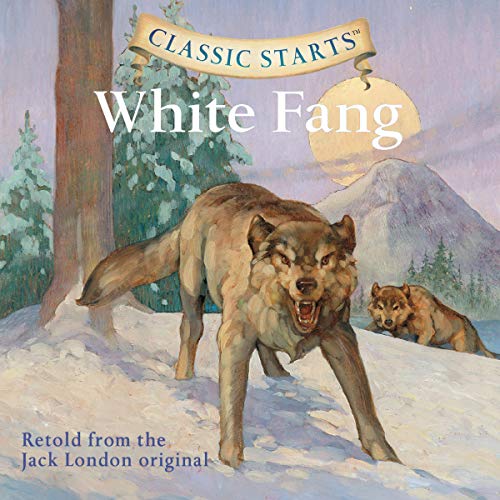
[White Fang: The Challenge of Adaptation and the Chicken Coop Incident]-[White Fang - Part 23]
📋 Summary
The Evolution of White Fang: From Wild Instincts to Domestic Harmony
The Misunderstood Guardian
White Fang’s transition to life on the Scott farm is marked by a fundamental clash between his past experiences and his new environment. Having been raised by Gray Beaver, White Fang operates under the strict code that he must "protect his master's property." This instinct leads to a significant misunderstanding when he attacks a farmhand, whom he perceives as a "thief." Despite White Fang’s intent to act as a guardian, the farmhand is terrified, and the resident collie reinforces the rejection by barking and nipping at the wolf. This incident highlights the central conflict of the chapter: White Fang’s protective instincts, once essential for survival, are now viewed as aggressive liabilities in a civilized setting.
Adapting to an Unfamiliar World
Life on the farm is a psychological challenge for White Fang. He remains in a state of hyper-vigilance, constantly expecting "a famine, a beating, or an attack." His previous life at the Indian camp and Fort Yukon taught him to "mistrust" children, whom he associates with taunting and teasing. However, the Scott children prove to be "gentler," leading White Fang to undergo a profound shift in behavior. He moves from mere tolerance to actually accepting their touch, demonstrating that his capacity for trust is not entirely broken, provided he is met with kindness rather than cruelty.
The Chicken Coop Conflict
The turning point of the narrative occurs when White Fang encounters the "chicken coop." Lacking the domestic knowledge that these animals are property, he treats them as prey, killing two chickens. This triggers a conflict between Weedon Scott and his father. Judge Scott, skeptical of domesticating a predator, insists that "a wolf is a wolf," implying that nature cannot be overridden by training. Weedon, however, enters into a "friendly bet," confident that he can teach White Fang to respect the boundaries of the farm.
Discipline and the Lesson of Restraint
Weedon’s method of discipline is stern but deliberate. When he catches White Fang with the dead birds, he uses a "harsh" and "severe" voice and cuffs the wolf. Because Weedon had never hit him before, White Fang realizes the gravity of the situation. This discipline is effective; when placed back in the coop, White Fang waits "calmly," demonstrating his intelligence and his deep desire to please his master. He recognizes that the chickens are "off-limits."
The Triumph of Laughter
The story concludes with a moment of reconciliation. As Judge Scott is forced to admit, "White Fang, you are smarter than I thought," the atmosphere is filled with laughter. Significantly, White Fang learns that this laughter is "not mean-spirited or cruel." By transitioning from an environment defined by fear and violence to one defined by patience and communal humor, White Fang successfully integrates into the farm, effectively ending his days as a raider of the chicken roost.
Deep Learning with ListenLeap


