Chapter 18 Taming the Wolf Well, Matt, Whedon said, do you think it's hopeless?
He sat on the step of his cabin and stared at Matt.
His friend responded with a shrug.
Together they looked at White Fang at the end of his stretched chain.
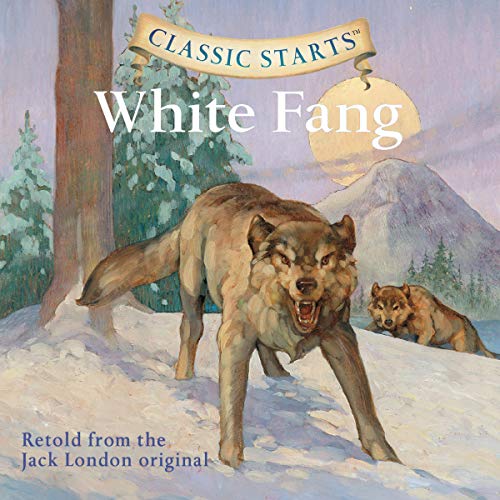
The wolf was snarling, straining to get at the sled dogs.
Is there any chance of taming him? asked Whedon.
Not sure.
Matt said, there might still be a lot of dog in him.
Matt moved in as closely as he could.
He examined White Fang without touching him, of course, for a long time.
Well, what is it?
Whedon asked.
Come on, spit it out.
Why are you looking at him like that?
Wolf or no wolf, Matt said, this dog has been trained.
He pointed to marks along White Fang's fur where leather straps from a sled once lay.
You're right.
He was a sled dog before Beauty got a hold of him.
Whedon was amazed.
So there's no reason he can't be trained again.
Don't get too excited, Matt warned.
We've had him two weeks and he seems worse.
Whedon thought carefully for a moment.
We need to prove to him that he's not being punished.
He needs to know that we won't hurt him.
We could try turning him loose, I guess, Matt said.
Whedon thought about his friend's idea.
It seemed risky, but Matt was a careful man.
All right, let him off his chain.
We'll take a chance on him.
White Fang could hardly believe he was free.
He had been with Beauty Smith for many months, and in all that time he had never known freedom.
He did not know what to make of it.
There must be some sort of trick.
He watched while the bigger man circled him and the little one went back into the cabin.
White Fang stayed close to his corner, growling with his head down low.
"'What he needs,' said Whedon as he walked back outside. is a little human kindness.
He threw a chunk of meat toward the hungry wolf.
Before Matt had a chance to hold the other dogs back, one of their sled team jumped for the fresh meat.
White Fang was on him in mere seconds.
Matt and Whedon quickly pulled the wolf back while the dog ran off whimpering.
Matt quickly came to White Fang's defense.
Look, Whedon, he said, that dog's had a rough go.
You can't expect him to be as nice and shiny as an angel.
You have to give him time.
Don't worry, Whedon said.
I was being careless.
I forgot the sled dogs might jump for the meat.
He looked at White Fang.
The wolf was confused and frightened, waiting for a beating or some abuse.
All right, then, Whedon said.
We'll try something.
He walked over to White Fang.
Matt suggested that he take a club, but Whedon shook his head.
He spoke to the wolf in a gentle voice.
White Fang waited for the beating.
After all, he had attacked this man's property and hurt one of his dogs.
This man was acting strangely, though.
His voice was different.
It was soft and low.
This was something new, and one of the things White Fang understood was that new rarely meant better.
He bristled and showed his teeth, his body shaking.
This new man had no club.
He didn't yell or kick or pull his chain.
The man sat down very close to him.
When a hand came out slowly toward him, White Fang offered a quick bite.
Whedon cried out sharply with surprise.
He grabbed his torn hand and held it tightly.
That's it, Matt said.
He went into the shed for his rifle.
We can't take these chances.
We have to put him down.
Matt aimed the gun at White Thing.
The wolf reacted by jumping back into his corner, growling and hissing at Matt and the gun.
No, Whedon jumped up.
No, it's not his fault.
Whedon, he bit you.
He could do worse next time.
Look at the intelligence of him, Whedon said.
He knows the meaning of firearms as well as you do.
Watch.
Put up your gun.
Matt put his gun down and White Thing immediately calmed down.
He sat by the fence and continued to watch them.
Pick it back up.
Matt did as he was told and White Thing reacted by lowering his head and growling, his fur bristling.
Now.
Put it back down again.
White Fang's snarl disappeared once again.
Matt was amazed.
I agree with you completely.
That dog's too smart to kill.
And so the retraining began.
Every day, Whedon sat beside the wolf.
He talked to White Fang in a kind, gentle voice.
He wanted the wolf to get used to his voice, to understand kindness.
Whedon Scott wanted White Fang to know that not everyone wanted to hurt him.
He wanted him to learn trust.
I'm still a bit worried about you sitting so close, Matt said at dinner.
I'm not saying you can't calm him down, but do you still think you can tame the wolf?
He's never known kindness, Whedon insisted.
He'll learn kindness by kind treatment.
Matt shook his head slowly.
He knew what his friend said was true, but wild animals could be unpredictable, especially one that had known so much abuse.
You're more optimistic than I am.
I say, if people can't be kind to each other, how do you expect a wolf to be?
That's just it, Whedon said.
People don't always treat each other with respect.
You have to change the world, one person or one wolf at a time.
Each morning before he set off to work, Whedon returned to White Fang.
Every time he sat down, he moved a little closer.
Eventually, he put his hand out.
White Fang sniffed.
Whedon moved his hand closer still, and White Fang did not step.
Even though the wolf growled, he moved closer.
Then he touched the fur along White Fang's back.
The wolf's coat was matted and dirty.
Whedon wondered if White Fang would ever trust him enough to let himself be cleaned.
The wolf shied away slightly, but let Whedon gently press his hand into his back.
Matt stepped out of the cabin to empty a pan and saw his friend with the wolf.
Well, I'll be a monkey's uncle.
The sound of his voice broke the spell.
White Fang jumped back, snarling, teeth bared.
Whedon stood up and walked over to his friend.
I'm not sure what will happen now, he said, but I think White Fang has finally learned some trust.
And the lessons did not stop there.
Whedon kept up with his routine of sitting close to the wolf and talking low.
White Fang slowly got used to people being near him.
The wolf was still not fond of petting.
He let Whedon touch him, even though he growled the whole time.
Whedon, however, was not fooled.
He could hear the difference, even if no one else could.
It was not a harsh or mean growl.
It had a different tone.
It was a growl of comfort and growing love.
But about a month after White Fang came to live with Whedon and Matt, they saw a return of the vicious angry wolf.
One night after dinner the men were playing a game of cribbage when they heard a deep growl from the front porch.
They opened the door to see the wolf, teeth bared, ready to spring into the darkness.
Whedon and Matt looked into the darkness but could see nothing.
Matt called.
Anybody there?
But no one answered.
Suddenly the wolf leaped down the stairs and a man cried out in pain.
Matt ran to grab a lantern while Whedon went for the wolf.
Hold on, boy, he said.
Let's get a good look.
White Fang did not calm down at the sound of his master's voice, though.
He continued to growl and snap and snarl.
He tried to pull away from Whedon's arms and attack the whimpering man in front of him.
Matt returned with a lantern.
He held the light up.
Aha, he said.
Well, that explains a wolf acting up.
Beauty Smith was lying in the snow, holding his leg where White Fang had bitten him.
He continued to cry in pain, although the wound did not look very deep.
Get up, Smith, Whedon said.
What do you think you're doing out here?
Aye, aye, aye, he stuttered.
White Fang continued to growl and Smith knew he was in trouble.
Just don't let go of the wolf, okay?
Why are you sneaking around our cabin in the dead of night, Smith?
Whedon asked.
I'm guessing it's not for a friendly visit.
I came to get my prop.
My wolf!
As soon as Smith looked at White Fang, the wolf started to growl and snarl again.
Do you really want me to let him go?
Whedon laughed.
Would you like it if I let you take White Fang home?
The wolf struggled to free himself from his master's hold.
His teeth were bared.
His fur was standing straight up.
No, Smith cried.
No, don't let go of him.
He put his hands up in front of his face.
White Fang will stay right where he is, Whedon said, if you leave this instant.
And remember, Matt said, we won't hold him back if you try this again.
Smith mumbled something under his breath.
He turned from the cabin and started limping back up the trails.
Come on, boy, Whedon called the wolf back to the porch.
I think you should sleep inside tonight.
Now Whedon.
Matt said you can't be worried that that coward, Beauty Smith, will try to take him again, are you?
The young man led White Fang inside and cleared a space for him near the fireplace.
Yes, Beauty might try again.
But I'm more worried we won't be around to stop the wolf next time.
Whedon sat down in a chair and lit his pipe.
You saw him out there.
I thought he might kill the man.
He looked over at the wolf that could be so gentle with him.
White Fang was already sound asleep by the fire.