
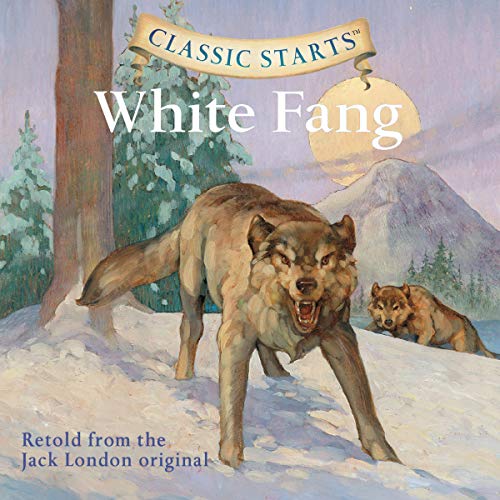
[The Return to Domesticity: White Fang’s Choice of Man Over the Wild]-[White Fang - Part 13]
📋 Summary
The Return to Domesticity: White Fang’s Choice of Man Over the Wild
The Awakening of Loneliness and Fear
In Chapter 12, White Fang experiences a profound shift in his perception of freedom. Initially, he enjoys his autonomy, playing among the trees and chasing squirrels as darkness falls. However, the silence of the woods soon transforms into a source of dread. White Fang becomes acutely aware of his "loneliness," describing the silence as something that "frightened him." Having grown accustomed to the "comforts of man" and the protection of his master, he finds himself ill-equipped for the solitude of the wilderness. He realizes his mistake in staying behind, feeling "cold, hungry, and scared," as the primal wild no longer feels like home.
The Mournful Call to the Past
Returning to the deserted camp, White Fang seeks the remnants of his life with Grey Beaver. The sensory details—the scent of his master, the "pit that had once held their fire," and the "round mark" left by the tent—evoke a deep sense of longing. In a pivotal moment of character development, White Fang sits and lets out a "long wolf howl, full-throated and mournful." This act is significant as it is "the first howl he had ever let out," signaling a bridge between his ancestral wolf heritage and his domesticated present. The howl serves as a desperate plea for connection and a manifestation of his grief for the warmth of the fire and the familiar presence of his human family.
The Instinctual Search for Belonging
Driven by "instinct," White Fang spends the following day "crisscrossing the land" in a frantic search for the tribe. His efforts to find signs of his family are hampered by the "frozen ground," which makes tracking nearly impossible. Despite the vastness of the woods and the silence of the wind, his determination remains unwavering. He is not merely searching for food; he is searching for the structure and safety of the human camp. His reliance on his senses—sniffing the air and the earth—eventually leads him to the familiar scent of "meat cooking on a fire," marking the end of his brief and harrowing stint in the wild.
Acceptance and the Final Surrender
Upon finding Grey Beaver, Klukuch, and Mitza, White Fang exhibits a submissive posture, moving to his master’s side and "expecting the usual beating." He is prepared to accept his "fate," anticipating punishment for his disappearance. However, the reaction is unexpected: Grey Beaver "chuckled" and ordered Klukuch to give the wolf the "biggest piece" of meat available, declaring, "Our wolf has come home."
This reunion serves as the definitive turning point in White Fang’s life. By choosing to return to the camp, he effectively "given up his life in the wild." He consciously chooses to "turn his back on his wolf heritage" in favor of the security provided by his master. The closing scene, where White Fang lies at Grey Beaver’s feet, "gazing at the fire that warmed him," underscores his transition into a creature who is "completely dependent on man." The cold, lonely forest is left behind, replaced by the safety of the fire, signaling that White Fang’s identity is now inextricably linked to the human world.

Deep Learning with ListenLeap


