
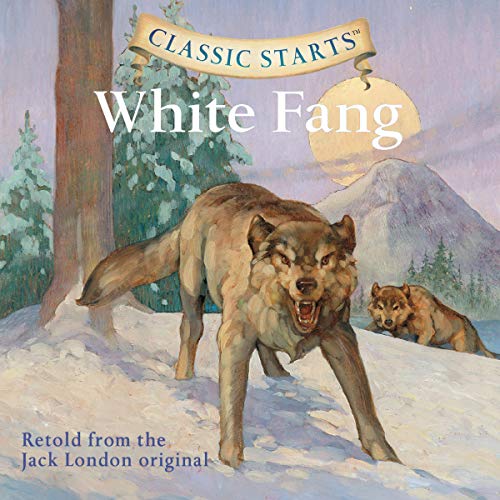
[White Fang's Initiation: Navigating the Complexities of Human and Canine Society]-[White Fang - Part 09]
📋 Summary
The Collision of Two Worlds
Chapter 8 of White Fang marks a pivotal transition in the protagonist's life, as the young wolf-cub is thrust from the untamed wilderness into the structured, social environment of an Indian camp. This shift introduces White Fang to a new set of challenges that are fundamentally different from the life-or-death struggles of the wild.
The Hostility of Canine Society
Upon entering the camp, White Fang immediately encounters the local dogs. The text highlights a profound biological and social divide: "Wolves and dogs were cousins, but they were very different." While wolves possess an inherent independence, having "lived with humans for so long," the camp dogs have lost much of their "wild heritage."
This difference manifests in immediate violence. When the dogs attack, they recognize White Fang as an "outsider" and a creature "from the wild." The resulting fight is described as a "mass of growling, angry dogs," forcing White Fang to defend himself. This experience is transformative; though he does not yet possess the vocabulary for "justice," he begins to develop a foundational "mistrust of dogs" while simultaneously forming a nascent "respect for man" as the force capable of controlling the chaos.
The Mystery and Peril of Human Civilization
Life inside Gray Beaver’s tent presents sensory confusion for White Fang. The environment is entirely alien, filled with the smells of "cooked meat" and "dried animal hides," which contrast sharply with the scents of the wild.
Perhaps the most significant encounter is his introduction to fire. Drawn by the "strange light" that flickers with warmth, White Fang’s curiosity leads to a painful lesson. When he attempts to "taste the strange light," the flames burn his nose and tongue, causing him to stumble backward in agony. This moment is compounded by social humiliation: Gray Beaver and the other humans "laughed loudly" at his distress. For White Fang, this laughter is not merely an amusement; it becomes a catalyst for further isolation, as he "learned to hate the sound of laughter," viewing it as "one more reason not to trust others."
Adaptation and the Legacy of the Wild
Despite the hostility and confusion, White Fang begins to adapt through the guidance of his mother, Kiche. Having "lived with man before," Kiche acts as a bridge between the two worlds. She demonstrates how to interpret "body language" and "tone of voice," teaching her cub that these creatures—humans—possess a unique capacity to sense fear, anger, or threats.
White Fang observes his mother’s transformation with bewilderment. The once "brave and strong" wolf of the wild is now content, wagging her tail for Gray Beaver and barking when fed. Though he does not "question it," White Fang’s internal world is irrevocably altered. As he falls asleep, exhausted by the day’s trauma—the fight, the fire, and the social rejection—he remains unaware that his life in the cave is finished. He enters a new era of existence, forever changed by the complexities of human domesticity and the rigid hierarchy of camp life.
Deep Learning with ListenLeap


