
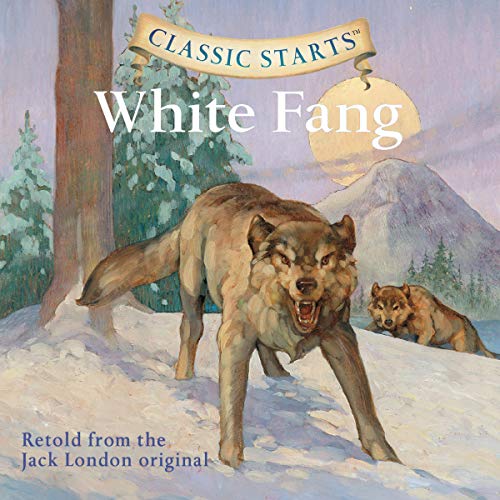
[The Rule of the Wild and the Encounter with Man: The Origin of White Fang]-[White Fang - Part 08]
📋 Summary
The Lessons of the Wild
In the early stages of his life, the cub undergoes a rigorous education under his mother’s guidance. He learns that the "rule of the wild" is a complex code of conduct rather than a simple cycle of "eat or be eaten." His mother teaches him that even among predators, there is an inherent need for mutual respect, noting that a wolf kills only when "hungry or in danger." This formative period allows him to develop independence, roaming and hunting on his own while remaining tethered to the safety of the cave, until a solo adventure irrevocably alters his destiny.
The First Encounter: A Clash of Worlds
While seeking water at a stream, the cub’s instinctual world is shattered by the appearance of five "strange creatures." Unlike the animals he knows, these humans exhibit a baffling stillness. Despite his instincts telling him to run, the cub is held captive by a sense of "awe." This curiosity quickly turns into a violent misunderstanding when a man attempts to touch him. The cub reacts with primal defense, "biting the man’s hand and drawing blood." The subsequent retaliation—a strike with a stick—leaves the cub "confused" and experiencing pain for the first time, marking his initial, traumatic contact with the unpredictability of human nature.
The Return of Kiche
The tension is broken by the arrival of the cub’s mother, Kiche. Her transformation from a "fearless" predator to a submissive companion is startling. Upon hearing the voice of a man named Gray Beaver, who recognizes her as his late brother’s dog, Kiche abandons her wild persona. She crouches until her "belly touched the ground" and whimpers in recognition. The revelation that Kiche was once a domestic animal who escaped during a "famine" explains her dual nature. Her willingness to let Gray Beaver tie a rope around her neck signifies the end of her wild autonomy.
The Birth of 'White Fang'
Gray Beaver’s claim over the mother and cub marks the beginning of the cub’s transition from a creature of the forest to a creature of the camp. When Gray Beaver attempts to handle the cub, he is met with a "growl and bared fangs." Impressed by this defiance, the man dubs him "White Fang." The cub’s submission is not voluntary but imitative; he observes Kiche’s compliance and decides he "must too."
A New Reality: The Human Domain
The final shift occurs when Gray Beaver forces White Fang into a position of vulnerability by rubbing his belly. Though the cub’s nature rebels against such "helplessness," he finds himself unexpectedly enjoying the touch. This moment of domesticity is short-lived, interrupted by the arrival of the entire Indian tribe. As the woods fill with "supplies and food," and the air is crowded with the noise of "dogs and children," White Fang realizes he has been thrust into a new existence. The narrative concludes with the cub standing on the precipice of a life "ruled more by man than by the wild," signaling the end of his untamed youth.

Deep Learning with ListenLeap


