
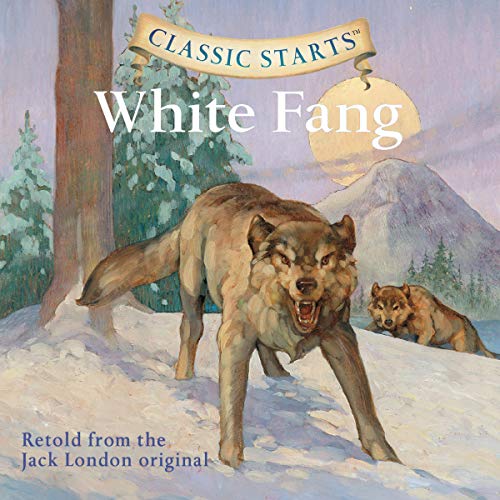
[The Awakening of the Wild: A Wolf Cub’s First Journey into the Unknown]-[White Fang - Part 07]
📋 Summary
The Awakening of the Wild: A Wolf Cub’s First Journey
The Threshold of the Unknown
For the gray cub, the cave was the entirety of his universe. He viewed the entrance not as a gateway to the outside world, but simply as a "cave wall" that his mother alone could transcend. His existence was defined by the protective instincts of his mother, who would "nudge him back" with a "soft growl" whenever he approached the threshold. Despite having never encountered true danger, the cub possessed an innate sense of fear, a "part of his heritage" and "a part of the wild" that served as a fundamental survival mechanism. This fear was not a human intellectual construction, but a primal response to the mysterious world beyond the mouth of the cave.
First Steps and the Encounter with Nature
Driven by a hereditary "need to wander and hunt," the cub eventually crossed the boundary. As the "white wall dissolved into colors," he was met with the overwhelming sensory input of trees, sky, and a running stream. His initial reaction was one of pure terror; he "crouched down" and attempted a "fierce snarl," yet he was quickly disarmed by his own curiosity. Watching a bird disappear into the woods, his fear subsided, replaced by a burgeoning fascination. This curiosity led to his first physical tumble down a slope—a chaotic introduction to the gravity and unpredictability of the outside world. He learned that the world was divided into two distinct categories: "live things," which were unpredictable and dangerous, and objects like "rocks," which remained stationary and benign.
The Lessons of the Wild
As the cub explored, his movements were characterized by a clumsy lack of coordination; he "tripped over rocks" and "stumbled into trees." However, each mishap was a pedagogical moment. His encounter with a "moose bird" served as a sharp lesson in cause and effect when the bird gave him a "sharp peck on the end of the cub's nose" after his playful overture. This formative experience taught the cub that his interactions with other living creatures required caution and readiness. His journey reached a climax when he discovered a stream, an experience that mirrored his first exit from the cave. The water was "entirely new," and his accidental immersion forced him to rely on instinct, leading him to "swim" as if he had been doing it his entire life.
The Perils of Inexperience
His newfound confidence was nearly his undoing when he encountered a weasel. Driven by curiosity rather than malice, he attempted to play with a "baby weasel," only to be met with the ferocious protective instincts of the mother weasel. The cub was quickly overwhelmed, finding himself in a life-threatening situation as the weasel "swiped at him and tried to bite him in the neck." This moment underscored the brutal reality of the wild: innocence is no defense against the defensive instincts of another creature. The cub’s survival was purely fortuitous, saved only by the sudden intervention of his own mother, the "red dog."
A Return to Safety
The reunion between the cub and his mother was a profound display of maternal affection. The mother’s "joy at finding the gray cub" was palpable as she "nuzzled him" and "licked the wounds" inflicted by the weasel. In the safety of his mother’s presence, the cub released a "sweet low rumbling"—a sound of relief and contentment. This journey outside the cave marked the cub's transition from a naive dweller of the dark to a sentient creature beginning to navigate the complex, dangerous, and beautiful tapestry of the wild.

Deep Learning with ListenLeap


