Discussion keeps the world turning.
This is Roundtable.
You're listening to Roundtable with myself, Hyung.
I'm joined by Yuxuan and Steve Haverly in the studio.
Coming up, believe it or not, there's a whole trend on social media dedicated to just figuring out how to open EV car handles.
Wild, right? Who says car designs are all the same?
Just opening a door reveals a world of variety.
How should car designs strike a balance between innovation and practicality?
And what truly fuels your happiness?
What you own or who you are?
Join us as we explore how shifting our focus from material wealth to meaningful experiences can transform our pursuit of joy.
Want to be part of Roundtable's Heart to Heart segment?
Share your thoughts, questions, or hot takes on news, tech, and life by sending us a voice memo to roundtablepodcast .com.
You might hear yourself on our next live show.
Our podcast listeners can fight us at Roundtable China on Apple Podcast.
Now, let's shift gears to the world of automotive design, where tech meets style.
Specifically, those retractable door handles and EVs that have drivers scratching their heads.
The young people who once pitied older generations for struggling with smartphones are now facing their own tech nightmare.
They can't figure out how to get into an electric vehicle without checking notes online, apparently.
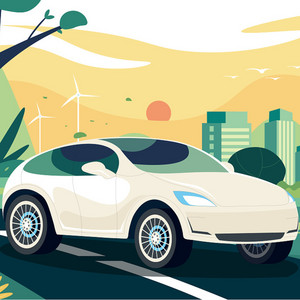
Why are hidden door handles all the rage and EVs when no one, young or old, seems to know how to use them?
So how really prevalent are these hidden door handles and EVs, and they remain hidden?
Yeah, it's kind of all over the automotive industry these days.
EVs are becoming more prevalent and they're known and positioned as high tech, aren't they, and technological?
And now more automakers are using this retractable door handle design.
They do it to make it look cooler, I suppose, add that aesthetic value to it.
But they're also looking to reduce energy consumption as well.
Drag is the term, and we'll talk about that a little bit later.
Tesla is an easy example because they were one of the first to promote these retractable door handles on EVs on a large scale.
The hidden door handles in Tesla vehicles themselves, they came out on the Model S back in 2012.
And then in the following years, Tesla put them on all their vehicles.
The Model S and the Model X, they have handles that present themselves when you walk up to the car.
But the less expensive Model 3 and Model Y, they have handles that owners must push in for the door to open.
It's kind of annoying, those ones, because it's almost like a, it's a two -part process, almost.
For our listeners who don't know, they say hidden door handle because it doesn't stick out like it does on another typical car.
So when you approach the vehicle, you kind of have to look for it for a sec if you don't know where it is.
It's still in the same spot, but it doesn't, it's not obviously presented to you.
But you have to push in on one side.
It's flush with the door.
You have to push in on one side.
The other side pops out.
The video I watched, the guy has to use his pinky finger to grab the other end that has popped out.
And so there's dexterity involved here.
And then, then open the car door.
You need an owner's manual or an instruction manual to figure out how to do it.
And some people just find it annoying.
Tesla is one example, but there's plenty of examples here in China too using that.
Oh yeah, in China, many EV makers have used similar door handle designs, including Neil or X -Pong, which is Xiaopeng, I believe in Chinese, WM Motor and Zikr and Aeon.
And generally speaking, the design is equipped with cars that are relatively more expensive.
And also this is from personal experience just to echo with Steve's viewing experience of that video.
So I was hiring a car to go to work and I was imagining that day to be just another random work day until an EV stopped by.
And the driver had to lower the window of the backseat to tell me, oh, you need to push the button at the front and then pull the retractable handle from behind.
And judging from the frequency and the such a fluent reaction from the driver, I would assume it's not his first time to instruct the rider to do so and it's not going to be the last.
Yeah, exactly. And also when you look at the Chinese market, which is a thriving EV market and competition is fierce.
And this is one of the areas when you kind of feel, I don't know whether I want to sing phrases or not in innovation because every brand seems to have their own retractable flash hidden door handle design.
Therefore, it's not like you've got Tesla figured out, you know how to get into the next EV car.
Once you know, you know, right?
Once they're still kind of different.
Yeah. Yeah. Like in theory.
Yeah. I suppose maybe I'm just not one of those people who are who know the theory and doesn't have a problem in applying in a million ways.
Well, no, you're right.
You're right. Because from carmaker to carmaker, it will be different and you will have to figure it out.
I was just saying, if you're a Tesla owner, you're not really going to have that different of an experience.
Maybe from one model to the next.
There's a new one now, by the way, in 2024 from Xiaomi's SU7.
This is a hit. They call it a semi -hidden door handle, and it's becoming the new industry benchmark.
I guess Xiaomi got word that consumers were kind of annoyed by the fully hidden door handle, and they dedicated a big part of their launch presentation to emphasize the value of these handles as car executives.
They're scrambling to study and they're scrambling to adopt the concept too.
And in fact, before Xiaomi's innovation, this type of handle had already been employed by brands ranging from Porsche to Volkswagen and BYD as well.
And to be honest, I think the hidden door handle theory is not really an entirely new thing because all the way back to over a decade ago to 2011, that is reported by the New York Times, car customizers like George Barry's already banished handles and sometimes replaced them with hidden electric releases.
So it's really impressive to see that now not only is the idea of hidden door handle being applied, it's also being modified to become more practical and more easy to use.
Yeah, and the semi -hidden handle, it was found on vans at one point, but they thought it was kind of a low -end solution.
But Xiaomi, they revamped the design.
They made it look a little bit sleeker.
They made it a little bit easier to use without needing to pull the handle.
And their innovation had already been employed by brands from Porsche to Volkswagen to BYD, as Yushan mentioned.
It's so funny almost.
When you think about how big a car is, when you think about all of the design production that goes into it, how expensive they are, the industry is still trying to figure out the door handle and consumers are sitting here scratching their heads going, why is this complicated?
And why is it good?
I drive a traditional car, still haven't switched, but one thing I'm happy about is no frills, no panic in opening the car door.
So what justifies this hidden door handle design in the first place?
Yeah, so I looked it up.
I found an article from Medium from 2022 and the writer of that article was an engineer.
And it was really interesting to read that and to learn about why automakers are doing this.
Why does Tesla do this?
Why do others hide their door handles?
So I'm very excited to talk about this because I love cars and I love the science behind it.
So cars, they have about 25 % of the drag in the underbody of the car due to things like transmission and exhaust systems.
The drag is the wind.
It's what slows the car down and it decreases your fuel economy if you're driving a typical gas automobile.
But if you're driving a battery powered automobile, you're talking about distance traveled then, right?
So the more drag, the less distance traveled.
So 25 % of the drag comes under the car.
The extra 50 % that goes over the entire vehicle.
And Tesla, they pay a ton of attention to the design of their cars so that they can reduce drag.
If you've seen a Tesla, which I'm sure everyone has, you'll notice the back end has these really sharp lines and clear edges.
Well, that's not just for aesthetic value.
That's because it reduces 2 .2 % of the drag.
And again, drag reduction, increased distance for a battery powered vehicle.
Every measure that they took to improvise the outline of the design contributed to drag reduction.
And the argument against, and by the way, Tesla, they state that 8 % to 10 % improvement in motor efficiency translates to 15 % to 18 % increase in range.
And the argument against the hidden door handle is that it will not really make a big difference in drag reduction.
Why? Because it's right behind the mirror, right?
The mirror is already contributing to the drag and the handle is almost in the same line.
Tesla engineers, they wanted to get rid of the mirror on the car, as a matter of fact, to streamline their car even further because a mirror is 2 % to 7 % drag, depending on the size of the mirror.
But the authorities said you cannot remove the mirrors, the side mirrors from the car.
The point is, that's why they hide the door handles to try to reduce drag and increase the distance that they can travel in a battery powered vehicle or increase fuel economy in a gas vehicle.
And also data has it that retractable door handles contribute by about 12 % to reduce the drag coefficient of vehicles as well, which then contribute to increasing the fuel efficiency of vehicles.
Yeah, and exactly. And this isn't when we think battery powered vehicles versus cars that use gasoline.
It's not that big a deal for cars that use gasoline because gas stations are everywhere.
They're easy to find.
If you're driving a battery powered vehicle, the charging stations still are not everywhere, right?
So getting as much distance as you can out of your battery is a really big deal for the automakers.
And it's also a marketing tool for them, something that they can sell to their customers.
We can go this far on one charge.
That's why they're always trying to reduce drag.
Oh, interesting. I have to admit, I knew nothing about that.
I thought it was purely marketing.
It's that too. Because it seems like at least in the initial stage, the EV makers, they kind of want to differentiate from the traditional car makers and having that super sleek and new kind of image is really important.
And I guess it's still part of it.
And also, I think the retractable door handle is part of the general look as well.
It tries to provide you such scientific, if not modernized flow that's integrated as part of the whole car shape and image.
And just creating trouble for people.
For example, like just an average person like myself, I sort of know what how to open a Tesla door.
But there were a couple of times when, yes, I was on the car hailing app as well and it was a new energy vehicle that came to pick me up.
And then every time I felt like a complete country bumpkin in trying to figure out, oh, another car model.
Oh, another way that I need to figure out how to open this door.
And this is definitely creating controversy.
What I just mentioned might just sound like no big deal.
But apparently, let's say if a police man is trying to rescue someone in one of these cars and you don't know how to open the door.
It happened. It happened in South Florida in 2019.
As a matter of fact, it was a Tesla Model S and Omar Awan, who was a 48 year old man, was driving his Tesla in February.
He lost control on the highway and he ran into a palm tree.
That's not the most important part of the story.
The accident caused such a problem for the rescuers, they couldn't figure out how to open the door handle.
And it cost him his life.
I mean, that's on the serious end of this design on the less serious end on just the annoying end.
Some people complain that in the wintertime, because it's because it's built into the door and you have to press it in the wintertime, sometimes it'll get stuck or it'll freeze.
That's not an important problem if you live in Florida, for example.
But if you live in Canada in the wintertime, that's going to be a pain to deal with all the time.
The term that the engineer used in that article I was referencing before, and this is the term that engineers use, is over -engineering.
Over -engineering is when product designers try too hard to make a product useful or cool for consumers, but they just go too far to the point where it's not cool and it's not user friendly, and it's actually engineered to a point that isn't practical at all.
And do we have some more examples in the automotive industry?
Apparently, this is not the first time when over -engineering happens and there are some of these features that some people today might deem as a bug rather than a feature.
One thing about some of those newer SUVs were cars with bigger front, one thing that I really dislike about it is the oversized grilles that I personally found it's so unseemingly not good looking.
Because, well, despite the function, it's really not that necessary to make the front of a car so bulky and so thick and big as if it's a whole piece of iron loaf of bread moving from head to toe, like it's a whole rectangular shape from the front to the back.
And one example is the Lexus LX.
Me, myself, I'm a big fan for the Lexus series, and I was discussing with other Lexus fans as well because LX is one of their more luxurious model types.
And we both believe that it's just looking as if you are to put a human face at the front side of a car, it looks like an old man with a full face of beer, which is, you know, it loses the touch of the whole...
Interesting customer feedback.
I'm not sure the Lexus engineers thought of that when they designed it.
I'll give you a few and you can ask me if you want, we can talk about one in detail.
Useless car features that various media outlets have pointed out.
Paddle shifters, those are for changing gears instead of a manual transmission, the paddle shifters allow you to switch gears with your fingers.
That's what I do every day.
Yeah, so you know, they're just above the steering wheel.
A lot of people complain that's such a useless feature in a car.
Another one, voice recognition, social media integration, a CD player.
I don't think we're going to get any flack on how useless that's becoming these days, a compact display, spare tire, they say is going to become useless in the future.
Paddle shifters, you use them, do you?
Yeah, and I've only figured out that's what it's called.
And for my brand of cars, like every, for this brand, every car, regardless of the cheaper one, the more expensive series, have that feature.
And I'm so used to using it.
It's great. Do you think so?
I love it. But the problem is, I don't know how to drive the stick thing anymore, even though a lot of the auto...
But your car is an auto transmission.
I have that feature, but I don't always use it.
But it doesn't have the stick on the side.
It's all the moving the fingers without actually needing to move your arm.
You don't need to use those paddle shifters to operate the vehicle.
I do, I do. That's how I drive my car every day.
There's no other option?
Yeah, that's how we do it.
So you know, it's really interesting because this is a pretty popular brand.
And once you're used to this kind of driving, then when you get your next car, I suppose some of us are compelled and we feel, all right, we'll just still stick with this thing because we're used to the way we drive.
Interesting. I had it in a previous car, too, and I just never, ever used it because my fingers were always moving up and down, up and down.
I didn't want to bother.
I think we can agree, though, social media integration into the infotainment screen in your car.
That's not a good idea.
Yeah, you don't need to be watching videos or checking in with your social media while you're driving the car.
That should be banned.
No kidding. Touch screen only controls.
Apparently, this is a big feature for some new, newly designed cars, but replacing physical buttons with touch screens for basic functions such as adjusting volume or other controls is not really good.
Let's say if there is some kind of dysfunction malfunction thing going on with your computer unit, then you don't have another alternative.
Yeah. With my traditional car, I can just push those dear old hard buttons and then it works.
Oh, my gosh. Don't even get my dad involved in this conversation.
He doesn't even like power windows in a car.
He prefers to roll up the window and roll down the window.
And he always said, the more buttons, the more things that can break.
Yeah. And coming up, are you chasing happiness through possessions, knowingly or unknowingly?
Let's unpack some ideas on having versus being and discover how to break free from materialism to find true joy in life.
Stay tuned. It's the hour of roundtable with myself, Hyang.
I'm joined by Steve Hatherly and Yuxuan in the studio.
Ever feel like you're on a treadmill sprinting for a financial future but not really getting anywhere?
It's a common sentiment these days, especially with the rise of resignation influencers who are ditching their supposedly well -paid jobs in search of true happiness.
So let's unpack the idea.
Does a bigger paycheck really lead to more joy or is it just a shiny distraction from what truly matters?
Yeah, let's get deep here.
But before we do, you know, super deep resignation social media influencers.
I don't see them having many videos.
Resignation influencers?
We should talk about what that is, first of all.
A resignation influencer is someone who posts a video about their resignation announcement from their job.
They do these very elaborate farewells and they have these quote unquote last day vlogs.
And many people in the comment area of these videos, they find these influencers to be kind of relatable, I guess, because they feel like that's what they would like to do.
If they were to quit their job, it's almost like throwing a party when you quit your job to say congratulations to me.
Congratulations. Yeah, exactly.
But this psychological question or the thing that's going on behind this phenomenon is the question, does more salary equal more happiness?
What do you think before we get into it?
If you're asking me, then the answer is most likely to be no.
I tend to see that higher salary is just a portal or rather it opens more portals or gates for you to have access to those that's traditionally deemed as happiness or that you are at least financially capable to do what traditionally people think could lead to happiness.
But in real life, that's not always the case as Forbes highlights a study that's mentioned in Harvard Business Review with which surveyed 100 ,000 working adults that many of the respondents were willing to sacrifice higher earnings for more free time, as in more fulfilling social connections and satisfying careers
and greater overall joy leading to higher levels of general satisfaction.
So when we talk about happiness, there's a lot of different aspects that could lead to happiness.
And again, how do money fulfill that will help us to get closer to that?
Let me ask you both this question.
You both work generally five days a week, correct?
Okay, so let me say I'll give you a four day a week schedule and you can start work one hour or one hour, 30 minutes later in the day.
However, I'm going to decrease your salary by, let's make it reasonable, 12%.
Do you accept this or do you not?
Well, if I'm okay with the current establishment, then I'll say no.
And if you take a deduction from my current pay, it'll be difficult for me.
See, this is the problem I had with the survey results from Forbes 100 ,000 people.
I want to know who these 100 ,000 people are because when you ask people a question in a survey and then you actually apply it to their real life, you might get very different results on a paper.
Oh yeah, sure. Give me more free time.
That sounds amazing.
But in practical applications, maybe not so much.
But that being said, money doesn't always buy you happiness because it can be a band -aid for bigger problems.
It could be temporary satisfaction for things.
It can lead to an overabundance if you will of retail therapy.
We assume as well that money will solve all our problems when in fact it doesn't solve all of our problems.
And that's where money can create problems for you as well.
Yes. And there is a theory about to have versus to be.
Do you think that might partially answer the deep ultimate question we're asking today?
What we're talking about when you say to have is to be or to be.
This is from Eric Fromm.
And Eric Fromm talked about the value of life through possessions versus the value of life through experiences.
Meaning buy yourself a nice house and a nice car and expensive jewelry and a flat screen TV and all of those things.
Or experiences meaning go on a trip.
Go to a beach and watch the sunset.
Go to Japan and go to a music festival.
Someone recently just did that, didn't they?
That's the argument.
And without going too deep into it, what they find is that having experiences outvalues having possessions.
I wonder how you feel about that, Yushan.
I mean, could this be one of those things where no amount of warning can prepare you?
Do you kind of really just need to experience it for yourself?
Fall flat on my face to truly understand that having all that money doesn't apparently promise joy.
I think I am a bit idealistic on that because I would believe that going through the experience itself matters a bit more than just knowing how it's going to affect my life.
Because without experiencing it, without really knowing what truly brings me as an individual happiness, then I wouldn't assume having a lot of money would help me to feel happy in the first place.
Because I don't even know how to experience happiness with all those money that I probably will have in the future.
So on this notion of to have or to be, you don't really have to have in order to be.
That's how I feel. Oh, that's well said.
You don't have to own stuff to be a great version of yourself.
And that's what Eric Fromm talks about as well.
Individuals view material things as something to own, but they also view others as possessions that can be part of the psychology behind it.
If you really pay attention to or if you're one of those people who loves material, if you're a materialistic person, then your mindset is owning stuff.
And that can roll over to people as well if it gets really deep into the psychology.
But do you agree? I mean, I agree with this theory that having experiences is better than having things because an experience will last a lifetime.
And in the moment, in your memories, but having things will only last until it breaks.
And it doesn't provide the same level of emotional satisfaction either.
I mean, that is one reason why the whole society is running through consumptionism, if that is a word, that encourages people to buy things for themselves as a way to treat themselves better.
But that's just part of that ultimate goal of treating ourselves better.
But in the meantime, it also leads to another word that you mentioned earlier, Steve, which is possession.
And that could not just be applied on objects or stuff that we buy, but also on people as well, which in some cases can go very extreme as to like I process a person, for example, romantic partner thing, the other things his or her partners belong to them.
I think that could lead to very detrimental effects.
It's not very healthy in that way.
Hmm. By prioritizing our relationships and experiences over material possessions, we cultivate a deeper sense of fulfillment that resonates with our true selves.
While material possessions may play a role, I do admit in our happiness, but they're never the full truth.
And true joy blooms not from what we own, but from who we become in the embrace of others.
I invite you to uncover the hidden sources of happiness, where the heart finds fulfillment, possibly beyond material shores.
And that brings us to the end of today's roundtable.
Thank you, Steve, Heatherly and Yushan for joining the discussion.
Thank you for tuning in.
You can find us on Apple podcast at roundtable China.
I'm high young. We'll see you next time.