I'm Aisha Roscoe, and this is The Sunday Story where we go beyond the news of the day to bring you one big story.
For more than 150 years, the U.S. has been drilling for oil.
That meant punching millions of wells deep into the earth.
And those wells, they don't just go away when that big gush of oil is over.
Today, our big story is about the life, death, and afterlife of oil wells.
We're talking to NPR's Camila Dominovsky, who did a series of stories all about these wells.
Hey, Camila.
Hi, Aisha.
So now, you know, I used to be an energy reporter.
And so I really follow that news.
I'm always into like the energy story, especially with oil.
And of course, there's a lot going on in the energy world right now.
You could say that again.
Yeah.
So can I ask you like, what made you want to cover these old wells which are you know?
I mean you look at it, it's like literally old news.
I honestly fell down a rabbit hole based on a single fact that blew my mind, which is that the vast majority of US oil wells make very little oil.
That's really not what you would think.
That's very counterintuitive.
So what's going on here?
Yeah well, what's happening is most of the wells in the US, more than three-fourths of them are only making a tiny bit of oil.
When you put all the wells in the country together, the U.S. makes a ton of oil.
It's the largest producer ever.
But most of that comes from a relatively small number of wells, which are absolute beasts.
They spit out huge amounts of oil.
So like the overachievers.
Yeah.
That's right.
But all of these wells have a life cycle.
So they extract a bunch of oil and then they sort of peter out.
OK, because the way this works is that the oil is under pressure, way underground.
And then when you pump it up, it loses that pressure.
Right.
So at first it's like opening a bottle of soda is how people have described it to me.
It wants to explode out.
But then over time it becomes a lot more like a tube of toothpaste, where you're squeezing it out and it gets harder and harder as you go.
So eventually the well is pretty much done.
And at that point you have to plug it.
You have to fill it with cement from the bottom to the top so that it's not just a big hole.
And that's really important, right?
Because otherwise stuff might leak up from deep underground, including toxic chemicals and also methane, which is a super potent greenhouse gas.
It's more than 28 times as powerful when it comes to planet warming than carbon dioxide.
Okay, you got to cue the ominous music right there.
That methane is a beast as well.
Right, that lurks beneath.
So that's the life cycle of an oil well.
It's born, it gushes, it peters out, and it gets plugged.
And so the thing that made me go, what?
Was that there are all of these wells, a truly huge number of wells that are mostly dry, but they are not plugged.
They're just dribbling along, making tiny, tiny bits of oil.
I mean, like, why?
Like what you know and how are they dribbling?
Exactly why are these wells still around?
Yeah, and so a couple years ago, i was asking lots of people, as i was working on various stories, versions of this question, which is not like a super sophisticated question like why so many old wells, and what people explained to me is that the oil industry is simply much better at creating new wells than it is at shutting them down.
Stay with us.
This message comes from Carvana.
Explore Carvana's quick and easy financing and browse thousands of car options, all within your budget and timeline.
Get pre-qualified now at Carvana.com.
Financing subject to credit approval.
Additional terms and conditions may apply.
This message comes from AT&T.
Staying connected matters.
That's why AT&T has connectivity you can count on, or they'll proactively make it right.
That's the AT&T guarantee.
Terms and conditions apply.
Visit attcom slash guarantee for details and fun quality reporting.
Developed to connect people to their communities and the world they live in.
More at nprwineclub.org slash podcast.
Must be 21 or older to purchase.
We're back with The Sunday Story and Camila Dominovsky, who's been looking at the afterlife of oil wells.
So, Camila, you say the oil industry is much better at creating new wells than shutting them down.
Like, what does that actually look like in practice?
Yeah, let's go to Oklahoma.
That's a state that has a lot of old wells, and it also is home to a guy named Dan Arthur.
When I was asking people my oil 101 questions, his name came up.
He's a petroleum engineer who once worked with the Environmental Protection Agency and has thought deeply about these wells for decades.
And when I first contacted him and I asked if we could chat, he mentioned that he was going to be going out with his stepson to look for old oil wells on their spring break.
Wait, spring break looking at oil wells?
Yeah, that was their fun vacation plan.
And so obviously, I asked if I could come along.
And last spring, I went out to Tulsa, Oklahoma.
And just about the first thing that Arthur did when I met him was he handed me a fossil.
This is... a jawbone from a triceratops in Montana.
My four year old's going to be so pumped when I tell him I touched part of an actual triceratops.
There you go.
Arthur is into fossils and fossil fuels.
Anyway, then we hopped into his pickup.
Um, so we are going to go to a, uh, an oil field, uh, first discovered in 1906 and still producing.
Wow.
This particular field, which is called Bird Creek, it's owned by Arthur's friend, Scott Rabinowitz.
It has produced more than 20 million barrels of oil.
And Rabinowitz says that's just a small fraction of what's underground.
So there's a lot of oil left.
There's still toothpaste in that tube.
It's just a lot harder to get out.
We were standing in this sort of scrubby field with a bunch of pump jacks very close together.
And for listeners who have maybe never been in oil country, those are the things that look kind of like abstract statues of giant birds.
Rabinowitz walked me over to one of his wells, which was first drilled in the 1920s by Texaco.
And it is still pumping today.
Although its big gusher days are long, long behind it.
So how much oil does this well make?
This well makes about three barrels a day.
Three barrels a day is pretty close to nothing.
A new well will average over a thousand per day in the U.S. right now.
But at 60 or 70 bucks a barrel, minus royalties and overhead, a single well like this can still make several thousand dollars per month.
And Rabinowitz has hundreds of them.
And these kinds of wells they're called marginal wells or stripper wells because they're stripping little bits of oil out from underground.
Anyway, the thing is that these kinds of wells are very vulnerable to swings and the price of oil because they produce such a tiny bit.
So you really need a good price to keep them running.
And it has long been government policy to try to keep wells like this open as long as possible, through special tax breaks, for instance.
And that's because oil is a national resource and nobody wants it to go to waste if there's even a little bit more to squeeze out.
So these marginal wells, they produce just a tiny fraction of the oil in the U.S.
They're 77% of the country's oil wells, but together they produce just 6% of the country's oil.
And there's a problem because those same wells are responsible for more like half of the methane pollution from oil production.
So the wells that are making up just 6% of American oil are making half of the methane pollution?
Exactly right.
And that's got environmental groups making the case that these wells should be monitored for methane pollution only, which is challenging when the economics of these wells rely on keeping costs as low as possible.
And some folks are also making the case that more of them should simply be shut down.
I spoke to Cara Joy McKee of the Sierra Club of Oklahoma about this.
These piddly little wells that are just drip-drabbing out a little bit of profit while polluting on the other end –.
They're not worth it.
The health costs to our society and the future costs to our world are really way too high to pay.
So what does someone like Rabinowitz say to that argument?
Well, you know, he doesn't deny climate science.
He acknowledges that making oil and gas comes with an environmental cost that isn't factored in to the finances of these old wells.
But when he looks at marginal wells, he sees opportunity.
And I asked him about that one well that we were looking at out in his field.
How long will it be able to make three wells a day?
This well will be here as long as we manage the reservoir in a proper manner and someone takes care of this every day.
This well should be here for another 30 or 40 years.
So dribbling out oil and money for decades to come.
So Camila, is this the answer to your question, that these wells stay open, because even a little bit of oil is a lot of money?
I mean, partly, but it's not the whole answer.
When I was out standing in that field, I realized that there was something that I had been missing.
Rabinowitz had just explained to me that he had about 42 wells in this field that were actively involved in making oil.
But I knew that some of the wells we were looking at were not active, so I asked him how many of these wells are not doing anything?
So I would say we probably have 1,700 acres. upwards of about 175.
Wow.
So it's actually not that many of the wells that are here that are still producing.
Correct.
And that blew my mind.
In that old oil field, the vast majority of the wells were not making any oil at all.
And like we said before, when an oil well is done, it's supposed to be plugged.
So I asked Rabinowitz, how many wells do you close in a year?
How many wells do you shut in?
When you say close.
Plug and abandon.
So we have plugged maybe two or three wells in.
At Bird Creek.
Total or?
Well, total on this field through our tenure.
Almost none of them had been plugged.
So why wasn't he plugging those wells?
I mean, they're not making any money.
So two reasons.
One is he thinks that they could pull more oil out in the future.
Like maybe new technology could get out more of that oil that's trapped underground.
And that can happen.
He has wells operating now that used to be defunct that he revived.
It probably won't happen for all of them, but that is one reason.
So what's the other reason?
Plugging a well is just really expensive.
Rabinowitz said for him it would start at $12,000 per well, and it goes up from there.
Some wells can cost hundreds of thousands of dollars.
Okay, of course, I mean, you don't want to pay that money unless you have to.
Uh-huh.
So going back to my original question, this is another reason why old wells don't get plugged.
It's not just that they might be making money.
It's that it costs money to shut them down.
And on these first wells that we visited.
You know these are Scott Rabinowitz's legal responsibility.
He is on the hook to plug them someday.
But there are lots of wells for which that's not true.
Wells that are nobody's responsibility.
Those are called orphan wells.
You know, I love these names, stripper whales, now orphan whales, all of this.
And I need to hear about this one.
When we come back, how a whale becomes an orphan whale.
This message comes from ZipRecruiter.
Finding great candidates to hire can be like trying to find a needle in a haystack.
Unless you use ZipRecruiter.
ZipRecruiter doesn't depend on candidates finding you.
It finds them for you.
That's why four out of five employers who post a job on ZipRecruiter get a quality candidate within the first day.
And right now, you can try ZipRecruiter for free at ZipRecruiter.com.
That's ZipRecruiter.com.
This is Eric Glass.
On This American Life, we like stories that surprise you.
For instance, imagine finding a new hobby and realizing To do this hobby right according to the ways of the masters.
There's a pretty good chance that you're going to have to bend the law to get the materials that you need.
If not break it.
Yeah.
To break international laws.
Your life stories, really good ones.
This American life.
This message comes from a ritual.
What makes ritual vitamins different?
Ritual vitamins are made with bioavailable, clinically studied key ingredients, as well as the essence of mint.
Get 25% off your first purchase when you visit ritual.com slash NPR.
We're back with Camila Dominovsky and the Sunday Story.
So, Camila, you also took some time on this trip to think about orphan wells?
That's right.
I was riding along with Dan Arthur and his stepson, Carter.
Carter, keep your eyes peeled, you know, for if you see any other wells or anything like that.
Carter was 13 at the time, and he almost immediately spotted an old well on the side of the road.
And, Aisha, I'm going to be totally honest.
I did not see it at all.
Where?
By that.
It's by the fire hydrant right there.
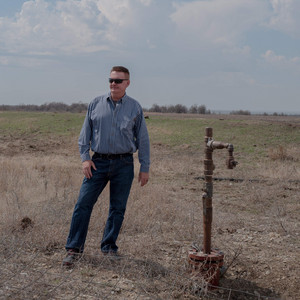
That pipe?
Just stick it up?
That's an orphan well.
Oh, my gosh.
It looks like a fence post.
I know.
In my defense, it was very easy to miss.
It was literally just a janky looking pipe sticking out of the ground less than waist high, not a big pump jack or anything.
And there are old wells like this from California to Pennsylvania, a ton in Texas and Louisiana, anywhere there's ever been an oil industry, basically.
They might be in the middle of a farm or a ranch or right next to schools and houses.
Some of them leak oil or methane or chemicals into the water or into the air and they contribute to climate change.
They don't emit as much methane as agriculture or the active oil and gas industry, but it's still a meaningful amount.
And there are so many wells like this, at least hundreds of thousands, and Dan Arthur estimates a million and a half, which several experts have told me is plausible.
And we don't even know where they all are.
Now how is that possible?
Well, the oil industry has been around for a long time.
You know, Dan and Carter, Arthur and I, we were driving around through Osage County which is the location for that movie Killers of the Flower Moon.
A hundred years ago there was an oil boom and white people murdered.
Many members of the Osage tribe to steal their oil wealth.
And a few of the wells that were drilled in that bloody time are actually still pumping.
A bunch of others are now defunct, and they are not all on maps, as Arthur put it.
You think all these early wells in Osage County when they were drilling had permits?
No.
So how do you find them?
How do you know?
You've got to go get your ass out and find them.
So that's one reason.
These are really old wells.
They didn't have the internet, and people were just going out, sticking the pipes in the ground.
They weren't talking to nobody.
They were just doing what they wanted to do.
That's right.
There is another reason, which is that wells do still get orphaned now.
An old idle well, can get sold off from one company to another company, passed along like a hot potato.
And if a company is holding on to them and goes bankrupt?
Now there is no company that is responsible for those wells, that's liable for those wells.
And here's the thing.
You can't figure out whether or not that happened from just looking at a well.
At one point, Dan and Carter and Arthur and I were driving through this beautiful prairie preserve near Tulsa, Oklahoma.
The air smelled like smoke from these nearby brush fires.
There were bison roaming around on rolling hills covered with native grasses.
Carter wanted to get out and pet them, which we obviously did not do.
But they're so fluffy.
Which is true, they were.
And then Dan Arthur saw something.
Oh.
What do you see?
So what I spotted here is what appears to be an orphan well.
Maybe a couple of orphan wells.
So here and maybe one even over there.
So let's get out and take a look.
Oh, watch out for buffalo poop.
We found a couple of pipes sticking out of the ground with little metal caps on top.
But was this actually an orphan well, or just an idol, well?
We didn't know.
I actually spent some time trying to figure out who owned this exact well, and what I found was that it was disputed.
There were some different stories about it.
So it can be really tricky trying to figure out who is liable for a well, if anybody is.
And why does it matter who's liable for them?
Well, remember that these wells can be sources of pollution.
Out in that prairie preserve.
One of Dan Arthur's employees, Daniel Caldwell, was with us with this expensive camera that makes invisible gas leaks visible.
And those particular wells, they looked good, actually.
They were not leaking.
But some old tanks that used to be connected to them...
Okay, yeah, see where the hatch is?
I think there's a plume.
Caldwell zoomed in, and Arthur and I took a peek through the camera.
Oh, there it is.
Yeah, there's a little bit of a different color.
Yeah, you can kind of see it moving upward in kind of a way.
A little stream of planet-warming gases rising up into the air.
Now, this leaky tank is not as bad as a leaking well, but there are plenty of those out there.
And collectively, it is a real problem.
Methane, far more potent than carbon dioxide.
And when you're talking about orphan wells, they don't benefit anybody.
They don't make food or energy or money.
There is no reason for them to be open except the fact that they're expensive to close.
And if a company owns that well, a regulator like a state government could force them to plug it and the company would have to cover the cost.
That's why that liability matters.
But if it's an orphan well, nobody is legally responsible.
And to be clear, wells are not supposed to be orphaned, right?
Companies are supposed to plug wells when they're done.
And in case they go bankrupt, companies are also supposed to put up money in advance to cover the costs of plugging their wells.
Often that's done through a surety bond, which is kind of like buying an insurance policy.
You pay a company to agree to cover this cost if you go bankrupt with these wells on your hands.
The problem is that the amount that's put up through those bonds is just a fraction of what it actually costs to plug a well.
So what happens when the money's not there?
Well historically, a lot of these wells simply haven't been plugged, and they might just keep leaking climate-warming gases and toxic substances.
Now there are programs that put up money to plug them, including one from the federal government that has billions set aside.
Some of that money is currently frozen by the Trump administration, but the Department of the Interior told NPR that the money is set to resume flowing after a review.
And some states have programs, too.
So the next thing that I did was I wanted to see what it's like to actually plug a well.
And last fall, I went to Ohio to the front yard of Maria Burns.
Normally, the loudest thing in her yard in Ashland, Ohio, would be the cacophony of dogs.
She runs a dog grooming business, and she also has more than a dozen of her own rescues.
They're all old.
But on the day that I visited her, those dogs were drowned out by the three-story tall drill that was working out front.
Burns had an old natural gas well in her front yard.
And around it... Grass didn't grow.
The pine trees kept dying.
Yeah.
And there was another tree that sat there and it died.
So back in 1911, before the houses on this block were built, an oilman named E.C.
McManoway had drilled a natural gas well here.
And just like an oil well, a natural gas well has a life cycle.
After 40 years of production, this well petered out and it was plugged in 1953.
Well, so, I mean, this well was plugged.
Yep, 70 years ago.
And Maria Burns is 79, and she grew up in this house.
She saw it when it was filled up with cement the first time.
I can remember because my sister and I were just little.
Yeah, just little.
But Aisha, after decades and decades passed, the well started to leak.
Well, that, I mean, that is not good.
I hadn't even thought about that.
You plug it in the plug, don't laugh.
Yeah.
So the company that owned that well had done everything right back in the 50s, right?
They filled the well.
They checked that box.
So once it started leaking again, it was not their liability.
This well, too, was now an orphan.
And it wasn't Maria Burns' responsibility to fix it, but it was leaking into her yard, so she reached out for help.
It took me quite a while, but it's called the Orphan Well Program in Ohio.
The program pays to seal up those old wells and make them safer.
But you have to get on the list because evidently there are a few.
Quite a few.
Remember how there are possibly more than a million orphan wells across the country?
Even in just one state, the number can be daunting.
There are surely tens of thousands of unplugged wells in Ohio.
That's Mary Mertz, the director of the Ohio Department of Natural Resources.
In fiscal year 24, we plugged 353 wells.
And I know that doesn't sound like a lot.
But, she says, it's a lot more than the state used to plug.
The scale of the challenge is so big, especially when you think about what can be involved in plugging a single well.
Well, break that down for us.
Like, why would this be hard?
Well, first, you have to clean out the well.
Some of these old wells were, quote unquote, plugged with things like wood or trash.
That's no good.
Or in the case of Maria Burns in Ohio, there was a failing cement plug to clear out.
What we are doing right now is we are drilling out that cement plug that was placed in 1953.
That's Amanda Wiese, vice president of business development with CSR Services.
Her company was plugging this well at Maria Burns's house.
After the old plug came out, the team had to fill the well again, from the bottom to the top, with cement.
Not the knobbly concrete that you would make a sidewalk out of.
It has to be a very specific mix of cement.
And it turns out this well was even more complicated than expected.
I called up Maria Burns recently to check in with her and she said it took them months and multiple tries to get the well properly plugged.
And it took a couple of tries to get the landscaping fixed, too.
The soil had been more contaminated than they originally realized and they had to replace a whole bunch of soil.
So this whole process is not cheap.
And then, of course, the well in Maria Burns' yard had already been plugged once, right?
So I asked Visee...
How can we be sure that the wells we're plugging now, 50 or 100 years from now, they aren't going to need to drill up and plug again?
So there's no guarantee of that, what happens 100 years down the line.
Now she does say industry standards for well plugging have improved over the years, so plugs should last longer than they used to.
But, you know, the question of the lifespan of these plugs is a real concern.
I mean, all of this is really kind of overwhelming to think about.
I know, believe me.
The fundamental problem behind all of this is that you can make money drilling a well, but it costs money to plug it right.
And the oil industry has known about this for a long time and there are lots of people trying to fix the problem.
There's the billions of dollars that the federal government dedicated, which is only a first step, but it is a big one.
There's community activists working to raise awareness about old wells.
The Department of Energy has done things like sending out drones to locate orphans.
There's this whole interesting, complicated effort to use voluntary carbon markets to fund well plugging.
Basically, companies that want to go green pay to plug wells.
And there's a whole bunch of state-level efforts to tighten up regulations so that the oil industry does actually clean up as it goes along.
But even with all these efforts underway, it's just a massive problem.
The number of orphan wells that are out there, let alone the ones that might be created in the future.
It's honestly hard to wrap your head around.
You know.
This really makes me think about how all the traditional forms of energy that we have used in this country Even after they are no longer in use they're no longer providing us with anything they still have this lasting impact on land and the environment.
Whether you think of like nuclear power or coal mining, with the shutting down those plants, like even when we're done with the resource, there's still this lingering cost of using the resource.
Yeah.
That's right.
And it can linger for a really long time, right?
Whether you're thinking about those coal mines or wells or nuclear waste.
And even with newer forms of energy like solar and wind that don't use up fuels, there are still long-term consequences to think about right.
Things like whether a wind turbine or solar panel is recyclable or whether it's just future trash right.
You know we need energy today, but we've also got to meet that need without leaving problems for the next generation, right?
And what we have seen from a century and a half of the oil industry is that it is really challenging to do that when the economic incentives, the money-making opportunities, are all about today rather than tomorrow.
And Camila, thank you so much.
You know, I always love to talk about energy.
So thank you for this reporting because it's really important.
Thank you so much for having me.
Always a pleasure talking to you.
That was Camila Dominovsky, a correspondent with NPR's Business Desk.
This episode was produced by Andrew Mambo.
It was edited by Jenny Schmidt and Cara Platoni.
It was fact-checked by Susie Cummings and engineered by Robert Rodriguez.
The rest of the Sunday Story team includes Justine Yan and Liana Simstrom.
Irene Noguchi is our executive producer.
I'm Aisha Roscoe.
Up First is back tomorrow with all the news you need to start your week.
Until then, have a great rest of your weekend.
This message comes from BetterHelp.
It's only human to ask others for advice, like turning to your barista, hairdresser or a taxi driver for life advice.
But when you're looking for help about relationships anxiety, depression or other clinical issues, they may not have all the right answers.
Instead, get guidance from a licensed therapist online with BetterHelp.
Visit BetterHelp.com for 10% off your first month.
This message comes from NPR sponsor Capella University.
Interested in a quality online education?
Capella is accredited by the Higher Learning Commission.
A different future is closer than you think with Capella University.
Learn more at capella.edu.
This comes from NPR sponsor Sierra.
How businesses connect with customers defines their brand.
Sierra is the platform for building better, more human customer experiences with AI.
No stock answers, no halt music, just real solutions fast.
Visit Sierra.ai to learn more.