This week, on Up First from Minneapolis to Venezuela, to the Federal Reserve.
One of the biggest stories of the year so far is how the Trump administration is using presidential power.
We're following every angle, so you start each day knowing what's happening, what's true and what isn't.
On Up First.
Listen on the NPR app or wherever you get your podcasts.
You're listening to Shortwave from NPR.
There's this idea that something happens in the human brain when we turn 25.
Suddenly we're developed.
We can finally make rational decisions.
And we might even regret some of our past indiscretions.
I thought that I was so adult as a 20-something-year-old.
I thought I was so mature.
And now I look, even now I look back and I remember various things I said or did.
Not like big things, actually, but just little things that sort of fill me with embarrassment.
Duncan Astle is a neuroscientist and professor at the University of Cambridge.
And he says that there is some truth to this anecdotal reverence for the age of 25.
The cortex of our brain, its outermost layer, is filled with neurons.
It's kind of computational center for your brain.
It's at its thickest point when we're around three or four years old.
And then it gradually starts thinning.
Around age 25, the executive control center of your brain, the frontal lobe, is done thinning out.
But the question of when the human brain stops developing?
Well, it was seen kind of as this sort of unfathomable question.
You know, it's this question that neuroscientists hate to be asked.
Until now.
A new study from Duncan's lab finds four distinct turning points in human development.
And it suggests that we may be in the adolescent phase until we're 32.
Adolescence lasts all the way through, from nine, so just before puberty, all the way through until 32, when you reach a sort of adult stable-like plateau.
So today, on the show how the human brain develops across our lives and why we might be maturing for a little longer than scientists thought.
You're listening to Shortwave, the science podcast from NPR.
For wellness when you need it.
Shop Smart Meal.
Shortcuts to stay motivated, like Ready-to-Eat Salad Kits.
Shop all things wellness at Whole Foods Market.
On NPR's Wildcard podcast, heavyweight host Jonathan Goldstein talks about his early years as a writer.
I was writing and no one was buying what I was selling.
I just couldn't get anywhere.
And I just kept doing it because I felt compelled to do it like a spider spinning a web.
Listen to that Wildcard conversation on the NPR app or wherever you get your podcasts.
Okay, Duncan, let's talk about your study and how you identified these different turning points.
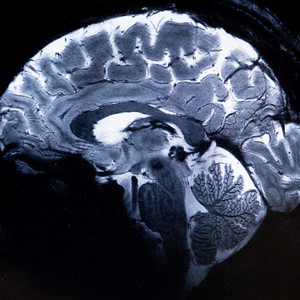
To do this, your lab analyzed 4,000 MRI scans of human brains from birth to age 90.
So what are the development stages you found?
What stands out about them?
So, in the very first phase, from zero to nine, what you see is you get this explosion in connectivity.
And that is because what the brain is doing is there's a massive proliferation of the connectivity.
So it's wiring together closely located areas.
So you're forming lots and lots of connections between short-range areas.
And then from 9 to 32, what the brain is doing is wiring those up.
And so you start to get strong myelination of long range connectivity which connects those clusters up together.
And so in that long nine to 32 phase, what the brain is doing is it's myelinating, it's insulating those long connections so that it can integrate the information over larger distances.
So it's not about more and more connectivity.
It's about Like efficiency.
Exactly.
It's about like an organizational goal that it's trying to achieve.
And then essentially it does that all the way up to 32.
And then you see this kind of turning point in the data, implying that now the change is coming from something else.
And then you get really a much more stable like pattern.
The more you talk about this, the more I think about cities developing and highways.
And from 9 to 32, you're actually connecting those cities.
And then from 32 to 66, you have a nice highway now.
Everything's connected, but maybe you're maintaining it.
I don't know.
What would you say then between 32 to 66?
That's exactly the right way of thinking about it.
And it's interesting how Lots of different networks whether they be between your ears, where you drive your car they adhere to quite similar principles when they're designed.
So yeah, up to 66, it's really very stable.
And if you look in the data really carefully, you can see that that turning point is 66.
It's much more gradual and subtle than the other turning points.
And to me, that suggests that it's more variable across individuals.
And it's not as clear that it's a completely different mode of change from what you get in the previous section.
Because it might just be about maintaining that highway.
Like if you can just maintain that highway instead of it deteriorating with age, you might be able to last longer, right?
Exactly.
And into kind of early aging and older aging.
We think that those changes with age are primarily about trying to preserve the efficiency of the network.
So in early aging, your brain really starts to become more modular.
And you can imagine that for lots of activities and tasks, that is still absolutely fine.
If you've got to learn something new, where you've got to start to coordinate all sorts of different bits of your brain that you haven't coordinated before in that way, that might be quite tricky.
But for doing the things that you know how to do well, that you're doing like 90 of the time, it will still work pretty well.
It's a bit like an orchestra that's learned a piece of music.
And once the orchestra knows the piece of music brilliantly well, you don't need the conductor to be there.
Everyone knows it, like the back of their hand.
But try and learn the new piece of music.
You could really do with the conductor being there to kind of coordinate everything.
And then into older aging, from kind of 83 onwards, you see that certain key hubs start to play a really crucial role.
Oh, wow.
You know what are the limitations to these MRI scans when it comes to understanding brain development.
Yeah, that's a great question.
In a way, I guess what we're looking at is a sort of average brain for each age.
So we've got the 4,000 brains and we've analyzed them all in lots of different ways.
But in this sort of final analysis where we did the kind of machine learning with the turning points we created, like an average brain for each year of life,
And you can imagine that you're smoothing over an awful lot of differences between individuals that you're kind of losing in the data.
Now we know from other studies that that things like cardiovascular health and social connectedness are really important for maintaining brain health into older age.
And also we're pulling out one particular aspect of the brain, this idea of the kind of insulation of the wires, and using that to look at organization.
But there'll probably be a whole host of other changes going on in the brain that are not captured by the type of MRI scan we're doing there.
Surely there are kind of hormonal changes.
There are changes in the density of different bits of brain that are all changing as well, that we're not able to look at through this kind of one particular lens that we've chosen.
Yeah.
So this adolescent brain, if you think about it, nine-year-old brain is not the same as a 32-year-old brain, just in the way we live.
Why make that one category?
Yeah.
So just to say, we didn't decide any of these categories.
We were completely agnostic as to whether there would be turning points or where they might be.
But the point is that they are there.
And you're right.
We're not suggesting that a 10-year-old's brain and a 30-year-old's brain are the same, even though they're in the same category.
The way to think about it is that what we're saying is that the way that the brain changes is relatively consistent through that time period.
It's continuous.
It can be radical and extensive, but the way that it's changing is relatively continuous, which suggests to us that that the brain is attempting to achieve a kind of common goal through that whole period of time.
Give me some examples.
What do you mean?
Well, adolescence is sort of associated with this time of relative impulsivity, difficulties controlling one's behavior.
And when you think of the neuroscience of the brain and the duration with which it takes different brain areas to reach maturity.
That might make sense.
I mean, I think there are other factors.
We were just talking about brains here, but there are also massive social changes that are going on during that time.
And others have shown that actually sometimes that sort of apparent risk-taking is actually to do with kind of social norms within groups around the time.
But yeah, there are large, large changes happening across that time range.
And what about different brain or mental health conditions at these different developmental points?
So I think one thing that's interesting, that has struck us, is that you will encounter different types of conditions in these different phases of life.
So, for example, if you are going to get an ADHD diagnosis at some point in later life, The symptoms will first become recognizable when you're kind of six seven eight, nine years of age.
Phase two if you're going to have a mental health condition, your anxieties depressions, also kind of more severe mental illness like schizophrenia.
Adolescence is when you will first have the onset of symptoms.
So 75% of all of those symptoms. conditions will have their first onset before they become 24 or 25.
And then, of course, when you think of the other end of life, you can think of kind of dementias, age-related cognitive difficulties, Parkinson's and so on.
Yeah.
After everything's said and done, what's your big takeaway about these developmental phases of the human brain?
Scientifically, it's definitely the slowness.
That long process has really struck me.
And it's got me thinking much more deeply about right.
What other changes happen in your kind of late 20s, early 30s?
We haven't traditionally thought of that as a particularly interesting developmental window.
Because we've assumed you know you're 18.
Sorry, you're an adult at sort of 18 or 21 or whatever the law says.
If you compare us to other species, for instance, human development is so slow, like absurdly slow.
Like when you watch those kind of Attenborough documentaries and the giraffe emerges and within minutes it's up and about escaping the lions, or whatever.
Whereas Human Baby arrives and it's useless for years.
And you kind of think, what an incredible design flaw.
Why on earth would you design a system like that?
In many ways, I think it's actually the secret of our success as a species.
Really?
Yeah, absolutely.
Because when you have this incredibly long developmental time course, it maximizes adaptation to the environment.
So much of our development is not spent inside the womb.
It's spent outside in the real world.
It maximizes brain size.
So the baby comes out relatively early on.
And its brain still has a long way to grow.
So overall, our brains are enormous by comparison with what they should be given our body size.
And it also maximizes diversity across the species.
So because the way that our brains develop is kind of, we call it sort of stochastic.
There's randomness in it, which means that each of us gradually moves down a different trajectory.
So even if you had like an identical twin genetically, you would still end up with different brains.
And...
As a species.
You could imagine how all of those features big brains, maximum adaptation, maximum diversity across the species are all absolute keys to our success.
Wow.
And so I actually think this idea of you know it takes us till we're 32 to develop.
In a way, I sort of feel like this is kind of our secret weapon as a species relative to other species.
That's fascinating.
I had never thought of that.
Personally...
I think.
I mean, I became a parent about 18 months ago and it is incredibly reassuring to know that, whilst other parents are sort of saying oh, is she walking yet?
Is she talking yet?
This is a constant drive on like these kind of early milestones.
Yeah.
I'm like, guys, we've got another 30.5 years left to go.
Let's chill out.
We can't keep doing this.
So I now feel incredibly relaxed at the idea that development's really long.
People are on really different timescales.
Early and fast is not always good.
Wow.
Thank you, Duncan.
This has been really enlightening.
Thank you so much for coming on the show.
My pleasure.
Thank you very much for having me.
Also, you might want to check out our episode on the psychology of why people think things could always be better.
Or our episode on keeping the brain from aging by doing cognitive workouts.
We'll link to them in our episode notes.
This episode was produced by Rachel Carlson and edited by our showrunner, Rebecca Ramirez.
Tyler Jones checked the facts.
Kweisi Lee was the audio engineer.
Beth Donovan is our vice president of podcasting.
And I'm Regina Barber.
Thank you for listening to Shortwave from NPR.
Have you ever thought about leaving the U.S., starting over somewhere new?
Well, I have.
And according to one poll, 40 of young women said they'd move to another country permanently if they had the chance.
But why?
Where to start?
Listen to the It's Been a Minute podcast on the NPR app or wherever you get your podcasts.
The Catholic Church in terms of storytelling aesthetics.
They got everyone beat.
I'm Jesse Thorne.
On Bullseye.
Ryan Johnson, director of the Knives Out films, talks about why the latest one is set in a Catholic cathedral, not a SoCal megachurch.
The churches I grew up in, you know, most of them look like pottery barns.
That's Bullseye.
Find us in the NPR app, MaximumFun.org, or wherever you get your podcasts.