Mm. NPR. This is The Indicator from Planet Money.
I'm Waylan Wang, joined today by producer extraordinaire Julia Ritchie.
Hello, hello. Waylan, like me, I know you love a weekend trip to a big box store.
Mm. Sample Saturdays?
Absolutely. But one big box retailer has been having a rough go of it lately, Target.
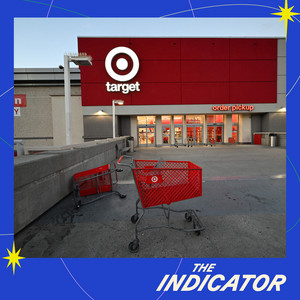
The chain has been the subject of a boycott over its decision to roll back diversity, equity, and inclusion policies, you know, DEI.
It's been in the news a lot recently, Whalen.
It is an about face for a chain that had enthusiastically promoted racial equity causes just a few years ago.
Well, Atlanta pastor Jamal Bryant organized a 40 -day boycott against the store beginning in March to coincide with Lent.
And after meeting with Target's CEO earlier this month, he shared this update with his congregation on Easter.
Their currency does not ride with us if in all of these years we have been loyal customers and clients and then in the moment of dis -ease you turn your back.
I told them, what I'm getting ready to tell you, we ain't going back in there.
The early data indicates that this boycott has taken a toll.
Foot traffic at the retailer has been down for 11 consecutive weeks, Target's share price is down about 19%, and its socio says sales are down.
Political boycotts are nothing new, but they are getting more attention.
So we wanted to know when does a boycott actually make a difference?
Today on the show, we talked to a researcher about how to measure the impact of a brand boycott and how one company is caught in the crosshairs.
In January, President Trump signed two executive orders calling for the termination of diversity, equity, and inclusion offices, positions, and programs in the government.
Although the orders only applied to the federal government, many corporations from McDonald's to Target followed suit, rolling back their own DEI policies, including those designed to diversify their workforces.
While Target is bearing the brunt of the backlash, it's not the first brand to face a consumer boycott for seeming to roll over for the Trump administration.
Trump's first term was notorious for these kinds of stories, stories that Yura Locanita began studying.
She's a professor of marketing at Cornell University, and the first consumer boycott she studied was the Hispanic food company Goya.
Oh, I do remember this.
It was so many boycotts ago, though.
I know, please jog my feeble memory.
So, in 2020, former Goya Foods CEO Robert Unanue made a friendly appearance with Trump in the Rose Garden to promote Hispanic and Latino entrepreneurs.
We're all truly blessed at the same time to have a leader like President Trump who is a builder.
His flattery irked a lot of people on the left, so many boycotted the brand.
Meanwhile, conservatives were encouraged to add Goya to their grocery baskets.
Yura says the headlines were divided between Boycott vs. Bicot which means, like, go buy more of this brand.
She and her co -authors crunched the numbers to find out which side came out on top.
For Goya Boycott, what we observe is that it was a boost in sales around 20%.
But it was very short -lived like up to a month.
So the Bicot one. Temporarily.
Yura says it's hard to directly correlate how much of this bump was customers rallying to go his side.
But the numbers showed a disproportionately higher increase in sales in Republican -leaning counties.
Ura also noticed that among Latino households, beyond maybe a slight dip, there was not much of a difference in the baseline.
Right. So this observation led Ura and her colleagues to develop a framework for how to determine whether a boycott will be effective economically.
Factor number one. Who are the with those consumers.
Factor two? Can you swap this brand easily for something else?
Yura calls this factor substitutability.
Say that three times fast. No way.
And this factor played a big role in another boycott she studied on Bud Light.
You may remember in April of 2023, Bud Light and its parent Anheuser -Busch came under fire for a partnership with trans influencer Dylan Mulvaney.
This month I celebrated my day 365 a womanhood, and Bud Light sent me possibly the best gift ever, a can with my face on it.
Alright influencers and Fox News pundits piled on and called for a boycott.
Kid Rock for one also spoke up.
Let me uh say something to all of you and be as clear and concise as possible.
Who could forget Kid Rock shooting up a pyramid of Bud Light cans in his backyard?
I've tried very hard to forget, Julia.
Sorry. Bud Light sales did take a steep and prolonged hit in the months that followed. Nearly 30 % from Euro's research. And Euro says it's probably because it was easier for consumers to substitute another domestic beer like Coors or Miller Lite or Michelob Ultra.
I have to say my palate is not nuanced enough to tell the difference between any of those beers you just listed.
Ah, I'm a Tecate drinker personally.
But the two brands that benefited most from the Bud Light backlash were Coors Light and Miller Light.
For the Target boycott, Yura says this substitutability factor is likely to determine whether the retailer feels ongoing pressure from customers in the long run.
I think the question then comes down to, like, how essential is Target in their shopping experience and their convenience experience and what are the other alternative options?
It's like, you know, do you stop on Target on your way back from work?
Is it much more inconvenient for you to stop somewhere else?
Target already faces competition from Walmart and Costco, not to mention the growth of online retailers like Amazon.
Earlier this month, Target's CEO Brian Cornell met with the Reverend Al Sharpton and Pastor Jamal Bryant to discuss the boycott.
We reached out to Target to ask if the retailer was reconsidering its decision on its DEI policies.
The company responded with an email saying it has an ongoing commitment to creating a welcoming environment for all team members, guests and suppliers.
These policy rollbacks aren't just a consideration for a politically engaged customer base.
It also affects Target's vendors.
That includes minority -owned businesses that the boycott aims to support.
Take Rucker Roots. It's a Black -owned business from Lancaster County, South Carolina.
They sell natural hair care products like shampoos, growth serums, and scalp oil.
Ellen Rucker Sellers and her sister, I own Rucker -Jamison, run the company.
Our parents had eight children and out of the eight, there were four girls.
And my mother used to use these wonderful kitchen concoctions, you know, refrigerator items like mayonnaise and olive oil and avocado and different things like that and make hair mask for our hair.
Rucker Roots launched in Sally Beauty Supply in 2018.
Target was their second big retail contract.
Their successful company that now has seven retail chains nationwide.
Ellen says when she first heard about the DEI rollbacks, it was unsettling.
For me, it's so scary because a lot of times when you are a supplier like Rucker Roots, you are planning on having inventory for these retailers up to you know, six to nine months prior.
They've invested a lot to increase their inventory to keep shelves stocked.
So any drop off in customers could mean fewer sales.
Ione and Ellen are discouraged by the DEI rollbacks, but they're also conflicted on the boycott.
And they want retailers to keep Black -owned businesses front of mind.
You know, don't boycott so much of these Black businesses that are worth blood, sweat and tears that they will go bankrupt from these boycotts because you know, then that's just not the right strategy that we want to see.
You know, the Atlanta pastor leading these boycotts, he says he wants to see Target increase its commitments to the Black community.
That includes investing in Black -owned banks, partnering with historically Black colleges and universities, and to reimagine what a more effective DEI could look like in the Trump Era.
This episode was produced by Cooper Katz -McKim with engineering by Senna Letannis -Lofredo and Robert Rodriguez.
It was fact -checked by Tyler Jones.
Kate Kincannon is the show's editor and the indicators are production of NPR.
you