You're listening to Shortwave from NPR.
You come home from work.
You're exhausted.
You finally get into bed and your head hits the pillow.
And then the next thing you know, your car is barely out of control on the highway.
You're going around that turn.
But you're in the back seat.
You can't reach the brakes.
At least, that's my reoccurring nightmare.
But when I told that to Michelle Carr, she wasn't phased.
That is a very common dream theme.
I have it all the time as well.
I think it's just related to Our physical body being like not really receiving any sensation of the car pedal.
So the dream is like going out of control.
As a sleep scientist at the University of Montreal, her job is basically watching people sleep.
So when it comes to dreams and nightmares, she's pretty much heard it all.
Teeth falling out or flying or falling or finding new rooms in my house.
Michelle is the author of the new book called Nightmare Obscura.
In it she explores the science of dreams nightmares, even something called dream engineering, where people are able to influence their own dreams while they sleep.
But why we dream or get nightmares is still a bit mysterious for scientists.
We know so much about how important sleep is for our health, but we're only just beginning to uncover whether dreaming and the way that we feel during sleep is significant in our health as well.
And since humans spend somewhere around one-third of our lives asleep, we had to know more.
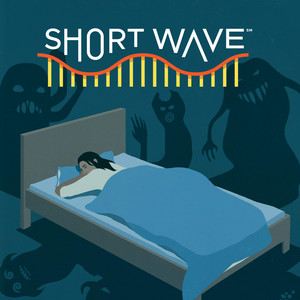
So today on the show, why your nightmares go bump in the night.
We dive into the science of our sleeping life with Michelle Carr and make nightmares a little more known, a little less scary.
I'm Regina Barber, and you're listening to Shortwave, the science podcast from NPR.
Support for this podcast and the following message come from Recorded Future.
Every day, millions of cyber threats compete for attention, but only a few truly matter to your business.
As a leading threat intelligence company Recorded.
Future cuts through the noise with precision intelligence.
That's why top banks and governments trust them because security leaders don't just react.
They foresee, spotting the signals that others miss and acting before threats become setbacks.
Recorded Future.
Know what matters.
Act first.
This message comes from PACA.
Everyone's got that one hoodie they practically live in, but the PACA hoodie?
It's on another level.
Softer than cashmere, warmer than wool and still breathable, this alpaca fiber hoodie goes from airport to mountain trail to couch without missing a beat.
Right now, grab a PACA hoodie and score a free pair of alpaca crew socks.
Moisture-wicking, odor-resistant, and guaranteed for life.
Level up your hoodie game at go.pakaapparel.com slash NPR code NPR.
Michelle, sleep happens in cycles.
So can you just walk us through the four different stages of sleep?
Sure.
Yeah.
When we first start to fall asleep, there's this stage where we're still a little bit awake and we just start entering a stage where our brainwaves start to slow down.
And that's pretty obviously called stage one sleep.
It's just a really brief period of sleep onset, a transition.
And already in stage one sleep we can start to have really bizarre thoughts or images that appear in our mind.
And stage two is when our brainwaves slow down a bit more.
It's a much more stable sleep state.
And we're really disconnected from the sensory environment.
And gradually we move into a deeper state, stage three or slow wave sleep, where there are really a lot of very slow waves throughout the brain.
And this is the state with the least amount of dreams.
Our dreams are really short and brief and maybe thought-like, when we're in stage three sleep or we don't remember anything at all.
And then the fourth stage is REM sleep.
It's called REM because our eyes are moving, rapid eye movements.
And our body and our mind are actually quite active during REM.
Our brain is even...
It looks very similar to wakefulness.
We have a lot of really high-frequency activity in the brain.
And REM sleep is the stage when we also have the most vivid and emotional and sensory dream experiences.
It seems like, at least for me and many people, there's an emotional component to sleep.
And in your book Nightmare Obscura you write about a study you love where participants watched embarrassing videos of themselves singing and then their brain showed signs of shame.
But that changed after a night of sleep.
What does that tell you about the importance of sleep?
Yeah, I think this is maybe something that a lot of people can relate to, that we all go through different stressful experiences during the day.
And at night, just before sleep, you might be worrying about an argument you had, or really stressed about something that happened during the day.
And then after a night of sleep.
If you think about that same problem, it seems completely manageable.
And this is one of the functions of sleep.
It's helping us to essentially, in a way, let go of a lot of the distress that we accrue during the day, like all of the emotions that get activated during the day.
We kind of are able to let go of them during a night of sleep.
And even for memories that we have, we let go of the emotion that's attached to them.
So it helps us to adapt and to be better able to manage anything that might come up the next day.
It kind of sounds like exposure therapy.
Yeah, I think that there is a similarity there in that you're.
But I think one of the keys about sleep, and what makes it different from maybe like being exposed to things stressors in waking life is that there's actually a very physiological component, that the brain and the body are in a specific state where, during sleep, we're able to reactivate emotional memories, like the amygdala is active, but our physical body is actually subdued in certain ways.
So we think that's really essential to being able to strengthen and to hold on to and to store important memories but to let go of the kind of stress and arousal that's attached to them.
And then that makes me think of nightmares, which mostly seem to happen in that fourth REM sleep stage.
When our amygdala, which deals with fear, is more active.
In your book, you call nightmares almost like a self-attack.
Like there's this mental autoimmune reaction.
Is that what's happening?
Like, why do we have them?
Yeah, I guess part of that analogy is that the source of nightmares is something that we have experienced.
And so it's.
We do see that nightmares are specifically very highly correlated with past experiences of trauma or with adversity.
They occur a lot more during periods of stress.
It's almost like the memory is too intense and the emotion is so strong that it kind of disrupts sleep anyways.
It causes the body to become really aroused and your sleep is interrupted and you wake up in a state of distress.
Are there any benefits of nightmares, you know, like this mental autoimmune reaction that we have in our minds?
I mean, I think there's a benefit to bad dreams in general and even to occasional nightmares.
And I think if nightmares are occurring occasionally or if you're having bad dreams, I think these are all reflecting what is an adaptive process of sleep and of dreaming, which is you're trying to work through these stressful or negative experiences that you've had.
So where do scientists see...
Nightmares in the brain.
Is this a different part of our brain than pleasant dreams?
I'm just so interested.
Like, where do they live?
Yeah, there's actually not too many actual recordings of people having nightmares in the sleep lab.
This is one of the kind of curious things about studying nightmares or any sleep disorder actually that patients who have nightmares or other sleep disorders frequently at home they very rarely have episodes in the lab.
Wow.
Maybe they feel safe in the lab.
I know.
I mean, that's one of the theories.
But in general we have some evidence that experiencing emotion or memories and dreams, it seems like it's the areas of the brain that are active in waking life.
But there is some work on kind of the brain basis of nightmares and nightmare disorder.
And one thing that we have seen is that people who have nightmares potentially have a difference in how their brain regulates emotion and specifically, we know that sleep is important for emotion regulation and it specifically helps this connection between basically frontal or prefrontal areas of the brain which are responsible for helping us to control and to regulate our emotion, and their connection with the amygdala, with our emotional arousal centers.
So in people who have nightmares, what we see is that there's actually less activation in their frontal areas of their brain when they are experiencing emotional distress.
So in principle, we think this means they're less able to regulate and to control and to manage their emotion, and that this is occurring both during REM sleep, when emotion regulation is really maintained, And then this spills over into wakefulness as well, making them They'll have a harder time managing and dealing with stress and waking life because of this.
And speaking of stress when you're awake, you mentioned in your book that there's a point where nightmares can become harmful to overall health.
So what are some methods researchers use to treat nightmares?
The main methods to treat nightmares are imagery, rehearsal therapy is the most common therapy and there's just a lot of other variations of that, and it's basically a technique, what's called re-scripting a nightmare's content, because nightmares very often have very recurring themes.
So if somebody has a nightmare of a tidal wave or a nightmare of being chased, they tend to have these themes that recur over time and it's almost like this that's learned in your mental imagery.
And so imagery rehearsal therapy works with first just a little bit of exposure to the nightmare, like kind of being more comfortable with looking at your nightmares, talking about them, writing them down and not being so aversive to them, and then changing the nightmare in some way.
So you write a slightly new script or a, you know, change something so it's not so scary or make yourself more powerful, and it's a dream so you can do whatever you want, really.
And then you, before sleep, you visualize this new, more pleasant or more satisfying dream.
Visualize that for 10 to 20 minutes before sleep each night and over time, this decreases nightmare frequency, it makes people feel less distressed by their nightmares and it improves symptoms overall.
I mean, this is the sleep engineering you were talking about, right.
Like trying to do things to affect your dreams.
I have had personal experiences where I feel like I can alter things within my dream.
Is that normal?
Have you studied that as well?
Yeah, that's definitely very common.
And that moves a little bit into what's called lucid dreaming, which is where you become aware of the fact that you're dreaming while you're still asleep.
So, of course, If you're fully aware that you're in a dream, you can control yourself and your own actions, but you can even potentially change the dream environment.
The scenery.
Yeah, exactly.
You can change things around you.
But one thing that I find really interesting is, even when you're not fully lucid, like even if you just to have more agency in your dreams, that can be beneficial.
So kind of, like you said, maybe you don't realize it's a dream, but you have this thought like oh, maybe I don't need to be afraid of this thing that's chasing me, or oh, maybe I can just change the scene or, like move into a different room or something.
You start to have essentially just more of this choice and awareness, more awareness in your dream, even if you're not fully lucid, and that can be helpful for people.
One of the final chapters of your book you talk about exciting new technologies and methods to study dreams.
Can you give us some of those highlights of these new technologies?
Yeah.
I mean, there's already, of course, a lot of apps and ways to just record your dreams and follow maybe different visualizations you can practice before sleep to influence dreams.
But in our lab, we're pretty interested in new wearable instruments EEG technologies.
So these are like wearable headbands that you can use during sleep.
They're getting better at being able to detect sleep stages in real time.
And this means that we would be able to not only measure someone's sleep at home, but potentially use these types of wearable headbands to actually potentially influence sleep, as it's occurring using different types of sensory stimulation.
Like to shake you out of a nightmare or to like soothe you.
Yeah, there is one, i think, app and wearable technology that that's designed to maybe detect when you're basically when you're showing signs of arousal during sleep, which they're using as kind of a proxy for maybe you're experiencing a nightmare.
And when they detect this state of arousal, they might uh, present a vibration stimulus which awakens you a little bit and it interrupts the nightmare as it's occurring in theory.
You've made me think about my dreams even more.
So thank you, Michelle, for talking to us today.
Yes, thank you for having me.
It was a pleasure.
If you liked this episode, you might want to check out our episode on melatonin and avoiding jet lag.
We'll link to them in our episode notes.
This episode was produced by Rachel Carlson and edited by our showrunner, Rebecca Ramirez.
Tyler Jones checked the facts and Kwesi Lee was the audio engineer.
Beth Donovan is our vice president for podcasting.
I'm Regina Barber.
Thank you for listening to Shortwave from NPR.
This message comes from NPR sponsor Capella University.
With Capella's flex path learning format, you can set your own deadlines and learn on your schedule.
A different future is closer than you think with Capella University.
Learn more at capella.edu.
This message comes from Mint Mobile.
At Mint Mobile, their favorite word is no.
No contracts, no monthly bills, no hidden fees.
Plans start at $15 a month.
Make the switch at mintmobile.com slash switch.
That's mintmobile.com slash switch.
Upfront payment of $45 for 3-month 5GB plan required.
Equivalent to $15 a month.
New customer offer for first 3 months only.
Then full price plan options available.
Taxes and fees extra.
See Mint Mobile for details.