Discussion. You're listening to Roundtable.
I'm Steve Hatherly, together today with Yushan and Yushun.
Coming up, the Swiss watch had a monopoly on prestige.
But not anymore. China's consumers are driving a seismic shift, embracing cutting-edge tech and bold local brands that rival the classics.
Made in China is being redefined. We'll show you the new symbols of status and what they say about the future of time telling luxury.
After that, it's the happiest place on all the airwaves.
It's Roundtable's happy place. Our podcast listeners, that is you, can find us at Roundtable China on Apple Podcast.
And don't forget, we say it every single day, we love hearing your voice.
Yes. You can send an email, but if that email includes a voice note, that's what puts a smile on our face.
So here's how you do that. Roundtable podcast at QQ.com.
One more time. roundtable podcast at qq.com and now Once, a fine Swiss watch was the ultimate status symbol, a hard asset that declared, yeah, I've made it.
But is that era's time running out? The golden age of European luxury watches appears to be waning, with their market dominance and sky-high prices beginning to slip.
In its place, a new horological landscape is emerging, from sophisticated smartwatches that monitor your health to ambitious homegrown Chinese brands boasting some serious serious craftsmanship, a revolution is indeed underway.
Is the once unassailable prestige of Swiss watchmaking finally meeting its match?
We're going to find out about the shift. on the wrists of China's consumers.
I learned a new word today, by the way, horological.
I'd never heard that word before. Oh, yeah?
Yeah. Did you know that word? No, it's the science of time telling pieces like. watches and clocks.
So there you go. Added to all of our vocabularies today.
Alright, so let's get into it. I don't think we've talked about this in a really long time on Roundtable, if at all, the consumer market for watches.
So where do we begin with this? Yeah, there are several new trends in the watch industries.
First of all, domestic watch brands are gaining increasing attention.
Brands like Seagull, Haiou, and Fayada are being favored by consumers.
For example, Chinese brands are like they're like building stronger brand narratives and integrating some eastern and local aesthetics and cultural elements.
Fiat has aerospace connections like J-20 aviation watches, and also elements of porcelain from Song dynasties.
Seagulls, like three-legged golden crow watch inspired by Chinese mythology, Appealed a lot of consumers, especially younger demographics according to media reports I doubt that because I actually look up this three legged golden crow.
I wonder what that was. So did I. Yeah. It turned out to be a mythological creature in various mythologies and arts of East Asia.
It's also in Korean culture, too, and it's widely believed to be inhabited in or represent the sun that's shining the earth.
This watch featuring this mythological creature is labeled as nearly 240,000 US dollars on its website outside of China?
It's different prices on different sites.
Yeah, on Chinese website, it costs 1.38 million yuan.
Oh, is that all? I'll take two. Which equals roughly $193,000.
That's a lot cheaper. But I will say, this watch, this three-legged Golden Crow watch, it is... stunning it is absolutely gorgeous yeah is it 240 000 gorgeous well i guess that's up to you if you want to buy it that's a really beautiful watch I also looked up the other one that you mentioned, the J20 Aviation Watch.
That's a really cool-looking watch as well.
It's got this green or emerald... face to it and then a brown leather strap and then the numbers are outlined in silver.
It's really smart looking and it's a lot more affordable.
I didn't check the price. Do you know the price of that one?
It's a lot more affordable. That watch cost you around like 2000 yuan.
That's not bad at all. Actually, I checked up like price range of these two brands.
Seagull is ranging from 2000 to 3000 yuan, like mostly of their watches. and Fiat is around 5,000 to 10,000 yuan.
So basically they are creating an image of We are also putting a lot of emphasis or effort in sophisticated craftsmanship.
Yeah, and they're doing a great job of that.
But while that is happening, smartwatches continue to do really, really well.
They're gaining traction very quickly. And also that features brands that's very commonly mentioned nowadays, Huawei, Xiaomi.
I actually got my dad a Huawei smartwatch just as his birthday present. present for like many years ago, I think.
And yeah, these brands they are offering affordable products equipped with just all different sorts of functions, health monitoring and exercise tracking.
Just like the sports brand or sports wristband that comes out that's kind of popular among young people nowadays.
That's what I'll go for. But apparently there are many people that's really rooting for smartwatches as well.
For example, there's this market research firm IDC reported in June that global wearable device shipments reached 45.57 million units in the first quarter of 2025 and that's up 10.5% year on year.
So the shipments in the Chinese market totaled 17.62 million units.
And that's marking a Over 37% of year-on-year increase.
That's just on the smartwatch market. Just approving just how popular it is among young people.
Yeah, they really, really are. Well, they're cool looking, aren't they?
They're really cool looking. It's a suggestion that there's a shift away from the traditional luxury watches as perhaps an investment or at least a hard investment. asset.
There was a report from Forbes, came out in 2024, and it talked about the secondhand market. and the prices in secondhand markets for iconic luxury models, they've been dropping pretty substantially.
Rolex would be an example of that and other brands, too.
But I think that's one of the more recognizable ones.
They're seeing their prices decline by 30% to 40% from their peaks of maybe just about three years ago.
And the overall market index fell by almost 6% in 2024.
So if we take those numbers into consideration. it kind of indicates that there's a reduced interest in buying a watch as a speculative asset, as kind of something that might, increase or appreciate in value over time.
That's really interesting, isn't it? Because As far as I can observe from my own parents, for example, my mom, she's been crazy of searching you know, the wrapping box of a watch, which is kind of flipping over kind of like the rings.
Yeah, those pricey and very fairly made boxes of her...
I think that's like two decades old Omega watch that my dad bought her like upon their marriage so she's trying to find the matching box she's been trying to find that matching box because with the box the whole say value of the collection of the watch itself will add up but she's been failing to find it that's why she's been frustrated but I think at least for my parents' generation, they still believe that these luxurious watches they have this value within the hard currency or at least upon purchasing they believe that they have this long-term say investment value that comes within them despite the fact that you know sometimes yeah we see how the falling of the the decline of prices is going on with the second-hand luxurious watch market is but yeah still people as individuals they still believe in these watches for some reason So maybe people's mindset have been shifted away in some way.
But still, these... treated as a hard currency or asset or a good investment, it's like partially it's still there because people may think that these kind of like iconic models is not that popular anymore or the price has decreased.
Instead, consumers are still increasingly moving away from high production new watches towards vintage pieces with historical significance, which means some of them still has The value of keeping them.
Yeah, the draw, the romantic side. The poetic side.
Artistry and exclusivity of independent watchmakers, that kind of thing.
So, it's not like people are just forgetting all of these luxury or let's say these famous watches.
Of course, we are having a very diverse market right now.
Yeah. And speaking of diverse market, me personally, I'm not really a believer of smartwatch.
As you can see, I only wear two. mechanic watch.
What do you mean you don't believe in them?
Like they don't exist? I do not wear them religiously.
I do have, say, a sport... wrist band that could qualify as a smartwatch.
It has watch functions. I have so many watch faces.
Yeah, but it's just like, I don't... Change whenever you want.
I don't want another piece of electronic device so closely tightened to me physically as I've already had too many.
But that's a strong consumer opinion, isn't it?
Yes, because some technological advancements within these new technologies feature smartwatches is really popular and also they're made really affordable. these days and attracting a wide range of functions put on them like health monitoring, sports tracking and also timely notifications they sync with your computer your um uh what's that card called your your your Public transportation payment card.
Transit card. Yeah. Oh, your smartwatch can sync with your card.
Instead of swiping a card to get on Subway or on a bus, you swipe your watch.
That's what... Chinese young people and old people older people it's pretty it's pretty cool I mean you're not a fan of these smartwatches yourself but you have to admit some of these features are pretty amazing.
Yeah, they are. And there's a strong consumer demand for sports and health related features, of course.
And these functions, they are continuously improving in data richness and accuracy.
Speaking of accuracy, I believe I read a lot of funny anecdotes of people wearing their smartwatch for a relatively longer time and then just realize, okay, it's giving false alarm. based on how it's detecting your body's figures, right?
Some of these domestic... watch brands are considered to be.
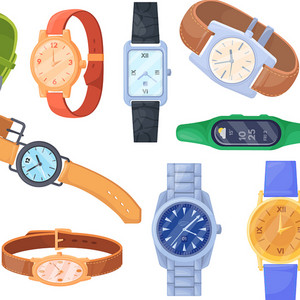
And when you look at the pictures and I would encourage you listening to look at these beautiful designs that we talked about at the beginning of this discussion. they're gorgeous but what is it about them that kinda makes them special because it is a very competitive market isn't Yeah, so independent R&D research and development and technical innovation is the thing that they are actually focusing on.
China began by learning foreign watches but moved towards independent design and manufacturing of watch movements in the mid-1960s.
The Tianjin watch factory successfully developed the ST5 type movement which is China's first independently designed watch movement in 1966.
And when we mentioned the newer brands like FIATA established in 1987, Focused on quartz watches and pioneered products such as the first sapphire anti-scratch mirror and hard alloy watches among domestic brands.
So then these domestic watchmakers, the traditional ones, the artistic ones, are...
Really putting out a great quality product.
But the smartwatches have developed significantly.
And these smartwatches, these are a pretty significant force in the global market, too.
Yeah, they are just growing so fast and rapidly in recent years.
And this is according to IDC data that China has become the largest wrist-worn device market globally.
That means we're shipping over 45.8 million units in the first three quarters of 2024 which is a 20% year on year increase in that realm And also the growth is notable given a global decline of And in the meantime, China's smartwatch market shipped almost 33 million units.
That's marking a 23% year-on-year increase. all of which meaning that we are opening up this market not only to domestic say watch admirers, but also to international orders as well.
And we mentioned it before, Huawei and Xiaomi are pretty big players in the game.
I think it's Huawei who's ranked first in global cumulative wrist-worn shipments in the first three quarters. in last year because they show significant growth and launched new products like the GT5.
Wow, I think the one I got my dad is probably GT2.
Time for an upgrade. Yep. And Watch D2, that means the newer version of Watch D2, they have blood pressure monitor.
That's pretty cool. Yeah. The monitors on these smartwatches, the tech is improving, right?
They're getting better. I was reading a story from, I think it was The Guardian the last couple of days that talked about there's watches that are, the next level is to get to become familiar with your emotional state.
They were telling the story about how smartwatches will try to measure your stress levels, but they have a hard time And distinguishing whether you're actually stressed or not.
One person reported, I was in a really great mood, so I was really excited.
And my watch told me I'm stressed and need to calm down.
So there are... The improvements have been impressive.
Um... but there is still some work to be done for sure.
So just last question quickly, as the, Numbers suggest the big Chinese companies are doing very well globally with their shipments overseas and their sales overseas.
How can they continue on that path? How can they continue to be successful in the future?
Yeah, we mentioned a lot of these brands, they are trying to get a bigger market share and another big point is that they they're already very mature electronics brands, right?
Not only making smartwatches, but also, let's say, smartphones and a lot of other devices.
So actually they are on that kind of path of development of the whole ecosystem. to make the user having all the devices, not only the laptop, smartphone, everything in the ecosystem so that they have loyal users and create a whole like bigger iot in and of things system and then push to work smoothly across different foam brands.
So like including if you are using this brand, but you can, this brand of cell phone, but you can use another brand of your smartwatch.
Yeah, and that's where sales of one product can help increase sales of another product through that connected ecosystem, right?
Yeah, that's one of the fascinating things about the tech industry.
All right, we'll take a break, and when we come back, it is time for Roundtable's Happy Place.
Delivery. Delivery. What is it? Happy Meals from Round Table.
Time for Roundtable's happy place. Yushan, you're going to go first today.
And I'm actually very familiar with your happy place because the news was all over. over Western media, including the sports world.
And it's also blown up in Chinese media as well.
I think, yeah, it's shaking both music industry and the American football industry definitely.
So my happy place today is, I'm sure many of you have already seen this news floating around, is the reported engagement of Taylor Swift and Travis Kelsey.
So yeah, like... Are you a Swifty? Yeah, I'm just getting there.
I'm not really what you'd call a hardcore Swifty and I don't really have friendship bracelet lineup in. my arm, and I probably can't even name each and every song in all of her albums, but what I am... what I am is someone who just like so many of us grew up with her music as the soundtrack to my teenage life and just constantly and continuously wowed all the time by her journey that has been so impossible to ignore, say, in the past two decades.
And I think what makes this news feel so special even for a casual admirer like me is that her art always been always have been so deeply intertwined within her own personal journey so to see her find this, say, quiet and steady and joyful partnership that feels like the closing of a chapter and the beginning of a new one is just something that's worth celebrating.
She absolutely deserves a love story that's as beautiful as the ones that her songs sings.
And she's definitely earned it. She found her apple.
Yeah, it's Valentine's, say Chinese Valentine's Day today.
It's Chi Chi today. So yeah, that's totally a happy place for me.
Everybody knows who Taylor Swift is. People in China may not know who Travis Kelsey is.
Not that well. Now they know that's Taylor Swift's fiance.
Well, yeah, right. But he's a football player.
He's an American football player. He plays in the NFL.
He plays for the Kansas City Chiefs. At his position on the team, he was one of the best players at his position in the entire league.
He's a really famous, famous player. And when they started dating, I'm a huge fan of the NFL, right?
I watch games here when I'm living over here when they're happening at 1am in North America.
That's how big a fan I am. And I remember when Travis Kelsey and Taylor Swift started dating.
Two years ago, I think. Yeah, I guess around that time, her fans started coming to the NFL.
And watching football. And this was considered a really wonderful thing for the NFL because it was like free promotion, right?
It was an opportunity to gain fans of the sport that probably wouldn't have... turned on a game before.
So that was one aspect of it. The other aspect of it was the people who were annoyed.
And when I say annoyed, I'm talking about the NFL fans who didn't care that Taylor Swift and Travis Kelsey were dating because she started going to all of his football games.
Just as how he's showing up for many of her tour concerts.
But the difference is when he's at her concert, the camera doesn't pan. to him in the audience 25 times but when she she's a global megastar yeah um When she was at the football games, the camera would like when it was break time or whatever, the camera would just automatically go to Taylor Swift like every time, like. every time and people started to say like, is this a football game or a Taylor Swift concert that we're watching here?
But yeah, it's all over the news. Are you a big fan of hers, Yusha?
I listen to a lot of her songs, and I feel...
To be honest, very happy to them, actually.
I and my girlfriend watched the podcast they did together.
Oh, yes. Is that where she announced it?
I forgot. The announcement of a new album, I think.
Oh, right, right, right. I think it was Instagram where they announced the marriage.
And I can totally see through Taylor Swift's eyes that they are actually have that kind of chemistry that okay they they are the ones that should get engaged so a lot of fans are giving out different opinions on this relationship but i would say that's her personal Of course.
Yeah, exactly. I'm curious to see what is going to happen with her songwriting.
Yeah, maybe she'll start to write lullabies for babies.
Yeah, maybe. And who knows, right? Because if you don't know, she in the past wrote a lot about relationships and things and hardships that would happen in relationships.
But I'm curious to see if that is going to be this new engagement or upcoming marriage will be reflected in the songwriting as well.
I guess we'll have to wait for that. Probably not on this album, but...
Maybe the next one. Pretty cool news, though.
It was nice to see all over the media. All right, that'll do it. it for today's roundtable thank you so much for being with us thank you to you shun and you sean and we'll see you again next time