What are the concerns, standing in the way of China making the 5 % target this year?
Very little. The real question, can it be sustained?
What it really shows is that deeper understanding of some of the challenge that actually related to pushing consumption up from the Chinese government.
In the very long term, my bet would be on the A .I.
+, or kind of technology -driven consumption, because we're kind of already seeing some of that right now.
The Chat Lounge The Chat Lounge unpacks views and opinions on hot issues in a more casual way.
China's economic growth is outperforming expectations.
But questions remain.
When will the property slump end?
Can consumer confidence keep rising?
How much will the US tariffs bite?
Welcome to the Chat Lounge.
I'm Tuyen. Joining our discussion on China's economy are William Li, the chief economist with the U .S.-based Milken Institute, Dr. Li Lun, an assistant professor of economics, Peking University, and Dr. Li Wei, senior lecturer at the business school of University of Sydney.
Thank you all for joining the chat, a warm welcome.
Well, let's first take a look at the better than expected beginning.
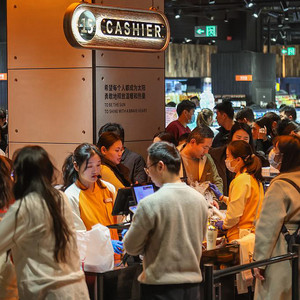
In the first two months, key economic indicators, including retail sales, industrial production, fixed asset investment, and service sector output, posted solid gains surpassing market expectations.
But were you surprised?
Well, the question goes to you all.
Shall we begin with the lady?
Dr. Li Hui, please.
Okay. Thanks so much. I think in terms of the figures, particularly about the consumption figures that have gone up.
That is more than the expectation, it's certainly something that I think people would have hope that the policy have been put into place have come into effective.
But also, let's not forget that January and February is the traditional Chinese New Year periods.
And I think there's a lot of holiday spending that comes into the eight day, New Year holidays and also as we've seen that actually some of the sectors for example, like movies and films, particularly being powered by the very extremely popular movie coordinator that to certainly have actually pushed up the box office and as well as the consumption.
Yeah so I think on the consumption funds because I've been quite positive it's essentially I think within the expectation of people.
That's true, the festive effect there we've got...
What about Dr. Li -Len?
I'm not really surprised because of course we're seeing that indicators like retail sales and also industrial production, also investments are kind of going better than expected.
And also, even though part of it is due to macro policy and increased demand, also seasonality, as Professor Liman just said, we have to keep in mind that some of these growths are actually before the two sessions announce the new policies.
So I think it kind of indicates a fundamentally strong driving force behind domestic spending surrounding, you know, for example, the trading policies and other policies that boost consumption.
And also it of reflects a improved expectation among investors and also consumers, mostly driven by improvements in innovation, in human -wise robots, and in technology.
So I'm not really surprised.
What I'm a little bit concerned or I keep looking is how much of this momentum can be maintained in the rest of 2025 and what else can the government do to keep the momentum going.
Indeed, I almost benefited from this trading policy, but at the last minute I decided to wait for an upgraded a massage chair, and to William there.
Does this surge really comes as a surprise, you know, a lot of foreign agencies, like Bloomberg, they were saying that this outcome is was beyond their expectations.
So why? Yeah, I have slightly different angle on this these data.
What I'm surprised by is that so much of the policy is oriented toward boosting supply.
So it's been that way for quite a while now.
And the fact that the supply side response is as meek as it is, is the part that is most surprising to me.
And as far as the demand side is concerned, especially private demand, the strong retail sales, I here in the West, I don't have the luxury of having access to a lot of the desegregated data.
I would like to know, how much of the retail sales is in non durable and discretionary consumption?
That is, there's a lot of programs that are put in place as you just mentioned Dean, about swapping, right?
Swapping a lot of consumer durables, swapping your iPhone, swapping your car, refrigerators for the newest model, and people will take advantage of that.
They have taken advantage of that in the past. That part of strong consumption, I'm not surprised by.
What I would like to know is how much of the strong retail sales comes from the non -incentive portion of the consumption basket.
Why do you have that kind of question, then?
Because I think a lot of the policies that we'll be talking about that was put in by the two sessions and reinforced by the refinement and how discussion about how it's going to be implemented, it is driven towards supply side.
The theory is we will boost high -value added sectors, improve people's wages, give them better jobs, high -tech jobs, and the high income will naturally cause people to spend more.
One of the things I've mentioned on your show before is that thesis, the notion that supply creates its own demand, was something that was debunked in the 1930s when the United States depression was so severe that notion of income -producing demand to spend that income just wasn't there.
It's known as Say's Law, and John Maynard Keynes came along and said, Say's Law doesn't work when people don't have any sense of optimism about the future.
So can Dr. Lleewan or Dr. Leewan answer that question?
Maybe, Dr. Lleewan?
Well, I can certainly try.
I mean, I think the risk is a very interesting point, that how much of this growth is a direct response from policy, from the trading policy, or from like, if we, for example, remove the policy with the growth still be sustained.
I've got some data from the National Bureau of Statistics saying that the retail sales of, for example, communication equipment, furniture and other household appliances.
But basically those goods supported by the policy all witnessed a double digit growth, some even in the 20 percent increased category.
For more general consumption, for example, retail sales, general goods, they increased by around 4 percent, restaurants or catering service by 4 .3 percent, something like that.
So modest growth, but we're also seeing double digit growth in the area that's being supported by the policy.
Now William also raises a very interesting point of whether supply can drive its own demand.
And I think the logic here behind also the 30 points action plan is basically kind of boosting the disposable income of households, and how to boost the disposable income, of course, through their either labor income court, other sorts of income, for example, from the stock market.
Now to boost their labor income, of course, you have to get the companies to pay them higher wages.
And that will evolve some sort of policy towards the supply side.
That's not equivalent to saying you know as long as we have a strong supply site we'll automatically have a higher demand.
There's you know a translation like how much of that income will be translated into consumption through a what we call a marginal propensity to consume.
So I think we can talk about the details of the same point action plan later but I think really that raises a very interesting point that I look forward to discuss.
Indeed yeah. Sorry to jump in.
I just want to add in a couple points I think when we're looking to the supply side how the Chinese economy is performing it is very important to keep in mind how China is part of the global economy.
So at the moment, I think there's a tremendous amount of pressure globally, in terms of the tariffs and also in terms of geopolitical shifts.
So I think that would in fact have a huge impact on the supply side of how China is trying to make progress in terms of the direction it's moving.
The second point I want to make is that it's not a simple policy to encourage supply sites.
In terms of increase in general, what we see in China is actually a transition from the old supply side to somehow the new supply side, which is the so -called new quality production supply side.
So what it will mean is that even though the general figure on the supply side may not be seen very promising, but if we look into the specific areas, for example into equipment manufacturing, to high -tech manufacturing, manufacturing as well as into some of the areas to link to solar manufacturing and new energy vehicles.
I would love to see India also figures in those areas.
I will be surprised to hear that if those areas have underperformed, because I think this is where exactly when we look into the supply side change, we also need to keep in mind that it's the overall shift in underlying thinking about China's development model, which is much more focused on high value -added production as well as more innovation -driven production.
But there's also a question, would income, or revenue increasing those sectors, like equipment manufacturing, mentioned by Dr. Liu Wei just now, would automatically translate into income rise in other sectors, so like clothing, right?
Which is a little bit of, obviously, lower riches of the supply chain.
Yeah, I have a view on this.
I think at the moment, this true part are not necessarily connected at the moment, because particularly when you're looking to consumption figures, the reality why consumption figures have been actually quite mild over the last few months or a couple of years, I think is related to the old part of the economy, which is related to the real estate sector, where a lot of the households actually having their assets that are put into real estate.
So when you have household assets that actually been affected because of the performance of real estate sectors, I think that's as a consequence of why consumption could be quite mild and then I think it would take a very long time for this new model of supply side which is focused on high -end manufacturing.
India has gradually improved the overall structure of the Chinese economy and then goes into the income of the individual household and then would have an impact on consumption.
So I think certainly that would be the long term plan but at the moment when we're seeing the weakness in consumption, I think a large part of it is related to the old model of development which is heavily relying on you know infrastructure and real estate development.
Yeah and to change that model also takes time.
The chat lounge. The chat lounge unpacks views and opinions on hot issues in a more casual way.
But for now actually the performance in the first two months is arguably I should say believed to to have laid a good foundation for success in meeting China's 5 % annual growth rate target.
Then comes the question as Dr. Li Lin also mentioned How long will this momentum continue is a big question and what economic concerns standing the way of China reaching its targets and also the momentum continuing like what we've already seen?
Well, I think I would ask the question slightly differently.
What are the concerns standing in way of China making the 5 % target this year?
Very little because I think with sufficient boosting of either old or new supply side, you'll get production up to the point where you can pretty much get close to 5 % fairly easily, so long as the federal as well as state and local governments cooperate, because so much of the state owned enterprises control that part of the economy.
The real question, which Professor Layeler alluded to earlier was, can it be sustained?
Will you be able to keep at 5 % for the next three to five years?
And I think that's where I had my doubts, because in order to have consumption, especially private sector consumption, grow at the requisite pace for that long period of time, you really have to fix two things.
One is the perceived permanent income of consumers and their wealth, which are really two parts of the same thing.
If household wealth feels that their wealth is depressed and has no hope of coming back for the next three to five years, particularly the property market, it's going to be very hard to induce more consumption out of them.
And if their job security and even more importantly, their social safety net, the retirement income that they're expecting, is also considered to be less secure, that again will cause consumers that cut back on their consumption and lower that marginal propensity to consume that Professor Lee talked about.
And so, to me, the sustainability of 5 % is the biggest question I have. Meeting 5 % this year, you push hard enough, and you get it.
But what will be the cost?
As we will speak about in a moment, I guess, about the swap programs, I think that's just borrowing consumption from the future, right?
Borrowing next year's consumption into this year.
And so, that is just displacing when you're going to consume, incentivizing people to consume more today and less tomorrow.
So you're saying it indicates that the Chinese government may want to learn from U .S. practices?
I think there are some lessons that they can take on.
And one of them to me is a social safety net, social security, hospitalization, health care at a higher level, and perhaps the HUCCO problem of settling people's benefits for where they are residing, rather than where they originate.
These are one of the few things that come to mind that we hear in the West discuss as ways of putting in a more permanent solution to China's insufficient demand problem.
So Dr. Lin -Wen, are we considering those long -term measures?
Well, I think that's part of the 30 -point action plan, is trying to implement.
Of course, I completely agree with William's suggestions that we need long -term measures and to kind of increase people's permanent income.
Right now I think one of the main concern is that are worried about, for example, their labour income and whether their wages, their labour income is going to increase or decrease in the future.
Now, there's a global trend of people are kind of substituting away from labor and towards capital, you know, everywhere, you know, the US, in Germany, in Japan, in China.
So, the share of labor income in GDP is already declining, and that, you know, adding with, especially with the unemployment pressure that we're facing last year, it's not creating such a good expectation, in terms for the labor market side.
But I think there are several points in Achen Plan that kind of addressed to this issue.
One of them is providing allowances towards childcare, healthcare, and elderly care.
So these things kind of get rid of the uncertainties that you have to face because, you know, sometimes it can take a lot of money and resources to take care of the elderly, especially to prepare for their medical expenses.
And those creates incentives for so -called precautionary saving.
You have you save, not because you don't want to consume, but instead you save because you're worried that, you know, tomorrow something bad will happen.
So if the medical insurance or the childcare is more well equipped than the middle income middle -aged families doesn't have to worry that much about, you know, future something, you know, catastrophic will happen and that will kind of ease their precautionary saving motive but I mean, I don't think any policy even those in the U .S. can be guaranteed to work for example, for the next 30 years, because you know, the government's body constraint may change, we may have a debt crisis, for example in the U .S. So I don't think long term, the government can make such a credible promise and even if it
does, they still have to make some short term policy recommendations or biases.
Otherwise, we can't just let the household stick long term and developing any short term measures.
And Mon the 30 points I mentioned in the action plan, the central government introduced, you know, to consolidate a foundation, which ones Dr. Leland, do you think are for short term, which ones are for medium or longer term?
Okay, yeah. I think one of the main terms is that the plant is that to kind of guarantee a higher household income and also expanding income channels, for example, by addressing like the stock market and make sure that basically to kind of make people have more money to spend in their pocket.
So I think in the short term, those are definitely good measures.
Now, in the long term, we could theoretically boost consumption through purchases of real estate and cars because those durable goods usually involves mortgage or other debt -driven expenditure.
So, if you buy a house, basically it lasts very long and also contributes significantly to the GDP.
In the very long term, my bet would be on the AI plus or technology -driven consumption because we're already seeing some of that right now.
Like there's new gadgets, new robots being introduced every day in China.
So I think maybe if we put more emphasis in areas such as AI or technology -driven consumption, In the long term, you know, those things could turn out to be big.
If everyone, for example, if everyone had started to buy a human -like robot in their family, that's going to create a huge amount of consumption.
And not to mention, you know, the maintenance, the repair for those robots and so on.
What about Dr. Li Wei there?
What's your evaluation of this 30 -point Special Action Plan?
Some people say, you know, it's the country's most comprehensive package of policies for boosting consumer spending since the 1970s.
But others say it's just merely a patchwork of previous measures, because a lot of measures, including those mentioned by Dr. Lee -Hoon, just now, were repeated over and over again for a long time.
So your take there.
Dr. Lee -Hoon. Yeah, I think I agree with the previous comments that this is the extension of what was the policy aimed to increase consumption.
But really I think the key work is comprehensive that I think it is very interesting actually to see that this package actually include measures such as employment and raising the minimum wage as well as enforcing the paid annually system as well as the childcare allowance system.
This is something that actually will be on the cards.
So I think what he really shows is that deeper understanding of some of the challenge that actually related to pushing consumption up from the Chinese government that is not just that someone wants to change to a new mobile phone, or switch to a new electric vehicle cost, but it is actually when people making decisions about consumption, they have to take into consideration a whole range of things.
And I think at the moment when we're looking through the Chinese economy, you know, employment is something that people are looking actively at it as well as the minimum wage.
If the wage level can go up, there are a lot of studies that have shown that.
Particularly for people who are actually having lower wage and you know lower wage consumers, actually the studies have consistently shown that if their income increased by $1 .00 and the propensity to spend is actually much higher than if you increase the wage level of a very wealthy household in the economy.
I think the childcare allowance system is also very important as well because underlying the consumption challenge that China face is also about the population challenge.
So I think we are looking to the population growth rate last year has been actually slightly below zero.
So what it will means is that when you have less populated economy, right as what we've seen in Japan, and it could very quickly happen to a lot of other countries, even individual household consumption level is high, if the total number of household total number of population is more, then that could still be a very huge challenge for the policymaker in terms of push -up the consumption levels.
I think, yes, the key word is comprehensive and it's very interesting, you know, to see the Chinese government, actually, you know, from a consumption angle and from the purpose of pushing our consumption, actually, is willing to change a policy related to employment and minimum wage, as well as Child Care Allowance System, as well as Aged Care Service.
So, I think that's something that is quite commendable.
Right then of the Action Plan.
William, is there anything that's eye -catching to you or you most look forward to?
Yeah. I think the one thing that everybody in China should be looking at is the size of this package and how long lasting it's going to be.
The American saying is, have the authorities truly put their money where their mouth is.
As far as I can see, the boost in the fiscal deficit goes from 3 % of GDP to 4 % of GDP, which is great.
But historically, those kind of policies, incentives, whose GDP for every dollar spent by somewhere between 50 cent, half a dollar to less than $1.
In other words, the fiscal multiplier in China has always been less than one.
That's because again of what Professor Liyue said which is the saving propensity of the Chinese consumer.
And that partly ties to what Professor Liyue earlier said, which is precaution.
People are not going to spend their money unless they have a sense that they have security, both in terms of their employment and in terms of their income, not just today, but going forward. So for me, the thing I want to hear is some assurance that the fiscal spending will continue for at least the next three to five years.
That we'll be there long enough to allow people to gain confidence that the social security that's being put in place will be there when I retire in five, 10, 20, 30 years, that it won't be pulled back and even more importantly that it's not run by the provincial governments who might decide to change the policy objectives on their own.
So I need something that ties the expenditures to something that is ongoing that I can count on that I will know will be there going into the future and that I don't see at all Oh all I see are Discussions of this year's policy target this year spending how historically large the fiscal package is how the new age industries?
Are going to generate this enormous amount of income?
But then you know, how much of GDP is there are these new age industries?
I'm willing to bet even the broadest estimates is less than 20 % I think the size and duration are the key here.
And if it's a stop -go kind of policy where, next year, oh my god, the deficit's going to go up to 5 % of GDP, we've got to cut back.
Well, no. If it's got a 5 % of GDP, it possibly could be pushed forward to 6 % going up, because that's what's needed to put in the social safety net infrastructure that will guarantee the 30 -year -old and 40 -year -old worker that when they're 60, they will have government -paid Social Security.
We see your point about the reason why you have this feeling from those measures, probably because the 5 % growth rate is the most urgent or imminent task that authorities have to tackle in the first place, right?
And, from your perspective, William, among those measures, which one would you say can generate obvious results in the short term, then?
Well, the short term ones are going to be the rebate packages, because again, that's borrowing consumption from the future or into today.
So if I want to boost my results today, I will borrow like hell into tomorrow and then tell everybody, hey, you know, I'll give you 50 % discount on every new iPhone you buy or any new luxury chair you buy, a massage chair as you mentioned earlier.
So I can cut the discount...
On all of that stuff, and that'll guarantee you boost consumption this year.
But what's gonna happen to the consumption next year?
How many massage chairs are you gonna buy next year?
So there are limits to that.
Of those measures, which ones do you see has been challenging to implement, or may risk training.
The social safety net, the childcare and social safety net of public pension or public private pensions or some kind of pension system that assures the worker that they'll have retirement income.
I don't see the infrastructure for that in China, and I don't hear discussion of creating that infrastructure.
You don't hear it? What about Dr. Lelun?
Yeah, I think those are actually some pressing concerns for Chinese households, like knowing for sure, whether you can have of like a solid stream of income after you retire.
And how much would that be?
My mom recently retired.
The retirement income comes as a price, like before she retired she didn't know how much income she's going to receive.
So having the clear expectation for in the household, if I know, you know, this is the amount of money I'm going to earn my whole life time, of course I can.
In some periods of my life, I borrowed in some period of my time, I saved.
But right now, it's because of this lack of expectation and transparency, people are behaving in a way that they're kind of worried about, you know, especially after retirement, and we're talking in a scenario of an aging society.
So, I agree, even though reluctantly, to have that is actually a pressing challenge for China.
Now I think in the 30 -point action plan there are some short -term policies, but I also think like how much the support and long support is going to maintain remains a question, because last year we kind of raised the deficit by 1%.
And that's around like $1 .3 trillion.
So if we divide that number by the population of China, then it's around 1000 yuan, for each person, so it's not a huge amount of money.
So if we're spending the measures to kind of increase the income by 100 yuan per, you know, worker, even though it's not much, it's already calculated to be 110 of the total increasing the deficit.
I guess the main question for that is, we have to make sure that in short term we don't because globally, we are facing a lot of uncertainties, there are going to be terrorists and trade sanctions to China.
So in short term, we don't kind of slide into a recession.
And that's, I think, what this policy is hopeful to achieve.
Because in the long term, obviously, I think some problems are very difficult to implement.
And obviously, I can't really think of anything that's both credible and promising and also feasible.
This has been the Challenge.
After the break, check out how the sword of Damocles hanging over China may affect the country's growth.
Don't go away! for heated sports discussions.
Covering events that are happening in China and around the world.
Welcome back to the chat lounge.
We continue our discussion of China's economy.
But among those 30 points, I do see some long term ones, like Dr. Yun also mentioned, establishing child care subsidies and promote wage growth, enhance employment support, improve social safety nets, support farmer's income.
Let's take social safety net, what does that mean?
What exactly is the purpose?
If it's going to finance it.
You need some details, so that's why we're discussing here.
You're an economist, so when?
Maybe your suggestion for the government.
Well, in the United States when social security was introduced, it was considered the end of the world by a lot of companies.
You mean we don't have to pay a tax just to support somebody in their old age?
That's ridiculous. You know, we don't make enough profits to pay for that kind of stuff.
we certainly can't afford it.
But, all you have to do is look to Europe, right?
I mean, Europe has specialized in providing a safety net and it's so solid that people retire at the age of 55.
So, you know, if you want lessons on how to put in probably a bad social safety net, but certainly one that gives people a lot of guarantees and assurances and is very credible, Europeans have done a darn good job of that, but it took them decades to put that in place.
And they've found mistakes in doing that because the disincentive to work has reduced Europe to probably one of the lowest productivity continents on Earth.
So there's some awful ways of doing it.
And person Xi is really right to say he doesn't like transferring money into households because it just promotes laziness.
There's something to that, but there's also something to the other side that says unless you transfer income from the public sector to the private sector in an incredible way, you're not gonna get people to start consuming, even cause them to access, to save excessively.
So what you're saying, it's just you want to warn that there is such risks that such action plan can turn out to be anti -work.
Absolutely. I just point you to Europe, almost any country Europe, and you'll see a disastrous social safety net.
But on the other hand, I'll point you to Singapore, and they've got a phenomenal social safety net.
And when I was Mission Chief of Singapore, I had suggested that the elderly just cannot depend on family for taking care of them in their old age.
They accused me of not understanding Singapore and refused to do that.
Two years later, they put in exactly my recommendations.
So I think there is a good way of designing social security system where you can allow people to save and also contribute, match some of that saving, but set up public institutions that can take care of the elderly.
But it has to be done very carefully to preserve the incentive effect that they continue working hard today.
Actually in China, there is some specific plans to help boost the welfare of the elderly, right?
Dr. Li Wei, according to your study?
Yes, I think this is something that is quite interesting to hear the different perspectives.
What I'm seeing is that the point of the safety net, the point of elderly, welfare, childcare provision, it is indeed not a new point, there have been actually lots of discussion about it for quite a long time.
the reality in China is that a lot of this responsibility actually fall under the local government, for example, in terms of providing safety nets, in terms of providing education.
So a lot of the responsibility is on local government and as we know that over the last couple of years, local government budget has not been absolutely wonderful.
So that's another challenge why pushing forward to these reforms has been actually quite difficult.
So what I've been seeing here is again, central government intervention coming into this place that I'm sure that they acknowledge the challenge of pushing forward those social reforms, but really actually starting to use consumption as a growth and as a point to bring it back to the local government to say, this is how we actually go into look at consumption as a growth, but also to enable us to do that.
That's where the social part of the reform that needs to be able to put into place.
So I think this is really a new way to looking into the local government development model again because traditionally we know a lot of it is relying on property development and then in the end that will be the tax coming from selling the land and in the end that actually helps local government in terms of their budgets and everything.
So at the moment what we think is local government in China are trying to find out a new development model.
So what I see these points is this new consumption points aim to bring out is also towards the audience and the local governments in China to say this could be a new development model for you.
But however they will play out, I think as in all the Chinese policies and regulations, it goes through rounds of experimentation and how they would all fit together.
So I think, yeah, it would be interesting to see the long -term outcome of this particularly as sets of policies.
It's just like what Dr. Li -Wei mentioned earlier, that it's a comprehensive project, only a social safety net is not enough to support the whole society or with one leg, you know, walking ahead.
It's just too difficult, right?
Because there are a lot of aspects to the economy apart from a refined social safety net, and we also see two other sectors, you know, it's the financial sector and the property market that are of great concern of the government, at least for now.
They are also concerning domestic consumption.
The stock market, which is a barometer of economic health, seems to have a clear upward trend recently, especially after financial institutions, including Citigroup or Goldman Sachs and Deutsche Bank sent out some messages to buy Chinese shares.
But the market continues to struggle a lot.
Though, you know, the decline has slowed a little bit in recent months.
So the question is, what are your expectations for these two markets this year?
I know, William, you're very much focused on a social safety net, but in those two areas, what's your take?
Well, I think the property market really is key to unraveling some of the difficulties.
And and there revamping the model of sales I think is really critical here.
You cannot pre -fund the purchase of something and then allow the developer to take those finances and shove it somewhere else.
You really have to have some kind of accountability on the part of development to say that if I'm paying for this flat or this house it will be built using the funds I put in place.
You cannot shift these bonds to some other set of activities.
So I think that that the need for governance and reform of the developer market, the way construction is financed, really has to be looked into more carefully.
That at least will give the household some sense of security that what they pay for is what they'll get.
And right now, that assurance has been eroded by the collapse of so many of the well -known developers and really has been the root cause, I think, of some of the profit market difficulties.
The other thing is to take away the autonomy of local governments to finance and allow these developments to take place, and the disincentives they have in terms of using land sales as their main source of revenues, having more federal revenue sharing would go a long way to easing those issues.
And if you were to somehow put a floor onto the value of property, that alone will go so far in assuring people that whatever wealth they have will stay there going forward. That's really one of the hindrances the consumption right now, aside from the safety net issue is wealth.
Because so much of household wealth is in property, that has to be addressed.
Of course, the other policy prescription, which I think that the IMF and every other institution has recommended to China is diversify household asset portfolios.
Allow them to invest in other stuff other than property.
Having more financial assets that are credible, long lasting and have some sense of government guarantee, perhaps, will go a long way to allowing the household wealth portfolio to stabilize.
And those are the reforms I think that could easily be put in place in the financial sector that would go a long way to alleviating the need for precautionary saving on the part of households that person they learned mentioned earlier, naturally, it's also included in the 30 -point action plan, expand investment channels that Dr. Leland, what will be your take here, you know, develop more bond products suitable for individual investors to diversify investment options, but how?
Well, related to Linda's point, I think the profit market is really complicated, we don't want the housing prices to have a crash.
That's going to have disastrous effect on the economy.
We don't to rise to rapidly either, because that's going to create a healthy expectations for investors, potentially causing a housing bubble.
So we wanted to stabilize, meaning that if you stabilize, it means basically your investment in the housing market is not going to give you such a high return.
So where does the money go?
They can either go to stock markets, the performance has been volatile.
But I do think a lot of tiny stocks are way are actually underpriced, because the P -E ratio compared to, you know, other stocks like in the U .S. or Hong Kong are actually in the pretty affordable range.
But in the long term, can we expect, for example, the stock market to be the sole vehicle for saving an investment?
I don't think so. So I still think that maybe through government bonds or through other innovations in the financial sector, we could be able to prevent some other waste to investment for example, I think there are a lot of startups in technology and also in AI related industries.
If we can somehow funnel the money from the private household to these startups that needs the most support.
It's actually driving funds to the most productive sector of the economy.
Of course, there's going to be risk, but I think if we kind of strengthen the role of venture capital, of other private, even foreign funds in this area, it could potentially be, you know, healthy to the economy as a whole.
Yeah, let me echo that, because I make sound -sounds self -serving when I say the other way of diversifying is allow Chinese investors to go to the rest of the world and invest in other parts of the world as well.
They are now. It's just the channels are a little bit limited, right?
Yes. Then what about this big headache, the property market?
What should they do about it?
Dr. Li Wei? I think probably China has gone through the worst days of what's going on with the property market.
They asked you all the supply of property in the market at the moment, that what we're seeing.
But certainly, I think we are seeing, at least from the way that I have done a lot of research that's talking to some of the private sectors that a lot of the private development companies are basically actively, a few years ago, already diversifying into other new areas.
and those new areas usually will be into renewable energy, into healthcare, biopharmacy and AI sectors.
So, I think that we've seen some big property developers over the last couple of years have really come into the news and actually really struggling a lot, but I think there is already quite a lot have been moving on from a real estate developer sector in China that a lot of the companies are moving into new areas, diversifying their business.
I think it would take some time for the market to consume the oversupply of the properties and I think it would take some time for the consumers to come back to reality to actually really understand what will be the impact on the wealth level.
But I think at least the risk index sector is not as worse as what we were seeing a couple of years ago.
However I do see that now actually the risk really goes into the banking sectors now, because, as we know, a lot of the real estate developments are financed through the banking system as well as we talk about the local development model, the local governments in terms of a lot of their actual revenue or expenses in somehow investment into so -called infrastructure and real estate are actually financed by the banking sector.
I think as the real estate sector is gradually moving out of challenge, I think that what is what we're seeing now, it would be actually some challenge that really facing with the banking sector.
And that's something that we should certainly keep an eye on in terms of what would be the potential impact.
Look, in terms of investment from private consumers, I always think it's very interesting to see that the Chinese consumers are very active in actually making investment decisions.
And I say that because when you look into a share market, for example in Australia, most of the investors are institutional investors.
So it's just very interesting to see that Actually, when you look into Chinese share markets, a lot of investors are private individual household mom and dad who doesn't know much about probably, you know, company return and everything.
But they are making active investment into those channels.
I think partially is going back to the reality of the social safety nets.
And also people kind of are concerned about, you know, the future and whether their wealth is going to shrink or not if they don't invest in property or in shares.
So I think those expectations need to be changing and will change but it will only change over time.
It's not going to change in one or two days.
So again, I think, to provide people with social security, to provide people with not to worry about their future, not to worry about their kids' future, not to worry about their retirement.
I think a lot of that would actually then feel away some of those investments into consumption, I think which is the important part of it where you can actually encourage people to spend more on the moments now that they're enjoying or they're working on rather than have to worry about investing here and there because they worry about their future.
The Chat Lounge The Chat Lounge unpacks views and opinions on hot issues in a more casual way.
Indeed, I think the authorities, they are well aware of those issues.
It's a matter of time, but they also got a lot of problems imminent to tackle.
Just now we focused mainly on domestic issues.
Now we turn to the external factors, which include U .S. tariffs and levies imposed by other countries on China -made products.
They're seen as a sort of Democrats hanging over China.
Then how would you expect them to affect the Chinese economy this year?
Maybe William. I think because so much of the export production is produced by industries that have relatively low value added and whose profit margins are very thin, many of those companies won't survive in the sense that if a small price increase causes American consumers to buy the same t -shirt made in Honduras rather than China, they're going to do that.
And that means the Chinese t -shirt manufacturer is going to go out of business because their profit margin is so small.
But the larger manufacturers with slightly more profit margins, if they think that going into the US market is important for their long -term strategy, I think they're willing to take some of that price and cut some of their prices to allow the American consumer to have less of a price increase.
That's going to be a business decision made company by company.
And if China really wants to ensure Chinese companies' presence in the US market, the government might also want to subsidize some of these companies and pay some of those tariffs here.
I think that's a consideration I don't hear talked about very often, but that's the reality of business.
And so the question to the policymakers and to Chinese businessmen would be how important is the US market?
If it's important, then you do whatever you can to maintain your market share.
If it's not that important, you can find other markets, like in South America, in Eastern Europe, and in Asia, so be it, then don't shift to the US.
Or, I think the way the President Trump would put it is, come produce in the United States, not only will you get tariff protection, you will get all sorts of income tax subsidies and deregulation to make it worthwhile for you to set up production in the United States.
When you said earlier Chinese need to find altered means of investing their savings to diversify their portfolios.
Investing in the United States directly like that would be a great way of doing it through Chinese companies.
So there are many ways of handling the tariff barrier which would benefit US as well as Chinese workers and investors.
So you're saying US tariffs or levies by other countries won't be a big problem for the Chinese economy.
It will be a problem, but it's solvable.
It is solvable, depending upon how innovative and creative you are in dealing with the US.
And I just offer three or four solutions.
All right. And Dr. Lelan?
I agree. I don't think that US tariff, especially this round of tariff is going to be a big concern for the Chinese economy.
Last time it hit us unexpected, but this time, pretty much all the exporters in China, before Trump even comes into office, realized that this is something that's about to happen.
So I do think, first, companies are going to make adjustments to prepare for the shock.
And also related to William's point, I think tariff is basically a distortion on prices.
It's like a 20%. It's like a 20 % tax on Chinese products.
But the key question is how much more expensive is the product going to be if we manufacture the US instead?
So if the answer is more than 20%, then we're relatively safe.
Of course, we're going to have a smaller profit margin, but we still have an advantage in prices, is that it's still potentially profitable to export to the US.
Of course, we're also competing with other exporters, for example, in Malaysia or other countries.
But another way out of this is that we can provide product varieties that other countries doesn't offer.
For example, DJI drones, or as we have seen this regard with the humanoid robots.
If you simply can't offer similar products in the US market by domestic manufacturers, Then, you know, no matter how much the tariff it is, the customers are still going to want to buy that, and they're only resort is from China.
So I simply don't think that this tariff is going to have such a damaging effect in hitting the 5 % goal, especially this year.
But I mean, if it continues, it's probably going to have a deeper reconstruction of our industry structure.
For example, how much of our economy is going to depend on, you know, exports driven, especially to a Northern America, how much of the economy is going to depend on domestic consumption.
That's probably going to change.
Dr. Liyue, I guess you share similar views?
In terms of the export market, the US is due to the largest export market for China, so it counts for around 15 % of the export share.
What has been happening in the first turn of Trump was very much direct tariffs on Chinese manufacturers on China.
What we have seen is a big movement of actually manufacturing offshoring or French shoring, that means a lot of Chinese companies are moving their factories to Southeast Asia, to South America and in order to bypass tariffs on Chinese companies.
What we see now in Trump, what I call 2 .0 is that there's a huge realisation of what's been happening in Trump 1 .0 by simply imposing terrorists on China is not enough.
So increasingly, within the approach from the US is the approach to impose tariffs on the general.
So that will mean the understanding of China being the center of the global value chain.
So in order to actually put a stop on China's growth, it is to disrupt that global value chain.
So that's why I think you see that a lot of the new policies coming from the US is about in general tariffs on every country.
So for example, when we come to still an there's a big debate in Australia just a few weeks ago about, you know, we've been a very close ally with US therefore, you know, there should be exemption for Australia for exporting UN -Alumnus to US.
But the response in the end that we get is that no, you know, this is a terrorist on every single country.
So what I think is US is really trying to redefine global trade and redefine that global value chain.
Now, obviously, if this is going to take a very long time, because the global value chain system that we see now it takes decades to build.
So how long it's going to take for the US to encourage manufacturing to go back to the US and then to become the global centre of global value chain, I think it takes a very long time.
But it does present some complexities as well as opportunities for China.
I think in the end some of the traditional allies of the US economy now started to realise they're not necessarily being taken into good consideration in the whole discussion about tariff sanctions.
And the other point is about, I think talking about policy consistency that Chinese still actually over the last few years, pursuing this Bell and Roll policies quite a lot.
The reason I say so because my research looking through Chinese investment into Australia, we have seen that actually there's a very low level of Chinese company engaging in Australia where a lot of the Chinese company now are moving into the Bell and Roll countries.
So it's certainly, I think that it's not just exports expanding in the Bell and Roll country as what we can see from the statistics, the 2024 is 6 .4 % increase but we'd also see that Chinese investment into the Belt and Road country have also increased 6 .5 % in 2024.
So what it means is that you know there's active strategy that is coming out from China over the last few years and there's consistency in that in terms of pushing China's engagement with the Belt and Road country to diversify its trade.
I think finally when you look into the export figure for China for last year, is the growth of the ASEAN country.
So in the end, this is where I think, as a part of the global geopolitical uncertainties, what's going to see is there's lots of anti -globalization.
But what China is trying to take advantage of is the regionalization, which means actually much more integration into the Southeast Asia country, but also in terms of facilitating investment and trade within the region.
I think that would drive some of their growth, in terms of China looking into it is export market.
It will be still challenging, but I think now every country in the world has realized that it's not just China is facing a challenge, I think every economy is facing that challenge right now.
Indeed. And to our last question, I understand William is a long term thinker, and I believe Dr. Li Wei and Dr. Li Yuan, and in fact all economists are and should be right.
But this time we focus our attention on the rest of the year or the coming year?
So given what we've discussed, how difficult would it be for China to achieve 5 % growth this year?
And William might think it's not a big problem.
It's quite easy. But can you give us a snapshot of the Chinese economy by midyear and year -end, highlighting the key trends you want to emphasize?
Should we begin with William, please?
Well, I think let me give you a pessimistic scenario, right?
The economist has got a calling card of the dismal science, I have to do at least one pessimistic scenario, which is, if you fail to really reform the state owned enterprise sector, and innovation starts to stall out, and you can't protect intellectual property, then consumption I think is going to stall because the confidence in having income starts to go out even further, because state -local governments start to lay off even more.
Or if somehow the tariff situation doesn't cause Chinese businesses to reconsider their export market and where to shift their production, then I think we can face something where China's GDP stagnates to maybe three to four percent and the SMEs will be squeezed by this kind of deflation and overcapacity that many of them face.
But I think a more likely scenario is that China will wind up somewhere between four and a half to slightly under five, maybe 4 .8, with the private sector trying to expand, but the key will be again whether there's a credible sign that the deeper reforms, SOE restructuring and credible social safety net and a way of boosting rural income and rationalizing the financing of state and local governments.
If those things are done in a way that is credible, I think we are in that range of four and a half to four and three quarters.
I don't think you'll reach five unless the private sector kicks in and you don't kick in a cheap way like, you know, borrowing a lot of durable consumption from the future, but rather really getting the consumer to start to credibly spend because they're confident their permanent income and wealth situation is being restored.
So that's that's my little outlook scenario, the pessimistic one and the more likely one.
Sure advice, well received and Dr. Lulian, please.
Yeah, I think key measure to look at is by the half of 2025, like what's the growth rate for the first half?
Now, I think the economies are pretty bad at making accurate predictions and but I agree that I think, first, we need to kind of downplay a little bit about whether we hit like 5 .0 % or you know instead we only hit 4 .8 % but we are seeing a more healthy product market or a healthy more competitive structure for the market so I would rather have a you know not meeting the 5 % but rather have a deep structural reform for the you know the market structure rather than leading 5 % this year, but from next year onwards, I'll be hitting 4%.
So, in order to maintain that long -term growth target, I think keeping the consumers to be optimistic about the future is important.
Also, transformation of the out of date or even less efficient companies or industries are also important.
But also, we need to provide some sort of allowance or subsidy to households, especially low income households to make sure that they're not left behind in this age of development.
Well said. And last but not least, Dr Li Wei please.
Yeah, I think there are many challenges.
In general, I think it's achievable.
One of the thing is that I think this is what Chinese government would try everything in order to achieve these targets.
That we think that over the last few or two sessions, the emphasis is increasingly on actually make sure that there's growth but there's stability.
So in 2023, the growth target was 5 .4, 2024 was 5 % and 2025 I think now is that above or below 5%.
So I think what it has shown is really a shift in the Chinese approach in terms of looking into GDP growth rather than you know high growth, two -digit growth but now the main focus is on stability Chief and then Groves.
So that's when I think that I think they will try everything to maintain that 5 % growth.
On that note, we wrap up this session of the Chat Lounge.
Many thanks to Dr. Li Wei, Senior Lecturer at the Business School of the University of Sydney, Dr. Li Luan, an Assistant Professor of Economics at Peking University and William Li, Chief Economist with the U .S.-based Filkin Institute for your time and insights.
The show is available also available on all major podcast platforms. Please email us your comments at radio at cgtn .com.
I'm Tuyen. Thank you for listening.
Join us again for more chat at the chat lounge next week.
I cannot marry you, while your mother regards me.
Stepping to the world of timeless elegance with Mrs spring fragrance, a captivating audiobook by Edith Eton read by ManApart.
Because the gring leaf still clings to the bow.
Experience the lively yet complex lives in Chinese -American communities at the turn of the 20th century as Edith Eaton's delicate prose weaves together themes of tradition, change, love and identity.
Follow the journey of Mrs. Spring fragrance, and witness the struggles and fights of those living on a rapidly changing exotic land while holding on to their cultural traditions or more importantly to their identities.
You could hardly believe that his daughter was seriously opposed to becoming the wife of such a good -looking, prosperous young merchant as one...
Join Books and Beyond for Mrs. Spring fragrance.
Let the stories come to life in your imagination.
Subscribe to Books and Beyond for free on your favorite podcast platforms. Or log onto radio .cgtyen .com for more Ever wondered what's actually going on in Africa through the perspective of an African?
How are things really going between China and Africa?
What's the narrative of this relationship?
Well, get a perspective with China -Africa talk.
Hear from African diplomats, entrepreneurs, academics, Chinese natives, and more.
Get an hour wave link every week to find out what's real with China Africa Talk.
Find us on Apple Podcast, Spotify, Google Podcast, and more.
We'll see you there.