The creators of A Knight of the Seven Kingdoms made an interesting creative choice in their season one finale.
They opened with jazz.
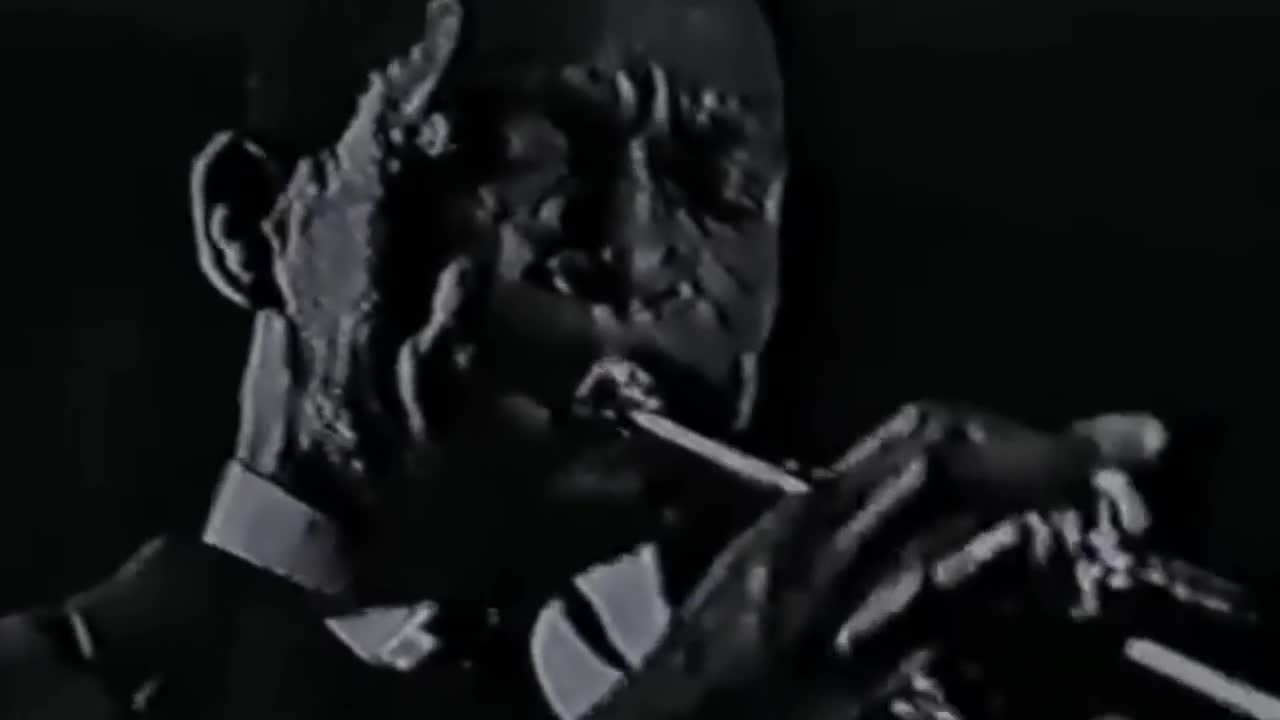
To be specific, 30 seconds of jazz trumpeter Kenny Dorham's rendition of Alone Together from his amazing 1959 hard bop album Quiet Kenny.
Dorham was an underrated master of the bop era.
His playing, especially his playing on Quiet Kenny, has been described as intimate sensitive unforced, yet deeply emotional.
All words that would describe this season of A Night of the Seven Kingdoms.
But the choice to include this jazz song is not primarily interesting for what jazz song it is, but because it's jazz full stop.
Jazz is a genre of music that doesn't align with the aesthetic conventions of George R R Martin's medievalist fantasy world.
It's noticeably music from our world, the world of the audience.
For some, this inclusion was jarring in an unwelcome way.
A number of people online commented that the jazz music quote, took me out of the story.
They expressed that as if it were a bad thing, and for them maybe it was, but I also think it's part of the intention of that choice.
Such an aesthetic or tonal mismatch is bound to be a bit jarring.
It does take you out of the story or, more precisely, it creates a double consciousness in which part of your attention is still following the narrative, while another part is suddenly made aware of the narration itself, to the fact that you're being told a story.
It's also funny a little bit of comedy and lightheartedness to contrast with the tragic ending of the previous episode.
A Night of the Seven Kingdoms is full of gags, and this is certainly one of them, but I do think there's something deeper here too, because there are a number of similar creative choices in this finale.
Too many, I think, to be just coincidental.
For example, the episode ends with another anachronistic needle drop 16 Tons by Tennessee Ernie Ford, a country hit from 1955 about the labor exploitation of coal miners in Kentucky, workers who were paid in scrip, not cash, but credits that could only be spent at the company store, effectively enforcing their loyalty.
The subject matter is grim, but the music isn't.
Ford croons jovially over finger snaps and a walking bass line, narrating a character resigned to his fate.
The tonal contrast parallels the shows in which Dunk and Egg move through a violent world with as much cheerfulness as it's possible to muster, each trapped inside systems that are very hard to escape or change.
Pre-existing songs like this weren't used once in eight seasons of Game of Thrones or the first two of House of the Dragon.
In this 30-minute episode, we get two.
Both are disorienting, or maybe a better word is reorienting, because they reorient the viewer's relationship to the show.
Of course, all non-diegetic music music that the characters can't hear is a narratorial device, but the music in the other shows isn't designed to make you aware of itself.
It's designed to deepen your immersion in the story.
In A Knight of the Seven Kingdoms, composer Dan Roemer expands and experiments with the conventions of epic fantasy scoring, bringing in elements of music from the Western genre.
But he's careful not to stray too far from the Sonic universe created by Ramin Djawadi on Game of Thrones.
There was definitely like a bit of a feeling of like, how do we make this sort of feel like a Western but not sound like a Western, sort of?
Like, we were like, we can't just go, like, full spaghetti Western style.
You know, we need to keep this grounded in Westeros.
Roamer's experimentation stretches the conventions, but the Dorham and Ford needle drops are far more radical.
When they come on, it's as if all of a sudden you can feel the storyteller's hand.
You can feel that hand again in the closing title card.
As Dunk and Egg leave the tourney and head out onto the road.
Dunk muses on where they could go in the Seven Kingdoms and Egg corrects him saying that there are actually nine kingdoms.
Moments later, the show fades out to the familiar title card, but this time it replaces the 7 with 9.
Now, a title card may seem like a small thing, and it is, but all the small things that exist at the threshold of an artistic text play an important role in framing our experience of it.
Collectively these things the title cards, end credits, the previously on recap trailers posters, press stores, even the episode thumbnail on HBO Max.
All these things and more comprise what's called the paratext, a term coined by the French narratologist Gérard Genet.
The paratext exists at the threshold of the work outside the story world, but attached to how it's presented to us.
Normally, the boundary between the fictional world and its framing apparatus is a solid one, but here, for a moment, that boundary becomes permeable.
It's as if the title card heard what Egg was saying.
This is an example of what Jeanette calls metalepsis, a transgressive crossing of narrative levels.
It's a rather soft metaleptic event, nothing so extreme as say, Deadpool making a comment about Ryan Reynolds, but it still serves to create that double consciousness, drawing our attention to the constructedness of this show.
Have you heard this story before?
The last choice I wanted to look at is a flashback in which Sir Arlen of Pennytree tells Dunk the story of how the Pennytree got its name.
There's a moment where Sir Arlen pauses and Dunk asks him a sensitive question, but Arlen stops moving and stares off.
After a second, it appears as if the old man has finally passed on.
Dunk starts to grieve, but then Arlen jerks awake to end his tale because... A true knight always.
For casual viewers, this is just a moving scene.
For fans of George R.R.
Martin's work, there's a resonance here that's impossible to miss.
The unending discussion and anxiety about Martin's long delay in finishing A Song of Ice and Fire.
Just a few months ago, at Worldcon 2025, someone asked Martin if he was going to authorize someone else to finish his series, since he's quote not going to be around for much longer.
A question that was rightly condemned by Martin's fellow panelists and other attendees at the event.
In January 2026, Martin commented on the incident.
I really didn't need that shit, he told The Hollywood Reporter.
Nobody needs that shit.
Is it a coincidence that in the flashback, Sir Arlen appears to die before finishing his story?
Maybe, but I doubt it.
Martin didn't write this adaptation, but he is a producer on the show and seems to have worked closely with showrunner Ira Parker.
The two of them would have to be naive to think that viewers in the know wouldn't make that connection.
And it also follows a pattern, the pattern I've been talking about.
The discussion about Martin's delay, the question at Worldcon, Martin's response, the TikTok videos discussing this very scene.
In light of those things, all of that is paratext too.
The show is inviting us to enjoy the reference, the in-joke, to see that it's making a joke.
Here again is the storyteller's hand in a scene where a character is telling a story.
What's the point of all this?
What does breaking our immersion in these ways accomplish?
The answer, I think, is in that question.
Because it's wrong for me to say that these creative choices break immersion, because they don't really.
We're still immersed, still deeply engaged.
It's just that part of our consciousness is engaged in a way that's not typical of our experience of this kind of fantasy media.
Epic fantasy has long privileged the kind of immersion that Tolkien called secondary belief, the temporary acceptance of a fictional fantasy world as real.
There are huge benefits to evoking this belief in the reader or viewer.
It triggers a profound and singular emotional investment in the fictional world and especially in the characters.
We feel their triumphs and tragedies as our own.
This can be deeply therapeutic.
It's also deeply entertaining.
By drawing our attention to the constructedness of the story, we exchange some of that emotional investment for reflection.
We're invited to interrogate the meaning of these triumphs and tragedies as we're watching.
We ask why the storyteller is telling us this story and why are they telling it in this way?
How does the form of the story itself or storytelling in general construct meaning?
How do we understand the concepts of chivalry or true knighthood if not as stories?
After all, that's how these ideas first entered the world in the romances of the Middle Ages.
In what ways does the story of Dunk and Egg affirm, challenge, or change those old narratives?
Of course, it's not binary.
You can, and usually do, have both emotional investment and aesthetic reflection.
A Night of the Seven Kingdoms certainly does.
These creative choices, these playful touches, these jokes are just one element of what the show is doing, but it's a fascinating one and a bold one, the way it stretches the limits of what television fantasy can be.
Hey everybody, thank you so much for watching.
This episode was brought to you by Squarespace, the all-in-one website platform for entrepreneurs to stand out and succeed online.
To get started, you can use Blueprint AI, Squarespace's AI-enhanced website builder, to get a fully customized site in just a few steps.
Or choose from their library of professionally designed templates that are sleek and engaging.
Every website you make will be optimized for SEO so you'll show up more often in search results.
You can do so much within squarespace, like creating members only content videos blogs courses, creative work that you can monetize via one-time payments or subscriptions.
The bottom line is that squarespace is going to make a home for your products or your work that looks and feels professional, something that will impress your customers and fans.
Head over to squarespacecom for a free trial and when you're ready to launch, go to squarespacecom nerdwriter for 10 off your first purchase.
Thanks guys, i'll see you next time.