You're listening to Life Kit from NPR.
Hey y'all, it's Marielle.
Our friends at NPR's science podcast Shortwave just did an episode all about hair loss and it is packed with useful information.
So we're sharing that with you today.
Let's get right to it.
Hey, Shortwavers.
NPR Pharmaceuticals correspondent Sydney Lupkin hosting today with a story that starts with Alison Richards, who remembers when she was a little girl.
The thing some people noticed most about her was her hair.
They're like, oh, your hair is so pretty.
It's so long.
Allison had long, straight, blonde hair.
That was the beauty feature that people commented on.
But when Allison was in her 20s, she noticed her hair was changing, getting thinner.
Then during COVID, when Allison was living in New York, maybe it was stress, maybe age.
She wasn't sure.
Something scary happened.
There was one day in the shower where just...
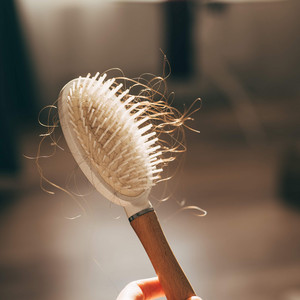
I had hundreds of strands of hair, like fistfuls of hair coming out.
Even though it's not life-threatening, hair loss can be devastating.
It can feel like part of your identity is slipping away.
It was a very scary experience.
And generally, people think of hair loss as a guy thing.
But by some estimates, half of all women will experience hair loss in their lifetime —
And if that's you and your algorithm gets a whiff, good luck.
And while there are some solutions out there based in science, that science is still evolving.
So today on the show hair loss what science can tell us about the causes and how to figure out what's best for you or someone you know?
You're listening to Shortwave, the science podcast from NPR.
This message comes from Capital One.
Say hello to stress-free subscription management.
Easily track... block or cancel recurring charges right from the Capital One mobile app.
Simple as that.
Learn more at CapitalOne.com slash subscriptions.
Terms and conditions apply.
This message comes from NPR sponsor, Adobe.
Introducing the all-new Adobe Acrobat Studio, now with AI-powered PDF spaces.
Need to turn 100 pages of market research into five insights with a click?
Templates for a sales proposal that'll close that deal, or an AI specialist to tailor the tone of your market report.
You can do all that with the all-new Adobe Acrobat Studio.
Learn more at adobe.com slash do that with Acrobat.
This message comes from ServiceNow.
People should do the creative work they actually want to do, not boring busy work.
Now, with AI agents built into the ServiceNow platform, you can automate millions of repetitive tasks in every corner of your business IT, HR and more so, your people can focus on the work that they want to do.
That's putting AI agents to work for people.
It's your turn.
Get started at servicenow.com slash AI dash agents.
We're talking about hair loss, and Dr Carolyn Goh, a clinical professor of dermatology at UCLA Health, has kind of seen and heard it all.
She says patients have come to her with all kinds of alleged quote.
You know solutions they've seen on social media, from onion juice to rosemary oil.
By the way, Carolyn says there is one randomized, controlled study of 100 people showing rosemary oil could work.
There's also a lot of misinformation.
Somebody asked me about cucumber today.
And I said, you know, I think if that worked, cucumbers would probably be $50 a pop for hair loss.
You know, someone would have figured a way to monetize it.
She's also had alopecia areata herself since she was three years old.
So she knows what she's talking about on like every level, including when she says that to understand hair loss, it's important to understand hair growth.
So here's the deal.
Each hair on your head goes through cycles of growth, transition, and rest.
The rest phase is called telogen.
So it's at the end of that telogen phase is when your hair actually sheds.
And when the hair's shedding, it's actually because there's a new hair growing and pushing it out.
And usually each strand does this at different times.
So all of your hair isn't falling out and regrowing at the same time.
Translation, some hair loss is totally normal.
Sometimes, however, stress like having a baby or even COVID can cause the hair cycles to sync up.
And that causes a bigger shed.
But it's temporary.
Mostly it's time will tell.
And that's really difficult to deal with.
You know, you see all this hair coming out and it's this huge change and it seems like the world is ending.
But in fact, most of the time is fine.
That also means that some of the time, when people try to remedy it and it seems to work, the temporary hair loss may just be resolving on its own.
Maybe you wasted some money or time, but on the whole, good news.
That said, sometimes hair loss doesn't resolve on its own.
Most of the time, it's pattern hair loss or androgenetic alopecia.
That's the receding hairline in men.
For women, it actually starts with a widening part most of the time.
It's hormonal.
There are a bunch of other kinds of alopecia, though, and they have different symptoms.
Like alopecia areata or there's these scarring types of hair loss.
For the most part, those become very obvious that there's something else going on.
So, for example, scarring alopecias, often they can also cause smooth spots.
They also often happen with a lot of itching and tenderness and redness, sometimes pimples on the scalp.
And so, again, it is not always obvious to people who are going through it.
They might not realize, you know, the extent of it, but usually there's some other signs.
For Thea Chasson, the founder and CEO of the nonprofit bald girls do lunch.
She was in her 20s when a hairstylist first pointed out the round, completely bald patch.
My hair was long, was in the back of my head.
I had no idea it was there.
And she said, oh, you have a bald patch in the back of your head.
You know, go see a dermatologist.
She did and eventually got a diagnosis of alopecia areata, an autoimmune disease.
Her immune system was attacking the hair follicles.
So it wasn't female pattern hair loss.
She wound up getting some steroid injections and it cleared up.
A decade later, though, there was another bald patch, and now she's completely bald.
And there's ways to live beautifully with this.
We're not saying that everybody should reach this stage where they just are so comfortable going out bald.
It's an option.
It's just another option that should become as normal for women as it is for men.
If we want to—and I do, I go out bald when I want to—
But it's an option and I'm all about putting women in the driver's seat of their life with alopecia.
In the last few years there have been some breakthroughs new prescription drugs that weren't available when she was going through this.
We'll have more from Sydney and Shortwave about hair loss after the break.
When it comes to trying to treat hair loss, it's important to get a formal diagnosis, because different kinds of hair loss respond to different treatments.
What works for one kind might be useless for another and waste valuable time saving the hair you do have.
But that diagnosis of alopecia areata or androgenetic alopecia or one of the others can be tricky to get.
Sometimes primary care doctors are dismissive and it can be hard to get an appointment with a dermatologist.
Now, in today's climate of American health care, sometimes it can be frustrating and difficult to get in to see your doctor.
So I have a method, what I do and the fact that I did it this morning, as a matter of fact, call the doctor's office regularly.
And sometimes I'll ask ahead of time when do you do your calls to remind people of their appointment?
So you have some idea of what time of day they're getting notified of cancellations.
And I call them every single day.
And I will ask every day, did someone cancel?
It sounds pretty frustrating.
That's where telehealth companies are stepping in.
You can answer a few quick questions online and talk or message with a provider.
Then you get a prescription for medication, which is then mailed to your home.
Dr Jessica Shepard, chief medical officer of hers, says the company takes women's hair loss seriously.
The company knows it's filling a gap elsewhere in the healthcare system.
We are going to be there when you're scrolling your phone on commercials.
That's really how we are exposed or how we introduce ourselves to our community.
But hers is mainly prescribing products including gummies for people with hormonal female pattern, hair loss, androgenetic alopecia.
So Thea Chasson says telehealth isn't always the answer.
She says a telehealth visit alone wouldn't have gotten her diagnosis right.
They don't know, because even with alopecia areata there are lookalike conditions that are completely different.
For example, you could have a fungal condition and yeah, and that's treatable, but you don't want to wait.
New drugs to treat alopecia areata were approved in just the last few years.
They're called JAK inhibitors.
They target the part of the immune system that has become overactive and attacks the hair follicles.
A recent review of several studies published in the medical journal JAMA Network Open found that patients had more hair regrowth compared with placebo.
But something like that likely wouldn't work for someone with run-of-the-mill pattern, hair loss, androgenetic alopecia.
Here's Dr. Carolyn Goh at UCLA again.
In the past, we haven't had a whole lot of options.
Topical minoxidil has been around for I think, 30 years or so now and does work.
But a lot of people find it to be messy and difficult and it doesn't work necessarily quite as well as people would like.
She's talking about what we would normally know as Rogaine, the foam you can buy at the drugstore.
It works by lengthening that phase of the hair cycle before it rests and falls out.
So you keep more of the hair on your head at any one time, but you're not supposed to use it if you're pregnant or nursing, for example.
As for Alison Richards, who first noticed hair loss in the shower, she considers herself lucky.
She was able to get to a dermatologist in person who took her seriously.
She was diagnosed with androgenetic alopecia, which is pattern hair loss.
Now Alison Richards takes oral minoxidil the same compound in Rogaine topical foam but in a pill and spironolactone.
Both are being prescribed off-label, meaning they weren't approved by the Food and Drug Administration to treat hair loss.
But they're working for her, and her doctor monitors her for side effects.
So my doctor, in the beginning, it was not uncommon for her to spend 45 minutes or an hour with me.
And she would literally, like, go through a checklist.
Like, you know...
And it was also, it was all like we would go through.
She'd be like how you know, how are you feeling like emotionally physically, mentally?
Are you noticing you're going to the bathroom more?
Do you have muscle cramps?
She also gets regular blood work done to monitor for things like kidney damage.
For her, social media has been a mixed bag.
On the one hand, she thinks celebrities have created an unrealistic expectation for how much hair women think they should have, when in reality they're wearing wigs or extensions.
On the other hand, she's found that there are hair loss influencers who make her feel seen, and platforms like Reddit, where she can connect with other women who have alopecia.
Alison Richards mostly wants other women like her to know they're not alone.
There's always going to be somebody to hold your hand, cheer you on.
And if you ever feel like your beauty is compromised, beauty gets redefined.
That was NPR Pharmaceuticals correspondent Sydney Lepkin guest hosting an episode of NPR Science Podcast Shortwave.
Before we go, I have a favor to ask.
If you have a second, would you leave LifeKit a five-star rating on your podcast app?
If we've ever helped you save a little money or make a healthier choice for yourself, a five-star rating is a great way to show your support.
Thank you so much.
This episode was produced by Rachel Carlson and edited by Brent Bachman and Rebecca Ramirez.
Tyler Jones checked the facts.
Kwesi Lee was the audio engineer.
Beth Donovan is our vice president of podcasting.
I'm Marielle Segarra.
Thanks for listening.
This message comes from Capital One.
Banking with Capital One helps you keep more money in your wallet with no fees or minimums on checking accounts.
What's in your wallet?
Terms apply.
See CapitalOne.com slash bank for details.
Capital One NA, member FDIC.
This message comes from Capital One with the Capital One Saver Card.
Earn unlimited 3% cash back on dining and entertainment.
Capital One.
What's in your wallet?
Terms apply.
Details at CapitalOne.com.