NPR. This is The Indicator from Planet Money.
I'm Adrian Ma. And just back from her vacation in Tuscany, I am joined by NPR's financial correspondent, Maria Aspin.
Maria. Welcome to the show. Thanks so much, Adrian.
It is great to be here, though I have to admit I'm sad not to be in Italy anymore.
It's always sad not to be in Italy, but it sounds like you had a pretty awesome vacation.
It was, and it was especially delicious, full of wine and... sun-ripened tomatoes, and lots of local extra virgin olive oil.
I even went on a tour of the groves for one small producer called Olio Piro. hiking through the olive trees on the steep hills of Sejano in southern Tuscany.
It was a ridiculously gorgeous view of the Tuscan countryside.
So, of course, I was thinking about trade policy.
Even on vacation, you're thinking about trade policy.
You can't take the econ brain out of the financial reporter.
And especially in the middle of olive oil country.
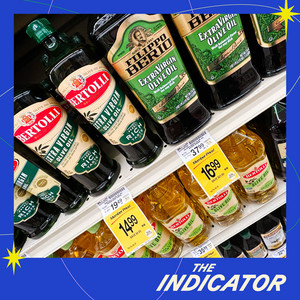
I mean, Italy is one of the world's top producers of olive oil, and the United States is a huge customer.
And now President Trump's tariffs are making business harder for both olive oil producers and customers.
And it turns out they're even complicating other parts of the Trump administration's agenda.
So today on the show, we'll look at what olive oil tells us about the unintended consequences of Trump's tariffs.
That's after the break. with no fees or minimums on checking accounts.
What's in your wallet? Terms apply. See CapitalOne.com bank for details.
Capital One N.A., member FDIC. This message comes from ServiceNow.
People should do the creative work they actually want to do, not boring busy work.
Now, with AI agents built into the ServiceNow platform, you can automate millions of repetitive tasks in every corner of your business, IT, HR, and more.
That's putting AI agents to work for people.
It's your turn. Get started at servicenow.com slash AI dash agents.
A few days after visiting his olive trees, I caught up with Romain Pirot over Zoom.
He moved to Tuscany from France a couple of decades ago and kind of fell into making olive oil.
But now he has the zeal of the converted. many people never had the experience of a freshly well-made olive oil.
Many, many, even here in Italy, so many people drink crap Not want to mince words, I hear.
A Frenchman making olive oil in Tuscany.
What else do you want? I mean, Romain's one of the founders of Olio Piro.
He grows the olives. His sister, Marie-Charlotte Pirot, handles the business side of things.
Okay, so we have sibling founders here. Do they get along?
Adrienne, I say this as an older sister, she is definitely the older sister.
But it does sound like working together keeps them young at heart.
We act like if we were 25 all the time. She also loves to tease her little brother about his more... relaxed approach to business.
I mean, this is how she describes Roman's initial sales plan for his olive oil. make a few hundred bottles, stack them in his Volkswagen van, drive to Paris. knock on the back door of Michelin star restaurants and sell the olive oil in the alley.
Did she say in the alley? Indeed, he was selling his olive oil in the alley.
He was fantastic. The chefs loved him. But of course, it was not a terrible business.
She's talking about what it takes to grow a business beyond a one-man, back-alley, traveling Volkswagen operation.
And it turns out that Romain wanted to scale it up too.
So six years ago, the siblings officially became business partners.
And eventually, their startup began exporting their olive oil exclusively to the United States.
So far, things have been going pretty well.
Oleo Piros won a bunch of awards for its olive oil, and sales have been good.
It did half a million dollars in revenue last year, which continues to grow.
Ramas says that focusing on the United States was great for business.
One would be crazy not to export to the US because it's an amazing market.
It's huge and they really want the best quality.
And here in the United States, we really need European olive oil producers like the Piros and all their large competitors.
Because Americans buy 400,000 tons of olive oil every year, which is enough to fill 160 Olympic-sized swimming pools.
That means that collectively, we consume more olive oil than any country except Italy.
And about 95% of what we consume here is imported.
Adrian, I was really surprised to discover that.
Right. Because, I mean, you look on the store shelves, we do have California made olive oil from California Olives.
We do, but it turns out it's just a drop in the bucket.
Some other states make olive oil, like Texas and Florida, but California has the best climate for growing olives, and it does make the vast majority of U.S. olive oil.
But Adrian, every industry member I talked to, here and abroad, said that California just can't physically grow enough olives to feed our demand.
Even if every farmer in the state ripped out every other tree and started growing olives, it would take a few years at least for them to start bearing fruit.
And this gets to one of the really big problems economists have with President Trump sweeping tariffs on almost everything that the U.S. imports.
Trump says that these tariffs will encourage domestic production.
But when it comes to food and farming, There are lots of things the U.S. just can't grow in big quantities.
Things like coffee beans and avocados and bananas.
And olives. And olive oil. Now, most European imports, including olive oil, have a new 15% tax.
Translation, more expensive for American shoppers.
Some of us will stop buying it. We'll switch to cheaper alternatives like canola or sunflower oil.
These are otherwise known as seed oils. And you may have heard recently from our current health secretary, Robert F. Kennedy Jr., that seed oils are unhealthy.
And he's even gone so far as to say that seed oils have, quote, poisoned Americans and contributed to the obesity epidemic.
Now, science doesn't back that up. Seed oils aren't as healthy as olive oil.
And yeah, they're often used to make unhealthy stuff, like fried food or ultra-processed foods.
But they're not terrible in and of themselves.
And now, the White House is almost certainly making it more expensive to buy olive oil from abroad, which is not good news for the Pirro siblings and everyone else who wants to sell olive oil to the U.S.
These olive oil producers are also just fed up with all the back-and-forth tariffs chaos this year.
As indicator listeners know, it's made it pretty hard for businesses to plan ahead.
I was visiting the Oleopiro groves right before Trump's latest EU tariffs were announced, and Marie Chalot was pretty frustrated with all the uncertainty.
But it was just so difficult. And we're not the only one.
We are the smallest player in this whole game.
So she and her brother decided to pivot.
Earlier this year, as Trump started rolling out tariffs, Olio Piro moved up its plans to expand to other countries, including Canada and Germany.
We were always planning to be global, but we were not planning to go global that fast.
So yes, we've definitely accelerated our project with the current tariffs. caused some scrambling.
The Pirus moved up their plans to bring on an export manager and other staff to handle the logistics of doing business in more countries.
They're also raising money to finance this expansion.
Meanwhile, the tariffs have cut into some of their U.S. ambitions.
Oleo Piro's getting big enough that its unit cost for making olive oil is coming down.
So they were hoping to be able to actually lower their prices this year.
Instead... Because of the tariff, it looks like we are going to stay at the same pricing.
Now, obviously, holding prices steady isn't the worst outcome for a business or its customers.
Especially at a time when a lot of companies are thinking about raising prices.
And Oleo Piro isn't giving up on selling olive oil in the United States.
It's a mess, of course, but it's not a catastrophe.
I mean, we'll survive that. For now, Trump seems to have finalized EU tariffs at 15%.
So for businesses, there's a little less uncertainty about what to expect or what to plan for.
So now Romain and Marie-Charlotte Pirot are trying to spend less time thinking about trade policy so they can focus on the upcoming olive harvest.
We reached out to the White House about all this, and a spokesperson, Kushda Sai, responded with an emailed statement that said, quote, Unquote.
Unquote. Although we should say, as we have often said on the show, the burden of tariffs often falls on U.S. importers, not foreign exporters.
Maria, thanks so much for stopping by and bringing this story from Italy.
My pleasure. Got to find the fun in tariffs where we can.
This episode was produced by Angel Carreras with engineering by Robert Rodriguez.
It was fact-checked by Sierra Juarez. Cake and Cannon edits the show and the indicators are production of NPR.
This message comes from ritual. Upgrade your supplement routine with rituals, commitment to trust and traceability during their subscription sales sitewide.
Get 40% off your first month of essentials at ritual.com slash podcast.
This message comes from Insperity, providing HR services and technology from payroll, benefits, and HR compliance to talent development.
Learn more at Insperity.com slash HR Matters.