
[Unveiling the Past: A Codicological Study of the Freer Gospels]-[What Materials Make a Manuscript?]
📋 Summary
The Material Biography of an Ancient Manuscript
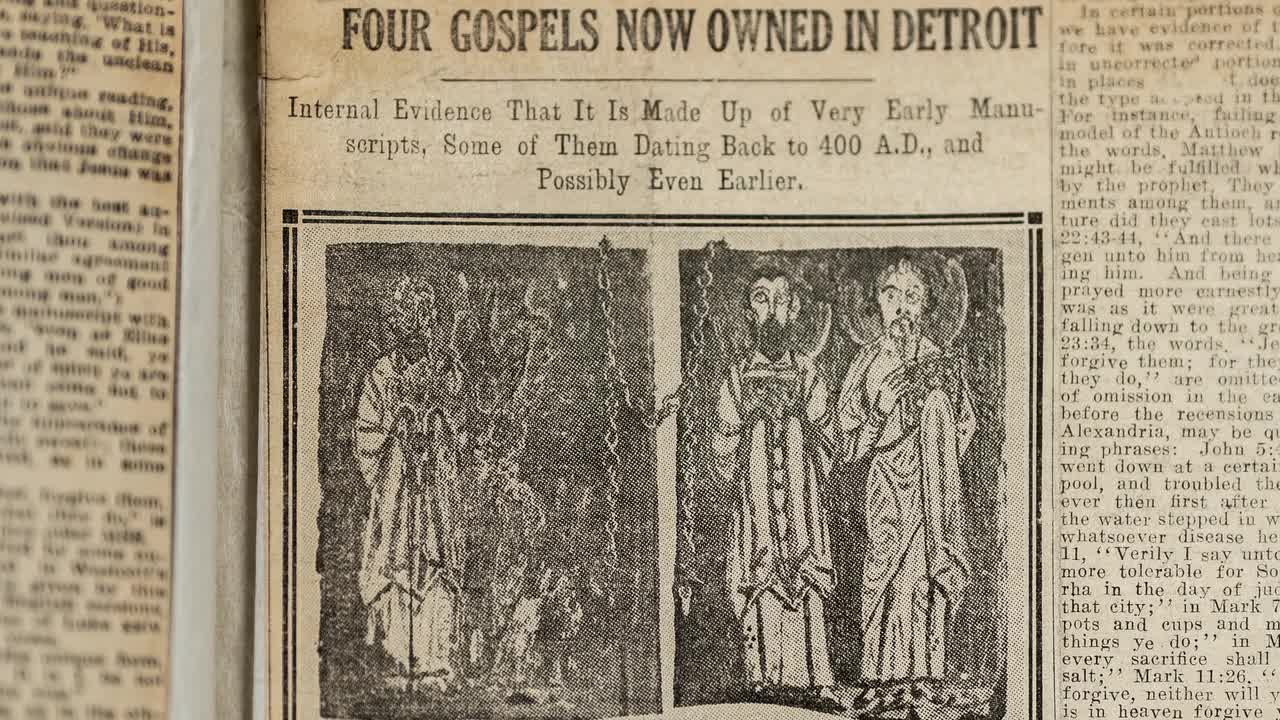
At the National Museum of Asian Art, conservators are currently engaged in a profound investigation of one of the world's most significant historical artifacts: a fragile manuscript purchased by Charles Langfreer in Cairo in 1906. While initially recognized as the third oldest complete book of the four Gospels, the current focus of research has shifted from the theological content to the physical identity of the object itself—a burgeoning field known as codicology.
The Physical Structure and Conservation Challenges
The manuscript is a codex comprising 27 gatherings of parchment held together by remnants of leather binding and two wooden boards adorned with encaustic paintings. Given its extreme age, the manuscript is described as "very fragile" and "brittle." The primary conservation goal is to "stabilize the edges" to ensure the object can be handled for viewing without risking structural loss. Conservators employ specialized tools, such as a "flat bamboo spatula," to carefully turn pages, minimizing physical stress on the delicate parchment.
Scientific Inquiry: Unlocking Secrets Through Material Analysis
The research project utilizes a multidisciplinary approach, drawing on the expertise of parchment specialists, bookbinding experts, and scientists conducting advanced imaging and chemical analysis. Key areas of investigation include:
- Material Identification: Researchers are working to identify the origin of the wooden boards—whether they are local to Egypt or imported from Europe—and analyzing the fiber content of the binding threads, specifically testing for "hemp" or "flax linen."
- Parchment and Biocodicology: Through the use of a "digital micrometer," experts have taken nine measurements on every page, confirming the use of "very fine, carefully prepared parchment." The physical evidence of gaps and repairs from the "peeling process" suggests that the material is likely "sheepskin." The emerging field of biocodicology allows the team to apply DNA analysis to the parchment, treating the manuscript as a biological record that provides insight into the animal sources used in its creation.
- Ink Composition: By analyzing the chemical composition and concentration of the ink, researchers hope to identify the specific tools used by the scribe and detect patterns in the writing process. This helps map how the ink recipe may have changed throughout the production of the manuscript.
Contextualizing the Project
This study does not exist in a vacuum. The team draws guidance from previous investigations of ancient texts, such as the Vienna Genesis and the Codex Sinaiticus. However, the team remains cautious, acknowledging the importance of "framing" their research to respect the limitations of non-invasive analysis.
Ultimately, this project is described as an "exciting puzzle." By synthesizing expertise across biology, chemistry, and history, the researchers aim to contribute significantly to the broader understanding of "book production in late antiquity." Every question answered regarding the manuscript’s physical composition leads to new inquiries, reinforcing the idea that the object is not just a carrier of text, but a complex historical artifact with its own evolving story.

Deep Learning with ListenLeap


