You're listening to TED Talks Daily, where we bring you new ideas to spark your curiosity every day.
I'm your host, Elise Hugh.
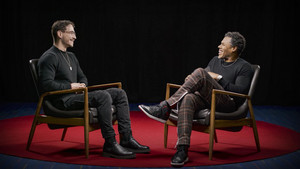
Today, something special, a new original series called TED Intersections, featuring speakers taking on subjects at the intersection of their expertise.
We've paired up social psychologist Brian S.
Lowery with AI technologist Kylan Gibbs to talk through technology in the near future, whether we're too worked up about AI, and what differentiates humans from other creatures, including artificial ones, after the break.
Support for this show comes from Capital One.
Banking with Capital One helps you keep more money in your wallet with no fees or minimums on checking accounts and no overdraft fees.
Just ask the Capital One bank guy, it's pretty much all he talks about, in a good way.
He'd also tell you that this podcast is his favorite podcast, too.
Aw, really? Thanks, Capital One bank guy.
What's in your wallet?
Terms apply. See CapitalOne .com slash bank, Capital One NA, member FDIC.
Support for this show comes from Brooks Running.
My friends at Brooks sent me the amazing new Ghost Sixteens.
I don't know about y 'all, but having new shoes, especially really lightweight ones that I like, get me out there.
It's like enough motivation just to have that soft cushioning.
You can take your daily joyride in these better than ever Ghost Sixteens, now with nitrogen -infused DNA loft V3 cushioning.
So lightweight, so soft, it'll help you turn your everyday miles into everyday endorphins.
Let's run there. Visit BrooksRunning .com to learn more.
Support for this show comes from LinkedIn.
If you are a B2B marketer, you know how noisy the ad space can be.
A lot of noise. If your message isn't targeted to the right audience, it'll just disappear.
But with LinkedIn ads, you can be a lot more precise.
You can reach the professionals who are more likely to find your ad relevant because LinkedIn has targeting capabilities to help you reach folks by job title, industry, company, and more.
You can stand out with LinkedIn ads and start converting your B2B audience into high quality leads right away.
I've learned so much about the vastness of LinkedIn because it does seem like everybody is on there.
So it's helping me find some leads or think of connections that I wouldn't have otherwise thought of without the technology.
It's helping me stay informed and stay educated.
Start converting your B2B audience into high quality leads today.
We will even give you a $100 credit on your next campaign.
Go to LinkedIn .com slash Ted Audio to claim your credit.
That's LinkedIn .com slash Ted Audio.
Terms and conditions apply.
LinkedIn, the place to be, to be.
And now our Ted Talk of the day.
What makes a human a human?
It's one of those pressures, isn't it?
I mean, there's like two ways I would look at it.
One is for my personal life and one is for my work life.
One thing that's interesting is there's been points when I've been spending like four to five hours a day and tracking the AI.
And the interesting thing that happens in that is the things that you note it like when you first started, oh, this is really realistic, similar to when people start first like black and white TV.
And they're like, wow, this is like real life.
But then as you get used to it, you start to kind of realize the things that make it less authentic.
And I think something that I've realized with AI is there's certain ways that we interact that are just more spontaneous.
There's something about the predictability of AI that teaches you about the spontaneity of being human, the ways they communicate, the naturalness, the contextual awareness.
These little things that all add up, that's on the technical side.
On the other side, I mean, I think there's something of just the shared experience of being human that actually I think differentiates it from other animals' experience.
You have a traumatic moment in your life.
And then you start to resonate with other people's.
I feel like every time I've had something that's nearly catastrophic, it opened up like a new door of empathy.
And then you start to be like, oh, man, that really hurt.
Or when you cry about something, you're like, wow, then you start to remember this is what usually happens to me.
It's like, I start crying about something.
And then I think about all the things that I did for my mom or my grandma and all these kinds of things and the things that they felt.
And I feel like there's something in that shared experience where we have these things that differentiate us.
We're all different people.
But there's something more like those common feelings that it all arises from.
But anyway, that's one thought.
I love that answer.
And I want to say that you're not normal in that way.
Here's why I don't think you're normal.
People anthropomorphize anything.
It doesn't have to even be that good.
It doesn't have to be anywhere near as good as AI for people to treat it like it has some human characters.
People treat their cars like they're people.
So I'm surprised that when you interact with it a lot, it feels less real to you.
There's something about like, I think about like resolution, it's like the way of seeing the world.
And like, you kind of increased this, right?
It's like the same reason you can't look at a TV that's not 4K now.
And it's someone I think who worked on like early VR was saying, you know, the interesting thing about it was like when you stepped out of it, you're like, oh, the real world is actually amazing.
And it's actually really hard to recreate that in technology.
And I think the same is true for AI.
It's like, maybe for some people when they interact with it, the thing that they see is some commonality.
But the thing that I always notice is like, well, this is very different from the conversations I have with my parents.
Even though it's something similar, there's something off.
And it's those little things that it's like, that's like, I think what over time will add up as people use AI more is they'll start to recognize, and I can't even point at them, like what are those nuances though that make us human?
You just know it when you see it and you're like, and it's missing in AI.
So I mean, that's also interesting because what you just suggested is that the more people use AI, the less real it's going to feel to people.
You think that's what's going to happen?
I mean, there's probably another case, like, you know, it's the same way as like, you know, your Instagram and Facebook feed isn't a real conversation.
There are certainly kids especially who would look at those kinds of feeds and feel like, oh, that's a real representation of my friends or my, you know, my favorite celebrities or whatever actually think.
When it's like completely, well, I shouldn't say completely, largely false.
And I do think something similar will happen with AI where some people for sure will like almost be like in captured and they will believe that like, that's the most realistic thing that exists and then start to compare people to that.
But I think that, you know, if you have that degree of empathy, you'll be like, oh, there's something off here.
It's the same way as like, even if you use the Zoom call, there's something off.
It's like, I can't, you can't, you can't, it's hard to pick it up, but like, I'm not picking up all the signals and it's the very little like nuances that you probably just subtly pick up as well.
So you don't think that the technology is going to advance quickly enough where to overcome those little things fast enough to capture all of us.
You're not worried about that.
I am definitely worried about that.
Mainly because I think for most people, it's easy, right?
So the thing about AI is it's so beholden, at least if you think about like the chat bot styles, it's so beholden to what we want.
And that's kind of like what people I think a lot of people want in their life or they need is like the sense of control.
And the AI gives you the sense that like, I can control this anthropomorphic thing.
And that's honestly, one of my fears is that people get used to that.
And what does it mean when like I get used to interacting with something that is beholden to only my views and interests, and then I go and act with a human who has their own interests.
Do you think people want control?
I think people want to be controlled.
Ooh, maybe it's a form of control though, to be controlled as a predictability, I guess.
Yeah, people want the world to make sense, don't you think?
Yes. Yes. I think they also want the world to be like, there's something about like, preferring predictability over optimality.
So like, I've even felt it like when you have like, you know, a mental health moment, you have friends who have mental health moments, things that I've always seen as interesting is like, your brain and your mind prefer to stay in a state that's familiar, even if it's worse.
So if you're in like a depressed state, you almost would have like stick in that, then break outside of it, right?
So there's something about like, things that are familiar, rather than actually like better.
And I don't know, there's like a bias towards, you know, you, you're almost identifying then with those kinds of states.
Yeah, there's there's there's research on this.
One is called status quo bias.
People like things that are already there and two, people like to have what they believe about themselves affirmed, they really believe them, even if they're not positive.
So that that is true.
So I don't like what does that look like in AI?
Yeah, I mean, it's, it's definitely interesting to me that people seem to love like, you know, you talked to a lot of these things, and they sound like computers, and they sound like AI, but people love it, because it's kind of like, it's, it's familiar, it's controllable.
You know, if you start to add lots of personalities and these kinds of things, it makes sense in context.
But I found it interesting that like, as we started developing these AI systems of people interact with, they all have this kind of like similar voice, as a very, it's a very AI voice, you can kind of tell that you're talking to an AI, maybe that's intentional.
But there's, there is something there where like, I think people have a preference to getting what they went from humans from humans and from AI from AI.
But that could blend.
Like, I think that there's, you know, there's already lots of, you know, people in certain demographics who spend a lot of time on the internet, and they start to identify like, that's their favorite form of interacting with people.
And so I do think that there's a reality where like, as we move into the future, there will be people who bias towards that, for whatever reasons, you know, whether it's the comfort of knowing someone's not judging them, whether it's like the format that it speaks to you with, that will kind of bias
towards, you know, preferring those types of interactions.
But on the other hand, I always think that there will just be like, you know, there'll be a distribution of people, and you'll have some people who really don't like it.
And, you know, like I was saying, the more that I interact with it, now I find it almost painful, because I just pick up on so many of these issues, that you're like, I can't even I can't even use it at a certain point.
And, you know, my, you'd think that like, you know, I'm in AI space, and I write like 20 page docs, I don't use AI for a single bit of it, because it does remove that voice.
And I do also wonder, though, is, as people interact with it more, will they either identify the differences, or start to conform to the things that they're trained with AI, it's the same as like, you know, if you interact with the same thing on your partner, for example, right, you start to be biased
by the communication, because you're talking so You mean they're training you?
They're training you.
Yeah, I agree. Right.
You're like, you know, your partner is probably like, you know, they have a preferred way of communicating, you get used to it, these kinds of things.
So I do wonder if as people interact with AI more, that they'll kind of all converge.
That's probably one of my biggest fears, actually, but as it causes convergence of, you know, I'm concerned about the exact opposite here.
So there's I'm gonna, I'm gonna shift a little bit.
So when we talk about AI, the way you're describing, it's usually like dyadic interactions, like I'm interacting with one AI, one agent, that's true.
But really what people do is interact with multiple people, right?
You interact in some community or some small group setting, and I'm surprised there's not more of that in AI.
So you're also in gaming, like my understanding, I don't, I don't really game, but my understanding is a lot of the gaming is about connecting with the people and it's a community kind of experience.
So there's two things.
One, I'm really surprised that AI seems so focused on these like one -on -one interactions as opposed to like multiple AI agents creating a more immersive social experience.
I love you, bro. That's literally what we do.
Okay, good. So that's one other thing, like the reason I worry less about convergence and more about divergence is if you could produce a more immersive social experience, now everybody's having their individual social experiences.
Like now, what I worry about with AI, with VR, with all these kind of technologies that are expanding, what we can control about our social environment, about our physical perceptions in the environment is that we all inhabit our own singular world.
Like that is more frightening to me than like, you know, that we all converge to the same experience.
And now back to the episode.
Well, my mom's a grade seven teacher and the one thing that is really interesting is if you went by like 20 years and everybody was watching like the same TV shows and they come to class and they'd all be talking about, you know, Pokemon or whatever it was, and now everybody watches their own favorite
YouTube channel. Yes.
And it's the siloing of reality.
So yeah, like what we do is when we work with games, for example, one of the interesting things is like as people play through games, it's basically the same thing.
You get a million people go through a game and it's, it's some differences, but you're largely gonna hit the same points.
And so one of the things that we think about is, you know, what does that mean for agency?
So you know, the way we interact with media changes the way that we feel agency in the world.
So if we see inert media that we can't change, it also gives you the sense that like you can't change the world.
And so at your point, one of the things that we do with, we want to do with games is how do you make it so that each person can actually influence that outcome.
And as you add more agents into that, that you see, okay, I interact with this one and it has a cascade effect, right?
And that's like, I love it.
I mean, even in some of the stuff we've done here, it's the magic actually happens when you do have those agents interacting, because then you're also not just seeing like that one to one interaction, but the emergent effect of basically that interaction.
And another thing is, if your main controls that you have in the computer is like point and click, or you know, in the games jump and shoot, we're trying to see like, what does it mean if social skills like interaction like this are the ways that you actually interact with the games or technology and the agents,
like that's, that's a very different way of conversing or of dialogue than like button presses, right?
And I think that changes the way that you sense agents in the world, because I think the way that most people change the world is by speaking and interacting and interacting with other humans, not by pressing buttons, I mean, arguably, it's the case in some.
Yeah, you know, the other thing that's interesting to me is I don't think people have an understanding of the systems they exist in, right?
People think about themselves as existing in like individual relationships, and they have a harder time understanding system effects, like I affect you, which affects your partner, which affects your partner's parents, right?
That is a harder thing to grasp.
But I think there's something that's fundamentally human about that, like you are also impacted by all these different things going on, like we had the person come and put on our makeup, and now I'm looking beautiful, that's affecting everybody else around me.
But you don't mean like, yeah, exactly, exactly.
I mean, how does that fit in?
I just haven't heard people talk about it in that way, which is surprising to me, because that, I think, is what fundamentally makes humans human, is interaction in complex social situations.
And these like nested systems.
Yeah. And like, they all affect each other, right?
Yeah. Like, you think that your like small activity doesn't affect whatever higher level political stuff, but it's all aggregate.
Yes. And it's all interlinking as well.
Yeah. I mean, it's like the AI thing is interesting too, because I often hear people talk about it as like this evolution, right?
You have like singular cells to monkeys to humans to AI, or like you could flip it, right?
Where it's like more like, you know, cells to organs to human to AI.
It's a system overarching that just because it's trained on us, when we do these things, we actually influence that system, then it's kind of this now that people are interacting with it, it has this interplay.
And I, and that's interesting too, when it becomes like, you know, AI isn't this like singular entity, it is more of an institution or a system almost, that is kind of overarching everything else.
Yeah. And it's also weird because it's like our vision of who we are.
So we're talking about AJI, AGI, it's like, we don't even know what intelligence is.
And we think we're going to produce something that has it.
It's just an interesting situation where we talk about it, as you said, it's natural evolution.
But in fact, we're creating it.
And it's not clear that we know exactly what it is we're creating.
I actually think that one of the most interesting things is that we're starting to work on AI at a point where like, I still think we're figuring out ourselves.
Like, you know, neuroscience is like very early on in its days.
And yet we're creating things that are like based on our own intelligence.
We don't really understand even what's going on inside.
And so to your point on like, what are the effects?
We don't really know yet, you know, we don't, we don't know, every year any paper comes out as like changes how people think about child rearing, right?
Like, how to how to bring up a child well, like all those kinds of things.
And now we're creating systems that will, you know, kind of be overarching other humans like, who's that mean?
I don't know, I do actually think, you know, I happen to be an AI, we happen to be at this point in time.
But if we could pause for a second, I think it'd be good, another few centuries of figuring out, you know, what we are and understanding that a little bit better before we created something that was in our image.
Because like, we're kind of just, you know, it's kind of like taking a photograph and like painting it, right?
And it's like, you're not actually getting the person and painting it, right?
Like, it's like, there's something about the life that's missing.
So I do agree. I think they were honestly kind of premature.
But I, I think it's just how I guess, you know, life goes that things come out when they naturally should.
So I mean, you work in AI.
So what do you what's the most exciting thing for you?
And like, what's your hope for it?
I think it's I think it's kind of back to that agency question.
So I mean, the way we you know, you read a news story, you read a book, you watch a movie, you watch a TV show, there's this, I mean, this is specific to like my domain, like, there's something about a communication that we're having right now, we're like, I'm adapting to the things that you say to
your body language, all those kinds of things, right?
It's like, you know, people in the room, all these kinds of things.
And so when you have AI able to sort of help that adaptation is that you have that agency and the things that you interact with.
I don't necessarily believe in like fully personalized media, because I think we need like a shared social context, like we reason watch a movie, because then we can all talk about it, right?
We watch a TV show, we can all talk about it.
But there is something about the fact that we're all interacting with these internet objects.
And so, you know, the way that technology feels you, you're on a screen, it doesn't change, you're in a movie, it doesn't change, you're on, you know, watching Netflix, it doesn't change depending on what you do.
And I think that changes the way that we see our own agency in the world.
And so I hope with AI that one of the things that it does is kind of opens this door to like agency in the way that we interact with media and technology in general, such that we do notice that effect that you have on systems.
Because even if it's small, right, we're like, I take a certain action, and it completely changes, you know, an app or change an experience, maybe that that helps us learn that we have an effect in the social systems as well that we're affecting.
So something to that effect.
So you want to make our agency more transparent?
Yeah. And do you think it does that?
Because right now, I'm not sure it doesn't obfuscate our agency.
No, I don't. I don't necessarily know.
Yeah, I agree. I mean, this is why I think also like media and games is the domain I mainly focus on.
And I think it's interesting, especially because young people use it a lot.
And so like, I've heard like very veteran game developers say, you know, how people interact with games kind of trains kids how they should interact with the world.
So even people who tend to like be professional players in different games have different like psychological profiles, because they bias towards certain ways of interacting and like seeing the world the same way, I guess, if you trained in certain something academic, right, you have a different way
of viewing it. And so if we make games and media in a way that you feel that sort of social impact as well, maybe maybe it opens the door to like another realm of understanding.
But yeah, I agree that like a lot of the systems that we have today give you maybe a false sense also of agency, where like we were talking about the AI systems where, you know, you actually feel like you're controlling this thing, whereas maybe it's also biasing, you know, and controlling or, you know,
having some influence over you as well.
So where do you think things are going?
So there's obviously a huge race among some very, very well resourced organizations over AI, right?
You know, Microsoft, Google, I mean, are the biggest maybe, but and they are very quickly going to need to monetize it because this is what those those companies are designed to do.
Like, what do you foresee, because I just I look at social media as an example, I think.
At the time when it first came out, people were really excited as a new way to connect with people, a way to stay connected to people, you know, you can't you catch up with people, you lost contact with that sort of thing, and it changed into something else.
In large part, because the way it was monetized that you're like going to add folks on attention.
Like, what's the what's the trajectory of AI?
I can't, like, you know, I'm taking guesses.
Of course, I want to hold it to you.
Don't worry. I mean, I think that the reality is, we were kind of mentioning before about the challenges of scale.
And when you invest tens of billions of dollars in something, you need scale.
And I think that's one of like the way that AI is developed, and specifically even the models that were types of models were using the economic model of it, which is effectively, the more compute you have, the better models you can create, the better models you can create, the more usage you get, the more
usage you get better.
It has somewhat of a honest, honestly, like monopolistic tendency, I think, in the way that actually even like the architectures and the economy of it works.
And so I think it's almost inevitable that whatever AI systems are produced by these target organizations will be pushed to scale as quickly as possible.
And there's maybe there's some pluses in that where like, you know, sure, they're building in feedback loops, people can give their input, it biases it, but also at the same time, what does it mean when a single model is fit to a billion people?
Right? So like, that's kind of what I meant about the converging effect where like, what happens when we are pushed to produce something that fits to like billion people is there's a lot of diversity in there.
And so, you know, we create these scaled systems that are fitting with the whole like trying to fit the whole planet, like does that work?
And so I think we'll, you know, we're going to go through this phase, we're like, yeah, you're going to have a billion people interacting the same AI, and I don't know what the effect of that will be.
And I also don't know even like the monetization models now are kind of, you know, you pay to pay to use these kinds of things, which are, are maybe okay, but certainly ads will probably enter the equation.
Also, what happens when like you want attention, and you can use AI is much better at than the algorithms you even have on YouTube and Instagram, and you can start to capture that attention.
And so I certainly think it's going to be an interesting little bit here now, as we see these huge organizations spending 10s of billions of dollars, and the choices that they make to then monetize that.
And what that means for like how AI proliferates, which is not, you know, I know a lot of the folks in the organizations and their, their interests have never been in that domain.
But at the same time, you're beholden, you know, stock market interests and whatever it is, then what happens like it, it shifts it, right?
We're in this, we're in a capitalist world.
And that's kind of like, you know, what ultimately will change the incentives.
So yeah, it's interesting.
Yeah, I mean, I am interested in the coming from your background, you have a very different stance on it.
But you know, it's all this AI stuff is interesting.
But you know, when you think it's almost your first question, you know, what makes us human?
And like, as people just technology in general, and specifically with AI, like, where can people find like the meaning in their life, the values that they, you know, find true?
And how will that change?
Do you think we would guess with like the advent of these new technologies?
Or how do you even have it see have have you how have you seen it change with the technologies we've already seen come to life?
Yeah, I don't you know, this is gonna sound like a funny answer.
I think people are too worked up about technology, personally.
I mean, you know, we had this conversation, I think, you know, we've people have been using technology since we've been human, right?
So paper was a huge invention, talked about this, the printing press, huge invention, computer, huge invention, internet, huge invention, AI, great, another huge invention.
And through all of that, I think, what you see in a lot of the biggest technologies is the desire to connect with other human beings.
I think what fundamentally makes us human is our connection to other human beings, our ability to engage the human beings and like consciousness and all these other things, I think are necessary preconditions.
Really, what makes us human is connections with other humans.
And that is incredibly complex.
And I don't think we're close in terms of technology replicating that I don't I mean, even what you described, it's like you have this feeling like this isn't right, this is off, like we're and even if you felt like it was right, it still would be off in ways you didn't quite get.
I don't think we're close.
Though, because it's designed to pull our attention away from other things, I think it impedes our ability to do what we all kind of want to do, which is interact with each other.
Right. And it might change the way we interact with each other in a way that might feel less fulfilling.
And I think you see some of that and social interactions now some of that I mean, recently, maybe COVID was an issue, but you know, people feeling less comfortable in face to face interactions, right?
Like people dating, there's no serendipity and hanging out and you meet or you meet.
It's like you're using an algorithm to try to present to you options.
That's a very different world.
So that's prior to AI.
And I don't know what how AI is going to further influence that.
And I guess just even like the general point, like, how core do you think the the need for connection is, in the sense that, you know, I've heard some parents say that like through COVID, their kids went through like a major change, like, you know, these regressions in their, you know, their different
different habits and these kinds of things, because they weren't connecting with people.
And then it's taken years to overcome that.
So I do also wonder, like, you know, whether it's through technology or things like COVID, or just like circumstances, could we lose that need for connection or that even desire, even if we need it, you know, we might lose the desire for it and feel, you know, emotional trauma as a result, but still
not go for it. Like, how core do you think it is?
And do you think it's, do you think we're safe in that, in that kind of need?
So I'm gonna give you the most extreme answer, which is, I think, the true one, that you will cease to be human if you don't have a need for human connection.
Like, I think you will be a physical person, but you you will literally break down as a human being.
And this is why, in part, social isolation or solitary confinement is considered inhumane, because people literally break down, you will start to have hallucinations, you will break down mentally and physically absent human connection.
So I don't think there's any, there's no possibility in my mind of losing the need, like, you may get less than you need, and that will have negative consequences for you.
But I'm not worried about people not wanting to be around people.
Are you worried that, like, things like social media or AI or any of these things could give you that sense that you're fulfilling that need, but not actually fulfilling it?
You know, you said, like, it's totally true, right?
Solideric confinement is a great example.
Because you, you, we need it, we absolutely, like, lose our sanity, as well as, you know, our well -being.
But maybe we can, maybe, you know, technology can manufacture the sense that we're fulfilling it.
And then over time, we see, you know, these mental health crises evolve as a result.
Yeah, that's a good question.
I don't have a, I don't, I think it's unlikely, but I don't know.
Honestly, I don't know.
I think, I'll give you, I mean, I'll talk about meaning for a second.
And I think of that as fundamentally tied to our need for connection to other people.
I think sometimes we confuse, for example, our need for meaning with a desire for personal achievement, that we chase personal achievement.
And what we're trying to do is generate meaning.
Um, so I think we can be confused.
And we can have those needs displaced into less productive routes.
But I don't, I don't think it's going away.
But, you know, I don't know that it's the healthiest.
Yeah. No, I'm totally aligned.
Yeah. Well, thank you, Brian.
That was an awesome conversation.
That was great. It was really fantastic and super informative.
Thank you. Support for TED Talks Daily is from Progressive, home of the Name Your Price tool.
You can say how much you want to pay for car insurance, and they'll show you coverage options that fit your budget.
It's easy to start a quote.
Visit progressive .com to get started.
Progressive, casualty insurance company and affiliates, price and coverage match limited by state law.
Hi, I'm Belaval Sidhu, host of TED's newest podcast, The TED AI Show, where I talk with world's leading experts, artists, journalists, to help you live and thrive in a world where AI is changing everything.
I'm stoked to be working with IBM, our official sponsor for this episode, in a recent report published by the IBM Institute of Business Value.
Among those surveyed, one in three companies pause an AI use case after the pilot phase.
And we've all been there, right?
You get hyped about the possibilities of AI, spin up a bunch of these pilot projects, and then crickets.
Those pilots are trapped in silos, your resources are exhausted, and scaling feels daunting.
What if instead of hundreds of pilots, you had a holistic strategy that's built to scale?
That's what IBM can help with.
They have 65 ,000 consultants with generative AI expertise who can help you design, integrate, and optimize AI solutions.
Learn more at IBM .com slash consulting, because using AI is cool, but scaling AI across your business, that's the next level.
You were listening to a conversation between AI technologist Kylan Gibbs and social psychologist Brian S.
Lowry. If you're curious about TED's curation, find out more at TED .com slash curation guidelines.
And that's it for today.
TED Talks Daily is part of the TED Audio Collective.
This episode was produced and edited by our team, Martha Estefanos, Oliver Friedman, Brian Green, Autumn Thompson, and Alejandra Salazar.
It was mixed by Christopher Faizi -Bogan.
Additional support from Emma Tomner and Daniella Balarezo.
I'm Elise Hugh, I'll be back tomorrow with a fresh idea for your feed.
Thanks for listening.