
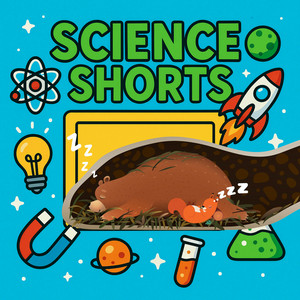
[The Science of Hibernation: Nature's Ultimate Energy-Saving Superpower]-[What is hibernation and will humans ever be able to do it? Science Short]
📋 Summary
The Science of Hibernation: Nature's Ultimate Energy-Saving Superpower
Hibernation is frequently misunderstood as merely a "really long nap," but as explored in the latest episode of Squiz Kids Science Shorts, it is a sophisticated biological "superpower." This state allows various species to drastically slow down their physiological processes—including heart rate and breathing—and significantly lower their body temperature. By entering this state, animals can survive for months on end with little to no food, effectively pressing pause on their metabolic functions until favorable environmental conditions return.
The Biological Mechanics: How Animals Hibernate
Far from being a simple period of rest, hibernation is a deep, complex physiological state. During this time, an animal’s body undergoes remarkable changes to maintain internal health. For instance, in bears, digestion slows to such an extent that their intestines form a "fecal plug," a dense buildup of hair, cells, and waste that prevents the accumulation of harmful bacteria and gases throughout the winter months.
But how do these creatures know when the time is right? The process is initiated by the brain detecting specific environmental "triggers," such as shorter days, decreasing temperatures, and a scarcity of food. These signals act as "hormonal switches," activating substances like melatonin—which increases as nights lengthen—and specific thyroid hormones that signal the body to shift into what is essentially "nature's built-in energy saver mode."
Beyond Bears: The Diversity of Hibernation
While bears and squirrels are the most commonly cited hibernators, the phenomenon is widespread across the animal kingdom. Even goldfish in garden ponds will enter a state of hibernation if the water temperature drops sufficiently. However, the intensity of this state varies. In Australia, for example, true hibernation is rare, with the mountain pygmy possum being a notable exception. Instead, many Aussie animals utilize "torpor," which is described as a "mini hibernation."
Furthermore, nature offers a seasonal flip-side to winter hibernation: "estivation." While hibernation helps animals survive the cold, desert creatures use estivation to "nap through the heat," proving that nature has evolved various ways to conserve energy depending on the specific environmental stressors an animal faces.
Can Humans Ever Hibernate?
One of the most intriguing questions posed is whether humans will ever be able to replicate this feat. Currently, humans lack the biological capability to hibernate, but scientists are actively studying the mechanism. The potential applications are profound; researchers are investigating whether unlocking the secrets of hibernation could eventually assist astronauts undertaking "really long space journeys" or help medical patients "heal faster from serious injuries."
Ultimately, hibernation remains one of nature’s most fascinating adaptations. Whether it is chilling out through the winter or snoozing through the summer heat, it represents a remarkable evolutionary strategy that allows life to endure through the most challenging seasonal changes. By understanding these biological switches, we may one day harness similar power to push the boundaries of human endurance and medicine.
Deep Learning with ListenLeap


