
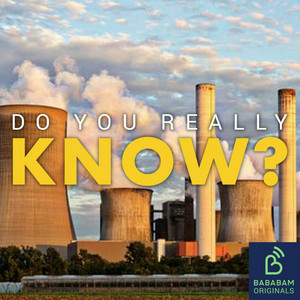
[Unveiling Environmental Racism: Disproportionate Burdens and Global Inequality]-[What is environmental racism?]
📋 Summary
Introduction to Environmental Racism
Environmental racism is a critical socio-political concept that highlights how environmental hazards do not affect everyone equally. The term was coined by African American civil rights leader Benjamin Chavis in 1982, emerging from the broader environmental justice movement that gained momentum in North America during the 1970s and 80s. At its core, it describes how low-income communities and ethnic minorities are disproportionately subjected to Earth's environmental burdens due to historical factors such as past colonialist exploitation, discriminatory regulations, and contemporary policy-making.
The Disparity in Exposure and Health Outcomes
Proximity to pollution is a primary driver of health disparities, with fine particle pollution contributing to over 4 million premature deaths annually. Research consistently demonstrates that marginalized populations are more frequently exposed to these hazards. Often, these groups live in areas further from city centers, which are more likely to host industrial facilities and factories. Furthermore, these neighborhoods frequently lack green spaces and natural water sources, exacerbating the effects of extreme heat and higher surface temperatures.
Statistical evidence underscores these inequities. A 2019 study published in the Proceedings of the National Academy of Sciences revealed that Black Americans breathed in 56% more pollution than they generated through consumption habits, while Latinos faced a 63% disparity. Conversely, non-Hispanic white populations were exposed to 17% less air pollution than they generated, highlighting a stark systemic imbalance.
Case Study: The Flint Water Crisis
The water crisis in Flint, Michigan, serves as a textbook example of environmental racism. In a city with a Black majority population, authorities opted to change the water source to save money without implementing necessary safety treatments. Despite persistent resident complaints being largely dismissed for 18 months, the community eventually forced officials to acknowledge the disaster. The human cost was devastating: 12 people died from Legionnaires' disease, and thousands of children were exposed to unsafe levels of lead.
Globalization and the E-Waste Crisis
Environmental racism is further amplified by globalization and the rapid growth of electronic waste (e-waste). As of 2021, the world generated over 50 million tonnes of obsolete or damaged devices. Approximately 80% of this waste is exported to Asia, a practice described by fairplanet.org as a "neo-colonial solution."
In hubs like Guiyu, China, piles of discarded electronic parts have severely contaminated the local water supply. Environmental sampling in this region revealed lead levels 190 times higher than the World Health Organization recommended limits. This demonstrates that the environmental impact of consumption in developed nations is often offloaded onto the most vulnerable global populations, perpetuating a cycle of injustice that continues to define the modern environmental landscape.
Deep Learning with ListenLeap


