NPR. Railroad Park is a couple of blocks of green space in downtown Birmingham, Alabama.
You could hear cicadas in the trees. There are turtles swimming in the pond.
And just on the other side of the fence, there are train tracks.
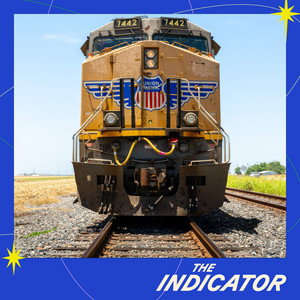
And these train tracks could be on their way to making history, along with tracks in San Francisco, Chicago, Phoenix, and Savannah. they could all be connected in the country's first coast-to-coast railroad.
Now, that is all assuming a planned merger between some of the country's biggest railroad companies actually happens.
And we're talking freight trains here, not people trains.
And there is a line of shippers and unions who are against this merger ever leaving the station.
This is The Indicator for Planet Money. I'm Adrian Ma.
And we're here with friend of the show, Stephen Basaja from the Gulf States newsroom.
Thanks, Stephen, for bringing us this story.
Happy to deliver. And on today's show, we take a whistle-stop tour into the world of mergers.
We find out how this can fast-track shipping, inspect the rough track record of past railroad mergers, and learn why both unions and shippers want this latest plan derailed.
Steven, do you have any more train puns you want to work out of your system?
Let's just try to stay on track and keep chugging along.
That's the ticket. All aboard! This message comes from Capital One.
Banking with Capital One helps you keep more money in your wallet with no fees or minimums What's in your wallet?
Terms apply. See CapitalOne.com slash bank for details.
Capital One NA. Member FDIC. This message comes from Insperity, providing HR services and technology from payroll benefits and HR compliance to talent development.
Learn more at Insperity.com slash HR Matters.
If you look at a map of the U.S. railroad networks, it's like one of those cross sections of the human circulatory system.
These lines cut across the states and each other like veins and capillaries.
But it does get easier to understand when you strip the other railroads away.
And just look at our bride and groom in this proposed locomotive marriage.
First up is Norfolk Southern. It mostly stays to the east of the Mississippi.
From Albany to Birmingham, Norfolk Southern spreads from those dense northeast cities deep into the south.
Union Pacific, meanwhile, is off to the west.
From Seattle to Denver to Dallas, it connects the West Coast to the Midwest.
And it is right around that central split, stretched down from Chicago, where things get interesting.
That's where these East and West Coast lines tend to get tangled up.
And that is also where we see why exactly these companies want to merge.
Like, let's say I'm a winemaker in California and I want to ship a bunch of wine to New York.
So I put it on a Union Pacific train, and it's a pretty smooth ride through Nevada, Utah, Colorado.
But when that wine reaches Chicago, when one railroad ends and we need to switch to another one, we start running into problems.
You've got to literally move your stuff to the other guy's yard in the other part of Chicago, and you're wasting 24 hours to do that.
This is Tony Hatch. If you want to know about the freight train business, he is the guy you call.
He runs his own consulting company and he says he really got into trains at the start of his finance career.
So you were not the kid building model railroads.
You stumbled into this later in life. You know, I actually did have a model railroad, but I was never very good at painting the scenery.
You know, if you just gave me one, I'd run the trains.
So back to our wine example. The wine gets to Chicago, and suddenly... it has to transfer from one train owned by one company to a whole different train owned by another company.
And all this time and labor to move Pinot Noir from one train to another, it's also wasted money.
And if there was one railroad connecting coast to coast, it would mean that we wouldn't have to do that expensive Chicago pit stop.
So if you eliminate that, you can save costs, you can move it quicker, you can be more reliable, and that reliability and that speed is something you can sell. to get more business.
That's the main selling point behind this merger. there's another reason, which is the reason that motivates a lot of companies to merge together.
It's that their business can be cheaper and more efficient if they became a single company.
Right. Like, it's not all that different from the classic argument your long-term partner might make about why you should move in together.
It's a lot cheaper to rent just one apartment instead of two.
Or, you know, having one rail yard instead of two.
Tony says this was the major motivation for U.S. railroad mergers in the 1990s. to headquarters like you don't need to rent checks.
They were about making the existing companies stronger to compete.
And what they really compete with is each other to some degree, but much more with the highway.
Meaning trucks. The real railroad competition is the trucking industry.
The most common way for freight to move across the U.S. is with trucks, not trains.
So these railroad companies hope merging will make them more competitive by being more efficient.
But railroad mergers in the 1990s were pretty messy.
One big merger back in the 90s was between Union Pacific and Southern Pacific, which led to severe congestion and shipping delays for at least a year.
Tony says the reason that happened gets at one of the main drawbacks of a merger, the chance of losing institutional knowledge, which often really just means cut workers.
Right, because the efficiency that comes with merging, it's not just about cutting buildings, but also cutting employees.
And if you cut the one guy who knows which switch turns on the lights versus the one that shuts down the whole rail yard, that's a problem.
That's part of what went wrong in the 90s.
And some companies that rely on railroads are worried that these problems could happen with this new merger.
So when you heard about this, you were like, oh goodness, not again?
Well, not again and not a good idea. Emily Regis manages the coal shipments for the Arizona Electric Power Cooperative.
She's concerned the whole thing would be the opposite of efficient.
There's going to be hiccups and bumps and problems along the way and that shippers will suffer.
And then in the end, what do we get out of it?
Now, the companies say this merger would create a more cost-effective option for shippers.
But Emily worries that the railroads would just get more expensive to ship with.
Yes, we are concerned about that because basically they have no reason not to.
I mean, there is no one stopping them from raising rates.
She's basically talking about monopoly here, or at least less competition.
That's the reason why regulators scrutinize mergers to begin with. you know, to avoid monopolies and reduced competition.
And it's not just some shippers who are against this merger.
Unions don't like it either. That includes the Transport Workers Union and its international president, John Samuelson.
We think a combined company, a mega company in freight rail. would be twice as bad as both of them are individually.
Union Pacific says this merger would make them more competitive against Canadian railroads and also win back American jobs.
But John actually believes this will lead to lost jobs.
And he also has safety concerns. Like he points to that horrible train derailment near East Palestine, Ohio in 2023 that spilled dangerous chemicals into the area.
I mean, East Palestine is complete, absolute disaster that's going to be impacting the neighborhoods in and around East Palestine for decades to come.
Tony Hatch, the Wall Street analyst, he points out that despite that terrible train accident, the safety record for railroads has actually been improving each year.
And he doesn't expect a merger to really change that.
I don't see how you could argue that this combination is going to make anything less safe than it is today.
And again, Tony points out there's a lot of opportunities for this merger to make shipping more efficient.
There are clear benefits to this merger for potential to gain business.
But what do you give up? Part of what Tony means by give up is that these mergers take a lot of work, and the companies expect this process will stretch into 2027.
People who are in the marketing side are kind of distraught about this because railroads were starting new ventures.
They were having new alliances, opening new intermodal hubs. might go away because all the smart minds are going to be focused on the merger.
And all that with no guarantee regulators will even approve the merger.
All that time could just end up being wasted.
Talk about inefficient. But if this railroad matrimony is approved, well, you might want to buy instead of rent your wedding tux because you might need it again soon. there's a good chance the other railroad companies would also catch the marriage bug and start their own mergers to keep up with their own coast-to-coast railroads.
What do you wear to a railroad wedding? I'm thinking pocket watch vibes.
Railroad tie. You know, you have a little monocle with it too.
Conductor hat. Yeah, there we go. This episode was produced by Julia Ritchie with engineering by James Willits.
It was fact-checked by Sierra Juarez. Cake and Cannon edits the show and the indicators are production of NPR.