
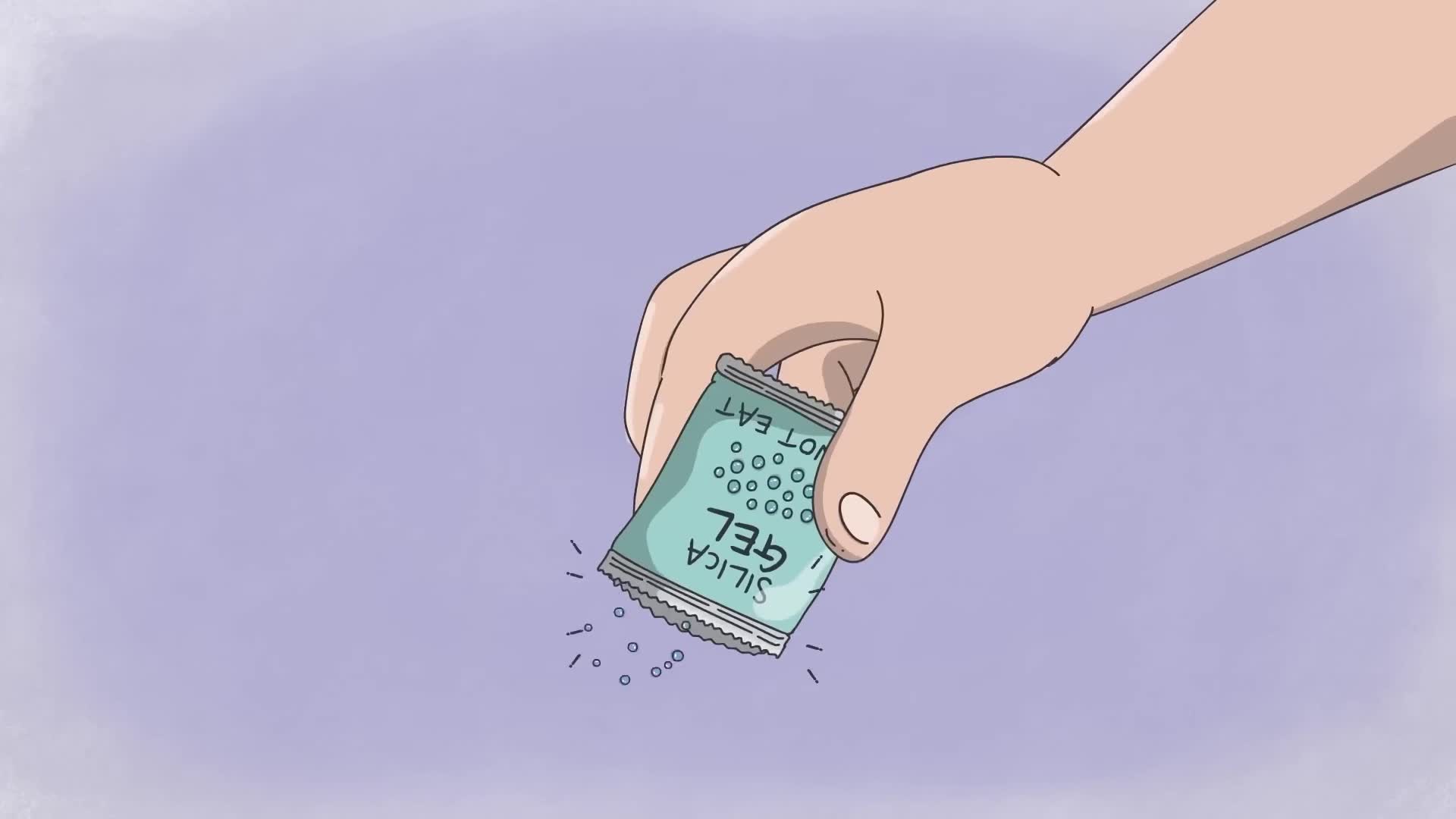
[The Science of Silica Gel: Why It’s Everywhere and Whether It’s Toxic]-[What happens if you eat a silica gel packet? - Vivian Jiang]
📋 Summary
The Science Behind Silica Gel: A Comprehensive Overview
Silica gel is a ubiquitous component of modern consumer packaging, found in everything from electronics and guitar cases to food products and pharmaceutical bottles. Despite the ominous "do not eat" labels printed on these tiny packets, they are a fascinating feat of material science. This summary explores the chemical composition, functional mechanisms, and safety profile of silica gel.
Chemical Composition and Porous Structure
At its core, silica gel is chemically identical to common beach sand—it is silicon dioxide. However, the manufacturing process transforms raw silica sand into a highly engineered material. Through a series of steps involving sodium carbonate and acid, manufacturers create a "jelly-like matrix" that, once dried, forms hard, glassy beads.
The defining feature of this material is its "porous structure." Through a microscopic network of tunnels, a single gram of silica gel provides over 700 square meters of surface area. This vast internal space is what dictates the material's unique capabilities.
The Mechanism: How It Works as a Desiccant
The reason silica gel is so effective lies in its molecular attraction. The silicon dioxide molecules are held together by "polar covalent bonds," which possess a natural affinity for other polar substances, most notably water.
When placed in a humid environment, the gel undergoes a process called "capillary condensation." Water vapor is pulled into the internal network of the beads. Remarkably, each grain can hold up to 40% of its own weight in water. Because the moisture is sequestered deep within the bead’s "internal network," the packet remains dry to the touch even when fully saturated. Beyond water, silica gel also attracts gases like ammonia and sulfur dioxide, making it a versatile tool for filtration in applications ranging from gas masks to cat litter.
Ubiquity and Industrial Applications
Since mass production began in 1919, silica gel has become the world’s most popular commercial desiccant. Its applications are vast and varied:
- Preservation: It keeps snacks "crispy," extends the shelf life of medications, and protects museum artifacts from rust and mold.
- Extreme Environments: A specialized form known as "aerogel" is utilized in outer space to insulate rovers against temperature extremes and to capture high-velocity comet dust.
Safety Concerns: What Happens if You Eat It?
Perhaps the most common question regarding these packets is the potential danger of accidental ingestion. The "do not eat" warnings are primarily intended to prevent "choking hazards" rather than warning against inherent toxicity.
Because silica is "chemically inert," the human body does not metabolize it into toxic compounds. Furthermore, the amount of moisture a standard 5-gram packet might absorb (roughly 2 grams) is negligible compared to the body's total water content. However, consuming large quantities is not advised; the material's "moisture-wicking properties" could potentially irritate the mucous membranes along the digestive tract, leading to diarrhea or an upset stomach.
Crucially, while standard silica is safe, some variants are coated with "cobalt chloride"—a moisture indicator that is genuinely toxic. In the absence of such additives, however, swallowing a standard packet is generally considered a harmless, if unpleasant, experience.

Deep Learning with ListenLeap


