This message comes from Warby Parker prescription eyewear that's expertly crafted and unexpectedly affordable.
Glasses designed in-house from premium materials, starting at just 95, including prescription lenses.
Stop by a Warby Parker store near you.
This is Planet Money from NPR.
Carolina Gariga is a watcher, not a periscope out the submarine binoculars in the bunker kind of watcher.
But her scholarly job is to be a kind of lookout for trouble in central banks across the world.
She's looking for signs, checking to see if these ideally independent guardians of economic stability, from the Central Bank of Kenya to the Bank of Japan, have maybe become vulnerable to political influence.
Have you been especially busy lately?
Yes.
Yes.
Yes.
It's keeping up with the news.
It's becoming a new job for me these days.
Carolina isn't usually following political dramas at our central bank, the U.S.
Federal Reserve.
She's more used to looking elsewhere, like her native Argentina, where the president famously pressured the central bank to do what the president wanted.
And it did.
And that resulted in...
Spiraling inflation, loss of credibility in the currency.
By this time, Carolina was no longer living in Argentina, but she had family back home.
And when she'd call them?
They would say well, we went to three supermarkets, because in this supermarket either the oil was too expensive or there was no more oil.
Inflation, shortages.
Carolina saw the same thing play out a few years later in Turkey.
Turkey is another poster child of what not to do with monetary authorities.
Turkey also had an independent central bank, but the president wanted lower interest rates.
So he started firing and hiring, firing and hiring until he got them.
What were you thinking as you were watching that happen?
So yes, that was a pretty clear example of what happens when you mess with central bank's.
Turkey's inflation rose to around 80 percent.
And these days, people are not lining up to loan Turkey money or invest in the country.
Carolina has watched these same patterns in Belarus and Zimbabwe and Hungary.
And now she is watching the early phases of central bank independence erosion play out here in the US.
And she's like, this is not great.
It's troubling.
Why?
Because we know the consequences.
And because I've done research showing that when central bank independence goes down, inflation volatility goes up.
I mean, we have a wealth of data showing that central bank independence is associated with a lot of good economic outcomes.
It's one of the pillars of rational policymaking in economics.
And in the case of the U.S., everybody uses dollars all over the world, so everybody is tied to us.
So the consequences?
Higher inflation, volatility, loss of credibility?
None of those are good things.
None of those are good things, and none of those things are easy to fix once they're unleashed.
Hello and welcome to Planet Money.
I'm Erika Barris.
And I'm Mary Childs.
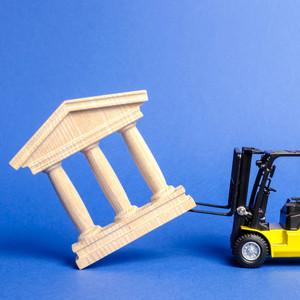
With our own president waging a war with the Federal Reserve, it's time to check in with the central bank watchers.
These watchers have had their eyes trained on central banks all over the world.
They've had their little notebooks out for years, scribbling down their observations, trying to gauge just how independent of political pressure all these central banks actually are or were, and what happens when one loses that independence.
Today on the show, we sidle up next to three of the leading central bank watchers to watch what they're watching.
Because as goes your central bank, so goes the fate of your economy.
This message comes from Capital One with the Venture X Card.
Earn unlimited double miles on everything you buy.
Plus, get premium benefits at a collection of hotels when booking through Capital One Travel.
What's in your wallet?
Terms apply.
Details at CapitalOne.com.
Support for this podcast and the following message come from Indeed.
Speed up your hiring right now with Indeed and get a 75 sponsored job credit to get your jobs more visibility at Indeedcom slash money.
Terms and conditions apply.
Hiring.
Indeed is all you need.
This message comes from Ritual.
What makes Ritual vitamins different?
Ritual vitamins are made with bioavailable, clinically studied key ingredients and a patented nutrient delivery system that aims to help your body use the nutrients you're getting.
Ritual's essential multivitamins are made with you and your body in mind and backed by scientific research, filled with key ingredients as well as the essence of mint, so you can enjoy taking your vitamins.
Get 25% off your first purchase when you visit ritual.com.
Pretty much every country has a central bank.
They handle a country's currency.
They set monetary policy, like setting interest rates.
The central idea of a central bank is to keep a country's economy stable.
And they have a long history.
Starts in the 1600s.
But that is way too far back.
OK, so we're not going to talk about the 1600.
No, we're not.
We're not.
The version that we are thinking of right now when we talk about a central bank.
Carolina Garriga again.
By the way.
She's a professor of political science at the University of Essex in the UK.
And we had her jump forward to the 1900s, when the British created a sort of central bank prototype, the Bank of England.
And they felt like they had really figured out how to manage a country's money.
So they sent people out to spread the word.
And there were missions sent by the crown to different countries to help countries set up central banks.
So they were like central bank missionaries?
Yes, converting governments into the scientific way to deal with money, if you want.
And there was this one economist, an American monetary missionary, if you will, who was especially influential.
Edwin Kammerer.
He helped set up the Federal Reserve in the US and he traveled everywhere, like Poland, all over Latin America, helping set up or tweak their central banks.
And eventually everyone adopted it.
Yeah.
The idea is how to provide stability to the economy.
It was only over the past 50 years that the idea of central bank independence started to take hold around the world.
Independent of politics, meaning central banks should think about the long term health of the economy, not just what it looks like during a reelection campaign.
Because what is the harm if a central bank is not independent?
The harm is that monetary policy decisions may be made by political interests that can cause damage in the long term.
Carolina says the whole reason to watch central banks and evaluate how independent they are is because, as her research shows, that will actually give you a pretty good indication of what a country's economy will do.
And Carolina, our first watcher.
She has spent a lot of time sorting through years of data to show exactly that link between central banks losing their independence and economic troubles.
But first, she had to look at the statutes and bylaws of 192 countries.
She read all of them.
Well, what I do in my research is I went and read the laws.
All the central bankers from 1970 until 23.
That must have been so much to read.
That was many years.
But yes.
And as she read them, she asked, for example, how long are central bank governors appointed for?
Can a central bank governor hold another job in government like say, in the Ministry of Finance?
That may be a conflict of interest.
What are the actual objectives of the bank?
Like?
Are they focused just on inflation or are their goals very broad, potentially opening them up to political interference?
Even if you have an autonomous central banker, the objectives are so broad and sometimes conflicting that open the central bank to political interference.
So all these things are in the metrics of central bank independence.
And by cross-checking those questions with economic data on things like inflation and unemployment, Carolina has created her own big data set that shows that in countries where central banks have become less independent, like in Belarus Turkmenistan, Venezuela the economies have suffered.
More inflation and volatility.
And in countries that have had reforms to make more independent central banks, like Croatia and Morocco.
Their economies have been more stable.
And now Carolina says Trump threatening the independence of the central bank in the US.
It has uniquely huge implications because our money is used all over the world.
The dollar in itself is a matter of concern for most countries in the world.
If there is inflation or if there is loss of credibility of monetary policy or of the dollar, this will have rippling effect.
This will have a rippling effect.
In a way that smaller economies don't have the potential to disrupt in that way.
So Carolina was our watcher number one.
Watcher number two is looking from a different vantage point.
The focus of his work is to more clearly define the most basic question.
What even makes a central bank independent?
Do we know what exactly exposes a central bank to political influence in the first place?
And so we set out to build a better mousetrap.
Lev Menand researches and teaches monetary systems at Columbia Law School.
And some years ago, he heard from an economist he'd worked with at the New York Fed, Tobias Adrian.
Lev says he'd always admired him.
But only from a distance, because he was this economist who published, you know, six like groundbreaking papers per year.
And I was a kid who hadn't even gotten a PhD in economics, which I never did.
By the time Tobias called, it was years later.
Now Lev was a well-known legal scholar.
And Tobias was pretty senior at the International Monetary Fund, the IMF.
And what Tobias wanted was Lev's help.
See, a major function of the IMF is to lend money to countries so they can grow.
But it's a loan, not a gift.
They want their loans to be good.
Yes, they want their loans to be repaid.
So they have a whole staff of people that collect and analyze central bank statutes from every country in the world.
And they reached out to me so that we could talk about.
Would it be of interest to me to work with this database to try to answer research questions?
Would it ever.
Lev and Tobias and their co-author, Ashraf Khan, also from the IMF.
They meet for the first time over Zoom to talk about what they could do with this database.
And it turns out it's a lot.
We came up with like 10 things to do and we're still on the first one.
Let's just be clear.
We haven't even finished the first one.
You're just in the first inning.
Yes.
And we may never finish the baseball game.
But in this first inning, they saw an opening.
See.
Lev says researchers had been using these indexes from some famous papers from the 90s to measure the relative independence of different central banks.
But Lev and company saw some room for improvement.
There's this one index that became very prominent.
That, in my opinion, made some pretty bad judgment, calls about whether certain legal features made a central bank more or less autonomous.
Like.
One way to get points for being independent was if the head of your central bank had a longer tenure.
And then you would get points for things like protection from removal at will.
Protection from the president just firing you and installing someone more to their liking.
The point that we made is it's not worth much to have an eight-year term if you can be removed at will.
And so it's kind of a mistake to give any points at all for an eight-year term, unless it's paired with a restriction on the executive's power to remove the central bank head.
There were a bunch of things like this.
You do get excited when you see something in the literature that creates an opening for a contribution by oneself.
By you.
Yes, that is an exciting feeling.
Like, oh, wow, this is something we can work on.
In their Zoom room.
Lev and his two future co-authors are like.
So if those assumptions were kind of wacky and we have this great new IMF database, we can just make a better index.
So they enlist research assistants at the IMF.
They start sifting through all the different laws governing central banks in all the different countries.
And they also do a big survey of 87 central bank officials.
And with all that information, they assign each rule governing central banks a score.
Somebody has to read the whole statute and go through and decide is this a one or a zero on this dimension?
Is it a one or a zero on that dimension?
So you have all these IMF research assistants and they've got their red marker and their green marker.
And they go through and they're like, oh.
I think it's a little bit more digital than that.
You have like an analog. vision of how this looks, but they have an Excel spreadsheet.
You can code those red or green.
You could put colors.
I think some of our spreadsheets have colors.
Thank you for granting me that.
As to what to highlight in green and what to highlight in red, this is the important part.
The hard part.
Because these choices, deciding what defines central bank independence...
They are not arbitrary, but they are subjective.
For example, one of the indices from the 90s ranked rules about when or how the central bank can lend money as way more important than setting monetary policy, which Tulev and his co-authors seemed arbitrary.
So in their surveys, they asked central bank officials to help weight each rule more thoughtfully.
But even amongst their own team, there was a lot of debate.
Granular, painstaking debate.
Oh, you thought that.
You thought that.
For example, at first, one of their metrics was to get a high independence score.
Can the central bank lend to the government directly?
You want the answer to be no.
That's what Argentina was doing.
But a lot of governments do permit their central banks to lend directly to them on a short term basis.
In their survey, central bank officials said that was different and less bad than lending long term.
So Lev and his team broke out that distinction and weighted it accordingly.
Then there was that metric from the 90s that had bothered Lev.
That assigned independence points for central bankers getting long terms, even if they can also be easily fired.
We didn't give credit for legal features that suggested independence when they were paired with loopholes that totally undermined any independence those features would have provided.
So yours is like a layering effect.
Yours is an if-then kind of criteria.
Exactly.
We put together like five things and said you've got to have all of these to get any credit under our index on this dimension of independence.
Ultimately, Lev and his colleagues have come up with a list of 10 updated metrics of central bank independence.
But like he said, this is only their first inning.
And especially while he is watching President Trump's current pressure on the Fed, he's already noting a shortcoming in their new metrics.
Because they're based on laws and statutes.
Everything written down and codified about how these central banks are supposed to work.
They represent what's called de jure independence.
Independence by law.
But laws don't tell you how people act.
That is de facto independence.
You could have a state-of-the-art central banking statute.
That is perfect, but there's no rule of law.
And so the president of the country can come along and just threaten to kidnap the central bankers if they don't do what he says.
Then there's no de facto independence, even if you're a 10 out of 10 on de jure independence.
So laws need to be enforced.
Laws need to be enforced and legal culture is an absolute critical ingredient in American success.
And part of what's so distressing about the last year is a pretty dramatic degradation of our legal culture.
It's just been a constant unraveling.
And who cares what the Federal Reserve Act says at a certain point, if it's just, if it's not followed.
If it's just a piece of paper with some words on it.
Yeah.
After the break we meet a central bank watcher who's looking at not just what central banks say, but what they actually do.
Support for NPR comes from Dell.
The new Dell AI PC with Intel Core Ultra helps you breeze through everyday tasks like editing images, summarizing meeting notes and replying to long emails.
More at dell.com.
This message comes from NPR sponsor Odoo business management software.
Some say Odoo is like fertilizer because it promotes growth.
Others say it's a magic beanstalk scaling with efficiency.
Odoo, exactly what a business needs.
Sign up today at odoo.com.
This message comes from the Hartford.
Every day, they create unique risk solutions for unique businesses.
They understand the challenges businesses face today and are ready to anticipate the risks of tomorrow.
Their teams know the ins and outs of specific industries, so the Hartford can help provide insurance solutions for midsize and large businesses.
If a business needs it, chances are they've got it and get it.
Connect with your underwriter at the Hartford.
Learn how to donate at DonorsChooseorg.
Back to school.
So we have peered over the shoulder of watcher number one Carolina, comparing the bylaws of central banks over time to see which of them result in economic trouble.
And watcher number two Lev, trying to better distinguish which rules protect the central bank from political influence.
Now, watcher number three.
Her name is Carola Binder.
She's an economist at UT Austin, and she is focused not on rules, but on action.
De facto, not de jure.
Carola's research looks at when and where central banks are being pressured and what they are doing in response.
Her journey started in 2018, a time of placid economic conditions, a time when the rate of price increases was like 2 per year and pretty much nobody was thinking about inflation.
But Carola was.
I kind of like to think of it as the year of politicization of central banks.
You know they've always been under political pressure, but I think it got a lot more attention worldwide in 2018.
Because, all of a sudden, President Trump, one year into his first term, at that point started tweeting critically about the Fed.
That the president would weigh in like that was very new.
New, but also right around then, other central bank pressure situations were unfolding around the world.
Turkey was starting to look kind of pressure-y.
Things were starting to percolate in India.
And Carol is watching all of this start to bubble up and she wants to know, How common is this?
How often are central banks pressured?
And what happens after that?
Like, it's one thing to have laws written down that say our central bank is super independent.
But to Karola, what might really matter is a more narrative read of the situation.
Not the rules that Karolina and Lev have looked at, but the behaviors.
So Karola decides to look at the period from 2010 right up to the very moment when she's reading the reports in 2018.
She looks for data that can show her not just what the laws say, but what central banks actually do.
And she finds two data sources that would fit the bill.
The method that I used was, with the help of some of my research assistants, to read through these country-level reports that are put out by Economist Intelligence Unit and Business Monitor International for nearly every country.
Basically news sources narrating in real time what pressure central banks were facing and what they were doing about it.
And we would read through and see whether there was any mention of political pressure on that particular bank in that quarter.
In her data set, she was looking for specific things.
It would have to say something like we anticipate that the central bank might cut interest rates due to pressure from the government.
It would be pretty explicit.
That's pretty explicit, yes.
In super authoritarian countries that totally control their central banks, like China.
Kerala is just not interested in them.
She's focused on these moments of change, situations in flux.
If a country goes from there not being any reports that they're facing pressure, then suddenly one quarter they start facing it.
What happens to inflation afterwards?
And Carola found of her pool of central banks around the world.
On any given year, 10 percent of them were getting political pressure at least.
If anything, the 10 percent is like the lowest estimate because there could have been political pressure that was so sly that the analysts writing these country reports didn't know about it.
Over the whole time sample from 2010 to 2018, almost 40 of central banks reportedly had political pressure or interference.
And the pressure she saw most often to cut interest rates.
Exactly what President Trump is pressuring the Fed to do right now.
The pressure was so directional in her data set, in fact.
There's almost no exceptions there.
There were one or two cases where I think Republicans in the US were saying that the Fed needed to tighten monetary policy.
Meaning to raise interest rates.
Once Kerala has a picture of the pressures on central banks all over the world during this period, she looks at whether they succumb to the pressure or not.
Do they lower rates after someone fusses at them to lower rates?
And finally, she compares their actions with price levels.
Do they go up or down?
And Kerala finds that it is pretty clear that old intuition, the old studies are still right.
When central banks succumb to political pressure, higher inflation occurs.
Which is exactly what happened in Turkey after President Erdogan took power in 2014.
He had this really unconventional view that he would talk about a lot, which was that lower interest rates would reduce inflation.
So that's exactly the opposite of the models that most macroeconomists and central bankers use which, of course, prescribes raising interest rates to reduce inflation.
Turkey's president wanted its central bank to cut rates.
So whenever a central banker didn't cooperate, he fired them and hired who he wanted.
And for a while there, there was a new one just about every year.
And frequent turnover?
In the canonical economic literature of central bank independence.
That's a pretty big tell that things are not going so great right now.
Kerala also found another tell, consolidation of executive power, which Erdogan also did in 2017.
In Kerala's data reported, political pressure is less likely in a parliamentary system where power is less concentrated, as opposed to a presidential system.
You have one particular person in power who is able to exert that pressure more.
One thing that all three of our central bank watchers told us it's actually quite hard to regain independence, with all its benefits, once you lose it.
Here's Carolina, who looked at the laws over decades.
Building institutions takes decades, but destroying institutions takes very little time.
And, in the case of central banks, you need markets to believe that these institutions are going to withhold political pressure.
So once you show the institution is unable, or that the rules are unable, to control political meddling well, the trust in the system or the long-term trust in the institutions is One of the few big examples is actually here in the US.
Regular Planet Money listeners will recall President Nixon pressured the Fed to lower interest rates in the 1970s.
Inflation began...
And it took years and a lot of economic pain for the Fed to regain credibility.
It wasn't until Fed Chair Paul Volcker finally jacked up interest rates to almost 20 percent.
Which illustrates something else Kerala found.
The more reports of central bank pressure and political interference, the longer the subsequent inflation sticks around because of that erosion of credibility.
And, like right now in the US, with President Trump pressuring our central bank, he's always posting, going after Jerome Powell about interest rates.
And he's accused Fed Governor Lisa Cook of mortgage fraud and is trying to remove her from her post.
Lisa Cook has sued him, saying he has no cause to do that.
The case will work its way through the courts.
And that will determine a lot.
Enough that it may make Lev open back up his color-coded spreadsheet.
We have the United States scored as having independence with respect to the members of the Board of Governors from the president for removal, because we have it scored as a protected term in office.
But if courts were to determine that for cause doesn't really mean anything, then we maybe don't have this scored right.
Lev and Carola and Carolina, their eyes are wide open right now.
And they are scribbling away on their little notepads.
If you want to dive deeper into the world of central banks, check out our show notes.
The Federal Reserve.
We have covered it a lot, like the Fed's origin stories and about Trump's efforts to remove Lisa Cook from her post.
Those episodes and many more are in the show notes.
This episode was produced by Willa Rubin with production help from Sam Yellow Horse Kessler.
It was edited by Marianne McKeown and fact-checked by Sierra Juarez.
Engineering by Robert Rodriguez and Maggie Luthar.
Alex Goldmark is our executive producer.
Special thanks to Charlie Kier, John Kelsey, and to WHYY.
I'm Mary Childs.
And I'm Erica Barris.
This is NPR.
Thanks for listening.
This message comes from Jerry.
Car insurance shopping used to be a nightmare.
Endless forms, hold music, and mysteriously rising rates.
Thankfully, there's Jerry.
Jerry handles the entire insurance shopping process, from comparing quotes side by side to purchasing your policy and even helping you cancel your old coverage, all in one app.
In just minutes, Jerry can check for quotes from up to 50 top insurers.
So before you renew your policy, download the Jerry app or head to jerry.ai slash NPR.
This message comes from Easy Cater, committed to helping organizations order and manage food for all their business needs, with online ordering from favorite restaurants, employee meal programs and tools to see and control food spend at easycatercom.
This message comes from LinkedIn Ads.
Target your buyers by job title, company, role, and skills with LinkedIn Ads.
All the professionals you need to reach in one place.
Get a $250 credit on your next campaign at LinkedIn.com slash results.
Terms and conditions apply.