A quick note before we start today's show, you might have heard that President Trump has issued an executive order seeking to block all federal funding to NPR.
This is the latest in a series of threats to media organizations across the country.
And whatever changes this action brings, NPR's commitment to reporting the news will never change.
Even as paywalls go up elsewhere, we offer this vital resource to everyone.
Support the news and programming you and millions rely on by visiting donate .npr .org.
And if you already support us via NPR Plus or other means, thank you.
Your support means so much to us, now more than ever.
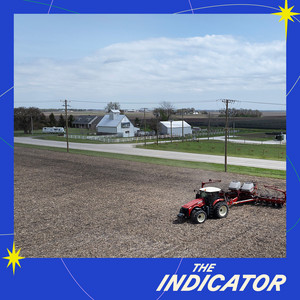
NPR. are. For pretty much his whole life, Anthony Bland has worked the land.
I am a third generation farmer in Tunica County, Mississippi.
I'm a rice and soybean farmer, and I have two sons who — one me on the farm and another one works with USDA.
The whole family is in the agriculture business.
What is it about farming that you like?
Basically, I like the independence.
Once you grow up farming, it's kind of something that stays in your blood.
You know, we have that enjoyment of living off the land and raising crops and, you know, the challenges can be a little overwhelming sometimes, but, you know, we're kind of we're kind of used to it.
A lot of those challenges have to do with nature.
You know, a drought, a hurricane, a crop disease.
Other challenges, though, are more man -made.
Like a trade war with China.
This is The Indicator from Planet Money.
I'm Adrian Mar. And I'm Darren Woods.
The Trump administration has said that the trade war would cause some short -term economic pain.
Well, a lot of farmers like Anthony are feeling it.
I think it's crazy.
I mean, short term paying for a farmer means going out of business permanently.
Today on the show, Anthony and another soybean farmer tell us how they're feeling about a trade war that targets their biggest customer.
This message comes from U .S. Bank.
As a small business owner, you're used to doing it all.
But U .S. Bank Business Essentials is here to help.
It's a powerful combination of checking and card payment processing that gets you fast access to the money you've earned with no monthly maintenance fee checking and unlimited digital transactions.
They even have small business specialists that work together with you to help your business reach its full potential.
That's the power of us.
Deposit products are offered by U .S. Bank National Association, Member FDIC.
This message comes from Apple Card. Picture this.
Somewhere in the world, an Apple Card user is getting 3 % daily cash back on the purchase of an iPhone 16 at Apple.
That's not all! They also earned 2 % back on the new shoes they bought using Apple Pay.
Visit apple .co slash card calculator and see how much daily cashback you can earn.
Subject to credit approval, Apple Card issued by Goldman Sachs Bank USA, Salt Lake City branch. Terms and more at applecard .com.
This message comes from Shopify.
Entrepreneurs on Shopify are reaching their first sale faster with AI that works with you.
Go to Shopify .com slash first sale to see how entrepreneurs use AI to grow their businesses faster.
The thing about growing crops for a living is so much depends on the weather.
Brad Smith knows this firsthand.
Hey, how are we doing?
I know you said that like um schedule is weather dependent so have you already kind of like being outside today and… Oh, yeah, it's kind of cold and windy and crappy here.
Brad lives in Milledgeville, Illinois.
And when the weather is not cold and crappy, he's out in the field growing corn and soy beans.
The first time we spoke to him was back in January.
So to understand how the trade war that Trump started was affecting farmers, we called him back and just asked, how's it been?
We had a good, a real good January and February, price -wise.
And so we were all feeling pretty good and confident of ourselves.
So we kind of fooled ourselves into thinking that it was no big deal that everything would work itself out." Then trade tensions escalated.
China retaliated with tariffs on U .S. agricultural products, including soybeans.
And then as the U .S. and China went back and forth raising tariffs again and again, China's tariffs on U .S. imports have gotten to at least 125%.
Because of that sudden price hike, sales of US soybeans to China have plummeted according to data from the U .S. Department of Agriculture.
Recent soybean sales to China are almost 30 % lower than they were a year ago.
Now again, that can come back quick too with the stroke of a pen.
But that kind of punches you in the gut a little bit when you weren't expecting it.
And from China's perspective, this is the strategy to hit the U .S. where it hurts.
After all, the U .S.'s most valuable export to China, in terms of goods, is not blue jeans or bourbon.
Any guesses? Hamburgers, I don't know?
Probably not that bad on the ship.
No, in fact, it is the humble soybean.
Last year, over 50 % of U .S. soybean exports were bound for China, where they were used for animal feed and cooking oil and to make things like tofu.
But this year, because of the trade war, things are not looking good.
Everybody's trying to figure out other places to go with their beans, other than China.
And right now there's no great answers to that.
And so we're just in an oversupply and under demand sort of market dynamic in soybeans right now.
Yeah, and unless the US population suddenly quadruples in size and Americans start eating a lot more tofu, Chinese customers will be hard to replace.
And Brad says this puts farmers in a financial bind.
Most every farmer has an operating line of credit you know the money they need to pay their bills, you know to buy your fertilizer, buy your seed, you know make your machinery payments and land payments and things like that.
When you have several hundred thousand dollars borrowed, you know, the banker likes to know he has a good chance of getting paid back.
And with the trade war dragging on, Brad says those banker conversations have gotten a little bit uncomfortable lately.
You know, one of the things that Trump has said about his tariffs is that there will be short -term pain, but long -term gain, and that jobs and manufacturing will come back to the United States as a result.
But for now, I mean, does it feel like that farmers are sort of being asked to take one for the team?
Yeah, that's probably a pretty accurate way to put it.
And so, like I said, I think most farmers are willing to do that for the short -term As long as you don't go broke in the process, you know.
If you're sick, sometimes you have to take medicine that doesn't taste very good right now but you'll get better in the long term.
So we'll see. I mean, we have to have faith that, you know, things will work out in the end and most times they do, but it still kind of stinks right now today.
This isn't the first time U .S. farmers have been hurt by a trade war between the U .S. and China.
Last time was during the first Trump administration.
Back then the Agriculture Department cut checks to farmers to make up for their loss revenue.
It was a bailout that cost about twenty three billion dollars.
And recently Trump's Agriculture Secretary, Brooke Rollins, said a bailout could be on the table again.
Although that's not really comforting for farmers like Brad or Anthony Bland, the Mississippi farmer we met at the start of the show.
Farmers have been bailed out but you know we can't keep getting bailed out especially Well, once you lose a market like that, you can lose a market in one month, and it may take you five to 10 years to recover that same market share.
And in fact, U .S. soybean growers still haven't recovered the business they lost during that last trade war, when China started buying more of its soybeans from Brazil.
So it's gonna shift that market.
And the American soybean farmer is gonna be the loser in all of this.
One of Trump's stated goals is to bring manufacturing back to the U .S. so Americans can buy more American -made stuff.
But Anthony says, compared to countries in Asia, there just isn't much demand here for rice and soybeans.
That's why he relies on the global marketplace.
Americans cannot keep up with all the crops that we raise.
There's no way they could consume it all.
And, you know, bringing the manufacturing jobs back is kind of a fallacy in any industry, including the farm industry, because today me and my son, the two of us, can do the work that previously it took 10 to 15 people to do on the farm.
So we have larger tractors, larger equipment, and of course, you know, there's automation.
And that's going to be the same way with any manufacturing jobs.
So those jobs that they're talking about will never come back, not to the extent that they're telling people that they're going to come back at.
So you can hear that while Brad was a little hopeful that the medicine will work, Anthony is a lot more skeptical about the Trump administration's promises.
But for both of them, the biggest challenge right now seems to be how the trade war's creating all this uncertainty for their businesses.
Not only from the loss of revenue, but also increased costs.
For example, most potash fertilizer comes from Canada, and because of tariffs, farmers are looking at higher prices on that.
Anthony says a lot of the parts and equipment he uses come from China.
And of course there are tariffs on those too.
So our input costs are going up, whereas our commodity prices or the price we get paid for our product are going down.
So that's a lose -lose situation in any business.
As of today, a truce in this trade war seems pretty far away.
On Friday, Chinese officials said they would consider beginning trade talks with the U .S. if it showed, quote, sincerity.
And it cancels tariffs on its goods.
When Trump was asked about this statement on an NBC interview, he said he wouldn't cancel the tariffs, but he would lower them, quote, at some point.
Tomorrow, we'll be looking at one industry that's embracing the tariffs, US shrimpers are applauding Trump's strategy.
Do economists agree?
This episode is produced by Angel Carreras and engineered by Robert Rodriguez.
It was fact checked by Sierra Juarez, Kake and Cannon edits the show and the indicators of production of NPR.
This message comes from NPR sponsor Charles Schwab with its original podcast on investing Each week, you'll get thoughtful, in -depth analysis of both the stock and the bond markets.
Listen today and subscribe at schwab .com slash on investing or wherever you get your podcasts.
This message comes from monday .com.
Work management platforms. Red tape, endless adoption time, IT bottlenecks.
And after all that, nobody really uses them.
But what if you didn't hate your work platform?
What if you actually loved it?
Monday .com Work Management Platform is different.
You can make any changes you want and adapt it to your needs in an instant.
No admin middlemen.
That's why people actually love using it.
Monday .com, the first work platform you'll love to use.
This message comes from Warpe Parker, prescription eye -wear that's expertly crafted and unexpectedly affordable.
Glasses designed in -house from premium materials starting at just $95 including prescription lenses.
stop by a Warby Parker store near you.