NPR. So, Weyland, let's say the indicator goes on strike.
How long do you think you could last?
Uh, Stephen Besaha.
I know where this is going.
Last time you asked me when we had a full episode about a strike that went more than 600 days.
And I can tell you right now, no way I could last on strike for almost two years.
Okay, I should have known better than to try get something passed to you, but it's totally fair.
How about, you know, a much shorter strike?
Like, let's say just one month.
I mean, maybe. That's a long time still, but I think I could do a month easier than a year or more.
How about just one day?
Oh, one day? Yeah, that's easy.
See you on the picket line.
Yeah, Well Weyland, you're in luck.
One -day strikes have been a growing trend over the last decade.
This is the indicator from Planet Money.
I'm Weyland Wong. And I'm Stephen Besaha from the Gulf States newsroom.
On today's show, what do short strikes say about union power in the U .S.?
And what can you accomplish with only 24 hours on the picket line?
From the online trends that dominated 2024, On the spectrum of BRAT to Demure.
Where are you right now?
To spicy TikTok viral reads, These romance fantasy books about dragons.
NPR kept you up to speed on pop culture all year long.
Give back to the news source that just hits different by donating today at donate .npr .org.
And thank you. Hi, I'm Laurel Womsley and I cover personal finance for NPR.
That means I report on some of the questions that might keep you or your loved ones up at night.
Like, will I ever be able to buy a home?
What about retirement?
As interest rates drop, where should I put my money?
Economic headlines can be confusing, but NPR is here to help you make sense of them.
To support this coverage, please give today at donate .npr .org.
Hi, it's Marielle Sagara from LifeKid.
There's a first time for everything, including giving to NPR.
Whether you're a brand new listener or a longtime fan, please join the community of NPR network supporters today.
Make your gift at donate .npr .org and thank you.
Strikes can be long, grueling wars of attrition to see who blinks first, the workers or the company.
Or sometimes strikes can be a party.
Thank you all for having me.
Shout out to all the nurses out there.
Hell yeah, hell. You're like, is this a holiday party or is this the strike?
It is definitely a strike.
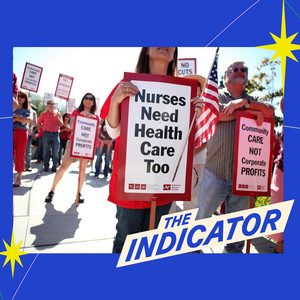
And the nurses getting that shout out are from the University Medical Center, New Orleans.
They went on strike in October with the kind of picket line you'd expect from that city.
I feel like it's multiple holidays rolled up in one.
Mardi Gras, Christmas, birthday.
This is what people should be doing to celebrate Labor Day.
Yes. Anyway, that is Terri McGillis.
She is a nurse at the hospital's trauma orthopedic clinic.
Now, Terri and these other nurses unionized about a year ago.
They wanted a union so they could try negotiating a safer workplace, get a pay bump and push the hospital to hire more nurses because right now they say they are overworked and overwhelmed.
Unions that our demands are really demands for the health, care and safety of our patients.
Like you said, Waylon, it's been a year since they unionized and the nurses are still negotiating.
So to show that they're serious, nurses told the hospital in October, get ready for a strike.
We feel that this is the right way to go.
And I'm here for the long haul.
Well, maybe the long haul when it comes to the negotiations, not the long haul on the picket line.
The strike itself was only scheduled to last 24 hours.
Yes. And they're not the only workers keeping it brief.
Cornell University has a strike tracker.
And according to that, the majority of strikes last year lasted less than five days.
Most of those are just one day or less.
So yet these kind of short strikes have become super common.
It's really taken off in the past 10, 15 years.
John Logan runs the Labor and Employment Studies Department at San Francisco State University.
And I'm actually curious, have you ever been on strike?
Yes. California Faculty Association, my union, we've engaged in a number of one day and three day strikes over the past decade.
Well, three day strikes.
Now you're playing a real hardball.
Yeah, we had planned to go out on a five day strike last semester, but the union called it off after one day.
John says these kinds of strikes with these set time limits were not always the norm.
It used to be unions would call a strike and it would be an all out, indefinite, all out strike.
Now, those types of strikes decreased very dramatically from like the late 70s to the late 90s.
Thing is unions used to be way more powerful in the U .S.
But they started to lose that power in the 70s and 80s.
That was a time of big economic changes that left unions weakened.
Localization, deregulation, entry of major new non -union competitors.
The environment became more challenging for unionized companies.
So companies started to demand huge concessions in their contracts.
John says unions tried fighting back against those concessions with strikes, but the companies just started getting rid of those striking workers.
You cannot be fired for participating in a lawful economic strike, but you can be replaced permanently.
That kind of sounds like a firing to me.
I know you're not fired someone sitting in your desk.
That's right. New to the worker who is being permanently replaced essentially makes no difference.
John says strikes did eventually start coming back, especially in the 2010s.
But the power dynamics between unions and companies had shifted.
So the unions had to change tactics.
And that's what led them to the one day strike.
Now, there are two types of workers that go on one day strikes and for two different reasons.
First up are low wage workers.
The reason they go on one day strikes is because long ones just aren't realistic for someone already struggling to make it on a low wage.
If you're working at Starbucks, if you're working at McDonald's, if you're working at Wal -Mart, they're just not going to be able to afford to go out on an open ended long strike.
The employer could easily replace them.
One day strikes were a way to get around both those problems.
That was from a one day strike back in 2015 put on by McDonald's workers.
Recently, it's been unionized Starbucks workers leading the short strike trend.
The big advantage here is that workers don't have to give up much pay, certainly a lot less than if they were going out on strike for weeks or months.
John says it's also a way to win a battle in the war for public opinion.
Maybe better to say avoid losing one.
If they were to go out on an indefinite strike, they might sort of threaten a lot of support they have in the community.
They might get the blame instead of the employer in that scenario.
Exactly. Yes. Well, the example is you gave Starbucks, Wal -Mart.
In many ways, these weren't exactly successful.
Sure, Starbucks is a bunch of unionized workplaces, but they don't have a first contract at this point.
Walmart doesn't have a union.
Our one day strikes, do they have a bad track record?
Well, no, I think you're right to question how successful they are.
If the company was absolutely resistant, you know, they could go out on one day strikes until the cows come home.
I don't think it would inflict enough economic damage on the company to make any difference.
It's not going to alter the company's behavior.
But one day strikes can be more effective with the second kind of worker that relies on them.
Here, we're talking about workers with leverage.
Think airport workers or those New Orleans nurses.
Just one day without nurses, that's a huge deal.
The hospital had to drop a lot of cash to hire expensive replacement nurses to keep things running.
You have that type of enormous leverage that you inflict huge economic pain or a huge amount of disruption by going out in a one day strike.
They are still very effective.
Still, even for nurses, a short strike just doesn't bring the same amount of leverage as one without an end date.
But there is another advantage of short strikes, keeping workers engaged.
Engage definitely describes the New Orleans nurses during their strike.
They also timed it to happen the same day as a Taylor Swift concert.
Dina Judkins is a nurse at the hospital and it's actually kind of tough to hear her over the sound of passing Swifties honking their support.
You know, we've had a good turnout the entire time we've been here.
Really, I'm really proud of everyone for showing up, spreading the word as the street car goes by, you know, hoping that some Swifties see us and maybe post it to their story and you know, make it a more nationwide, more nationwide news.
And that's often the other important goal of a one day strike.
Get the kind of media attention that comes from a long one without the same kind of pain.
This episode was produced by Angel Correras with production help from Drew Hawkins.
It was engineered by Jimmy Keeley and fact checked by Sarah Juarez.
Kicking Cannon edits the show and The Indicator is a production of NPR.
Holiday travel is stressful, especially if you're dealing with family baggage on top of your actual baggage.
I'm going home. I'm going to revert back to old family roles that are stressful.
And so this traffic jam is the straw that's breaking the camel's back.
But don't worry, we're here to bring you some relief.
Listen to the Life Kit podcast.
We'll help you out this holiday season.
On the 10th radio hour on December 24th, NASA's Parker Solar Probe will touch the sun.
The spacecraft will hit the closest approach ever to the sun.
Astrophysicist Norah Wawafi leads the mission.
We will be making history.
To this day, it's still like magic to me.
Ideas about the sun.
That's on the Ted Radio Hour podcast from NPR.
If you're the kind of person whose idea of a good party conversation starts with, I heard it on NPR, it might be time to take your super fandom seriously.
Deck yourself out in sale NPR swag from t -shirts to ball caps to the almighty NPR tote, all at 25 % off through November 27th at shop .npr .org.